Previous in Forum: Stainless Steel Wire Mesh   Next in Forum: Agro-Resource Based Alternate Engineering Materials
Close
Close
Close
8 comments
Rate Comments: Nested
Associate

Join Date: Nov 2007
Posts: 44

Vulvox has discovered a nanotube adhesive

11/19/2007 12:31 PM

Adhesive Carbon Nanotube Material Discovered in Vulvox Laboratory! Nanotube adhesive disc clings to clear silicone.
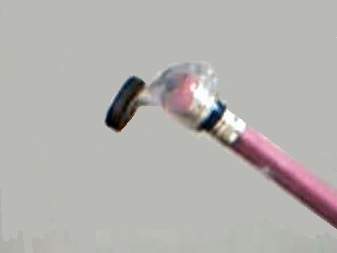
It clings like velcro to wet silicone rubber under water and also to dry rubber.

Its' a carbon nanotube adhesive that sticks to soft silicone rubber, and soft other rubbers and to wet soft materials like human flesh. It will be used in operating rooms in place of bandages and in underwater scuba applications. It clings reversibly like velcro, but it also makes a watertight seal.

http://vulvox.tripod.com/id14.html This link shows a picture of the nanotube material. It has similarities with materials developed at RPI and other academic laboratories but will be a hundred times less expensive to manufacture since it does not require expensive photo lithographic equipment to manufacture it.

Neil Farbstein

President & CEO Vulvox

Nanobiotechnology Corporation.

protn7@att.net

Recently, the Scientific World has seen a number of articles published about a brand new type of adhesive made from carbon nanotubes. It mimics the adhesive found on gecko feet. That lizard is able to climb on walls and ceilings up tree trunks etc. by means of the sticky hairs on its' feet.

They were able to synthesize tape with nanotubes stuck to it that adhered to objects temporarily. That adhesive was made by a complicated process of patterning catalysts onto a substrate using photolithography, similar to the process used to manufacture circuitry on computer chips. It was noted that the material might have uses such as fastening objects on the International Space Station, in high vacuum environments or in electronic devices or in high temperature uses where regular glues would burn up.

The Vulvox discovery will eliminate the necessity of using photolithography to make nanotubes in tufts patterns, bringing the potential cost down tremendously. We can take nanotubes off the shelf and after mechanically processing them we obtain solid objects that possess adhesive properties like the nanotube tapes discovered at RPI.

Vulvox President Neil Farbstein stated that "Vulvox made two discoveries this year; first we discovered a new genetic sequence that primes the reverse transcriptase reaction that might have applications in genetic diagnostic tests or in molecular genetics. And we discovered the adhesive properties of the nanotube material this week. We will work on developing composites that maintain those sticky properties on their surface. And there are indications that the adhesion might be increased in magnitude through a number of manipulations."

Contact
Neil Farbstein
President
Vulvox Nanobiotechnology Corporation
516-921-5058
protn7@att.net

Register to Reply
Interested in this topic? By joining CR4 you can "subscribe" to
this discussion and receive notification when new comments are added.
Member

Join Date: Jan 2008
Location: San Jose (Silicon Valley) California
Posts: 6
#1

Re: Vulvox has discovered a nanotube adhesive

01/03/2008 1:19 AM

Combine the adhesive properties of carbon nanotubes with the documented thermal properties of CNTs. You'll have a thermal adhesive tape for heat sinks that is 5 times more conductive than copper!!!

Register to Reply
Anonymous Poster
#2
In reply to #1

Re: Vulvox has discovered a nanotube adhesive

01/03/2008 10:37 AM

Thankks a lot! are you as nanotechnologist? What do you do? Tell me about yourself.

Register to Reply
Anonymous Poster
#3
In reply to #2

Re: Vulvox has discovered a nanotube adhesive

01/04/2008 1:32 AM

Just another nerdy engineer in Silicon Valley. I have a need for a thermal adhesive to replace the solder connection on a L.E.D. design that I am creating. The problem is a mismatch of Coefficient of Thermal Expansion (CTE) between the surface mount LED device and the heat sink and even the solder itself. The large number of thermal cycles in the lighting device creates joint stress because the two materials expand and contract at different rates. No flexible joining material (that I know of) beats solder for maximizing the thermal coupling between the power device and its heat sink.

Wikipedia reports theoretical thermal "ballistic conduction" at 6000 watts per meter per kelvin at room temperature compared to copper's 385 W/(m·K) . I have read reports that show CNTs thermal conductivity increases to 37,000 W/(m·K) at cryogenic temperatures of about 100 degrees Kelvin.

I would encourage you to make an entry into Wikipedia to include the van der Waals force properties of CNTs. And let me know when I can test that adhesive on my circuit!!!

Register to Reply
Anonymous Poster
#4

Re: Vulvox has discovered a nanotube adhesive

04/21/2008 8:14 PM

Wow, a substance that sticks to something sticky.

A little research shows this is the only "product" to ever come from Vulvox, yet a liitle more research shows Neil Farbstein is claiming to have achieved accomplishments in particle physics, biotechnology and genetics. A bit more research shows Mr Farbstein claiming a US government conspiracy against him.

Register to Reply
Anonymous Poster
#5
In reply to #4

Re: Vulvox has discovered a nanotube adhesive

04/22/2008 12:09 AM

So What! You dont know what you are talking about!!!! Wanna see the report written at Commonwealth biotechnologies inc. and my reverse transcriptase experiments that they performed under contract to us and my other corporate partner? What's your real name anonymous? Nobody else on this website has written negative character assassination garbage. My friends in the above string gave me some real good information. Anyone have nay ideas how to get rid of this nut????

He started ruining my repurtation on the phys.org web board and now he seems to be "stalking me" on the web.

Register to Reply
Participant

Join Date: Sep 2019
Posts: 2
#8
In reply to #4

Re: Vulvox has discovered a nanotube adhesive

09/06/2019 11:19 AM

Hey! Talk about slanted biased comments!

You owe me an apology!

Vulvox Nanobiotechnology Inc is now defunct but I have an issued patent

US10,050,595 ULTRA HIGH STRENGTH NANOMATERIALS AND METHODS OF MANUFACTURE https://patents.google.com/patent/US10059595B1/en

And the carbon nanotube adhesive sticks to solidified silicone rubber that's been wetted by water. UNDERSTAND NOW?

Register to Reply
Anonymous Poster
#6

Re: Vulvox has discovered a nanotube adhesive

09/20/2008 12:53 AM

Neil Farbstein is a fake, trying to cheat innocent investors out of their money. He's been challenged to back up his extragavant claims several times before, and he failed to do so each and every time. He immediately gets confrontational and even accuses people of being anti-semitic if they dare doubt him.

He is a sad fraud, nothing more.

Register to Reply
Participant

Join Date: Sep 2019
Posts: 2
#7

Re: Vulvox has discovered a nanotube adhesive

09/06/2019 11:00 AM

My new contact e-mail

vnbcinc@gmail.com

I'm now the President of Clean Energy Research Foundation Inc.

Register to Reply
Register to Reply 8 comments
Copy to Clipboard

Users who posted comments:

Anonymous Poster (5); Clean Energy Research (2); CoolSolutions (1)

Previous in Forum: Stainless Steel Wire Mesh   Next in Forum: Agro-Resource Based Alternate Engineering Materials

Advertisement