GEA's Global HVAC Technology Blog Blog

GEA's Global HVAC Technology Blog

GEA's Global HVAC Technology Blog covers a range of topics including:

  • Core HVAC Technologies
  • Technology & Patent Evaluation
  • Manufacturing Technologies
  • Product Quality Improvement
  • Materials/Failures/Corrosion
  • Product/Technology Commercialization
  • Business Strategy Development
  • New Factory Design & Equipment

We'll draw upon our range of experts to provide comments, insights, technical articles and a little humor from time to time

We encourage your participation and feedback!

Previous in Blog: How Do You Define A World Class Business?   Next in Blog: Battle Heats up Over HFO-1234yf Flammability in Autos
Close
Close
Close
Rate Comments: Nested

Strategic Sourcing:Time To Go Back To Win-Win?

Posted August 09, 2013 8:33 AM by larhere

In a recent Industry Week article, it was suggested that it is time to move away from Strategic Sourcing and to return to working with suppliers to create and maintain mutually beneficial relationships

Strategic Sourcing is loosely defined as the practice of establishing annual cost reduction percentage targets and pretty much doing whatever it takes to make the number, with all other aspects of the procurement transaction taking a back seat. It is easy to believe that the pendulum has swung too far and needs to swing back a bit. While the argument is very valid, the caveat needs to be, that things can get too comfortable and cozy with supplier relationships, and that is detrimental also.
Strategic Sourcing needs to be much more than that. Annual cost reduction goals are a very productive tool, contributing to the corporate bottom line, which is why we are all here, right? Supplier relationships should also contribute to the bottom line, but it may be in a less direct, but possibly more valuable way than direct price concessions.

It can be difficult to quantify, but there is value in improved quality, flawless delivery performance, shorter supply chains, lower transportation costs, reduced lead times and inventories, the ability to help engineer and improve new products, and a myriad of other costs of acquisition.

The focus needs to be on total cost of acquisition, including price, quality, delivery and service. Strategic Sourcing needs to be about using all the tools available to achieve all of the above, in both the short and long term. To a repairman with only a hammer, everything looks like a nail. Certainly, there is a place for reverse auctions on the internet, driving for the lowest global price on a commodity item, and that is but one tool. Supplier relationships are also an indispensable tool in highly technical products that are only available from a limited number of suppliers. Are we buying ear plugs for the shop floor, or a laser guidance system for a CAT scanner? The tool needs to fit the job, and Strategic Sourcing should be the process that determines the appropriate tools and applies them effectively. The trick is to properly identify the material being purchased, its contribution to the final product specifications, the supply base available, it's relative value, the cost of poor quality, etc. Then the appropriate tools can be applied to achieve the lowest total cost of acquisition through Strategic Sourcing.

What type of tools do you use to make your Strategic Sourcing World Class?

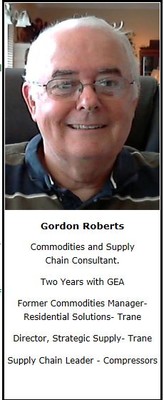
Editor's Note: CR4 would like to thank Gordon Roberts of GEA Consulting for contributing this blog entry in conjunction with Ed Eisermann and Doug Hunsley of GEA Consulting.

Reply

Interested in this topic? By joining CR4 you can "subscribe" to
this discussion and receive notification when new comments are added.

"Almost" Good Answers:

Check out these comments that don't yet have enough votes to be "official" good answers and, if you agree with them, vote them!
Guru
Hobbies - Musician - New Member

Join Date: Feb 2012
Posts: 523
Good Answers: 17
#1

Re: Strategic Sourcing:Time To Go Back To Win-Win?

08/12/2013 4:58 PM

Once upon a time, a farmer decided his mule was costing him too much to feed. He reckoned that he could save money by feeding the mule half as much. After a week of less feed, the farmer thought perhaps he could halve the feed ration once again. Another week went by and the farmer graphed out the data and liked the direction of the trend lines. He halved the feed ration again and chortled as that trend line continued just the way he wanted. Another week and another halving, and the data looked great! But the mule died.

The trouble with any target not based in reality is that reality has a way of making itself known in a big way. Reducing procurement costs to meet a fanciful percentage drives bad behaviors such as demanding price cuts (thus losing suppliers), buyers purchasing lower quality parts (thus driving up warranty costs and losing customers), buyers skipping verification steps (making your products susceptible to counterfeit parts and again driving up warranty costs and losing customers) and other behaviors which directly increase procurement costs or transfer the costs to other departments in the company.

If you need your supplier to lower his costs you must have a long term relationship. You have no control over what happens inside his facility so you have no control over his costs. Your choices are to take your business elsewhere or put him in position where he won't want to do business with you, both of which means sooner or later you will be spending resources looking for another supplier. The other option is to cultivate a relationship where the supplier actively helps you with your goals. That is truly strategic sourcing. The other stuff is just bullying.

Do you need cost reductions? Think long-term and lean out your entire system, not just pieces of it. Understand where all of your costs are and how they interact within your system. Understand what a true root cause is and what preventative and corrective actions are. Most importantly, follow through on all decisions and see if they had the intended effect of lowering the overall costs of the company, not just one piece of the company.

And that farmer? He applied for an MBA, was awarded credit for his life experiences, and went on to become a Professional Manager renown for making an organization show immediate turnaround within one or two quarters before moving on to the next position. (If only those companies had the sense to pay him more. Then they could have kept him on permanently and not totally collapsed within the year after he left!)

Reply Score 1 for Good Answer
Reply to Blog Entry

"Almost" Good Answers:

Check out these comments that don't yet have enough votes to be "official" good answers and, if you agree with them, vote them!

Previous in Blog: How Do You Define A World Class Business?   Next in Blog: Battle Heats up Over HFO-1234yf Flammability in Autos

Advertisement