Notes & Lines Blog

Notes & Lines

Notes & Lines discusses the intersection of math, science, and technology with performing and visual arts. Topics include bizarre instruments, technically-minded musicians, and cross-pollination of science and art.

Previous in Blog: Wait...What'd I Just Say?   Next in Blog: Vinyl: No Longer Just for Audiophiles?
Close
Close
Close
15 comments
Rate Comments: Nested

Acoustic Guitar Tonewoods

Posted July 26, 2014 12:00 AM by cheme_wordsmithy

I remember the day I received my acoustic guitar, and played it for the first time. In the moment, it seemed produced the most beautiful sound I had ever heard from an instrument of its kind. As my ears became attuned to more guitar music, I came to realize that the tonal quality of mine was nothing special. That realization drove me to delve deeper into the realm of acoustic guitar sound, and would help me find the right build for my next guitar a few years later.

As an amateur whittler and wood-worker, the beauty of wood is one of the reasons I think the acoustic guitar is such a neat instrument. Apart from maybe the body shape, the wood choice is the single most critical factor in determining the guitar's sound. What's more, different wood types can be chosen for each of the guitar's main body parts (top, back, sides, and bracing) to create a unique blends of look and tone.

Because wood comes from trees, which are living organisms, no two pieces are identical - each cut will have its own unique characteristics based on grain pattern, size, etc. A luthier (guitar-maker) must assess these characteristics to determine the musical quality of the wood piece for guitar building. Velocity of sound is perhaps the most important, and is a measure of how fast the wood transmits received energy. In other words, when you pluck a string, how will the wood respond to the energy of its vibration. Wood with a higher velocity of sound will generally have more colorful, lively, and accurate tones.

Characteristics like velocity of sound will vary by cut, but are also largely inherent in the wood based on its type (stereotypes of a sort, if you will). Different types of guitar woods (tonewoods as they are called) have different tonal qualities. The best tonewood for each musician will thus vary based on their playstyle. Here is an overview of some of the woods commonly used in guitar-making:

Spruce - Spruce is the acoustic guitar standard for soundboards, and comes in a number of species (Sitka being most commonly used). Spruce is a rigid, lightweight softwood with a high velocity of sound, and strikes a good balance of response for lighter and heavier playing styles.

Cedar - Cedar is a softwood with a balanced warm sound, and has a rich and quick response favorable to lighter playing styles.

Mahogany - As a topwood, mahogany (a hardwood) has a relatively low velocity of sound and high density, giving it a very mellow, warm, somewhat "punchy" sound suitable to country-blues music.

Koa - Koa is a hardwood similar to mahogany, with a solid tone throughout, with heavier emphasis on the mid-range.

Maple - Maple has a high degree of internal dampening and lower velocity of sound. This gives a heavy emphasis on the high range and a very bright tone, that contrasts well with the warm nature of finger-picking.

Rosewood - Rosewood is known for its high response rate, with a darker tone throughout most of its range, and a strong bottom end. It's broad range gives it presence in any style of music, finger-picking or pick-style playing.

The complexity of tonewoods goes well beyond this overview, as their are many more in this list I did not mention. In addition, the back, sides, top, and bracing on a guitar can all be made of different woods to create unique varieties of sound.

I'd be interested to hear what you fellow musician and/or woodworker CR4ers have to say. Do you own or have you ever made a wooden instrument? By sound or by application, do you have a favorite type of wood for your instrument?

Sources

Sweetwater.com

Davesguitar.com

Pantheonguitars.com

Tonewood Data Source

Reply

Interested in this topic? By joining CR4 you can "subscribe" to
this discussion and receive notification when new comments are added.
Guru

Join Date: Apr 2010
Location: About 4000 miles from the center of the earth (+/-100 mi)
Posts: 9913
Good Answers: 1141
#1

Re: Acoustic Guitar Tonewoods
07/26/2014 12:36 PM

I, like you, love guitars and have several of them. The last I acquired (brand unknown) was a bit more expensive than the others, but the tone is beautiful. Unfortunately, the others, which I was satisfied with, don't sound as good any more. Walking through antique stores, I can't pass up a guitar without picking it up and trying it out (if it has all its strings).

I have no experience at building guitars, although it does sound fascinating. I can see how denser wood would have a higher sound velocity and would raise the resonant frequencies the same way that helium raises the resonances of the human vocal tract.

I've read that the quality of the Stradivarius violins was attributed to the Maunder Minimum of sunspots that resulted in colder temperatures in Europe and denser wood from the trees that grew during that period.

http://www.sciencedirect.com/science/article/pii/S1125786504700314

Reply
Guru

Join Date: Mar 2007
Location: by the beach in Florida
Posts: 33392
Good Answers: 1817
#2

Re: Acoustic Guitar Tonewoods
07/26/2014 6:21 PM

I too have several guitars....1 acoustic 4 solid body....I have 2 solid bodies I built from parts...the bodies are what's called swamp ash and the necks are maple with rosewood face...

This one is the nicest, with quilted maple veneer on ash body, fender strat neck, seymour duncan pickups, special machines, quick release strap....I did buy plans to fabricate everything from scratch, but it's much easier to have them made...still no easy task to build as everything must be exactly precise....the body was $300, the neck $150, nothing about it was cheap or easy....this was actually my second build, the first was all black and a different setup, still basically a strat....

I also have a collection of exotic hardwoods....including tone woods, you can tell a good tone wood when you knock them together you get a high pitched plink....rosewood, ebony, I think are the best....I have several pieces of all you mentioned, and dozens more....

__________________
All living things seek to control their own destiny....this is the purpose of life
Reply
Guru
Popular Science - Weaponology - New Member United Kingdom - Member - New Member

Join Date: May 2007
Location: Harlow England
Posts: 16512
Good Answers: 670
#3

Re: Acoustic Guitar Tonewoods

07/27/2014 9:15 AM

I wonder what Yew would be like

Del

__________________
health warning: These posts may contain traces of nut.
Reply
Guru

Join Date: Oct 2008
Posts: 42355
Good Answers: 1693
#4

Re: Acoustic Guitar Tonewoods

07/27/2014 12:12 PM

Question for the general forum. I know that the different types of wood used greatly influence the sound quality of acoustic instruments but does the wood have that much to do with the quality of solid body guitar sound? It would seem to have more to do with quality of the pickups/strings/machines/frets and their correct placement.

BTW, nice work SE.

Oh, and Del, I expect that the quality of Yew used might only slightly affect the quality of the sound the bow makes when it snaps.

I toyed, briefly, with piezoelectric pickups in the '80s when PVDF piezo-films first became available. Never got very far with them. They just couldn't compete with copper coils.

Reply
Guru

Join Date: Mar 2007
Location: by the beach in Florida
Posts: 33392
Good Answers: 1817
#5
In reply to #4

Re: Acoustic Guitar Tonewoods

07/27/2014 5:41 PM

It wooden't seem like it wood, but it definitely does....The resonance and tone are effected by the wood, the mounting of strings, the shape and material of the nut, bridges and frets, tailpiece mounting and fine tuning mounts, tremolo mount and spring tension...another thing is the weight....that guitar gets heavy after a while...so a light solid wood is needed....one thing I struggle with is string height, the higher the strings, the better the tone, but the harder it is to play....can be very difficult to reach a happy median...

http://www.300guitars.com/2009/09/11/guitars-does-the-wood-really-matter/

http://en.wikipedia.org/wiki/Electric_guitar

__________________
All living things seek to control their own destiny....this is the purpose of life
Reply
Guru

Join Date: Oct 2008
Posts: 42355
Good Answers: 1693
#6
In reply to #5

Re: Acoustic Guitar Tonewoods

07/27/2014 6:30 PM

I expected that it wood make a difference. Density and all. Sound travels faster through dense material.

It's just that I'm a guitar holder, not a guitar player.

My friend who is a guitar player says the same thing. Action is the most difficult thing to balance for a picker. Then pickups, if it's electric and tuners (machines) come next.

Reply
Guru

Join Date: Mar 2007
Location: by the beach in Florida
Posts: 33392
Good Answers: 1817
#7
In reply to #6

Re: Acoustic Guitar Tonewoods

07/27/2014 7:27 PM

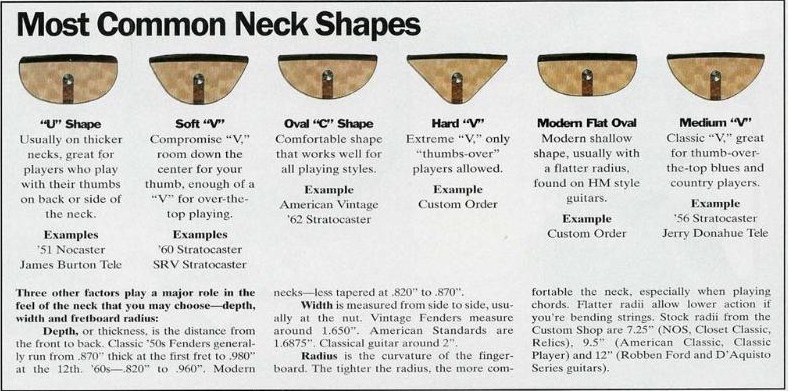
While I would say I play more with it than play it, I would agree the action is the most important, that is of course after you have gotten every mechanical aspect of the guitar correct....I'm never quite satisfied, but the black is my favorite to play with....it's the neck....the black is a little more narrow....

http://mycoolguitars.com/guitar-neck-profiles-and-measurements/

__________________
All living things seek to control their own destiny....this is the purpose of life
Reply
Guru

Join Date: Apr 2010
Location: About 4000 miles from the center of the earth (+/-100 mi)
Posts: 9913
Good Answers: 1141
#8
In reply to #4

Re: Acoustic Guitar Tonewoods

07/29/2014 4:33 PM

I'm strictly an Acoustic guy, myself, although I do have an Acoustic Electric which uses a piezoelectric bridge pickup and has a built in preamp/equalizer.

Reply
Guru

Join Date: Oct 2008
Posts: 42355
Good Answers: 1693
#9
In reply to #8

Re: Acoustic Guitar Tonewoods

07/29/2014 4:45 PM

Nothing wrong with acoustics.

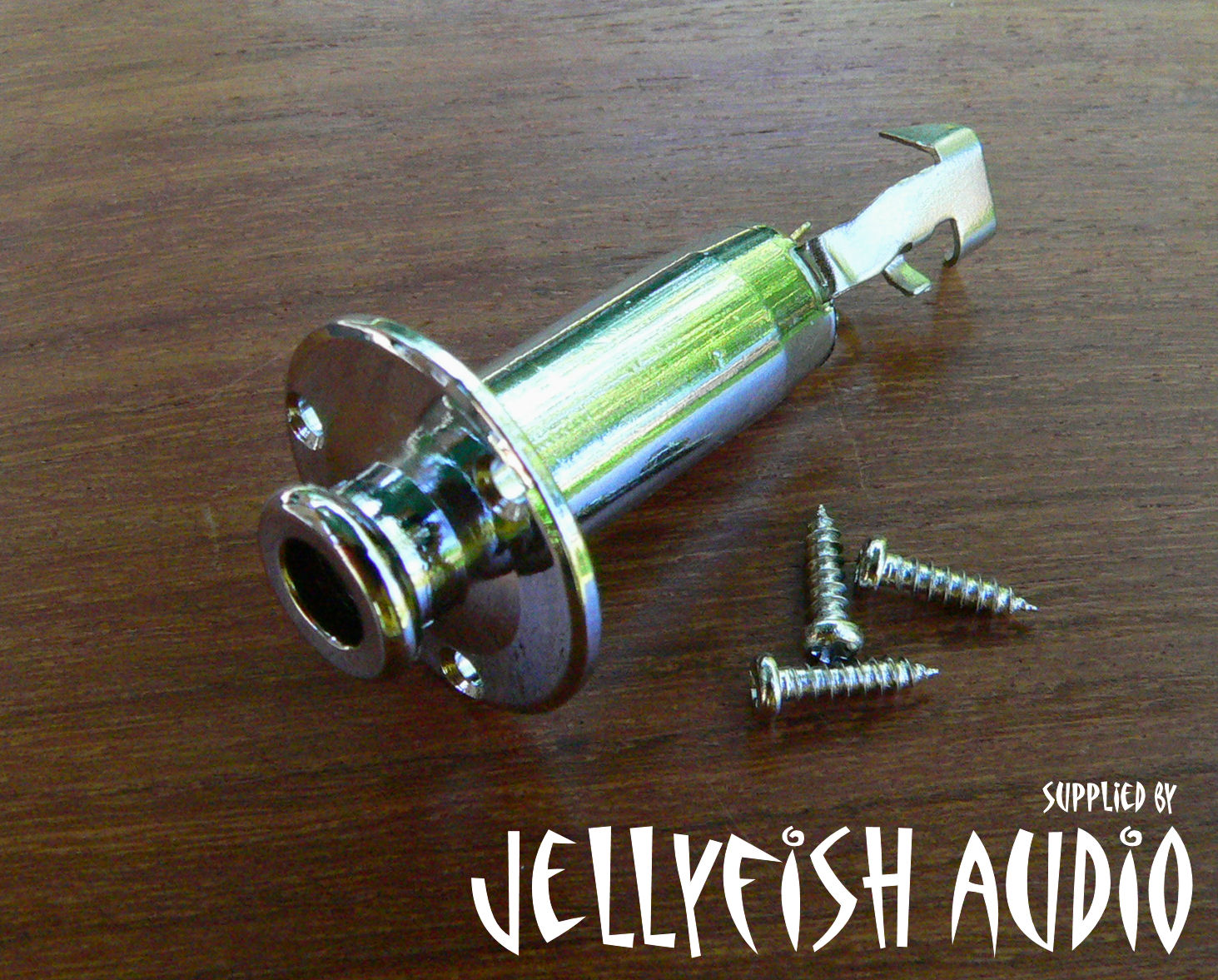
I was in a band once with a guy who had pickups put in his acoustic Ibanez by a craftsman we knew. He used a combo strap button/plug that I thought was awesome. No need to drill a separate hole.

Reply
Guru
Hobbies - Musician - New Member United Kingdom - Member - New Member Engineering Fields - Mechanical Engineering - New Member Engineering Fields - Transportation Engineering - New Member

Join Date: Mar 2007
Location: England
Posts: 951
Good Answers: 48
#10
In reply to #9

Re: Acoustic Guitar Tonewoods

07/29/2014 6:06 PM

I use endpin jacks because I don't like drilling extra holes in my instruments. They are not particularly expensive instruments, but I still don't like to mess with them too much, so I also don't fit on board preamps. I'm also not too keen on under-saddle piezo pickups, so I use piezo discs, but you have to be very careful where and how they are placed, and the 'sweetspot(s)' can be different from one instrument to the next. It has taken quite a bit of trial and error (and several broken strings!), but I have now done my baritone and bass ukuleles and located the pickups in the 6-string guitar. I am dreading the 12-string!

The best is probably a combination of piezo and electromagnetic pickups and a microphone, so I will be experimenting with various configurations to see if I can come up with something really good.

Reply
Guru

Join Date: Feb 2008
Location: Large hole formally occupied by furry woodland creature.
Posts: 3385
Good Answers: 97
#11

Re: Acoustic Guitar Tonewoods

08/05/2014 1:56 PM

Way back when I was a kid, I "experimented" with my fathers Gibson acoustic. Using the receiver from a phone acting as a "pickup" connected to a small amplifier. I moved the pickup around on the sound board while my father played and found that the optimal position for the pickup was approximately where the "F" holes are located on that (Arch top?) style of guitar. Could this be why F holes are located at that position?

__________________
CRTL-Z
Reply
Guru
Hobbies - Musician - New Member United Kingdom - Member - New Member Engineering Fields - Mechanical Engineering - New Member Engineering Fields - Transportation Engineering - New Member

Join Date: Mar 2007
Location: England
Posts: 951
Good Answers: 48
#12
In reply to #11

Re: Acoustic Guitar Tonewoods

08/05/2014 3:37 PM

Not necessarily, it doesn't really matter too much where the hole is as far as the sound is concerned. The location of the F-holes on archtop guitars is more to do with the originators (Orville Gibson, etc?) following what had been done before on other archtop instruments, eg. those in the violin/cello family (although it might also have been to retain strength and rigidity in the un-braced soundboard).

Flat-tops usually have the hole in the middle at the end of the fretboard simply because that's the way it has always been done since the days of lutes, ouds and vihuelas. In fact, it is not really the best place to put the hole, and it compromises the resonance of the soundboard and complicates the bracing in a steel-string guitar. That's why some luthiers are now putting the holes to the side, or either side, at the top of the bout.

Reply
Guru

Join Date: Feb 2008
Location: Large hole formally occupied by furry woodland creature.
Posts: 3385
Good Answers: 97
#13
In reply to #12

Re: Acoustic Guitar Tonewoods

08/05/2014 4:04 PM

Thank you for the enlightenment. Could this be why Martin uses the "V" style bracing?

__________________
CRTL-Z
Reply
Guru
Hobbies - Musician - New Member United Kingdom - Member - New Member Engineering Fields - Mechanical Engineering - New Member Engineering Fields - Transportation Engineering - New Member

Join Date: Mar 2007
Location: England
Posts: 951
Good Answers: 48
#14
In reply to #13

Re: Acoustic Guitar Tonewoods

08/06/2014 12:39 PM

I haven't come across "V" style bracing. Martin invented 'x' bracing (or were at least involved in the early development of it) which almost everyone uses these days. The bracing is very important to retain strength in the body without ruining the tone of the soundboard. I have never been entirely convinced that the 'x' brace is the best solution, but then again, who am I to argue with C.F. Martin? They've been around a long time, and their guitars do sound rather good.

Reply
Participant

Join Date: Jan 2015
Posts: 2
#15
In reply to #14

Re: Acoustic Guitar Tonewoods

01/09/2015 11:09 PM

An Interesting thing to do is to lay the quitar in your lap and just hold it, while listening to the stereo. It is amazing the amount of vibrations the guitar picks up from the sound.

Reply
Reply to Blog Entry 15 comments
Copy to Clipboard

Users who posted comments:

Hardknock (1); Holzfeller (3); lyn (3); Rixter (2); SolarEagle (3); Unredundant (2); user-deleted-1105 (1)

Previous in Blog: Wait...What'd I Just Say?   Next in Blog: Vinyl: No Longer Just for Audiophiles?

Advertisement