|
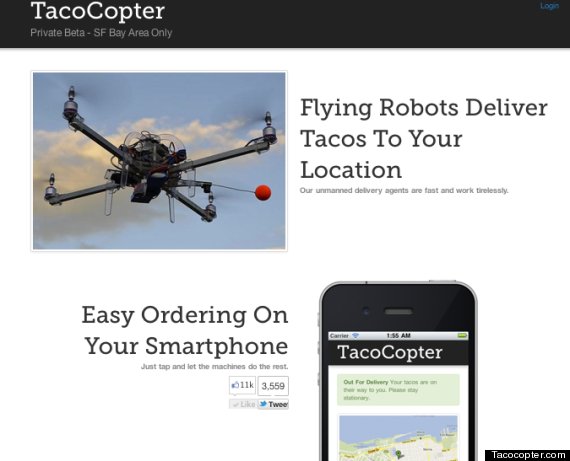 I kind of thought we were over this drone delivery concept. In
2013, big name companies promised to revolutionize home delivery with the
deployment of delivery drones. Amazon could fulfill orders in the same day for
right-sized products. A Dominos pizza flew
straight from the oven to your front door. Other enterprising individuals used
them to smuggle drugs into a prison. I kind of thought we were over this drone delivery concept. In
2013, big name companies promised to revolutionize home delivery with the
deployment of delivery drones. Amazon could fulfill orders in the same day for
right-sized products. A Dominos pizza flew
straight from the oven to your front door. Other enterprising individuals used
them to smuggle drugs into a prison.
The suspected hazards from widespread drone delivery use are
clear. How do we ensure civilian safety while cargo-carrying drones buzz
overhead? How does the drone land for a delivery with four dangerous rotors?
How does airspace become regulated on the delivery drone scale? What happens to
a drone that breaks down in midair? Will
people accept the constant buzzing of quadcopters carrying who-knows-what over
their houses? Are they the most efficient use of resources for delivering
irrelevant commodities? Will people steal drones to harvest parts and scrap
metal, or redirect them to steal cargo?
Despite these problems, some of which ultimately led to the
FAA banning
the use drones (for now) for Amazon delivery, the concept won't go away.
Some non-profit organizations continue to investigate how feasible UAV delivery
could be for their operations. The United Arab Emirates needs to spend its oil
money somewhere, so high-tech drones
with biometric analyses will deliver drivers licenses, passports, and other
documents to citizens in an official capacity. In the Netherlands, a drone-based
defibrillator can be flown to remote patients. After it lands, users can
fold away the rotors and carry the drone to the patient. A camera, microphone
and speaker allow the doctor or paramedic to instruct how the defibrillator
should be used.
 At the same time businesses are upgrading their technology
to alleviate some of the issues that plagued the first waves of drone delivery.
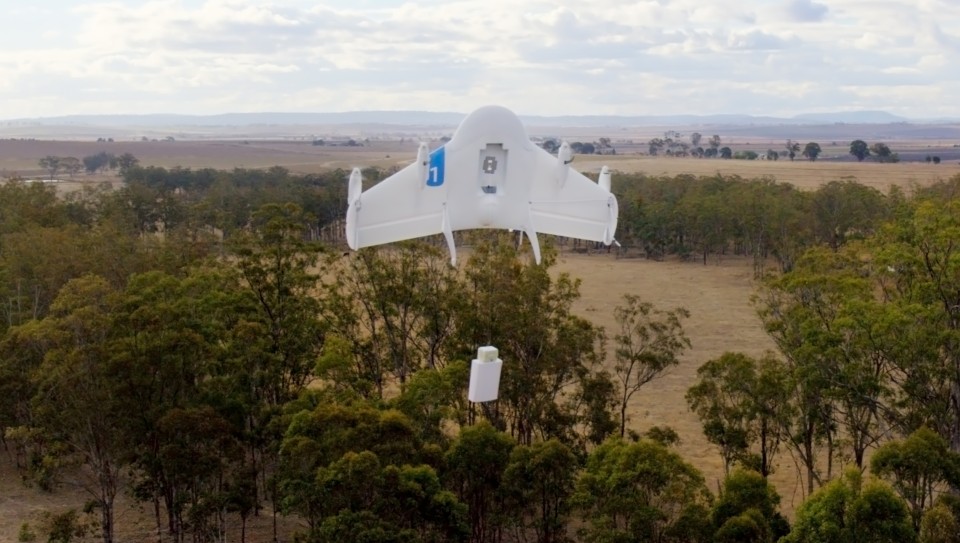
Google has developed Google Wing, a
drone aircraft that lowers packages to the ground via winch. This decreases the
chance for injury to a person as well as damage to the UAV. At the same time, Matternet, a company which claims to be the most
advanced of drone manufacturers and operators, promises a drone that adapts to
changing conditions with a network of support stations every 20 miles to ensure
drone maintenance and minimizes the chance for lost packages. Matternet also
hopes to make direct package delivery available to everyone via smartphone
apps. At the same time businesses are upgrading their technology
to alleviate some of the issues that plagued the first waves of drone delivery.
Google has developed Google Wing, a
drone aircraft that lowers packages to the ground via winch. This decreases the
chance for injury to a person as well as damage to the UAV. At the same time, Matternet, a company which claims to be the most
advanced of drone manufacturers and operators, promises a drone that adapts to
changing conditions with a network of support stations every 20 miles to ensure
drone maintenance and minimizes the chance for lost packages. Matternet also
hopes to make direct package delivery available to everyone via smartphone
apps.
Because of the rapidly changing state of drone delivery
safety and the clear benefits they can offer, the FAA has allowed such
small-scale drones, but with
crippling rules: the drone is less than 55 lb., flies lower than 200 feet,
stays far away from airports and heliports, and never leaves the line-of-sight
of the pilot. Obviously it's the last contingency that makes delivery drones
useless, but the FAA has at least shown the awareness that they can't keep
delivery drones grounded forever.
The future of drone delivery could be this: you're hustling
along, trying to catch the 8:20 a.m. subway to midtown, but the caffeine crunch
has hit. Pull out the phone, order a cup of coffee, and hear the buzz of a
drone creeping up. It has delivered a warm cup of coffee from the café down the
street in minutes. This is as close to teleportation as we may ever get.
| 


 Re: Drone Delivery is Still a Thing


"Almost" Good Answers: