|
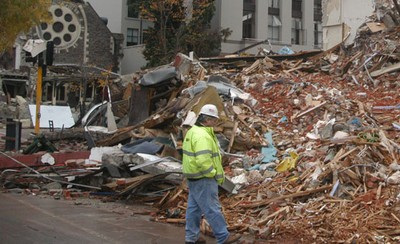 On Monday, November 14, 2016, just after midnight (New Zealand time), two nearly simultaneous earthquakes, of 7.8 and 6.2 magnitudes respectively, hit New Zealand’s South Island, northeast of Christchurch. With only two casualties, these quakes have a much smaller loss of life than the 6.3 magnitude quake to hit Christchurch in 2011, which killed 185 people.
In May of 2016, New Zealand’s Building (Earthquake-prone buildings) Act was amended, largely to “establish a more effective and nationally consistent framework for identifying and remediating earthquake-prone buildings.” The present devastation of New Zealand’s infrastructure highlights the need for such an amendment. Unfortunately, the act comes too late to assist much with this current earthquake, as the plan to identify and strengthen at-risk buildings has a timeline of fifteen years.
Luckily, New Zealand heeded the unfortunate lesson provided by the 2011 earthquake, so the country may be more prepared for the next quake that strikes the region. The same could not be said of Italy in the gap between the 2009 L’Aquila quake and the 6.2 magnitude quake that hit the Apennine region in August 2016.
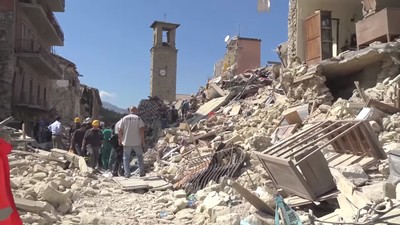 One particular writer, Dacia Maraini, asked after the 2016 quake, “Can it be that we have not built smartly, anticipating dangers, taking into account earthquake-resistant standards that exist and are very efficient?” Others agree with Maraini, and many wonder why action was not taken after the 2009—or even the 2004 quake—to improve building methods.
One significant difference between the after-effects of the two countries may indicate why one country reacted with plans to revisit earthquake-related building standards, while the other did not. After the 2011 quake in New Zealand, the media focused on “a six-story office building that collapsed and killed 115 people,” which was reportedly “poorly designed by an inexperienced engineer, inadequately constructed, and should never have been issued a building permit.”
Meanwhile in L’Aquila, seven scientists and disaster experts were charged with manslaughter for failing to prevent the devastation that resulted from the 2009 quake. The scientists in Italy were cleared, while the engineer in New Zealand was condemned by the public. Likely as a result of that condemnation, building standards changed in New Zealand, while Italy’s remained stagnant despite new research indicating the “high vulnerability of both older and some more recently RC constructed facilities [was] due to the presence of poor-quality materials, inadequate construction detailing, and wrong repair or strengthening interventions.”
After these two earthquakes, hopefully we, as a global community, will be able to make large strides in maintaining earthquake-resistant standards in the years to come, regardless of the media’s focus.
| 


 Re: Media Focus Shapes Earthquake Standards Prior to November 14 Earthquake


