Turn your thermal imager at the sky, even in the daytime, and read temperatures way below zero. Everything at ambient temperatures radiates energy into space, providing the sky is clear.
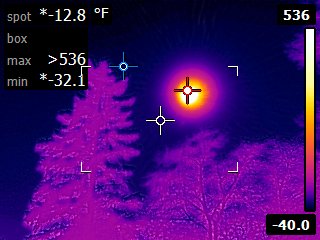
https://www.robotroom.com/Flir-Infrared-Camera-2.html
A heat engine can utilize the ambient environment as a heat source and the sky as a heat sink. There's not a large amount of power here, but a simple device has been built that generates about 25 mW per square meter, driving an LED as a demonstration. It may be enough to power remote sensors and, unlike solar, it works at night.

https://www.cell.com/joule/fulltext/S2542-4351(19)30412-X


 Generate Light from Darkness

 Re: Generate light from Darkness


