Robot dexterity
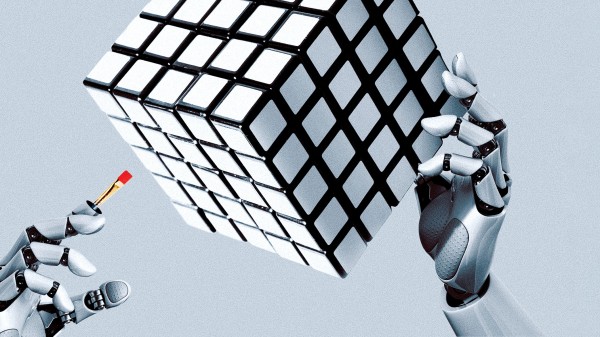
..."One such project is Dactyl, a robot that taught itself to flip a toy building block in its fingers. Dactyl, which comes from the San Francisco nonprofit OpenAI, consists of an off-the-shelf robot hand surrounded by an array of lights and cameras. Using what’s known as reinforcement learning, neural-network software learns how to grasp and turn the block within a simulated environment before the hand tries it out for real. The software experiments, randomly at first, strengthening connections within the network over time as it gets closer to its goal."...
New-wave nuclear power

..."New nuclear designs that have gained momentum in the past year are promising to make this power source safer and cheaper. Among them are generation IV fission reactors, an evolution of traditional designs; small modular reactors; and fusion reactors, a technology that has seemed eternally just out of reach. Developers of generation IV fission designs, such as Canada’s Terrestrial Energy and Washington-based TerraPower, have entered into R&D partnerships with utilities, aiming for grid supply (somewhat optimistically, maybe) by the 2020s."...
Predicting preemies

..." By sequencing the free-floating RNA in the mother’s blood, Quake can spot fluctuations in the expression of seven genes that he singles out as associated with preterm birth. That lets him identify women likely to deliver too early. Once alerted, doctors can take measures to stave off an early birth and give the child a better chance of survival."...
Custom cancer vaccines

..."By using the body’s natural defenses to selectively destroy only tumor cells, the vaccine, unlike conventional chemotherapies, limits damage to healthy cells. The attacking immune cells could also be vigilant in spotting any stray cancer cells after the initial treatment.
The possibility of such vaccines began to take shape in 2008, five years after the Human Genome Project was completed, when geneticists published the first sequence of a cancerous tumor cell.
Soon after, investigators began to compare the DNA of tumor cells with that of healthy cells—and other tumor cells. These studies confirmed that all cancer cells contain hundreds if not thousands of specific mutations, most of which are unique to each tumor.
A few years later, a German startup called BioNTech provided compelling evidence that a vaccine containing copies of these mutations could catalyze the body’s immune system to produce T cells primed to seek out, attack, and destroy all cancer cells harboring them.
In December 2017, BioNTech began a large test of the vaccine in cancer patients, in collaboration with the biotech giant Genentech. The ongoing trial is targeting at least 10 solid cancers and aims to enroll upwards of 560 patients at sites around the globe."...
...and more
https://www.technologyreview.com/lists/technologies/2019/


 Ten Breakthrough Technologies in 2019


 Re: Ten Breakthrough Technologies in 2019


