Previous in Forum: Real or fake?   Next in Forum: Crooked lines
Close
Close
Close
27 comments
Rate Comments: Nested
Guru

Join Date: Apr 2010
Location: About 4000 miles from the center of the earth (+/-100 mi)
Posts: 9912
Good Answers: 1141

Mapping exoplanet surfaces with solar gravitational telescope

10/13/2022 9:18 PM

This is really far out!

The gravity of the sun focuses light from a distant object. The resolution of a telescope is related to its objective size and using the sun's gravitational field as a telescope objective results in a resolution that could map features on an exoplanet. (Gravity is a very poor-quality lens, but can easily be corrected.)

It just might work. See what you think...

https://youtu.be/4d0EGIt1SPc

Register to Reply
Interested in this topic? By joining CR4 you can "subscribe" to
this discussion and receive notification when new comments are added.

Good Answers:

These comments received enough positive votes to make them "good answers".
Guru

Join Date: Mar 2007
Location: by the beach in Florida
Posts: 33392
Good Answers: 1817
#1

Re: Mapping exoplanet surfaces with solar gravitational telescope

10/13/2022 11:16 PM

Maybe we could try it on Jupiter first....?

Jupiter's diameter is about 11 times that of the Earth's and the Sun's diameter is about 10 times Jupiter's...

__________________
All living things seek to control their own destiny....this is the purpose of life
Register to Reply
Guru

Join Date: Aug 2005
Location: Hemel Hempstead, UK
Posts: 5826
Good Answers: 322
#2
In reply to #1

Re: Mapping exoplanet surfaces with solar gravitational telescope

10/14/2022 6:57 AM

If I understood it correctly: the focal length of Jupiter would be much longer than that of the sun.

Maybe if we were lucky we could use the gravitational field of a small planet orbiting a nearby star.

__________________
If you spend all your time looking for people and things to complain about: trust me, you will find plenty to complain about.
Register to Reply
Guru

Join Date: Apr 2010
Location: About 4000 miles from the center of the earth (+/-100 mi)
Posts: 9912
Good Answers: 1141
#3

Re: Mapping exoplanet surfaces with solar gravitational telescope

10/14/2022 9:40 AM

There are a number of tough engineering problems. Besides surviving a close pass of the sun with a giant delicate solar sail, there is the tricky part of arriving 550 AU out within a 1.3 km location.

But wouldn't it be awesome to image an exoplanet and see city lights!

Register to Reply
Guru

Join Date: Mar 2007
Location: by the beach in Florida
Posts: 33392
Good Answers: 1817
#4

Re: Mapping exoplanet surfaces with solar gravitational telescope

10/14/2022 10:28 AM

Well if the lensing effect is around the planet, why couldn't we have an orbiting telescope that would gather the lensing effect as it orbited the planet at the proper angle and distance and build a picture for each rotational trip...?

__________________
All living things seek to control their own destiny....this is the purpose of life
Register to Reply
Guru

Join Date: May 2006
Location: Placerville, CA (38° 45N, 120° 47'W)
Posts: 6215
Good Answers: 248
#7
In reply to #4

Re: Mapping exoplanet surfaces with solar gravitational telescope

10/15/2022 12:11 AM

Interesting idea. What if the planet doing the lensing was Earth?

Most illustrations of gravitational lensing I've seen show parallel rays prior to the "lens" bending and converging to a focus after passing the "lens". Of course some bending of the rays will have occurred before the rays reach the "lens", but most of the bending will occur as the rays pass the "lens", so the magnification will be far less to a telescope orbiting the "lens".

Then, as I understand it, the plane of that orbit would have to be precisely normal to the line from the center of the "lens" to the object being studied.

__________________
Teaching is a great experience, but there is no better teacher than experience.
Register to Reply
Guru
Engineering Fields - Electrical Engineering - Been there, done that. Engineering Fields - Control Engineering - New Member

Join Date: Dec 2008
Location: Long Island NY
Posts: 15602
Good Answers: 982
#11
In reply to #7

Re: Mapping exoplanet surfaces with solar gravitational telescope

10/15/2022 10:50 AM

The sun is the only mass we might be able to use this gravitational lensing effect to make a high-resolution telescope. With gravitational lensing, the focal point for our sun will be at 540 AU. Neptune's orbit radius is 30.1 AU. The mass of the Earth is considerably less than the sun so its focal length will be even farther than 540 AU. At any of these distances, the only thing one might be in a really slow orbit around is the sun.

__________________
"Don't disturb my circles." translation of Archimedes last words
Register to Reply
Guru

Join Date: Aug 2005
Location: Hemel Hempstead, UK
Posts: 5826
Good Answers: 322
#9
In reply to #4

Re: Mapping exoplanet surfaces with solar gravitational telescope

10/15/2022 5:30 AM

You have to get to the focal point.

__________________
If you spend all your time looking for people and things to complain about: trust me, you will find plenty to complain about.
Register to Reply
Guru

Join Date: Mar 2007
Location: by the beach in Florida
Posts: 33392
Good Answers: 1817
#12
In reply to #9

Re: Mapping exoplanet surfaces with solar gravitational telescope

10/15/2022 12:19 PM

But the lensing effect is contained in a ring around the planet...if you had a string of cubesat's observing the ring then you could gather all the information, there is no need to go to the focal point, you can focus the gathered information into a focal point with a software program...

__________________
All living things seek to control their own destiny....this is the purpose of life
Register to Reply
Guru
Engineering Fields - Electrical Engineering - Been there, done that. Engineering Fields - Control Engineering - New Member

Join Date: Dec 2008
Location: Long Island NY
Posts: 15602
Good Answers: 982
#13
In reply to #12

Re: Mapping exoplanet surfaces with solar gravitational telescope

10/15/2022 3:49 PM

And all of the animals in a mirage can get a cool drink anytime they want.

__________________
"Don't disturb my circles." translation of Archimedes last words
Register to Reply
Guru

Join Date: Mar 2007
Location: by the beach in Florida
Posts: 33392
Good Answers: 1817
#14
In reply to #13

Re: Mapping exoplanet surfaces with solar gravitational telescope

10/15/2022 4:08 PM

__________________
All living things seek to control their own destiny....this is the purpose of life
Register to Reply
Guru

Join Date: Aug 2005
Location: Hemel Hempstead, UK
Posts: 5826
Good Answers: 322
#15
In reply to #12

Re: Mapping exoplanet surfaces with solar gravitational telescope

10/17/2022 7:28 AM

The lensing effect does not increase the density of information where it occurs: there is no gain to be made by gathering data there.

__________________
If you spend all your time looking for people and things to complain about: trust me, you will find plenty to complain about.
Register to Reply
Guru
Engineering Fields - Electrical Engineering - Been there, done that. Engineering Fields - Control Engineering - New Member

Join Date: Dec 2008
Location: Long Island NY
Posts: 15602
Good Answers: 982
#5

Re: Mapping exoplanet surfaces with solar gravitational telescope

10/14/2022 12:21 PM

That is an interesting proposal. The kinematic accuracy to attempt this is truly mind-numbing. Just think of the tiny error window needed to gravity assist between Mercury's orbit and Sol in order to be on the correct trajectory to align with the Sol and a likely planetary star system.

I can think of a few critical points not addressed that might kill this plan. While it's true that a solar sail does not require fuel to get out to 550+ AU, the ion drives proffered for steering adjustments do need something to ionize and a power source to accelerate the ions. That power source can't be solar cells at that distance from the sun. Whatever mystery power source driving those ion thrusters will presumably also power the communication of vastly more information than Voyager can communicate now.

Still, this is an intriguing idea.

__________________
"Don't disturb my circles." translation of Archimedes last words
Register to Reply
Guru

Join Date: Apr 2010
Location: About 4000 miles from the center of the earth (+/-100 mi)
Posts: 9912
Good Answers: 1141
#6
In reply to #5

Re: Mapping exoplanet surfaces with solar gravitational telescope
10/14/2022 1:15 PM

Yeah, I'm thinking they would definitely need a nuclear-powered source. And maybe a magnetic sail of some sort would have a better chance of lasting for 35 years than a material sail 100 atoms thick the size of a football stadium. The slingshot past the sun is necessary to get out that far in a short amount of time.

Magnetic sail - Wikipedia

NASA has done some amazing things. Someday they might just pull this off.

Register to Reply
Guru

Join Date: Mar 2007
Location: by the beach in Florida
Posts: 33392
Good Answers: 1817
#8

Re: Mapping exoplanet surfaces with solar gravitational telescope
10/15/2022 4:16 AM
__________________
All living things seek to control their own destiny....this is the purpose of life
Register to Reply
Guru

Join Date: Apr 2010
Location: About 4000 miles from the center of the earth (+/-100 mi)
Posts: 9912
Good Answers: 1141
#10

Re: Mapping exoplanet surfaces with solar gravitational telescope

10/15/2022 8:24 AM

We have an amazing telescope. Our problem is aiming it.

Register to Reply
Guru
Engineering Fields - Electrical Engineering - Been there, done that. Engineering Fields - Control Engineering - New Member

Join Date: Dec 2008
Location: Long Island NY
Posts: 15602
Good Answers: 982
#16

Re: Mapping exoplanet surfaces with solar gravitational telescope

10/17/2022 10:25 AM

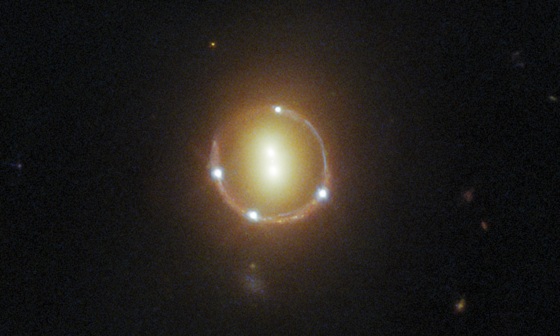
Before somebody puts in an enormous effort to attempt this deep-space imaging I'd like to see an accidental Einstein ring image reconstituted as this idea claims. I realize a controlled raster scanning cannot happen with an accidental alignment.

Here is a Hubble capture of an Einstein ring. What can this fuzzy ring with four dots tell us after imaging reconstruction?

__________________
"Don't disturb my circles." translation of Archimedes last words
Register to Reply
Guru

Join Date: Mar 2007
Location: by the beach in Florida
Posts: 33392
Good Answers: 1817
#17
In reply to #16

Re: Mapping exoplanet surfaces with solar gravitational telescope
10/17/2022 12:08 PM

__________________
All living things seek to control their own destiny....this is the purpose of life
Register to Reply
2
Guru

Join Date: Apr 2010
Location: About 4000 miles from the center of the earth (+/-100 mi)
Posts: 9912
Good Answers: 1141
#18

Re: Mapping exoplanet surfaces with solar gravitational telescope
10/17/2022 7:31 PM

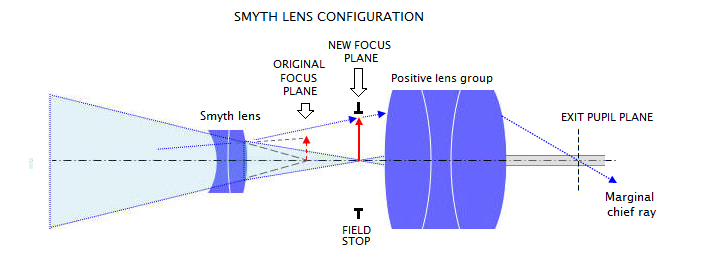
Here are some more details...

Register to Reply Good Answer (Score 2)
Guru

Join Date: May 2006
Location: Placerville, CA (38° 45N, 120° 47'W)
Posts: 6215
Good Answers: 248
#19
In reply to #18

Re: Mapping exoplanet surfaces with solar gravitational telescope

10/17/2022 7:46 PM

Really interesting! Thanks!

__________________
Teaching is a great experience, but there is no better teacher than experience.
Register to Reply
Power-User

Join Date: Feb 2020
Posts: 482
Good Answers: 7
#20

Re: Mapping exoplanet surfaces with solar gravitational telescope

10/18/2022 3:06 PM

If I remember right, the starlight did not bend til it was very close to the surface of the sun. Why assume such a much larger lens? If the lens does exist, it will be very thin.

The star light that the sun bent, could have been from the density of the atmosphere. And that bending might vary with that atmosphere. One should verify this concept with a non atmospheric object first. Has any bending from the moon been detected? A planet with an ordered atmosphere might even improve the concept. Any bending of Neptune or Uranus been done?

Have any experimented with a density gradient lens?

__________________
Light is only half of what you think it is.
Register to Reply Off Topic (Score 5)
Guru
Engineering Fields - Electrical Engineering - Been there, done that. Engineering Fields - Control Engineering - New Member

Join Date: Dec 2008
Location: Long Island NY
Posts: 15602
Good Answers: 982
#21
In reply to #20

Re: Mapping exoplanet surfaces with solar gravitational telescope

10/18/2022 3:35 PM

This bending of light is part of Einstein's theory of general relativity. That's why the occasionally observed ring around a massive object is called an Einstein ring. This was part of the observed proof for his theory a century ago.

__________________
"Don't disturb my circles." translation of Archimedes last words
Register to Reply Off Topic (Score 5)
Guru

Join Date: Mar 2007
Location: by the beach in Florida
Posts: 33392
Good Answers: 1817
#22

Re: Mapping exoplanet surfaces with solar gravitational telescope

10/18/2022 4:16 PM

A neutron star seems like it would be the best bang-for-buck Einstein ring telescope...

..."Some of the closest known neutron stars are RX J1856.5−3754, which is about 400 light-years from Earth, and PSR J0108−1431 about 424 light years.[66] RX J1856.5-3754 is a member of a close group of neutron stars called The Magnificent Seven. Another nearby neutron star that was detected transiting the backdrop of the constellation Ursa Minor has been nicknamed Calvera by its Canadian and American discoverers, after the villain in the 1960 film The Magnificent Seven. This rapidly moving object was discovered using the ROSAT/Bright Source Catalog.

Neutron stars are only detectable with modern technology during the earliest stages of their lives (almost always less than 1 million years) and are vastly outnumbered by older neutron stars that would only be detectable through their blackbody radiation and gravitational effects on other stars."...

Maybe there is a neutron star focal point that is closer to Earth than 650 au or 6.042e+10 miles....?

..."Additionally, the star loses a lot of mass in the process and winds up only about 1.5 times the Sun’s mass. But all that matter has been compressed to an object about 10 miles (16 kilometers) across. A normal star of that mass would be more than 1 million miles (1.6 million km) across. "....

__________________
All living things seek to control their own destiny....this is the purpose of life
Register to Reply
Guru

Join Date: Mar 2007
Location: by the beach in Florida
Posts: 33392
Good Answers: 1817
#23
In reply to #22

Re: Mapping exoplanet surfaces with solar gravitational telescope

10/19/2022 2:28 AM

What if we had one gravitational lens at the focal point of another gravitational lens...? What if we had a line of them across the universe, would we be able to see forever?

https://www.telescope-optics.net/eyepiece1.htm

https://www.atmos-software.it/Atmos8_9.html

__________________
All living things seek to control their own destiny....this is the purpose of life
Register to Reply
Guru

Join Date: Mar 2007
Location: by the beach in Florida
Posts: 33392
Good Answers: 1817
#24
In reply to #23

Re: Mapping exoplanet surfaces with solar gravitational telescope

10/19/2022 6:33 AM

__________________
All living things seek to control their own destiny....this is the purpose of life
Register to Reply
Power-User

Join Date: Feb 2020
Posts: 482
Good Answers: 7
#25

Re: Mapping exoplanet surfaces with solar gravitational telescope

10/19/2022 11:43 PM

I believe the light(EM) we detect, and the images we form from it, have detection and processing artifacts within them. Some of these artifacts are physical and come from the inertia and reaction of our detectors. And some artifacts are from processing, from the equations we use to electronically process information. This adds and subtracts information to the image. We try to filter these artifacts, but some are amongst the image data and come with it. Which is not there in reality.

Believe it or not, the sine we get from detection is 1/2 artifact, and is reaction to the emission. Do you remember Faraday induction? If only one M pole were passed thru the loop.......that would be like radio induction. The singular M pole curls, aligns and charges the loop free charge as it passes, then the loop charge uncurls and relaxes after it is gone. The charge field created, takes the same duration to relax. Resonance. Emission is a 1/2 period strobe containing solitary M pole, with a one-direction E field. It induces a M torque and an E torque on the free charge. This alignment cause a small field around the antenna. The induced field is strongest at the end of the pass. An emission is a duty cycle sawtooth. Now the field collapses, at the rate of the induction. Giving a sine voltage at the end of the element. The antenna is a linear coil in detection mode. Being induced broadside. However, when voltage fed from the end, in emission mode, the antenna is a non linear capacitor, which like a diode, only allows the field to collapse out in space and not return to the antenna. Space has no impedance and the outward collapse happens in an instant, leaving the antenna in a neutral state, ready for the next charging which takes 1/2 period. In emission mode, the antenna is an anti resonance device. I can show you how this free charge on the element can be dis-associated so quickly, if you are interested.

Fortunately this sine artifact is a mirror and can be used for an advantage. If we could nullify that mirror, that reaction, we could easily double the bandwidth of a rf channel. Easy full duplex on one frequency.

Radio is not a wave, it's a 50% duty sawtooth strobe. 1/2 of the time the frequency is un-used. This can be filled in with a returning emission. All we need is a non-reactive antenna. For RF, the detector is the antenna. The information detector(change in RF) comes later in the radio chain circuits. I believe that piezo materials are being tested now, for directly demodulating/modulating antennas. But if we could dis-associate charge on the receiving mode, like the emission mode, we would have a reaction-less detector. In receive mode, all the charge is acted upon at the same time. In uniform. In emission mode, all the charge is acted upon in succession and takes time. Entirely different currents.

You've heard of special detectors detecting 120 dbm in the noise.....a non reactive detector could receive all our signals much deeper in the noise. Not skinny signals, wide signals. Spread frequency spectrums deep in the noise. A huge increase in Q, without a reduction in bandwidth.

Who will step forward and prove Maxwell was wrong? Would you like to see a DC signal applied and propagated? DC rf.

__________________
Light is only half of what you think it is.
Register to Reply Off Topic (Score 6)
Guru
Engineering Fields - Electrical Engineering - Been there, done that. Engineering Fields - Control Engineering - New Member

Join Date: Dec 2008
Location: Long Island NY
Posts: 15602
Good Answers: 982
#26
In reply to #25

Re: Mapping exoplanet surfaces with solar gravitational telescope

10/20/2022 8:49 AM

Can you cite any studies that support this perspective?

__________________
"Don't disturb my circles." translation of Archimedes last words
Register to Reply Off Topic (Score 5)
Power-User

Join Date: Feb 2020
Posts: 482
Good Answers: 7
#27

Re: Mapping exoplanet surfaces with solar gravitational telescope

10/20/2022 1:45 PM

My mass/matter narratives come from an updated Parson's Magneton Theory. Although I disagree with some of their conclusions. Especially the purpose and placement of neutrons in the nucleus.

The EM radiation narrative is mine. It comes from particle structure. And a few simple experiments in which I need someone to repeat.

The first experiment emits with DC currents and DC voltages. Proving that no alternation occurs with propagation. And proving that Maxwell was wrong.

The second emits one photon at a time from a dipole. Proving that emission is a snap, an instant affair. With a duty cycle.

AND these experiments show that local time is not needed to explain our light measurements. AND the one way measurement of light.

A 2 channel function generator, 2 telescopic antennas with BNC connectors, and a ham radio should wet your appetite. Once you see the DC propagation, maybe you'll try a few other experiments. And confirm my narrative about radio. And a square universe.

__________________
Light is only half of what you think it is.
Register to Reply Off Topic (Score 5)
Register to Reply 27 comments

Good Answers:

These comments received enough positive votes to make them "good answers".
Copy to Clipboard

Users who posted comments:

dkwarner (2); Haymaker (3); Randall (3); redfred (6); Rixter (4); SolarEagle (9)

Previous in Forum: Real or fake?   Next in Forum: Crooked lines

Advertisement