Sharing a technical application on converting high-moisture industrial solid waste (ceramic residues, soil spoil, and waste gypsum) into high-strength green building materials (paving stones, curbstones, and permeable bricks).
Moisture & Strength Fluctuations: Variable moisture in waste gypsum/ceramics disrupts standard water-cement ratios, causing density variation and strength drops.
Material Handling: Cohesive, damp waste causes hopper bridging and uneven mold feeding.
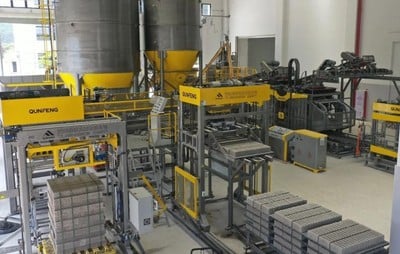
Custom Formulas & High-Intensity Mixing: Pre-tested lab formulas ensure uniform moisture dispersion and aggregate hydration before molding.
Dynamic Molding Control: Integrated IoT dynamically adjusts vibration frequency, amplitude, and compaction pressure to ensure consistent block density.
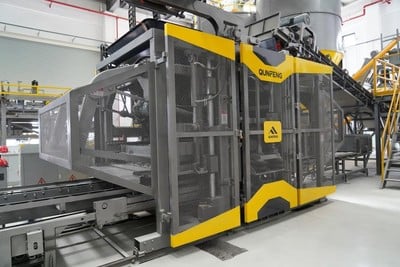
Material Feeding & Rapid Mold Switch: A swinging material feeder ensures uniform filling, while an automatic mold-changing system handles multi-spec production.
5G Telemetry: Real-time closed-loop monitoring and predictive maintenance reduce unplanned downtime.
Performance: Compressive strength and hardness consistently exceed standard specifications despite high waste utilization rates.
Proven Operation: Deployed in Fujian, Sichuan, Zhejiang, and Jiangsu for both industrial and construction waste recycling.
Questions for the Forum:
1. How do you stabilize water-cement ratios when handling highly variable waste aggregates?
2. What strategies do you use to mitigate mold wear from abrasive ceramic materials?
Looking forward to your technical insights!


 Turning Industrial Waste into High-Value Green Building Materials!


