The difference between fully threaded and partially threaded bolts of the same specification is often overlooked. However, for structural engineers and procurement managers, choosing the wrong thread type can directly compromise joint stability.
In this guide, we will compare the characteristics of Fully Threaded vs Partially Threaded Bolts (commonly known as half-thread) from multiple perspectives, helping you break down their core differences for accurate selection in your next procurement cycle.
Contents
1 Appearance & Standards
1.1 Fully Threaded Bolts
1.2 Partially Threaded Bolts
2 Advantages and Limitations
2.1 Fully Threaded Bolts
2.2 Partially Threaded Bolts
3 Differences in Measurement Methods
4 Thread Length Calculation Formulas for Partially Threaded Bolts
5 Fully vs. Partially Threaded Bolts: Selection Guide
6 Conclusion
Appearance & Standards
In engineering procurement, quickly distinguishing between fully threaded and partially threaded bolts requires looking beyond aesthetics to properly align with mainstream international standard specifications.
Fully Threaded Bolts
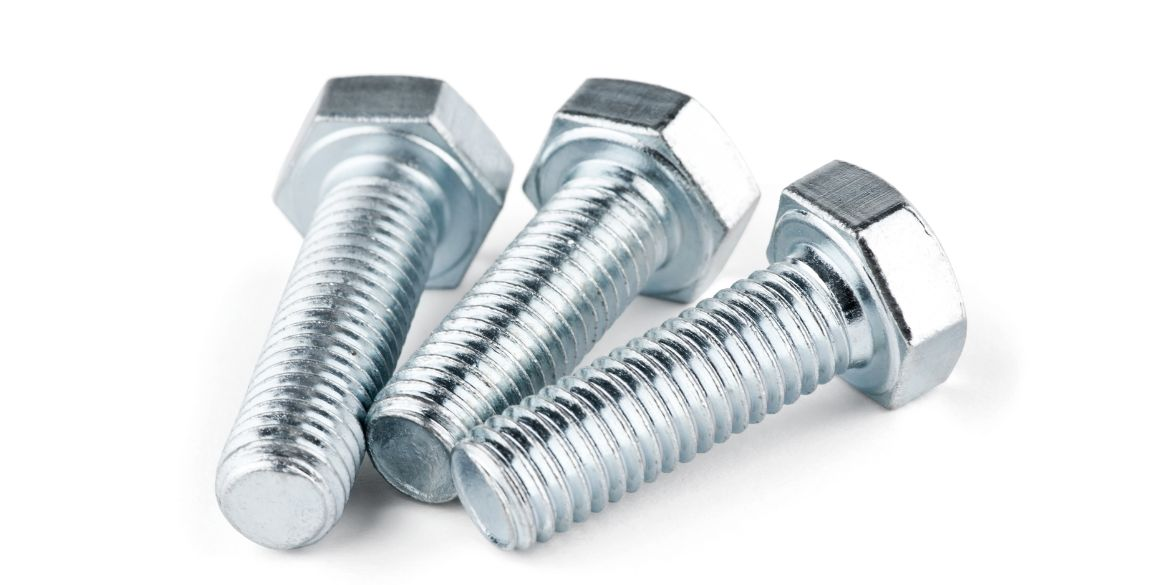
- Structural Characteristics: The threads start from the very tip of the bolt (tail/point) and run continuously all the way to the under-head bearing surface. These bolts lack an unthreaded shank, meaning the cross-sectional area remains entirely uniform throughout the length of the stud.
- International Standards:
- Metric (DIN/ISO):
- Imperial (ASME/SAE):
- ASME B18.2.1: In American standards, fully threaded hexagon bolts are formally designated as Tap Bolts in purchase orders and technical documentation.
Partially Threaded Bolts
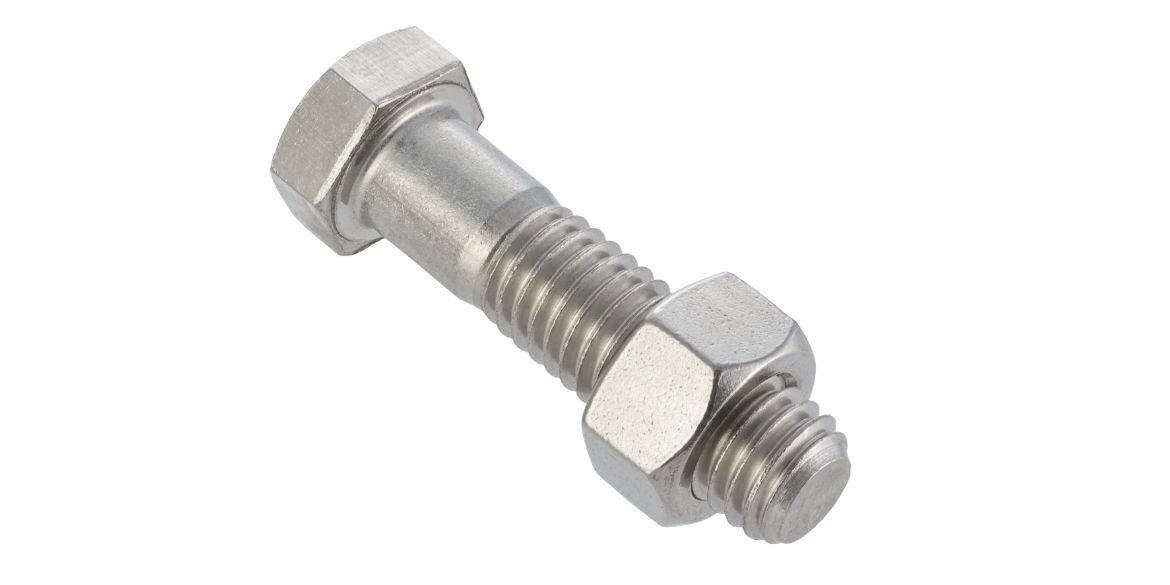
- Precise Structural Characteristics: The bolt body consists of two distinct segments: a smooth, unthreaded portion near the head (the shank) and a threaded segment at the tip (thread length). Technical drawings focus on two critical geometric concepts here:
- Grip Length (lg): The distance from the under-head bearing surface to the very first full thread, which generally corresponds to the combined thickness of the joined components.
- Thread Run-out: The transitional area where the smooth shank meets the threaded section. Due to the sudden geometric change, this zone is highly prone to stress concentration under operational loads.
- Standards:
- Metric (DIN/ISO):
- DIN 931 / ISO 4014: The standard hexagon head partially threaded bolts (the primary standard compared against DIN 933 during procurement).
- DIN 603 / ISO 8677: Round head square neck bolts (Carriage bolts), where longer specifications are partially threaded by default.
- Imperial (ASME/SAE):
- ASME B18.2.1 (Hex Cap Screws): In American standards, high-precision hexagon head bolts featuring an unthreaded shank are typically referred to directly as Hex Cap Screws.
Metric vs. Imperial Note: Metric and Imperial threads differ completely in profile, angle, and pitch units (mm vs. TPI) and are not strictly interchangeable.
Advantages and Limitations
- Fully Threaded Bolts
- Key Benefits:
- High Adjustability & Precise Fastening: Since the threads run the full length of the bolt, the nut can be tightened at any position, accommodating a much wider range of material thicknesses.
- Superior Grip & Load Distribution: The extensive contact area between the threads and the mating components allows tensile loads to be distributed more evenly across the entire joint structure.
- Technical Limitations:
- High Insertion Resistance: If the clearance holes of the mating parts are tight, the continuous threads will generate significant frictional resistance when passing through, slowing down insertion.
- Lower Lateral Shear Strength: The cross-sectional area at the thread roots is inherently smaller. When subjected to lateral (sideway) forces, these roots act as stress concentration points, making fully threaded bolts weaker in shear than partially threaded ones.
- Partially Threaded Bolts
- Key Benefits:
- Maximum Shear & Tensile Strength: The smooth, unthreaded shank features a larger cross-sectional area, allowing it to withstand extreme lateral shear forces and heavy tensile loads with a much lower risk of shearing off or fracturing.
- Smooth & Fast Installation: The smooth shank slides through clearance holes effortlessly without catching on the edges, significantly boosting assembly efficiency on production lines.
- Technical Limitations:
- Challenging Selection & Low Tolerance for Error: Sourcing requires extreme precision. You must choose a bolt with a grip length that exactly matches the total thickness of your mating components.
- Rigid Precision Requirements: This is a classic “one-size-fits-all does not apply” scenario. If a measurement error leads to a shank that is too long, the nut will bottom out at the thread run-out before clamping the materials together, resulting in a loose and failed joint connection.
Differences in Measurement Methods
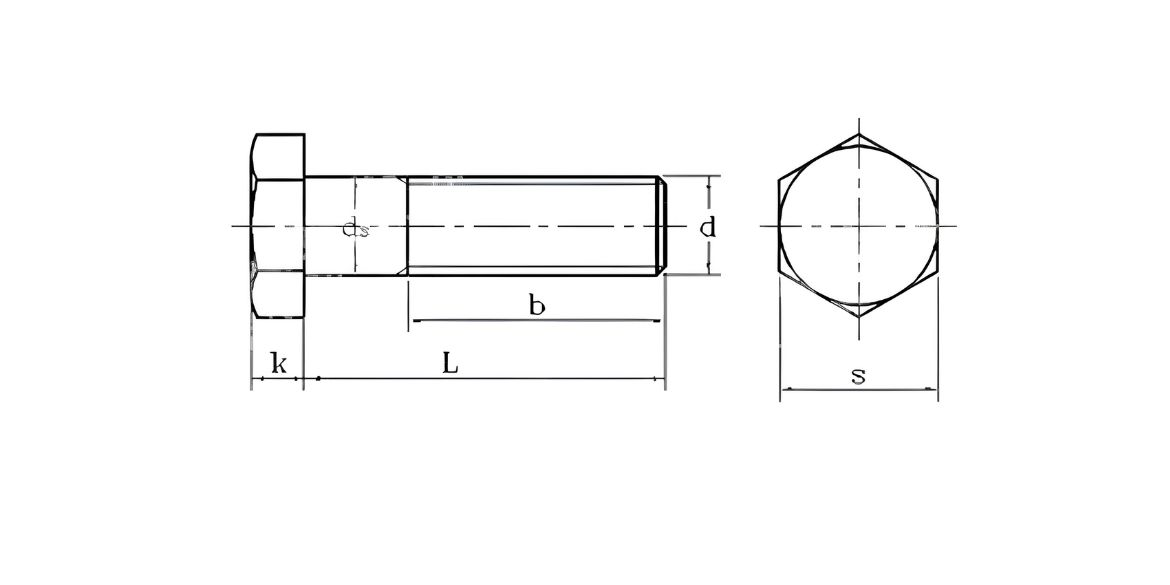
- Fully threaded bolts only require measuring the total length of the bolt body (the entire length excluding the head), thread diameter (major diameter), width across flats of the head, and head thickness.
- Partially Threaded Bolts: In addition to the aforementioned dimensions, the thread length (b) and the smooth, unthreaded shank length must also be measured. Furthermore, for special “full-size shanks” (shank diameter = major thread diameter) or “reduced/waisted shanks” (shank diameter < major thread diameter), the actual diameter of the unthreaded shank portion must be precisely measured.
Additionally, the thread type must be determined—whether it is a coarse thread, fine thread, or a special trapezoidal thread.
Thread Length Calculation Formulas for Partially Threaded Bolts
In fastener manufacturing and international standards, the actual thread length (b) of a partially threaded bolt is not determined arbitrarily. Instead, it is strictly calculated based on the total bolt length (L) and the nominal thread diameter (d) across three distinct dimensional ranges:
| Bolt Total Length (L) Range | Thread Length (b) Formula | Engineering Intent |
| Short Lengths: L ≤ 125mm | b = 2d + 6 | Ensures optimal grip rigidity for shorter fasteners. |
| Medium Lengths: 130mm ≤ L ≤ 200mm | b = 2d + 12 | Balances load distribution between the shank and threads. |
| Long Lengths: L ≥ 220mm | b = 2d + 25 | Provides sufficient thread engagement travel for extra-long joints. |
Fully vs. Partially Threaded Bolts: Selection Guide
| Application Scenario | Recommended Choice |
| Frequent Disassembly / Variable Joint Thickness | Fully Threaded |
| High Shear Load (Subject to Lateral Forces) | Partially Threaded |
| High Vibration Environment | Partially Threaded + Lock Washer |
| Focus on Surface Grip Force (e.g., Thin Plates) | Fully Threaded |
| Focus on Overall Tensile & Bending Strength | Partially Threaded |
| Extra-Long Fasteners (Lengths > 125mm) | Partially Threaded |
Conclusion
How to choose between fully threaded and partially threaded bolts ultimately depends on the actual working conditions. If you are still unsure after reading, feel free to contact High Fasteners for consultation at any time. We ship directly from the source factory, offering reliable quality and fair prices. Whether you want someone to review drawings for free, seek technical support, or need one-stop bundled procurement, leaving it to us will definitely give you peace of mind!


 Choosing the Right Fastener: Fully Threaded vs. Partially Threaded Bolts


