In underground mining, roof conditions are rarely the same from one section to another. Even within the same roadway, one area may have relatively competent hard rock, while the next may show bedding planes, open fractures, broken zones, or local rockfall risks. For an engineering team, a roof bolt is not a standard component that can be applied everywhere in the same way. Under different ground conditions, the bolt may need to perform a different support function: locking layered rock together, controlling shallow loosening, or working with grout to create a more reliable support structure.
This is why roof support selection often comes down to practical site questions. Which type of roof bolt is suitable for the current roof condition? Is a conventional resin bolt enough? Where do friction bolts or cable bolts make more sense? If the site has collapsing holes, broken rock, or difficult grouting conditions, should the project consider a support system better suited to complex ground conditions? This article reviews the common types of roof bolts used in underground mining, explains how they work in different applications, and provides a practical selection guide for different ground conditions.
What Are Mining Roof Bolts?
Mining roof bolts are common anchoring components used to support roofs in underground mines. They are mainly installed in the roof rock of roadways, stopes, and other underground openings. Their role is not the same as a normal fastener. Instead of simply fixing one part to another, a roof bolt helps connect loose, layered, or fractured rock with more stable surrounding rock through anchoring, locking, bonding, or friction. In this way, the roof can behave more like a continuous load-bearing structure.
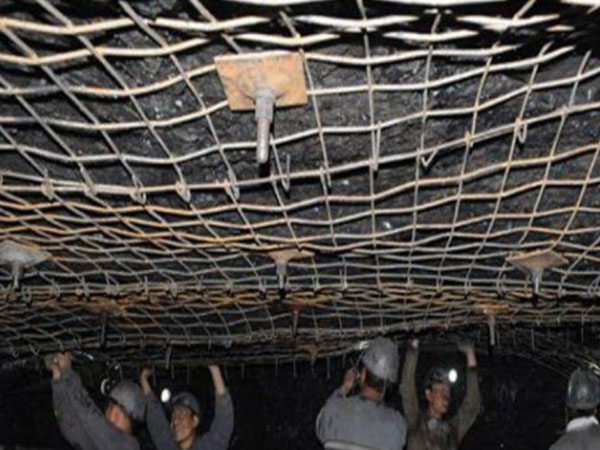
In actual support work, a roof bolt rarely works alone. It is usually used together with plates, steel straps, mesh, shotcrete, or grout to form a complete underground roof support system. The bolt helps control rock movement. The plate and steel strap help spread local loads. The mesh helps control small falling rock pieces. Grout can improve the bond between the bolt and the surrounding ground. Only by looking at these components as part of one support system can we better understand where different roof bolts are suitable.
Therefore, understanding a mining roof bolt is not only about knowing its basic structure. It is also about understanding how the bolt interacts with the underground rock mass. This also explains why different roof bolt types can perform very differently in the field. The anchoring method, installation process, and ground conditions can all affect the final support performance.
Common Types of Roof Bolts Used in Underground Mining
In underground mining support, different roof bolts are not only different in size, length, or appearance. The more important difference is how they interact with the surrounding ground. Some bolts rely on mechanical anchoring at the end of the hole. Some use resin or grout to create bonding. Some provide fast initial support through friction. Others are used for deeper reinforcement or more complex ground conditions. Understanding these support mechanisms makes it easier to judge whether a bolt type is suitable for a specific roof condition.
From a practical application point of view, common mining roof bolts can be divided into the following types:
| Type | Typical Working Mechanism | Main Applications | Main Limitations |
|---|
| Mechanical anchor bolt | An expansion shell grips the borehole wall at the end of the hole | Hard rock, relatively competent ground, and roadways with stable boreholes | Highly dependent on borehole quality and the strength of the anchoring zone; not suitable for heavily broken ground |
| Resin roof bolt | Resin cartridges cure and bond the bolt to the borehole wall | Common long-term or semi-long-term roof support in coal mines and metal mines | Requires good borehole cleaning, resin mixing, and curing time control |
| Friction bolt / Split set | A slotted steel tube creates radial friction against the borehole wall | Temporary support, development headings, and areas where fast installation is needed | Long-term capacity and corrosion resistance can be affected by ground and environmental conditions |
| Cable bolt | A longer steel strand system anchors into deeper stable rock | Large-span roadways, chambers, intersections, and high-stress zones | Requires more installation space, equipment, and construction time |
| Self-drilling anchor | A hollow bar works as the drill rod, then grout is injected through the bar after drilling | Broken rock, high collapse risk, difficult grouting, or emergency stabilization areas | Usually has a higher system cost than standard bolts and requires matching bars, drill bits, and grouting design、 |
1. Mechanical Anchor Bolts
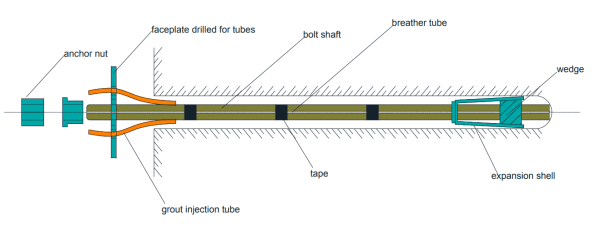
However, the reliability of a mechanical anchor bolt depends heavily on borehole quality and the strength of the rock around the anchoring zone. If the roof rock is weak, weathered, or heavily fractured, the expansion shell may not grip the hole wall properly. As a result, the anchoring force can drop significantly. For this reason, mechanical anchor bolts are more suitable for areas with good rock integrity and stable borehole formation. They are not usually the main support choice for broken ground or areas with a high risk of hole collapse.
2. Resin Roof Bolts
Resin roof bolts are very common in underground mining. During installation, resin cartridges are placed into the borehole. The bolt is then inserted and rotated to mix the resin. Once the resin cures, it bonds the bolt to the surrounding rock. Depending on the resin length and installation method, a resin bolt may provide end anchoring or a support effect closer to full-length bonding.
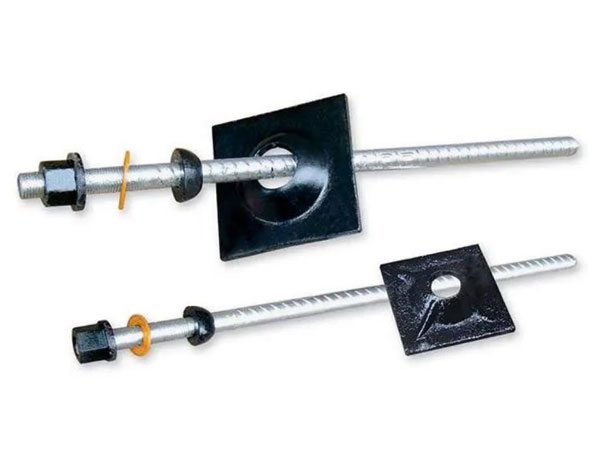
Compared with bolts that only rely on mechanical grip at the end of the hole, resin roof bolts focus more on the interaction between the bolt and the surrounding rock mass. In roof conditions with bedding planes, or where shallow rock needs better integration, resin bolts can help distribute loads and improve the continuity of the roof structure. It is important to note that resin bonding performance does not depend only on the bolt itself. Borehole cleanliness, resin cartridge matching, mixing time, and curing time all affect the final bond quality. If installation control is poor, the support performance may vary significantly.
3. Friction Bolts / Split Sets
Friction bolts, also known as split sets or friction stabilizers, mainly provide support through friction between the bolt tube and the borehole wall. During installation, a slotted steel tube is pushed into a borehole that is slightly smaller than the tube diameter. The tube is compressed and pushes outward against the borehole wall, creating frictional resistance.
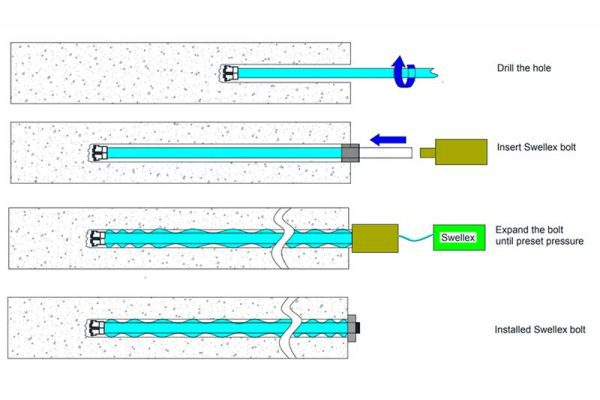
The main advantage of this type of bolt is installation speed. It can provide initial support quickly, so it is often used in development headings, temporary support areas, or working faces where fast advance is important. Its limitations are also clear. The support performance is sensitive to borehole diameter, hole wall condition, and rock mass integrity. Long-term load capacity and corrosion resistance can also be affected by the site environment. Therefore, friction bolts are more suitable for fast support or support at specific stages. They are not a universal solution for all long-term roof support conditions.
4. Cable Bolts
Cable bolts are used when the support needs to reach deeper than a standard roof bolt can provide. Compared with standard roof bolts, cable bolts are usually much longer. They can pass through shallow loose or broken rock and anchor into deeper, more stable rock. This is why they are often used in large-span roadways, chambers, intersections, high-stress zones, or areas where a larger roof zone needs to be controlled.
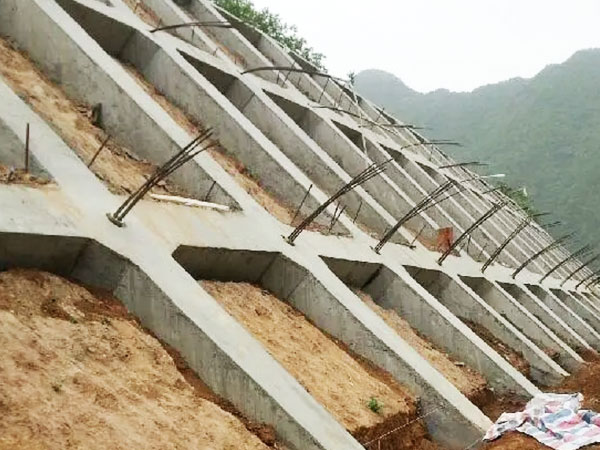
Cable bolts are useful when the support needs to extend beyond the shallow roof zone. However, they usually require more installation space, longer drilling, and a more complex grouting or tensioning process. Installation efficiency and cost must also be evaluated based on project conditions. In selection, cable bolts should not be seen as a simple replacement for standard roof bolts. They are usually used where the reinforcement depth of standard bolts is not enough or where the support level needs to be increased.
5. Self-Drilling Anchors
Self-drilling anchors, or SDA systems, are suitable for ground conditions where the conventional “drill first, then install the bolt” method is difficult to complete reliably. The hollow bar itself works as the drill rod. A drill bit is connected at the front, and grout can be injected through the hollow bar after drilling. This combines drilling, anchoring, and grouting into one continuous installation process.
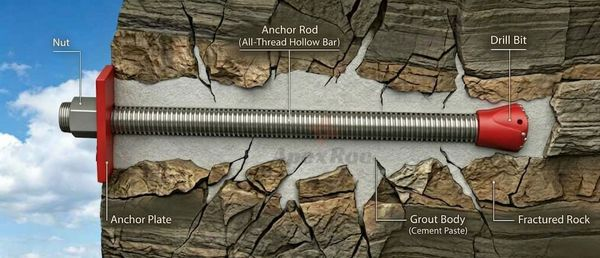
In broken rock, jointed ground, weak formations, water-sensitive ground, or areas where the borehole is difficult to keep open, the value of SDA becomes more obvious. Because the anchor remains in the hole during drilling, the installation process does not depend on a stable open hole that must remain intact for a long time. This can reduce the risk of hole collapse, preventing bolt installation. It can also help improve the bond between the anchor and the surrounding ground through grouting.
It is important to note that SDA is not designed to replace all traditional roof bolts. It is more suitable for ground conditions where a conventional drilling and installation process is unstable. Whether it is the right option still depends on rock mass integrity, borehole stability, grouting requirements, and project cost. For a broader explanation of system structure and applications, you can also read CQ-ROCKBOLT’s guide to self-drilling anchor systems.
How to Choose the Right Roof Bolt for Underground Mining
In underground roof support, saying “it depends on the ground conditions” is correct, but it is not specific enough for engineers, buyers, or project managers. A useful selection process does not start by asking which roof bolt is “the best.” It starts by identifying which site conditions affect bolt type, installation method, and support performance. Once these variables are clear, roof bolt selection becomes a more practical engineering decision rather than a general, experience-based judgment.
| Selection Factor | Key Question to Confirm | Impact on Roof Bolt Selection |
|---|
| Roof rock quality | Is the rock hard and competent, or weak and broken? | Competent rock may allow mechanical or resin anchoring; weak or broken rock may require full-length bonding, grouted systems, or self-drilling solutions |
| Fractures and broken ground | Are joints well developed? Is the borehole likely to become unstable after drilling? | Fractured ground can reduce mechanical grip and friction, and it may also make standard boreholes difficult to keep open |
| Initial support requirement | Does the roof need to be controlled quickly after exposure? | Fast support may favor systems with quicker installation or better installation continuity |
| Support service life | Is the opening temporary, or is it a long-term haulage roadway or chamber? | Temporary support often focuses on speed and cost; long-term support requires better bonding, durability, and system reliability |
| Borehole stability and grouting conditions | Can the borehole remain open? Can grout fill the hole properly? | Hole collapse, shrinkage, water inflow, or difficult grouting may limit the conventional “drill first, then install the bolt” method |
| Span and stress condition | Is the opening large? Is the ground stress high? | Large spans or high-stress areas may require cable bolts, combined support, or higher-level reinforcement |
The table works well as a first screening tool. In real project evaluation, however, three questions usually matter most.
First, check whether the surrounding rock can provide stable anchoring conditions.
If the roof rock is hard and competent, and the borehole quality is stable, mechanical anchor bolts, resin roof bolts, or friction bolts may all have a suitable working basis. But if the rock is weak, weathered, or highly fractured, the interaction between the bolt and the borehole wall becomes less reliable. In that case, the selection should not be based only on the strength of a single bolt. It should focus on whether the bolt can provide reliable support under the actual rock conditions.
Second, check whether the borehole can remain stable.
In many difficult ground conditions, the problem is not that the bolt itself is too weak. The real problem is that the traditional “drill first, then install the bolt” process may not be completed smoothly. In broken zones, water-softened formations, or heavily fractured ground, the hole may collapse, shrink, or become blocked by broken rock after the drill bit is withdrawn. This can prevent the bolt from being inserted properly and can also leave the grouting incomplete. In these conditions, the installation method itself becomes part of the selection decision, not a detail to be considered later.
Finally, consider the support objective and the excavation conditions.
If the opening is temporary or serves as a short-term work area, the selection often focuses more on installation speed and cost control. If it is a main haulage roadway, long-term chamber, or critical intersection, long-term system reliability becomes more important. For large-span or high-stress areas, standard short bolts may only control the shallow roof zone. Cable bolts, steel straps, shotcrete, or other combined support measures may need to work together.
Therefore, roof bolt selection should not stop at product names or specifications. A suitable solution should match the rock mass condition, borehole stability, installation method, and support objective. For conventional stable ground, traditional roof bolts are often enough. But when the installation method, anchoring condition, or reinforcement depth becomes a limiting factor, it is necessary to evaluate whether cable bolts, self-drilling anchors, or a combined support system should be used.
When Are Self-Drilling Anchor Systems More Suitable?
Self-drilling anchor systems are not intended to replace all mining roof bolts. They are more suitable for ground conditions where the traditional “drill first, then install the bolt” process is difficult to complete reliably. An SDA system combines drilling, anchoring, and grouting into a single system. The hollow bar works as the drill rod during installation and then remains in the hole as the final anchor. This can reduce the effects of hole collapse, borehole shrinkage, or broken rock that blocks the hole during installation.
In general, self-drilling anchor systems may be considered in the following underground support conditions:
- Broken rock or highly jointed areas: The borehole may not remain stable after drilling, making it difficult to insert a standard bolt properly.
- Water-softened ground or difficult grouting conditions: Groundwater, clay-rich layers, or open fractures may affect borehole stability and grout filling.
- Emergency stabilization or short-schedule projects: The project may require fewer installation steps and a more continuous process of drilling, anchoring, and grouting.
- Areas where standard roof bolt installation is at high risk of failure: When the installation method itself becomes the primary limitation, SDA can be considered a more practical alternative.
SDA is still a targeted support system. If the rock mass is competent, the borehole is stable, and the support period is short, traditional mechanical anchor bolts, resin bolts, or friction bolts may be more economical. For complex ground support projects, the hollow bar size, drill bit type, coupler, plate, and grouting plan should be selected as one system rather than as separate items. For more details on drill bit selection, you can refer to CQ-ROCKBOLT’s article on sacrificial drill bits for self-drilling anchor systems.
Conclusion
The key to selecting mining roof bolts is not deciding which bolt is “best” in general. It involves deciding which support method is most suitable for the current ground conditions, excavation environment, and construction objectives. Mechanical anchor bolts, resin roof bolts, friction bolts, cable bolts, and self-drilling anchors each solve different site problems and have clear application limits.
For engineers, buyers, and EPC technical teams, the next step is to confirm the real project conditions. Is the roof rock competent? Can the borehole remain stable? Is the support temporary or long-term? Does the roadway span or ground stress require deeper reinforcement? Once these questions are clear, roof bolt selection can move beyond product specification comparison and become a more reliable engineering decision.
When a project involves broken rock, hole-collapse risk, difficult grouting, or complex underground support conditions, self-drilling anchor systems can be an important option. CQ-ROCKBOLT provides R25 to T76 self-drilling anchor systems, along with matching drill bits, couplers, plates, and technical support to help project teams choose a suitable configuration based on ground conditions, design loads, and installation methods.


 Underground Mining Roof Bolts: Types, Applications, and Selection Guide


