As tunnels, mines, transport corridors, hydropower facilities, and other infrastructure projects move into increasingly complex ground conditions, construction safety depends on reliable reinforcement. Fractured rock, weak soil, groundwater, vibration, and excavation-induced stress changes can all increase the risk of deformation or local failure.
An anchor threaded rod helps transfer loads from unstable ground into stronger surrounding rock or soil. When selected, installed, grouted, and inspected correctly, it becomes an important part of a dependable ground support system.
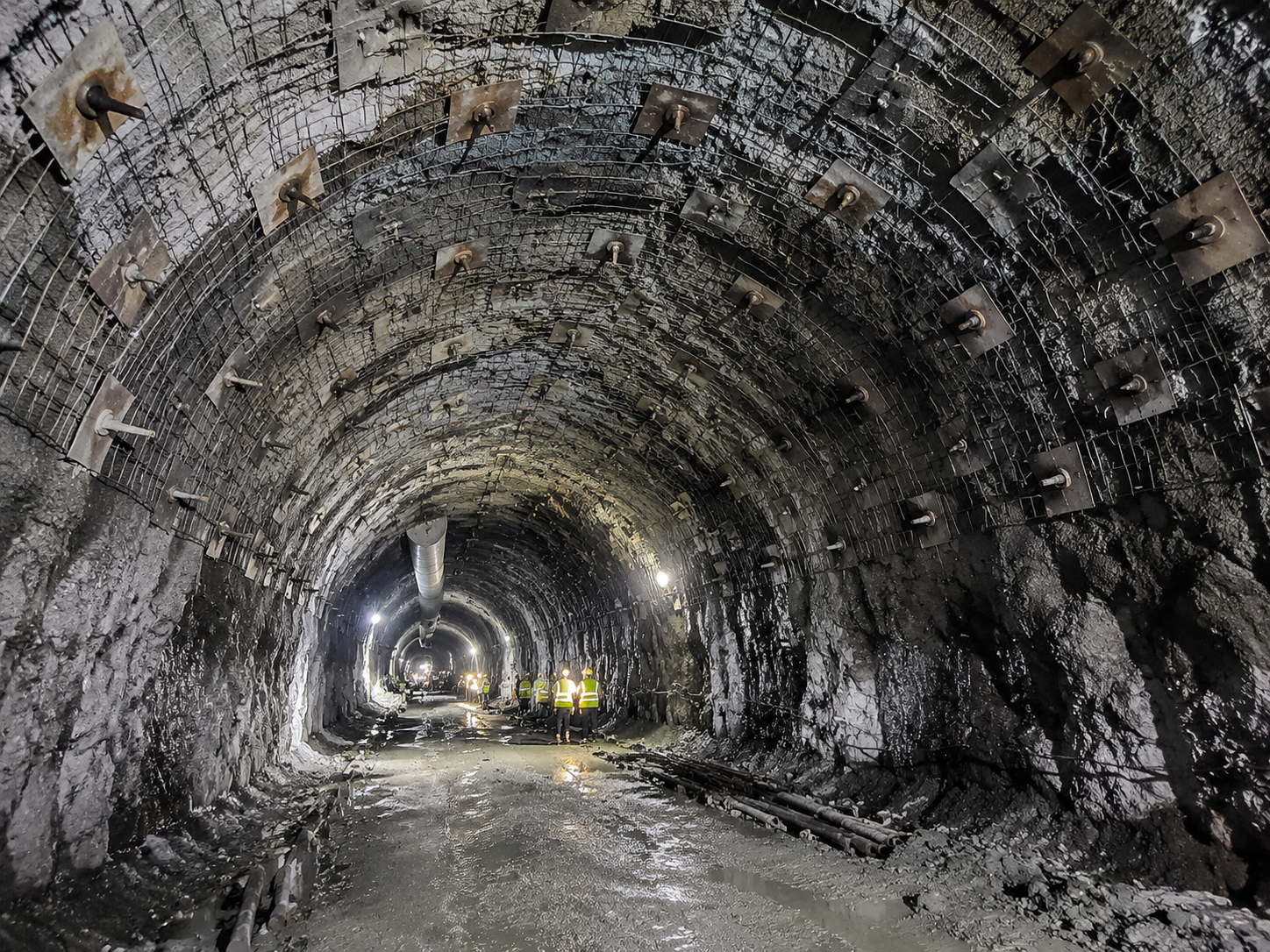
Why Anchor Threaded Rod Systems Matter
An anchor threaded rod provides a mechanical connection between the support plate, nut, coupler, grout, and the surrounding ground. Its continuous thread profile allows components to be connected and adjusted along the bar, supporting efficient installation and reliable load transfer.
In geotechnical engineering, support systems must often manage weak layers, fractured rock masses, water-bearing ground, and changing excavation conditions. A properly designed anchoring system helps control ground movement, reduce the risk of loose rock or soil falling into the work area, and improve overall structural stability.
Support for Difficult Ground Conditions
In fractured ground or other unstable formations, conventional drilling and installation processes can be difficult to control. Depending on the project design, hollow anchor rods can support drilling and grout delivery in a coordinated installation process.
Proper grouting helps create the bond between the rod and the surrounding rock or soil. The final anchoring performance depends not only on the rod, but also on borehole quality, grout coverage, anchorage length, connection hardware, and site installation control.
How Does an Anchor Threaded Rod Work?
The primary purpose of an anchor threaded rod is to reinforce an unstable area by connecting it to a more competent load-bearing zone. Once installed and grouted, the system can help distribute stress over a longer anchorage section instead of allowing it to concentrate at one weak point.
A typical assembly may include a threaded bar, drill bit, coupler, bearing plate, nut, and grout. Rock bolt accessories, including plates, nuts, washers, and couplers, are important because each component contributes to the continuity of the support system.
Improving Load Distribution
When surrounding ground begins to move, an anchor threaded rod helps provide restraint and improve ground reinforcement. This is particularly valuable in deep excavations, high-stress mining areas, and long-term underground structures where rock or soil conditions may change over time.
For projects requiring adjustable anchoring lengths and high-strength threaded bars, PT bars and prestressing thread bars can be considered as part of the engineered support solution.
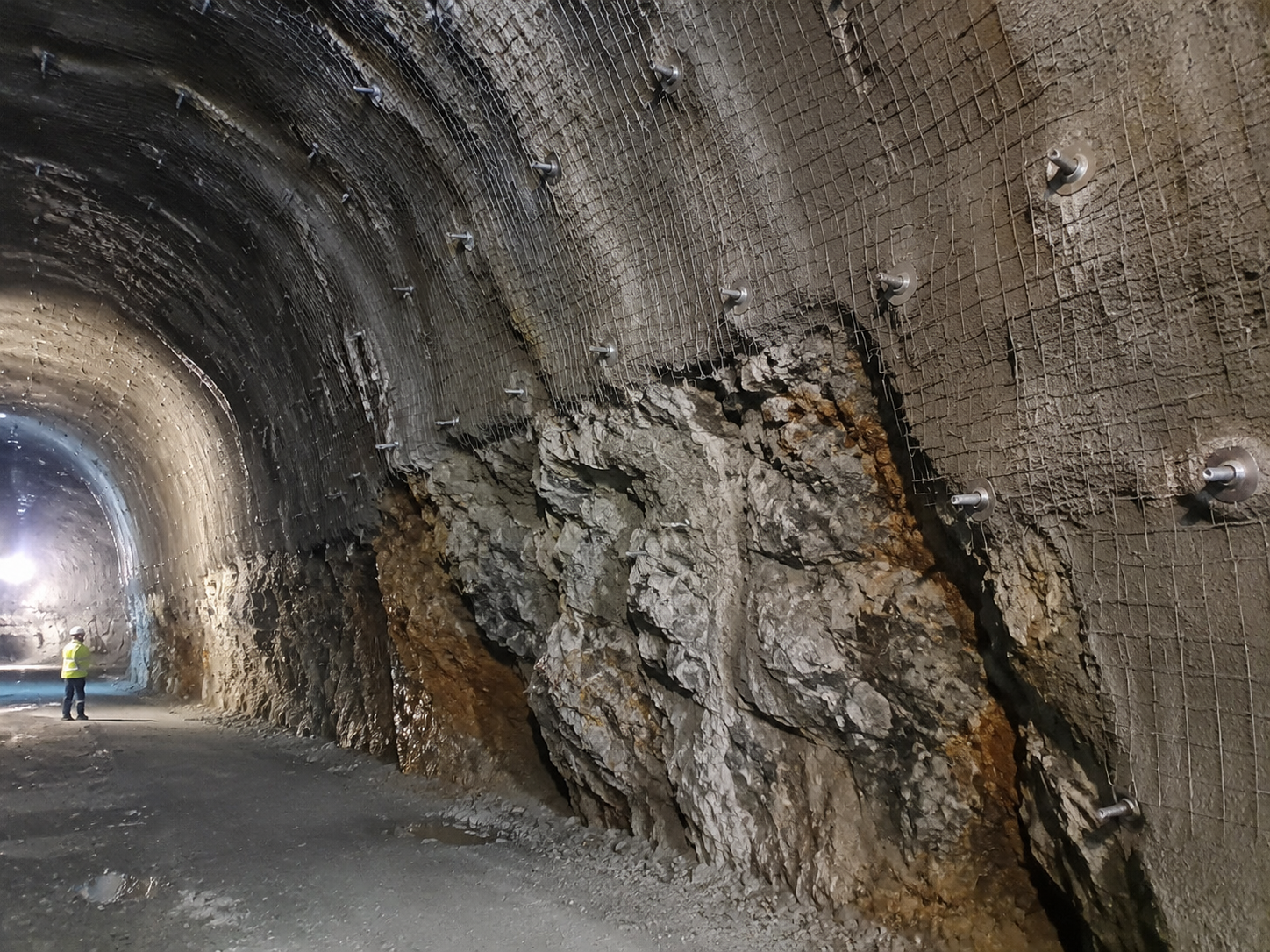
The Role of Rock Bolts in Tunnel Support
Tunnel support is one of the most important applications for anchoring systems. During excavation, the tunnel crown, walls, and face can experience stress redistribution. Without timely reinforcement, these areas may be vulnerable to convergence, cracking, rockfall, or localized collapse.
A suitable rock bolt system can work together with shotcrete, wire mesh, lattice girders, and drainage measures. The bolt reinforces the ground internally, while the surface support components help contain loose material and control deformation.
Faster and Safer Excavation Progress
Early ground reinforcement helps contractors create safer working conditions before subsequent construction stages begin. By reducing the likelihood of instability-related interruptions, an effective tunnel support system can also help maintain construction progress and protect personnel, equipment, and installed works.
Mining Support, Slopes, and Foundation Reinforcement
In underground mining, blasting, excavation, and high ground stress can continuously affect rock conditions. Reliable mining support is therefore essential for stabilizing mine roofs, sidewalls, and access routes.
Split Set friction rock bolts provide a practical option for underground applications where rapid installation and friction-based ground support are required. For highly fractured formations, Swellex rock bolts may also be considered according to the project design.
Beyond mining, anchoring systems are widely used for slope stabilization, retaining wall reinforcement, foundation support, bridge works, and other civil engineering applications. Their role is to limit movement and increase resistance to sliding, deformation, or instability.
Installation Factors That Influence Safety
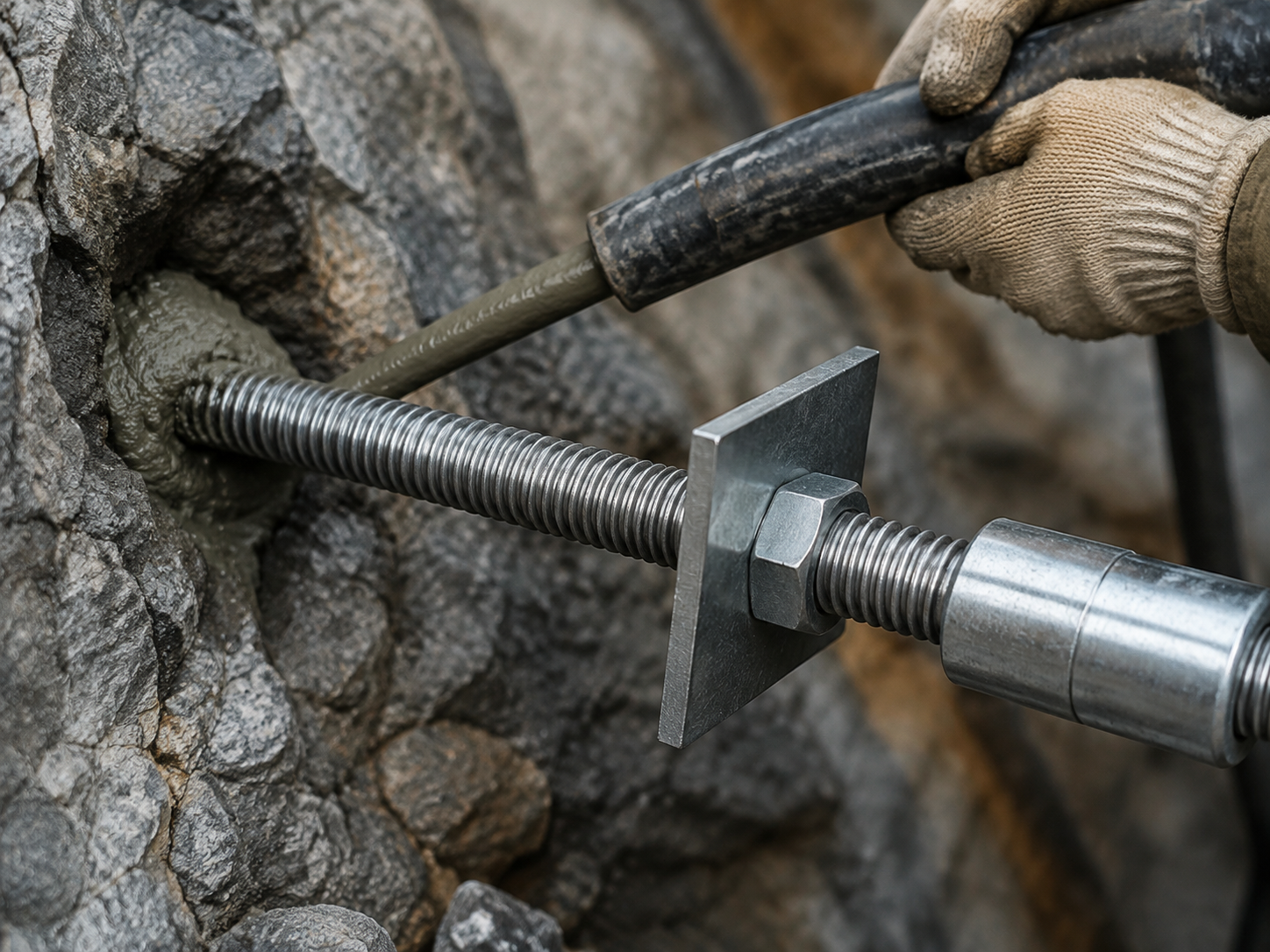
Correct installation is as important as choosing the right product. Even a high-quality anchor threaded rod cannot deliver its intended performance if drilling, coupling, or grouting is poorly controlled.
Important installation factors include:
- Correct borehole direction, depth, and diameter
- Secure rod, nut, plate, and coupler connections
- Continuous and sufficient grout placement
- Suitable curing time before loading
- Appropriate corrosion protection for the service environment
- Inspection of visible hardware and ground movement
For applications requiring controlled pre-loading, rock bolt tensioning equipment can help project teams apply tension in accordance with the approved support design.
Long-Term Durability and Inspection
Installation is only the first stage of long-term support performance. Groundwater, chemical exposure, vibration, repeated loading, and temperature changes may affect anchors during service.
Regular inspections can identify corrosion, loose connections, plate deformation, cracking, and surrounding ground movement before these conditions become more serious. In major infrastructure projects, monitoring systems may also be used to track convergence, displacement, or load changes over time.
Conclusion
An anchor threaded rod is essential to construction safety because it provides dependable ground reinforcement in challenging underground and civil engineering environments. It supports effective load transfer and helps stabilize rock and soil in tunnel support, mining support, slope protection, and foundation reinforcement projects.
With proper design, suitable product selection, controlled installation, complete grouting, and routine inspection, anchoring systems can improve construction safety, support project efficiency, and contribute to more stable long-term infrastructure performance.
Should you have any questions regarding tunnels, mining, bridges or engineering projects, please visit our website or contact us. We will provide you with satisfactory answers and high‑quality services.


 Why Is an Anchor Threaded Rod Essential for Construction Safety?


