Previous in Forum: thickness required   Next in Forum: crane
Close
Close
Close
37 comments
Rate Comments: Nested
Anonymous Poster

Ground source for heat and cooling

02/22/2009 8:27 AM

I have a bore-hole well,24 inch inside diameter,51 feet deep with 37 feet of standing water,and approximately 3 Gallons/minute flow though.The concrete tile is 2 inches thick, surrounded by concrete grout 6 inches thick, for the top 18 feet.The remainder (37 feet) is in a clay-gravel type soil structure, so the surrounding heat sink is virtually infinite, although I realize the transfer drops off over distance and decreasing temperature differential. The average temperature of the water is 60 degrees F. Approximately how much heat(BTU/Hr) can I dissipate into this well before it becomes too warm to effectively condense the freon from my A/C unit? How much heat can it transfer into the surrounding soil structure? Thanks, Tom

Reply
Interested in this topic? By joining CR4 you can "subscribe" to
this discussion and receive notification when new comments are added.

"Almost" Good Answers:

Check out these comments that don't yet have enough votes to be "official" good answers and, if you agree with them, vote them!
Guru
United Kingdom - Member - Not a new member!

Join Date: Jun 2008
Location: USA/Europe
Posts: 4547
Good Answers: 68
#1

Re: Ground source for heat and cooling

02/23/2009 11:40 AM

Hello Guest (Tom),

Do you use this well for your water supply? Or did you build the well to use for the freon cooler? It seems a rather awkward way to cool something. You may find cooling the freon at ground level and letting the water drop down the well may work better?

What is the idea of the freon? If that is not too silly a question?

Take care and more info please?

__________________
Take it easy, bb. >"HEAR & you FORGET<>SEE & you REMEMBER<>DO & you UNDERSTAND"<=$=|O|=$=>"Common Sense is Genius dressed in its Working Clothes"<>[Ralph Waldo Emerson]
Reply
Anonymous Poster
#6
In reply to #1

Re: Ground source for heat and cooling

02/25/2009 12:51 PM

You are correct.The info was incomplete.I intend to use a copper coil in the well,with propylene glycol as a transfer medium.The coil will be the full depth of the water, and wound into a coil shape, with the coil getting progressively larger towards the top.This configuration , I hope, will generate a circulating water flow within the well to mix the warmer and cooler layers of water within the well, thereby increasing the btu transfer.The fluid will enter at the bottom,and exit at the top of the coil. I have roughly 330 square feet of saturated contact with mother earth to absorb the heat.For 6 tons of cooling, this works out to about 216 BTU/Hr per square foot. It seems reasonable for that much area to radiate that much heat, but I do not know the thermal conductivity of the surrounding earth, which is saturated clay/gravel. Can you help me determine this unknown factor? Thanks Tom

Reply
Anonymous Poster
#2

Re: Ground source for heat and cooling

02/23/2009 6:44 PM

I assume that you are wishing to install a water source heat pump, and that the water used is discarded and not sent back to the well.

One ton of cooling equals 12,000 BTU'S

Rules of thumb: One gallon per minute per ton of cooling using city water (approx 55 deg F), and three gallons per ton per minute for cooling using cooling tower water (approx 80 deg F). Theoretically you have up to three tons of capacity for cooling. There are many variables that can increase or decrease this. Please note: as you know well water has a lot of minerals that can precipitate out and foul your heat exchanger. consider one that can be manually cleaned.

Reply Score 1 for Good Answer
Guru

Join Date: Dec 2005
Posts: 1602
Good Answers: 19
#3
In reply to #2

Re: Ground source for heat and cooling

02/23/2009 7:23 PM

too bad you are an anomymous guest, I gave you a good answer. There will be issues with water hardness fouling the heat exchanger. Otherwise, you seem close with the "heat sink" capacity of this application.

Can you extract water from the bottom of the well (where the colder water is) and recharge the top layer of the well?

Can you have a separate recharge point 40-50 feet from the well?

__________________
Eventually, one needs to realize that it is far less important to be the smartest person in the room than it is to sit next to that person and make friends.
Reply
Associate

Join Date: Feb 2009
Posts: 45
Good Answers: 2
#4

Re: Ground source for heat and cooling

02/24/2009 5:45 PM

The issue of water mineral content, other particulates or pH fouling an open loop heat exchanger is dealt with here (Toronto Canada) by using a particulate filter on the intake, combined with a cupronickel heat exchanger. I have been told this also addresses the issue of potential corrosion from salt water, but have no experience with that.

Our guideline is that for each ton of capacity about 3 GPM is required to be supplied to a heat pump with a COP of +/-3 at 50 F entering water temperature.

The question you have regarding the heat transfer rate and the ability of the well to thermally recharge is dependent on how many hours the extraction occurs for and then how long it is not occurring on any given day, but also over a season.

For example, we have a heating season where we remove heat from the ground all winter, and over the season can drop the temperature surrounding the (closed) loops to < 32F. Then, we have a cooling season where we pump heat back into the earth, giving us an earth temp of 60F + by the start of the next heating season.

So - do you cool year round? Is your home insulated well, and oriented and coloured to reduce solar gains - or is the AC running all the time?

What efficiency is the heat pump?

Reply
Anonymous Poster
#5

Re: Ground source for heat and cooling

02/24/2009 8:27 PM

I intend to use a propylene glycol solution to transfer heat from the heat pump to/from the well.This in turn will be used to cool the freon.The cooling season is usually around 3 months per year.What rate of heat transfer from the well into the earth can I expect from this well.It is not used for potable water anymore. I calculated roughly 351 square feet of contact area with the surrounding earth that is saturated with water.To dissipate 70,00 BTU/Hr over this area would require about 200 btu/hr.Is this value possible with this well? Thanks Tom

Reply
Guru
United Kingdom - Member - Not a new member!

Join Date: Jun 2008
Location: USA/Europe
Posts: 4547
Good Answers: 68
#7
In reply to #5

Re: Ground source for heat and cooling

02/25/2009 4:31 PM

Hello Guest,

Sounds like you have put a lot of thought into it and I hope you will be rewarded.

So as I understand it you are relying one the water in the well giving off enough energy to get useful heat for heating and or washing?

Can you tell me roughly where you live, because the ambient temp' has a lot to do with a fail or success here!

Forgetting the well for the moment, the surround clay type soil is good as it more dense than 'loamy' type soil you would find in a garden. Do you know, if you have a well with water flowing through, how much water you have taking the PE of the water away?

One thing you could try is to use a large spike about the same thickness as a copper pipe and drive it in to the soil close to the well. Take the spike out and replace it with a copper pipe which is cut off at the soil surface, to prevent the solar effect on the copper. Tie a thermometer on a string and drop in the hole. It will probably stay at around the same temp' but it will give you some idea of the thermal properties of the ground. It might also be an idea to keep a chart with ambient temp' and check the thermometer every 30 minutes or so on a hot day, a warm day, and a cool day perhaps when it is raining. Put a bung in the tube to stop it filling with soil or water and also keep the possibly cooler ground breeze cooling the thermometer.. You could also take readings up to the time you would normally stop using water at night and see if the thermometer varies much during the dark night hours.

The temp' staying more or less even means you can either use the pump 24/7 to reach a desired temp, then use it enough just to 'top up' the water temp to the house. Or possible use it at night only (perhaps) at which time the electricity to power the pump may be cheaper. Here in the UK I understand they have something called Economy 7? Which means any power used for heating at night is cheaper.

What do you think?

Good luck and please join CR4? You and this, what seems to be a unique system would be invuable for others thinking to save money doing a similar thing?

Take care and good luck once again................

__________________
Take it easy, bb. >"HEAR & you FORGET<>SEE & you REMEMBER<>DO & you UNDERSTAND"<=$=|O|=$=>"Common Sense is Genius dressed in its Working Clothes"<>[Ralph Waldo Emerson]
Reply
Anonymous Poster
#8
In reply to #7

Re: Ground source for heat and cooling
02/25/2009 6:06 PM

The water is 18 feet below ground level(top of water) with the bottom of the water level at 51 feet.That is around 700+ gallons of water, with a large contact with the tile surrounding it.How can I determine the heat exchange rate between the water and the earth around it?I am not relying on the water itself entirely, but the heat sink ability of the earth to absorb heat in the summer, and give up heat in the winter. The water flow through the well is small, around 2 gpm, so I cannot rely on water flow alone to provide the needed heat exchange. The average water temp is 55 degrees year 'round. If I knew how much heat can be absorbed by the ground around the tile, I could calculate the rest. Any references for this data would be appreciated.Thanks Tom

Reply
Guru
United Kingdom - Member - Not a new member!

Join Date: Jun 2008
Location: USA/Europe
Posts: 4547
Good Answers: 68
#9
In reply to #8

Re: Ground source for heat and cooling

02/25/2009 7:25 PM

Hello Guest Tom,

I fully understand what you say, but I thought the thermometer in a hole would give some idea just how far or how little the solar radiation of the ground penetrated?

I am still looking for what you asked for. Can you tell me are you aware of the sub-straight immediately surrounding the well walls? ideally it would be the same clay. If it is broken rock your calculations and thermal effect are very difficult to predict.

Take care and as I say I am still looking.

__________________
Take it easy, bb. >"HEAR & you FORGET<>SEE & you REMEMBER<>DO & you UNDERSTAND"<=$=|O|=$=>"Common Sense is Genius dressed in its Working Clothes"<>[Ralph Waldo Emerson]
Reply
Associate

Join Date: Feb 2009
Posts: 47
Good Answers: 2
#13
In reply to #9

Re: Ground source for heat and cooling

02/26/2009 6:53 PM

I am logged in now,and thanks for all the input from everyone.I figured that the water temperature in the well was a good indicator of the available ground heat. I figure 700 plus gallons of water, and if this was in a thermos bottle, eventually it would get boiling hot if I kept adding heat to it.But, it is exposed to over 300 square feet of radiating surface area into the surrounding wet clay(at water level the clay is saturated).If I had a method of injecting a known amount of BTU's into the water and plotting the temperature rise, I could calculate the heat sink/source capacity.This method is too expensive for my use.Of course I realize as the differential temperature decreases, so does the thermal conductivity.I have found values of wet clay of around 2 btu/ft/hr/degree f. If nothing else,an use it to assist my heat pump, or make hot water. Thanks for everyone's input, and the valuable links. ShoeShineBoy

__________________
"I See" said the carpenter as he picked up his hammer and saw.
Reply
Guru
United Kingdom - Member - Not a new member!

Join Date: Jun 2008
Location: USA/Europe
Posts: 4547
Good Answers: 68
#15
In reply to #13

Re: Ground source for heat and cooling

02/26/2009 8:52 PM

Hello ShoeShineBoy:

welcome and thank you for joining! I think if you can take a joke or three you will like it here. And of course having a name (which will probably end up as 'ssb') we can write to you knowing it is you and not someone perhaps with a similar style who we are replying to answer a specific question. You will also notice a lot more respondents from long established and new members, as well as guests, but at least we know who we are posting to now!

I think you will find the water may be much the same temp' year round. Because it does not get very much direct solar heating and is mostly in the shade? Having that much water with a slight flow-through to top up any possible evaporation, I would think it will stay an even temp' throughout the year.

You did not say where you were and the ambient temp'? Unless I missed it in which case please forgive me. It would be interesting to get some feedback over the next few weeks and months perhaps, on the sites sent to help. Just so I/we can save some sites and bin the others that were of no use?

Good luck and welcome to the gang. Gang in the nicest sense of course, we are not fond of 'street language' or I should be more precise and say I do not like 'street language'!

I have to say, I have found this to be the best and most helpful of similar sites. The posts are from ordinary people some are engineers and some are just interested in engineering in all its forms? But the wealth of talent and knowledge from the true experts is amazing.

I am humbled, often, to be a member.

Now you are a member you can also help others if you choose. Enjoy yourself and ask anything. Good luck

Take care.............................

__________________
Take it easy, bb. >"HEAR & you FORGET<>SEE & you REMEMBER<>DO & you UNDERSTAND"<=$=|O|=$=>"Common Sense is Genius dressed in its Working Clothes"<>[Ralph Waldo Emerson]
Reply
Associate

Join Date: Feb 2009
Posts: 47
Good Answers: 2
#18
In reply to #15

Re: Ground source for heat and cooling

02/27/2009 3:04 PM

Take a joke?Are you kidding?I've been taking jokes since I was a kid.I was real ugly as a child, and am lucky to be alive.Nearly starved to death. My dad had to get my mom drunk just so I could nurse.After I was weaned, she would sit me in the corner and feed me with a slingshot.Biscuits were ok, but just couldn't get enough gravy to go with them. Seriously, guys, thanks for all the input. SSB

__________________
"I See" said the carpenter as he picked up his hammer and saw.
Reply
Guru
United Kingdom - Member - Not a new member!

Join Date: Jun 2008
Location: USA/Europe
Posts: 4547
Good Answers: 68
#19
In reply to #18

Re: Ground source for heat and cooling

02/27/2009 5:11 PM

Hi ssb,

Appreciate the post, thank you! And yes, from the sound of it, you do have a necessary sense of humour! And it sounds like we had the same Mum!

Take care.......................Ha ha, guffaw, hoot........a few laughs to be going on with.

Good luck.

PS. I have a terrible memory so at this very moment can't recall why you started the thread, but the site itself has a great search and find facility. Name anything and it will find it. Seriously good.

__________________
Take it easy, bb. >"HEAR & you FORGET<>SEE & you REMEMBER<>DO & you UNDERSTAND"<=$=|O|=$=>"Common Sense is Genius dressed in its Working Clothes"<>[Ralph Waldo Emerson]
Reply
Guru

Join Date: Dec 2005
Posts: 1602
Good Answers: 19
#16
In reply to #13

Re: Ground source for heat and cooling

02/27/2009 9:17 AM

A big question is the permeablity of the soil in addition to the thermal conductivity of the soil. If you have ground water, it is probably moving from a high level to a lower level. In sand it moves fairly fast, in clay it moves slowly. So part of your theoretical equation involves soil conductivity pulling heat away and a slow water flow moving heat away.

Instead of making a small PhD problem for the thermal conductivity, I went to the internet. Ask.com gives these sources for my question http://www.ask.com/web?q=thermal+conductivity+of+soil&qsrc=0&o=0&l=dir

One of the sites indicates a thermal conductivity of clay at 0.64 BTU/ft hr °F, and saturated silt clay at 0.96 BTU/ ft hr °F.

You can review the Ask.com link to verify and get an understanding of heat transfer into various types of soil.

PS, welcome to the club. A word of caution, it is addictive.

__________________
Eventually, one needs to realize that it is far less important to be the smartest person in the room than it is to sit next to that person and make friends.
Reply Score 1 for Good Answer
Guru
United Kingdom - Member - Not a new member!

Join Date: Jun 2008
Location: USA/Europe
Posts: 4547
Good Answers: 68
#21
In reply to #16

Re: Ground source for heat and cooling

02/27/2009 8:12 PM

Hello Ried,

I did a similar search found similar details, then my computer crashed!

GA for the search and find

__________________
Take it easy, bb. >"HEAR & you FORGET<>SEE & you REMEMBER<>DO & you UNDERSTAND"<=$=|O|=$=>"Common Sense is Genius dressed in its Working Clothes"<>[Ralph Waldo Emerson]
Reply
Guru
United Kingdom - Member - Not a new member!

Join Date: Jun 2008
Location: USA/Europe
Posts: 4547
Good Answers: 68
#10
In reply to #8

Re: Ground source for heat and cooling

02/25/2009 7:47 PM

Hello Guest Tom,

Have just found this site. Now bear with me. It deals with Large ground heat exchanger in clay soil. At first veiw it may not sound what you want but, it explains how and why the tepm' varies across an area and, how that temp' is effected by water and/or wet clay. It may well lead you onto other readind which could help.

http://intraweb.stockton.edu/eyos/energy_studies/content/docs/FINAL_PAPERS/8A-2.pdf

http://www.google.com/search?hl=en&q=Heat+exchange+between+clay+and+water&btnG=Google+Search

Thats to start, be back later..........

__________________
Take it easy, bb. >"HEAR & you FORGET<>SEE & you REMEMBER<>DO & you UNDERSTAND"<=$=|O|=$=>"Common Sense is Genius dressed in its Working Clothes"<>[Ralph Waldo Emerson]
Reply
Guru

Join Date: Dec 2005
Posts: 1602
Good Answers: 19
#12
In reply to #8

Re: Ground source for heat and cooling

02/26/2009 11:31 AM

Tom,

As Baby Bear mentioned, JOIN THE SITE and get a user name! Make things easier to reply if we now you're a regular, instead of some unknown or new guest.

Check these posts for more info:

http://smartenergy.arch.uiuc.edu/html/gshp.html an IL org that introduced me to GEO thermal basics

http://smartenergy.arch.uiuc.edu/pdf/geo101.pdf PDF copy of "Geotherm 101" 3 hr seminar

http://www.igshpa.okstate.edu/publication/brochures_booklets.htm

http://www.soundgt.com/links.htm

and http://www.geoexchange.org/

Have fun!

__________________
Eventually, one needs to realize that it is far less important to be the smartest person in the room than it is to sit next to that person and make friends.
Reply
Guru
United Kingdom - Member - Not a new member!

Join Date: Jun 2008
Location: USA/Europe
Posts: 4547
Good Answers: 68
#14
In reply to #12

Re: Ground source for heat and cooling

02/26/2009 8:05 PM

Hello Ried,

How you doing? Just to wish you well and say I appreciate the mention!

So he is called shoeshineboy or similar now. Makes it easier to sort the wheat from the chaff so as to speak? Meant in the nicest possible way!

Take care OK?......................

__________________
Take it easy, bb. >"HEAR & you FORGET<>SEE & you REMEMBER<>DO & you UNDERSTAND"<=$=|O|=$=>"Common Sense is Genius dressed in its Working Clothes"<>[Ralph Waldo Emerson]
Reply
Guru
United Kingdom - Member - Not a new member!

Join Date: Jun 2008
Location: USA/Europe
Posts: 4547
Good Answers: 68
#11

Re: Ground source for heat and cooling

02/25/2009 7:54 PM

Hello Tom,

There is some seriously interesting sites if you click past the first goole list and on to page two.

Take care. And let me know what you think, and/or if you already knew this detail.

__________________
Take it easy, bb. >"HEAR & you FORGET<>SEE & you REMEMBER<>DO & you UNDERSTAND"<=$=|O|=$=>"Common Sense is Genius dressed in its Working Clothes"<>[Ralph Waldo Emerson]
Reply
Associate

Join Date: Feb 2009
Posts: 45
Good Answers: 2
#17

Re: Ground source for heat and cooling

02/27/2009 10:36 AM

A number of factors to consider in your plans:

You would likely be able to achieve the similar results at less cost by using high density poly ethylene piping instead of copper for your heat exchanger.

You may get into trouble (i.e. the heat exchanger will not perform) if you do not design the flow through the piping correctly. You will need turbulent flow through the pipe, not laminar flow. The Reynolds Number should be above 2500, else the system may not work.

The ambient air temperature and solar radiation does affect ground temperatures in a diminishing fashion. There is potential for +/- 20 F variance at 18' below grade. This information was established by Kelvin in 1860, and a graph is available from ASHRAE.

According to CSA C448.2-02 you would roughly need (note the charts do not specifically cover your installation method, so I am rounding upwards): For ¾" pipe you need about 39 m (for a vertical borehole with 2 pipes in it) up to 101 m (for a horizontal installation with 6 pipes in the trench) of pipe per kW of cooling capacity.

That is a very big range, since there is no defined standards for what you are doing. If you can find it, and have the patience, you may wish to try to dig up the Kelvin line source theory equations, and find the appropriate variables.

The equation is (not sure how to input mathematical symbols here… all units metric) : delta T = (0.1833x heat flow per m of borehole / thermal conductivity of ground)x(log10 x (thermal diffusivity x time / distance from pipe centre) + 0.106 x (distance from pipe centre squared / thermal diffusivity x time) + 0.351)

Alternately, you might want to contact your local heat pump designer and installer who likely has the software to calculate the potential heat of rejection capacity of your well.

Good luck!

Reply Score 1 for Good Answer
Guru
United Kingdom - Member - Not a new member!

Join Date: Jun 2008
Location: USA/Europe
Posts: 4547
Good Answers: 68
#20
In reply to #17

Re: Ground source for heat and cooling

02/27/2009 8:07 PM

Hello Village Technologies:

Some good info here!

GA to you.

I found some sites that gave details for 'surface' heat exchanger pipes, similar to what you found with the 'trench' detail. It is hard to work something out when, as far as I can find out, this has not been tried before? As you say patience and just trying different things until the correct order is found.

It might also be an idea to keep detailed info, graphs perhaps, on what the efficiency of the system is under different configurations?

__________________
Take it easy, bb. >"HEAR & you FORGET<>SEE & you REMEMBER<>DO & you UNDERSTAND"<=$=|O|=$=>"Common Sense is Genius dressed in its Working Clothes"<>[Ralph Waldo Emerson]
Reply
Associate

Join Date: Feb 2009
Posts: 47
Good Answers: 2
#22
In reply to #17

Re: Ground source for heat and cooling

02/27/2009 8:58 PM

To your knowledge, do they make a corrugated plastic pipe for this type of use?The corrugations would increase turbulence,at the cost of pressure drop,but this could be overcome with increased pump pressure.I realize that it is desirable for the liquid to be "scrubbing" the inside of the pipe to increase heat exchange rate, so corrugations would increase contact area per linear foot plus reduce laminar flow.

__________________
"I See" said the carpenter as he picked up his hammer and saw.
Reply Score 1 for Good Answer
Guru
United Kingdom - Member - Not a new member!

Join Date: Jun 2008
Location: USA/Europe
Posts: 4547
Good Answers: 68
#23
In reply to #22

Re: Ground source for heat and cooling

02/27/2009 9:16 PM

Hello ssb,

This sounds like a potentially good idea to solve a difficult situation of 'making' turbulence'!

GA to you sir

Take care...........................

__________________
Take it easy, bb. >"HEAR & you FORGET<>SEE & you REMEMBER<>DO & you UNDERSTAND"<=$=|O|=$=>"Common Sense is Genius dressed in its Working Clothes"<>[Ralph Waldo Emerson]
Reply
Guru
United Kingdom - Member - Not a new member!

Join Date: Jun 2008
Location: USA/Europe
Posts: 4547
Good Answers: 68
#24
In reply to #22

Re: Ground source for heat and cooling

02/27/2009 9:31 PM
__________________
Take it easy, bb. >"HEAR & you FORGET<>SEE & you REMEMBER<>DO & you UNDERSTAND"<=$=|O|=$=>"Common Sense is Genius dressed in its Working Clothes"<>[Ralph Waldo Emerson]
Reply
Associate

Join Date: Feb 2009
Posts: 45
Good Answers: 2
#25
In reply to #22

Re: Ground source for heat and cooling

02/28/2009 1:55 PM

I do not know of any corrugated plastic pipe for this purpose.

A potential issue exists with strength - when extracting heat from a source (which you may not be doing), the ethanol or glycol / water mix will likely fall below freezing point, as will the ground or water surrounding it, which may cause wear and tear on the pipe (especially if pockets form in the corrugations - the moving water may not freeze solid, but the stagnant stuff will). This may cause an eventual leak and result in you dumping a slightly toxic compound into your local water table.

Also, flushing air from the loop may prove difficult. If you can't flush all the air, eventually the pump will fail.

I almost never say something can't be done - but be aware of the issues...

FYI to achieve a Reynolds # of 2500 in a PG / water solution (20% / 80%) at temp range of 23F to 95F in a 3/4" pipe, you require only 3.6-0.92 GPM, and a fluid velocity of 1.99-0.51 ft / s. These are from a table, but I believe you could extrapolate based on your anticipated conditions.

That GPM and fluid velocity should be relatively easy to achieve with a small circulator pump.

That seems like the range you may need anyhow based on earlier estimates of GPM requirements. If the flow is too fast, heat transfer will be compromised.

Reply
Associate

Join Date: Feb 2009
Posts: 47
Good Answers: 2
#26
In reply to #25

Re: Ground source for heat and cooling

02/28/2009 2:21 PM

I have done some research since I first posted, thanks to the valuable links supplied by respondents,and I have seen where they use a "slinky" configuration in a trench.Freezing is not a concern, and due to the latent heat when water changes state from liquid to ice, it actually provides more heat.The PG solution is going to be around 50/50 and the freezing point is negative 32 degrees F or so.I hope to design the system so that freezing of the well water does not occur, so a thermocouple feedback from the well will probably be necessary.A small circulating pump to "roll over" the well water would probably help distribute the heat evenly.There would be very little positive head required, so energy consumption should be minimal. Still trying to determine all the factors.Thanks for the feedback guys. ----------------------------------------------------------------------------------My family moved a lot when I was a kid...but I kept finding them.

__________________
"I See" said the carpenter as he picked up his hammer and saw.
Reply
Guru
United Kingdom - Member - Not a new member!

Join Date: Jun 2008
Location: USA/Europe
Posts: 4547
Good Answers: 68
#27
In reply to #26

Re: Ground source for heat and cooling

02/28/2009 5:37 PM

Hi ssb,

How are you? Just a thought................I am not sure who said it but mention was made of a corrugated pipe to produce turbulence. Now I have Zero knowledge of your system and all the intricacies.

If it is halfway easy to remove the piping from the well, I would try smooth walled pipe first. If you cannot use corrugated pipe for any reason but, if you do need to create turbulence, could this be done by using a system they use often in factories to help 'pump' or, keep long straight runs of heating water moving through a level pipe; by inserting small lengths of thinner pipe, perhaps every 20M or so. Would this be feasible in your situation to create possibly enough eddies and turbulence?

Take care...............

__________________
Take it easy, bb. >"HEAR & you FORGET<>SEE & you REMEMBER<>DO & you UNDERSTAND"<=$=|O|=$=>"Common Sense is Genius dressed in its Working Clothes"<>[Ralph Waldo Emerson]
Reply
Anonymous Poster
#28
In reply to #27

Re: Ground source for heat and cooling

02/28/2009 7:40 PM

The purpose of seeking corrugated pipe was two fold. Corrugations increase the contact area with the transfer mediums, and help create a turbulent effect to prevent a "skin effect" that occurs with laminar flow.Imagine a whole series of concentric pipes, all within each other.In laminar flow, the velocity increases towards the center, with the outside layer hardly moving at all.With turbulent flow, there is a mixing of the inside and outside layers, creating a more efficient transfer of heat.Turbulence can be produced with increased flow without corrugations,but the extra surface area would be nice.Too much flow,however, can have a negative effect on heat transfer,because the liquid does not stay in contact with the sides long enough to remove heat,and cavitation can also occur.It is difficult to remove entrained air from a system, so some sites I have connected to use a very slow flow rate for a few days at startup to help remove air, and they have thousands of feet of "slinky" tubing in the ground. With proper expansion tank placement I should be able to purge entrained air. SO far, I have not been able to find the corrugated plastic in 1 inch size, so I will probably use straight-sided pipe.I intend to place the coil in the well with a smaller diameter coil near the bottom,with diameter increasing slowly towards the top. This way, the heat from below will not have a straight line to the coil above, and I hope to create a rollover effect in the well water to aid in mixing of thermoclines that may form otherwise. Thanks again for everyone's input.I have learned a lot in a short time. SSB

Reply
Guru
United Kingdom - Member - Not a new member!

Join Date: Jun 2008
Location: USA/Europe
Posts: 4547
Good Answers: 68
#29
In reply to #28

Re: Ground source for heat and cooling

02/28/2009 9:05 PM

Hi ssb,

I would not have thought there would be any problems with thermal layering. Though you mentioned earlier, a small circulating pump, which need only work slowly could eliminate this. I sent a site I thought they said they sold 1" corrugated pipe. Do they not sell it or have you not had a chance to view it yet? I am still looking anyway......

I was thinking about the possibility of freezing. If you could keep a metal cover on the well, it would warm up if the well was not shaded. Any cover would help prevent the freezing?

Take care...............

__________________
Take it easy, bb. >"HEAR & you FORGET<>SEE & you REMEMBER<>DO & you UNDERSTAND"<=$=|O|=$=>"Common Sense is Genius dressed in its Working Clothes"<>[Ralph Waldo Emerson]
Reply
Guru
United Kingdom - Member - Not a new member!

Join Date: Jun 2008
Location: USA/Europe
Posts: 4547
Good Answers: 68
#30
In reply to #28

Re: Ground source for heat and cooling

02/28/2009 9:18 PM

Hi ssb,

Can you tell me if you want metal or plastic corrugated pipe and do you know what length you would need if there was to be no joints?

I have found some plastic corrugated.

Take care...............

__________________
Take it easy, bb. >"HEAR & you FORGET<>SEE & you REMEMBER<>DO & you UNDERSTAND"<=$=|O|=$=>"Common Sense is Genius dressed in its Working Clothes"<>[Ralph Waldo Emerson]
Reply
Guru
United Kingdom - Member - Not a new member!

Join Date: Jun 2008
Location: USA/Europe
Posts: 4547
Good Answers: 68
#31
In reply to #28

Re: Ground source for heat and cooling

02/28/2009 9:23 PM

Hi ssb,

If you look further down the page you will see this pipe is sold in 30 Metre lengths.

£17.95 + £8.95 shipping
In stock. Dispatched from and sold by Luscombe Water Gardens Quantity: 123456789101112131415161718192021222324252627282930
or
Sign in to turn on 1-Click ordering.

More Buying Choices Get it for less!

Have one to sell?


See larger image

Share your own customer images

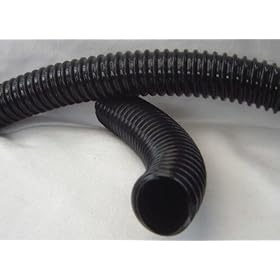
10 metres of Pond Hose Pipe corrugated Flexi hose 1" 25mm black

Luscombe Water Gardens

No customer reviews yet. Be the first. More about this product


Price:£17.95

In stock.
Dispatched from and sold by Luscombe Water Gardens.


Technical Details

  • 1 inch/25mm Diameter 10m coil
  • Many uses - especially in fish ponds
  • To carry water from pumps and fountains
  • To connect to filtration systems
  • Flexible plastic hose

Product details


Customers Viewing This Page May Be Interested in These Sponsored Links

(

What is this?)

Corrugated pipe systems www.hummel-group.com German manufacturer of quality industrial corrugated pipe systems Mains Water Pipes www.TradingDepot.co.uk Blue roll water mains pipe in range of sizes. fast delivery! Impact Moling Contractors ukmole.co.uk Water pipe replacement / Duct inst` Very competitive rates!


Product Description

Product Description
USCOMBE WATER GARDENS 1 inch/25mm Black Corrugated Flexi Hose This is for 10 metres of black flexi hose 1" that has many uses but, in particular in ponds for water pumps to filtration etc. It will be supplied in a continuous length of 30 metres We also stock 20mm, 32mm and 38mm and have all sizes available by the metre and 30m lengths. Please check our other Amazon listings. Take care........................

__________________
Take it easy, bb. >"HEAR & you FORGET<>SEE & you REMEMBER<>DO & you UNDERSTAND"<=$=|O|=$=>"Common Sense is Genius dressed in its Working Clothes"<>[Ralph Waldo Emerson]
Reply
Associate

Join Date: Feb 2009
Posts: 47
Good Answers: 2
#32
In reply to #31

Re: Ground source for heat and cooling

03/01/2009 10:11 AM

Thanks BB.Their delivery is restricted to the UK,but surely I can find some in the USA.I just need to look further.I figure around 1400 feet total length.1 inch gap between coils,each coil is 6 feet long,spiraling upward for 37 feet, that works out to 6 revolutions per foot of rise,or 36 feet per foot of rise times 37 feet =1332 ft.Plus extra for waste.I will have to build a manifold and divide the coil into segments to prevent too much loss through the piping.4 sections will probably be sufficient, but I will have to get specs from the piping manufacturer regarding losses when I find the supplier. Thanks again for all your effort.You are a valuable asset to this forum, as is everyone else. ----------------------------------------------------------------------------------I I couldn't play in the sand box when I was a kid...the cats kept covering me up.

__________________
"I See" said the carpenter as he picked up his hammer and saw.
Reply
Guru
United Kingdom - Member - Not a new member!

Join Date: Jun 2008
Location: USA/Europe
Posts: 4547
Good Answers: 68
#33
In reply to #32

Re: Ground source for heat and cooling

03/01/2009 1:10 PM

Hi ssb,

Thanks for the info on total length.

I somehow had the impression you were in the UK? Sorry.

Can you tell me roughly where you are in the US please?

A manifold could cause problems with circulation in the well. But it may be needed with the less strong plastic pipe? It may be something you can run a test on before you assemble the 1400 ft of pipe?

Take care......................

__________________
Take it easy, bb. >"HEAR & you FORGET<>SEE & you REMEMBER<>DO & you UNDERSTAND"<=$=|O|=$=>"Common Sense is Genius dressed in its Working Clothes"<>[Ralph Waldo Emerson]
Reply
Anonymous Poster
#34
In reply to #33

Re: Ground source for heat and cooling

03/01/2009 1:33 PM

I am in North Carolina, about 100 miles inland from the coast.A manifold properly designed, will be required to minimize friction losses in the pipe.If all sections are equal length, and fed from a common manifold, and a common header on return side, balance should be achieved easily.I figure four sections will be a good compromise,with a little over 350 feet per section.By paralleling the inputs in a manifold, and the returns on a header, the exchange efficiency will also be enhanced by reducing the amount of btu carried by each loop.Like paralleling resistors in an electrical circuit.This will tend to distribute the heat load across the entire well diameter, instead of concentrating the load mainly in the bottom or top of the well(depending on heat or cool mode).Consider this:With one coil, the hottest fluid will start at the bottom of the coil, and as it progresses upward, it will cool off.The differential temperature will decrease, and the exchange across the coil will be reduced.IF I have four coils, the temperature entering each one will be the same, and the well will be exposed to the same temperature for the full length, or close to it.Or at least that's the way I see it. SSB

Reply
Anonymous Poster
#35

Re: Ground source for heat and cooling

03/02/2009 8:51 PM

Thanks! SSB

Reply
Guru

Join Date: Dec 2005
Posts: 1602
Good Answers: 19
#36
In reply to #35

Re: Ground source for heat and cooling

03/03/2009 5:00 PM

An old acronym of wise advise,

KISS (Keep It Simple SSB!)

Admittedly, I know enough about geo-thermal applications to be dangerous. However, I am not aware of any systems that went to extreme measures to extract the last ounce of heat transfer efficiency.

Keep it simple and inexpensive with smooth wall pipe. Use something that you believe will last a loong time. Corrogated piping may flex in underground conditions and move enough to crack. Assume that once installed and buried you do not want to dig it up again. Invest you time and brain power in getting the big pieces to work together well, and keep the pipe design simple.

__________________
Eventually, one needs to realize that it is far less important to be the smartest person in the room than it is to sit next to that person and make friends.
Reply
Anonymous Poster
#37
In reply to #36

Re: Ground source for heat and cooling

03/03/2009 8:17 PM

Thanks for the info.The pipe will not be buried,at least not the coil.It will be in a large bore (24 inch ID ) well.The coil will conform to the inside of the well tile,and be surrounded by water for a depth of 37 feet.I agree with the KISS philosophy, and I may very well go with a smooth bore PEXa plastic pipe.The cross-linked polyethylene is very rugged, and is available with an oxygen barrier coating on the outside to prevent corrosion in the heat exchanger.I calculate that a 2inch supply and return will supply 4ea. 1 inch coil lines,through a balancing header.These headers/manifolds are available off the shelf. I am in the process of gathering information and opinions at the present time, and I have not settled on the final design.I welcome input from all sources and will try to consider all possible options before the design is moved from the rough draft stage into final design.In every design there are compromises between ideal and economic factors.The end result will be a "best fit" of many factors. Thanks to everyone for their input on this matter.---------------SSB-----------------

Reply
Reply to Forum Thread 37 comments

"Almost" Good Answers:

Check out these comments that don't yet have enough votes to be "official" good answers and, if you agree with them, vote them!
Copy to Clipboard

Users who posted comments:

Anonymous Poster (8); babybear (17); Ried (4); ShoeShineBoy (5); Village Technologies (3)

Previous in Forum: thickness required   Next in Forum: crane

Advertisement