Greetings Everyone.
Looking for assistance in some thermal management. This is not your usual management like for a house, no, think space program. I am the guy that has for the past 25 years been sending all sorts of electronic payloads to the what we call "Edge Of Space" IE: over 100,000 feet. Typical view,

Or a video if you fancy one,
http://www.youtube.com/watch?v=EdAuHr-bZ1M
OK, we launched another one last Sunday evening. This was an long duration attempt.
While my group was one of the original people that started this 25 years ago, these amateur high altitude balloon experiments, there are not thousands of people all around the world now doing these flights. We are always pushing the envelope so to speak, and was trying a design we tried before to make a long duration flight, details can be seen at,
http://www.qsl.net/nss/earthbreeze.html
OK now onto the thermal management.
Daytime flights we get cold, but never cold enough to kill the electronics. But these night time flights easily 50% of these flights die from the cold. Other than use special components that can operate in extreme cold (expensive) we try to keep the payload warm. Which usually means thick Styrofoam containers.
On this past Sundays flight we did also. the box was a white styrofoam box with 2 inch thick walls.
The flight was proceeding as desired, and it was dark after sundown launch so no solar gain to be had. and temps were dropping FAST even with the 2 inch thick styrofoam.
3 hours into the flight things started to mal function, transmissions were appearing late, off frequency, some garbled. telemetry was saying it is -55 deg C outside and -47 deg C inside the payload! BRRRR. shortly after that it died, and has not been heard from since.
So now doing some major re thinking on payload construction.
The Styrofoam really did not seem to keep the cold out very well at all. a 8 degree difference.
And I am thinking it actually made things worse? Because once the sun came up, the thick white box kept the solar energy from warming the electronics.
We have flown a few times in the day some payloads where they were wrapped in small cell "Bubble wrap" and even in the far vacuum of 100,000 feet, it was like mini greenhouse. the outside temps were like -30 deg C, but the inside, was a balmy +30 deg C.
so I am wondering since the styrofoam did not really keep it warm... and most likely kept the solar energy also out keeping it from warming up. wondering if maybe the bubblewrap is the better way to go?
The payload generates little to no heat of it's own. GPS and 300 milliwatt transmitter. so no useable heat.
Just looking for ideas here gang, on how to try to keep this thing as warm as possible.
Any ideas?
Joe


 Thermal Management


 Re: Thermal Management


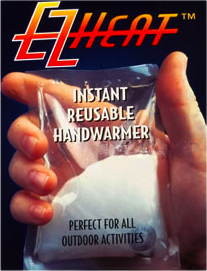


"Almost" Good Answers: