|
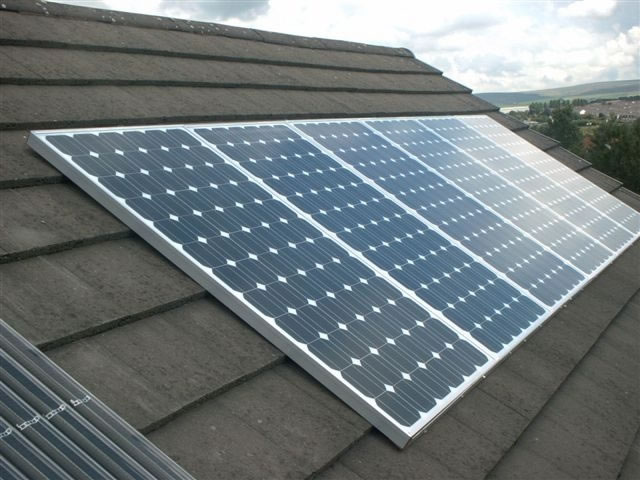
The solar energy industry has taken off over the last few
years due largely to the significant drop in solar panel price, driven by
Chinese manufacturers. But these low prices alone aren't always enough to make
solar technology economically feasible. After all, each square meter of
traditional solar panel produces an average of 145 Watts of electricity, enough
for maybe three lightbulbs.
(Credit:
solarpowerauthority.com -->)
But there are other ways to cut costs besides reducing the
price of the panel. As stated in a previous
article, buying the solar panels is only about 20% of the price tag for
small residential setups. Installation costs play a much larger role. Though it
is not quite so large a fraction for larger systems and solar plants, the setup
cost is still significant, especially since each solar panel has to be placed
and hooked-up by hand.
 Some solar companies, such as PV Kraftwerker and Gehrlicher
in Germany, have been working on new ways to reduce these costs using robots
that can install ground-mounted panels. These machines can work nonstop day and
night and in all types of weather conditions, saving companies big dollars on
labor costs. PV Kraftwerker states that these robots have cut their
installation staff needs from 35 to three, and the work can be done eight times
faster. Some solar companies, such as PV Kraftwerker and Gehrlicher
in Germany, have been working on new ways to reduce these costs using robots
that can install ground-mounted panels. These machines can work nonstop day and
night and in all types of weather conditions, saving companies big dollars on
labor costs. PV Kraftwerker states that these robots have cut their
installation staff needs from 35 to three, and the work can be done eight times
faster.
(<-- Credit: Gehrlicher
Solar AG)
PV's robot was built from off-the-shelf Japanese components,
including a robotic arm with suction cup grips to grab the panels and a camera
to guide them into place. All this is mounted on an all-terrain vehicle with
continuous tracks. The whole package summed a hefty $900,000. But in
perspective, labor costs for a 14-megawatt solar plant are estimated at $2
million, meaning one of these guys could pay for itself in less than a year of
continual use.
Right now, the robot can only place the large solar panels
on a metal frame already put in place by people. Two workers walk alongside the
robot to screw the panels into the frame and make the electrical connections. But
the creation of more flexible and adaptable solar modules could allow for more
multi-functional robots. For example, snap or glued connections could eliminate
the need for workers to screw the panels in; special plugs could even enable
the robots to make the electrical connections.
Automating the installation process is definitely a step in
the right direction for solar power. It won't be much help for the residential
sector (putting panels on roofs), but it will likely be a long-term money-saver for solar
power plants. As renewable power plants become more familiar, I expect to see
more improvements like these develop which aim to make construction and operation leaner and
more efficient.
References
These
Robots Install Solar Panels - Technology Review
| 

 2
2


 Re: Installing Solar Panels via Robot


Good Answers: