|
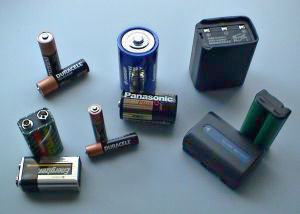
Battery technology is something I tend to take for granted.
Without it, I couldn't run my car or my cell phone or my mp3 player or (heaven
forbid) my watch. And the technology has come a long way since its invention in
1800; from Alessandro
Volta's expansive setup of electrochemical cells all the way down to those
button-sized pieces used in calculators.
As our world is becoming smarter and more mobile, batteries
are becoming increasingly important. In the smartphone realm, sadly, batteries
are having a tough time keeping pace with the race to the first handheld
supercomputer. With bright displays, lots of processing power, and more
capabilities in a small and lightweight package, smartphones fly in the face of
everything good battery life entails. It's the only thing those flip-phone
owners (me) can still brag about (besides lower phone bills).
Efforts to increase battery life usually revolve around
finding new ways to decrease power consumption. But a new product in
development by LG Chem is taking a different approach. The project is for
"cable batteries", batteries made to be flexible like cables or wires. They are
designed to work even when tied into knots or bent in any number of ways. The
idea is to incorporate these batteries into headphones, phone cases, clothing,
jewelry, and other on-person items and accessories in order to help charge or
provide power for small electronic devices.

Making the battery starts with thin strands of copper wire
coated with nickel and tin - two active electrode materials. The strands are
woven into a yarn and formed into a strong spring to serve as the battery's
backbone and anode. The other parts of the battery are wound around the anode,
including an aluminum wire as the main component of the cathode. Next, the
battery is drawn through a slurry containing lithium cobalt oxide cathode
material and then dried. After being wrapped in protective layers, the product
is completed by pouring in a liquid electrolyte used to carry charge when the
battery is hooked up.
Currently, these batteries don't output a ton of energy. IG
Chem says a 25 centimeter long prototype can run a small fourth generation iPod
shuffle for 10 hours while in its bent shape. But compared to other flexible
batteries that have been developed in the past, the discharge of these cable
versions is relatively stable under stress. Also, previous types of flexible
batteries were mostly made as flat sheets, which severely limitwwed their
practical application. Cable batteries offer a lot more creative options for
designers.

(A cable-shaped lithium-ion battery powers an LED display
even when twisted and strained. Credit:
LG Chem)
IG Chem hopes to boost the performance of these batteries as
their work continues. Several design aspects, such as new anode materials
currently being tested, could significantly increase efficiency and
performance. Researchers at the company have high hopes, and say the technology
could be ready for mass production in about five years.
I think this type of innovation has a lot of promise,
especially for making everyday items "smarter". For instance, wearable
electronics have been the focus of efforts to give sportswear the ability to
monitor an athlete's health and performance during training. Considering the
flexibility of the bendable battery design and the breadth if possibilities,
this is just one of the potential applications that could be utilized in years
to come.
References
Cable-Type
Flexible Lithium-Ion Battery - Advanced Materials
Technology
Review
| 


 Re: Bendable Batteries


