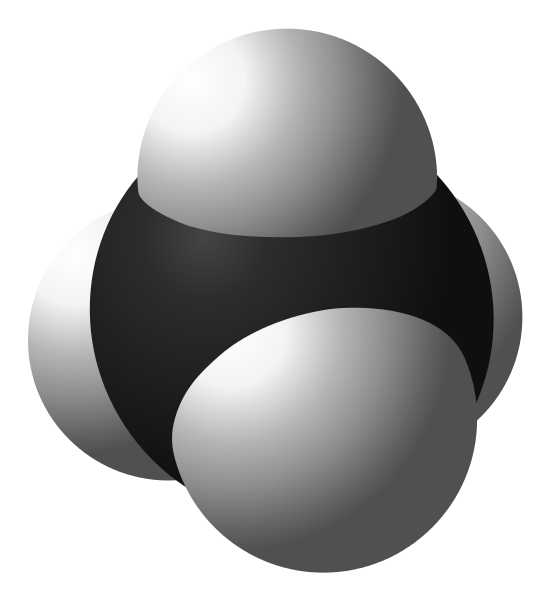
Since global warming became a hot topic, methane (CH4) gas
emissions have been a point of concern on the backburners of carbon dioxide. Considering
that methane's global warming potential is 72 times that of carbon dioxide over
20 years and 25 times over 100 years, it shouldn't be ignored. Two primary
contributors to methane gas production in the atmosphere are cows and
automobiles, raising the infamous question 'does a cow pollute more than a
car?' For those concerned about that debate, here is some insightful reading on
cow backpacks.
One of the ways methane emissions are curbed in cars (and
gas turbines, another big methane producer) is through the use of catalysts to
encourage combustion. In cars, these are found in catalytic converters, which facilitate
the oxidation (burning) of methane along with many other nasties produced by
the engine. The combustion reaction for methane is:
CH4 + 2O2 --> CO2 + 2H2O

(<-- The catalytic converter - an asset to the environment and a target for car thieves... Credit: Wired)
 In traditional catalytic converters, though, it's hard to
find catalysts that fit the bill for encouraging this reaction. Catalysts are
designed to assist chemical reactions by making them happen more efficiently
and effectively. Currently available catalysts for methane combustion are not
100% efficient however, allowing a lot of unburned fumes to leave with the
exhaust. The difficulty is, methane combustion catalysts need to be both active
enough to do their job effectively, and stable enough to withstand the harsh
conditions surrounding the process - particularly in regards to temperature. In traditional catalytic converters, though, it's hard to
find catalysts that fit the bill for encouraging this reaction. Catalysts are
designed to assist chemical reactions by making them happen more efficiently
and effectively. Currently available catalysts for methane combustion are not
100% efficient however, allowing a lot of unburned fumes to leave with the
exhaust. The difficulty is, methane combustion catalysts need to be both active
enough to do their job effectively, and stable enough to withstand the harsh
conditions surrounding the process - particularly in regards to temperature.
A new catalyst for methane, developed by a collaboration of
catalysis and energy specialists, could potentially fix these problems. It achieves
complete methane combustion at 400°C, the approximate exhaust temperature for
normal cars. This is crucial, considering most other catalysts can only achieve
100% efficiency at temperatures above 600°C. The catalyst also resists
breakdown from hotter temperatures up to 850°C, which can occur when more load
is put on the engine (climbing hills and driving fast).
(Representation of the catalyst's core-shell structure on an
aluminum oxide surface. Credit:
University of Pennsylvania -->)
The new catalyst has yet to be tested under real-world
conditions, which could be drastically different than the performance recorded
in lab. Vehicle exhaust in particular, which contains catalyst-disabling
components (like sulfurous compounds, oil-additives, and steam), could deter
the effectiveness of the substance. However, this development is a big first
step towards a real solution, and opens the doors for creating similar
structures which may perform better.
References
Catalyst
Could Zap Methane Emissions - CR4
Cheaper
and Cleaner Catalyst for Burning Methane - Science Daily
| 


 Re: Cutting Methane Emissions with New Catalysts


