|
It's your 10-year-old nephew's birthday tomorrow, and you
really want to impress him with the cool gift you purchased-only you haven't
purchased it just yet. And since you're Uncle Fun/Aunt Cool, it's your
responsibility to provide the most obnoxious gift possible and leave his
parents with the aftermath. Ten is a tough age for which to purchase; too
mature for childish toys and games, but too naïve for bikini calendars and
skateboards. it's your
responsibility to provide the most obnoxious gift possible and leave his
parents with the aftermath. Ten is a tough age for which to purchase; too
mature for childish toys and games, but too naïve for bikini calendars and
skateboards.
So you wander through the mall until you happen upon a kiosk
which sells remote control helicopters. Perfect.
Cool enough to put a smile on little Vladimir's face (yes, Vlad), and by the time he gets agile enough to chase the cat
with it you'll be back at home. And you can get 20 of them for $20. Sold.
But while remote control
helicopters are a failsafe for the uninspired gift-giver, they're also the most
basic type of unmanned aerial vehicles. Some of these UAV variants are only slightly more advanced than
your upper echelon hobby-grade kits, but are assisting humans in more ways than
just spending money.
Recently UAVs have gotten a lot of press. In December 2012,
internet giant Google donated $5 million to the WWF (The World Wildlife Fund,
not this WWF) to
support 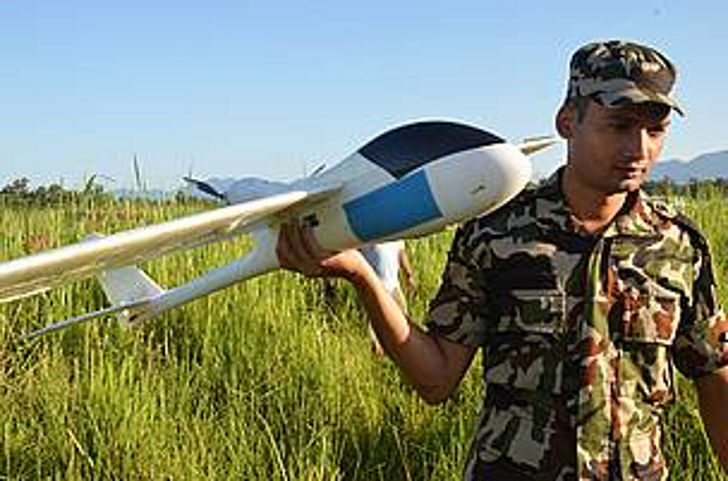 monitoring efforts in wildlife preserves in Africa and Asia. Illegal
poaching is a multi-billion dollar industry, and countries like Kenya and
Uganda do not have the resources to patrol thousands of miles of landscape. These
UAVs have been described as model planes that have been 'heavily modified',
though they do not carry any ordinance. Wildlife UAVs provide stunning
imagery but also reconnaissance on animal herds and poachers. Rangers can
then distribute resources accordingly. Completely eliminating poaching is
unlikely, but even by shortening the supply of animal products, the UAVs have
the capability of raising black market prices beyond reason and thereby
minimizing demand. monitoring efforts in wildlife preserves in Africa and Asia. Illegal
poaching is a multi-billion dollar industry, and countries like Kenya and
Uganda do not have the resources to patrol thousands of miles of landscape. These
UAVs have been described as model planes that have been 'heavily modified',
though they do not carry any ordinance. Wildlife UAVs provide stunning
imagery but also reconnaissance on animal herds and poachers. Rangers can
then distribute resources accordingly. Completely eliminating poaching is
unlikely, but even by shortening the supply of animal products, the UAVs have
the capability of raising black market prices beyond reason and thereby
minimizing demand.
Just
last month the Federal Aviation Administration released a list of which
government 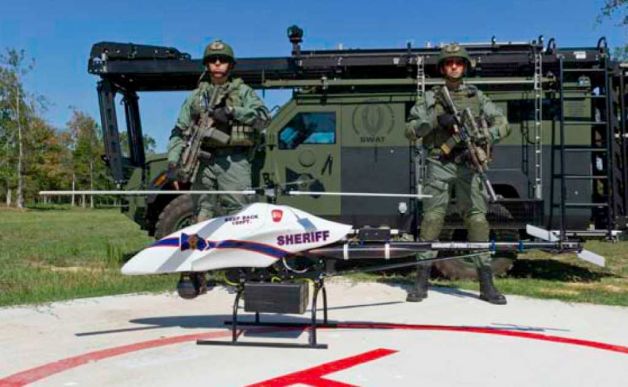 entities and universities have applied for a permit to use aerial
drones. While universities would fly them for academic reasons, most of the
government requests came from police departments to aid in law enforcement.
Last year, The Montgomery County Sherriff's Office of Texas began flying a
ShadowHawk UAV north of Houston, Texas, and has proposed outfitting the
pint-sized helicopter with Tasers, tear gas and rubber bullets. American
constituents press their legislators to keep drones away from backyards, but the
final decision would be handed down by FAA officials, meaning current bills in
some legislatures would be irrelevant. Hilariously, when the Montgomery Sheriff's Office had a press conference to launch their drone, they lost control of it and crashed it into a SWAT team. entities and universities have applied for a permit to use aerial
drones. While universities would fly them for academic reasons, most of the
government requests came from police departments to aid in law enforcement.
Last year, The Montgomery County Sherriff's Office of Texas began flying a
ShadowHawk UAV north of Houston, Texas, and has proposed outfitting the
pint-sized helicopter with Tasers, tear gas and rubber bullets. American
constituents press their legislators to keep drones away from backyards, but the
final decision would be handed down by FAA officials, meaning current bills in
some legislatures would be irrelevant. Hilariously, when the Montgomery Sheriff's Office had a press conference to launch their drone, they lost control of it and crashed it into a SWAT team.
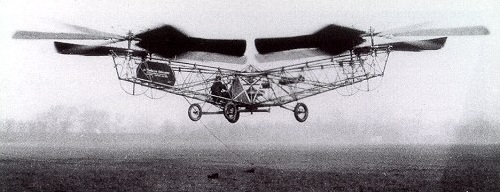 Perhaps ahead of their time, some manufacturers are
beginning to produce drones for general retail. Quadcopters are most common,
and though the Flying
Octopus was the first official helicopter, quadcopter research remained
stagnant until there was a need for inexpensive, lightweight, and reliable
surveillance UAVs. PopSci
recently reviewed a $700 quadcopter meant for aerial surveying, and other
quadcopters have been developed to map and help contain
wildfires. Perhaps ahead of their time, some manufacturers are
beginning to produce drones for general retail. Quadcopters are most common,
and though the Flying
Octopus was the first official helicopter, quadcopter research remained
stagnant until there was a need for inexpensive, lightweight, and reliable
surveillance UAVs. PopSci
recently reviewed a $700 quadcopter meant for aerial surveying, and other
quadcopters have been developed to map and help contain
wildfires.
But while these designs eliminate the need for onboard
operators, crews are still relied upon to provide input and support. This is
where Penn State's Vijay Kumar applied his ambition, and with help from
students Kumar created the Autonomous Agile Aerial  Robot. His quadcopters can
fly indoors or outdoors without GPS. At just over a pound and 8 inches in
diameter, these copters are nimble enough to navigate buildings. Input is
provided either by motion capture cameras or by an onboard smart camera. An
onboard processor transmits signals to the rotors 600 times a second to
determine its flight path. Most unique to these robots is their implicit
cooperation within a group. The processor is able to detect other AAARs and
coordinate actions. Kumar sees a day where these robots can autonomously map
buildings, detect hazards, and perform search and rescue with no human support.
These robots are able to fly in formations as well as lift and assemble
components. Watch Kumar's
2012 TED talk for a complete summary. Recently, similar quadcopters have
been developed to toss
objects between each other. Robot. His quadcopters can
fly indoors or outdoors without GPS. At just over a pound and 8 inches in
diameter, these copters are nimble enough to navigate buildings. Input is
provided either by motion capture cameras or by an onboard smart camera. An
onboard processor transmits signals to the rotors 600 times a second to
determine its flight path. Most unique to these robots is their implicit
cooperation within a group. The processor is able to detect other AAARs and
coordinate actions. Kumar sees a day where these robots can autonomously map
buildings, detect hazards, and perform search and rescue with no human support.
These robots are able to fly in formations as well as lift and assemble
components. Watch Kumar's
2012 TED talk for a complete summary. Recently, similar quadcopters have
been developed to toss
objects between each other.
 The capabilities of UAVs only seem to be as limited as the
creativity of the engineers behind them. While it seems like a long ways off
until a Terminator-like
future occurs, swarms of intrinsic and helpful robots may be the reality within
a decade. If we can invent one to fetch me a beer from the fridge, then I
welcome our new android overlords. The capabilities of UAVs only seem to be as limited as the
creativity of the engineers behind them. While it seems like a long ways off
until a Terminator-like
future occurs, swarms of intrinsic and helpful robots may be the reality within
a decade. If we can invent one to fetch me a beer from the fridge, then I
welcome our new android overlords.
Resources
(Image credits: NSMBL; Softpedia; Primal Unleashed; Wikimedia; GizMag; Killer Movies)
Wikipedia - UAV
The Atlantic - Google Gives $5 Million to...
Huffington Post - Drone List Release By FAA
| 


 Re: Universal UAVs


