E&E Exchange Blog

E&E Exchange

Welcome to the Energy & Environment (E&E) Exchange, a blog dedicated to science and engineering topics that are (generally) related to energy and the environment. This blog is meant to encourage discussion about the challenges and possibilities surrounding sustainability through science and technology. The blog's owner, cheme_wordsmithy, is a former technical writer and engineering editor at IEEE GlobalSpec, the company that powers CR4.

Previous in Blog: Pretty PV Panels   Next in Blog: Grow House Energy Concerns
Close
Close
Close
7 comments
Rating: Comments: Nested

Daylighting Lost Rivers

Posted July 03, 2014 7:00 AM by cheme_wordsmithy

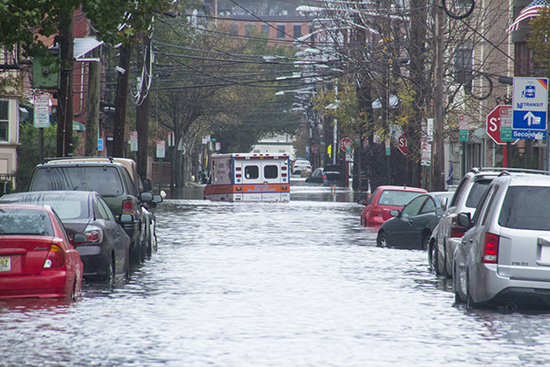
It has been a very wet year so far; lots of rain. Many parts of the US have had major flooding issues and big storms. When I see the results of these, it reminds me just how important stormwater management is, especially for large, congested cities. When I walk city streets, I often forget about the network of tunnels beneath my feet that keep the roads dry.

But subways and sewers aren't the only things hidden underground. In many cities, rivers and streams actually still exist and flow underneath portions of the city grounds. These waterbodies used to be visible parts of cities, but were buried and/or diverted underground as a result of urban development. In older cities, this was often for public health reasons, as sewage-polluted waters were the cause of sickness and also created terrible odors.

(Image right - Drawing depicting a filther "Father Thames" of the River Thames in Industrial Britain.)

Burying these streams and rivers has had noticeable effects on the environment. City conveyance systems, which replace buried streams and rivers, usually move water to a larger waterbody. This results in more frequent larger flow events to these lakes and rivers. In older cities, water is diverted to combined sewer systems. In these systems, high rainfall events often cause the combined sewage and stormwater to overflow straight into a main waterbody. Higher levels of contamination and nutrients are another adverse effect of urban development because of the number of impermeable surfaces that allow water to pick up various undesirables.

In some instances, the practice of daylighting can reverse the negative effects I just mentioned. Daylighting is the practice of uncovering lost streams and rivers and making them visible again. Often the projects result in more natural restorations, but opening a stream to the light of day between two concrete walls has also been done.

Regardless, the results of successful projects are the same: reduced flooding by increasing hydraulic capacity, water quality improvements through reduced combined sewer overflow, erosion reduction by slowing water velocity, and lower upkeep costs.

Of course, daylighting is not always feasible - the projects can get very expensive and are sometimes not possible based on the location of infrastructure. It cost $19 million dollars and ten years to open up a portion of the Saw Mill River in Yonkers. Pretty pricey, but also pretty nice results.

I first heard about daylighting through a documentary titled Lost Rivers. The practice has been gaining speed in recent years, which is good as I think it would benefit from some more attention and scrutiny. Water is a precious resource that affects so many things, so it is a worthy investment to find better ways to protect it and manage it. All the better if we can manage to do it by unearthing some of these beautiful natural waterways.

Reply

Interested in this topic? By joining CR4 you can "subscribe" to
this discussion and receive notification when new comments are added.

Good Answers:

These comments received enough positive votes to make them "good answers".
Guru

Join Date: May 2006
Location: Placerville, CA (38° 45N, 120° 47'W)
Posts: 6215
Good Answers: 248
#1

Re: Daylighting Lost Rivers

07/04/2014 1:01 AM

What we really need is a way to cause a portion of that rain to fall out here in the West!

Second best would be a way to transport a significant fraction of it here, where we grow a significant fraction of the world's food using a much smaller fraction of the world's water.

Our drought aside, I do applaud most efforts to intelligently manage and distribute all forms of water.

__________________
Teaching is a great experience, but there is no better teacher than experience.
Reply
Guru

Join Date: Jun 2009
Location: South of Minot North Dakota
Posts: 8376
Good Answers: 775
#3
In reply to #1

Re: Daylighting Lost Rivers

07/04/2014 3:35 PM

Sorry we can't. We have to use all of our excess water to do more fracking so that you people who live and California can feel good about not having power plants or petroleum production/refining done in your state.

Reply
Guru

Join Date: May 2006
Location: Placerville, CA (38° 45N, 120° 47'W)
Posts: 6215
Good Answers: 248
#5
In reply to #3

Re: Daylighting Lost Rivers

07/04/2014 6:25 PM

Right!

In fact there are two power plants only a block and a half from our shop in southern Ca. Of course they do burn some of the natural gas that comes from your fracking...

I have no idea what percentage of our petroleum is refined in the state, but there are several major refineries centered around Benicia in the Bay area, and I'm only a little aware of refineries in the Bakersfield and Los Angeles areas.

__________________
Teaching is a great experience, but there is no better teacher than experience.
Reply
Guru

Join Date: Jun 2009
Location: South of Minot North Dakota
Posts: 8376
Good Answers: 775
#6
In reply to #5

Re: Daylighting Lost Rivers

07/05/2014 1:46 PM

Well don't let the rest of California know about them or they will get those shut down right quick too!

Reply
Guru

Join Date: Jun 2008
Posts: 859
Good Answers: 33
#7
In reply to #5

Re: Daylighting Lost Rivers

07/05/2014 7:18 PM

RE: Oil comments…….California has not built a new refinery in over 30 years, as the new Enviro laws always stay ahead of the permit processes. On top of that, we have to manufacture 2 different types of gasoline, one for summer, one for winter. When a refinery goes down for service or there is a problem, there is no excess capacity to draw on, supplies go down, and prices go even higher. As far as water, diversion is a problem, but also, if we look at the amount of watershed that has been covered by pavement and roofs, especially in the cities west of the Sierras, Central and No. Cal., and Sierra Madre ranges, in So. Cal., with storm drains all leading to the ocean, there is much less water available to perc down into the aquifers. And , the movement to remove dams , for wilderness restoration, often trumps many other water priorities. Our last rain of 10 inches over 2 days, diverted 60% of the water that goes to our drinking water lake, down stream, for Steelhead (A native fish), preserve and Estuary restoration. The water wars are heating up again, , and local owners of water rights are making a killing. Our Governor wants to spend between $60 and $120 billion dollars for High Speed rail, then complains about the drought, and water shortages….Go figure...

Reply
3
Commentator

Join Date: Nov 2007
Posts: 85
Good Answers: 2
#2

Re: Daylighting Lost Rivers

07/04/2014 2:29 AM

In urban areas, rain water harvesting should be made mandatory as is done in the state of Tamilnadu, in India. Water from concrete surfaced area and roof tops are made to flow into water harvesting locations in each building/house, which helps in recharging the ground water table. This also prevents flooding to certain extent.

Reply Good Answer (Score 3)
Guru

Join Date: Jun 2008
Posts: 859
Good Answers: 33
#4
In reply to #2

Re: Daylighting Lost Rivers

07/04/2014 5:17 PM

Try and get that into the building codes here…How is the water purified for re-use? I can imagine the water running off the ground on a farm, with unknown contaminants, mostly biological, would need purification at local source, or does the water get funneled into a Municipal system, that then gets at least a Stage Two, Tertiary treatment?

Reply
Reply to Blog Entry 7 comments

Good Answers:

These comments received enough positive votes to make them "good answers".
Copy to Clipboard

Users who posted comments:

C-Mac (2); dkwarner (2); k.v.gopalakrishnan (1); tcmtech (2)

Previous in Blog: Pretty PV Panels   Next in Blog: Grow House Energy Concerns

Advertisement