|
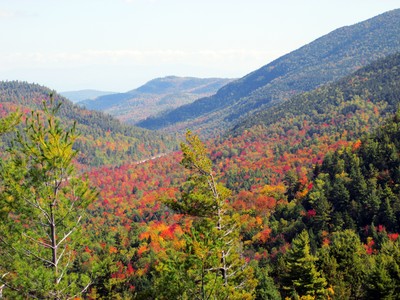 In New York, we are in the midst of blooming and peaking fall foliage. I had the pleasure last Friday of driving and hiking in the Adirondacks and seeing the autumn colors at their best. Viewing this brilliant display brought to my mind a question: what factors actually affect the fall foliage season? In New York, we are in the midst of blooming and peaking fall foliage. I had the pleasure last Friday of driving and hiking in the Adirondacks and seeing the autumn colors at their best. Viewing this brilliant display brought to my mind a question: what factors actually affect the fall foliage season?
A variety of natural phenomena play into the variations in brilliance and timing each year, and are best understood by stepping back and looking at the whole plant growth cycle process. At the end of the growth season (usually in June) plants begin the process of collecting energy for the next growth season (next spring). When the nights become long enough, the cells near the juncture of the leaf and the stem divide rapidly, but don't expand. This creates a blockage know as an abscission layer, which slows movement of material between the leaf and the rest of the tree. Because of the blockage, the leaf can't sustain its production of chlorophyll as the sun breaks it down (chlorophyll is that green stuff in the leaf that absorbs sunlight), and so the leaf loses its green color. The yellow, orange, and red pigments normally masked by the chlorophyll in the leaf are revealed for our viewing pleasure.
This process occurs naturally every year, but the display differs based on the influence of a number of environmental factors.
 Temperature - Cool temperatures (particularly at night) promote the creation of anthocyanins (red & purple colors) from sugars in the plant. Freezing conditions, on the other hand, destroy the mechanisms to create these pigments. Temperature - Cool temperatures (particularly at night) promote the creation of anthocyanins (red & purple colors) from sugars in the plant. Freezing conditions, on the other hand, destroy the mechanisms to create these pigments.
Sunlight - Lots of sun in autumn helps turn the leaves quicker by destroying chlorophyll more rapidly. It also feeds the production of anthocyanins.
Soil moisture - Drought can cause early abscission layer formation, causing leaves to drop before they develop fall colors. An extremely wet spring (along with cold spring temperatures) encourages the development of anthracnose, a fungal disease that discolors leaves and makes them fall prematurely. This was the case in the Northeast U.S. in 2011.
Wind & Rain - High winds and heavy rains in the fall can cause leaves to drop earlier, preventing coloration or shortening the season.
So what's the best formula for a great fall foliage season? A growing season with ample moisture that is followed by a pretty dry, cool, sunny autumn marked by warm days and cool but frostless nights provides the best weather conditions for the brightest and longest lasting fall colors.
 Fall foliage can also be affected by some more extreme weather events. For example, in 2011, extreme weather in the Northeast included major flooding and precipitation amounts during the spring, and Hurricane Irene in August. The wet spring encouraged the development of anthracnose (pictured left), a fungal disease that discolors leaves and makes them fall prematurely. The winds of Hurricane Irene deposited ocean salt on trees and shrubs many miles inland in Northern New England. The salt caused cell and tissue damage to leaves. The damage was greatest on the east side of the storm track (Rhode Island and southeastern Massachusetts), where precipitation from tropical storms is less than areas to the west. In these locations, the lower rainfall meant less rinsing of trees to mitigate the effects of the salt. As a result, late-dropping species such as oak and beech lost their leaves as much as two months early. Fall foliage can also be affected by some more extreme weather events. For example, in 2011, extreme weather in the Northeast included major flooding and precipitation amounts during the spring, and Hurricane Irene in August. The wet spring encouraged the development of anthracnose (pictured left), a fungal disease that discolors leaves and makes them fall prematurely. The winds of Hurricane Irene deposited ocean salt on trees and shrubs many miles inland in Northern New England. The salt caused cell and tissue damage to leaves. The damage was greatest on the east side of the storm track (Rhode Island and southeastern Massachusetts), where precipitation from tropical storms is less than areas to the west. In these locations, the lower rainfall meant less rinsing of trees to mitigate the effects of the salt. As a result, late-dropping species such as oak and beech lost their leaves as much as two months early.
Despite all this, the worst dampener on fall foliage I think is the weather that prevents a good viewing of it. I sit here on a Saturday morning writing this, having planned to enjoy peak weekend on an Adirondack hike; but alas, the clouds and rainfall made it a washout. I encourage anyone who has the chance to make sure they enjoy the fall colors while they are in bloom this year - it's another amazing spectacle we have to enjoy, one built into the framework of the natural world
Sources:
USNA - The Science of Color In Autumn Leaves
ScienceBuff.org
NorthernWoodlands.org
Fall leaf pictures were taken by the author
| 


 Re: Weather, Climate, and Fall Foliage


