|
Modern civilization is built upon
civil engineering. Buildings and bridges
are part of the study, but roads, subways, airports and all of these event
buildings are part of the discipline.
For that matter, even turning on a faucet and the complex waterways that
follow are part of what make up civil engineering.
While we take for granted so much of
every day life's conveniences, we remain awe-struck by what the future
holds. For example, modern civil
engineering is delving into jetliners, space stations, automobiles, and other
forms of modern technology. Some of the
most interesting creations to come from the field deserve a second look-and
perhaps even a greater amount of study.
The CN Tower is a building in
Toronto, Canada stands 1,815.4 feet tall and is western civilization's tallest
building. In fact, the American Society
of Civil Engineers called it one of the seven (modern) wonders of the world, given
its height as well as its design as a radio antenna.
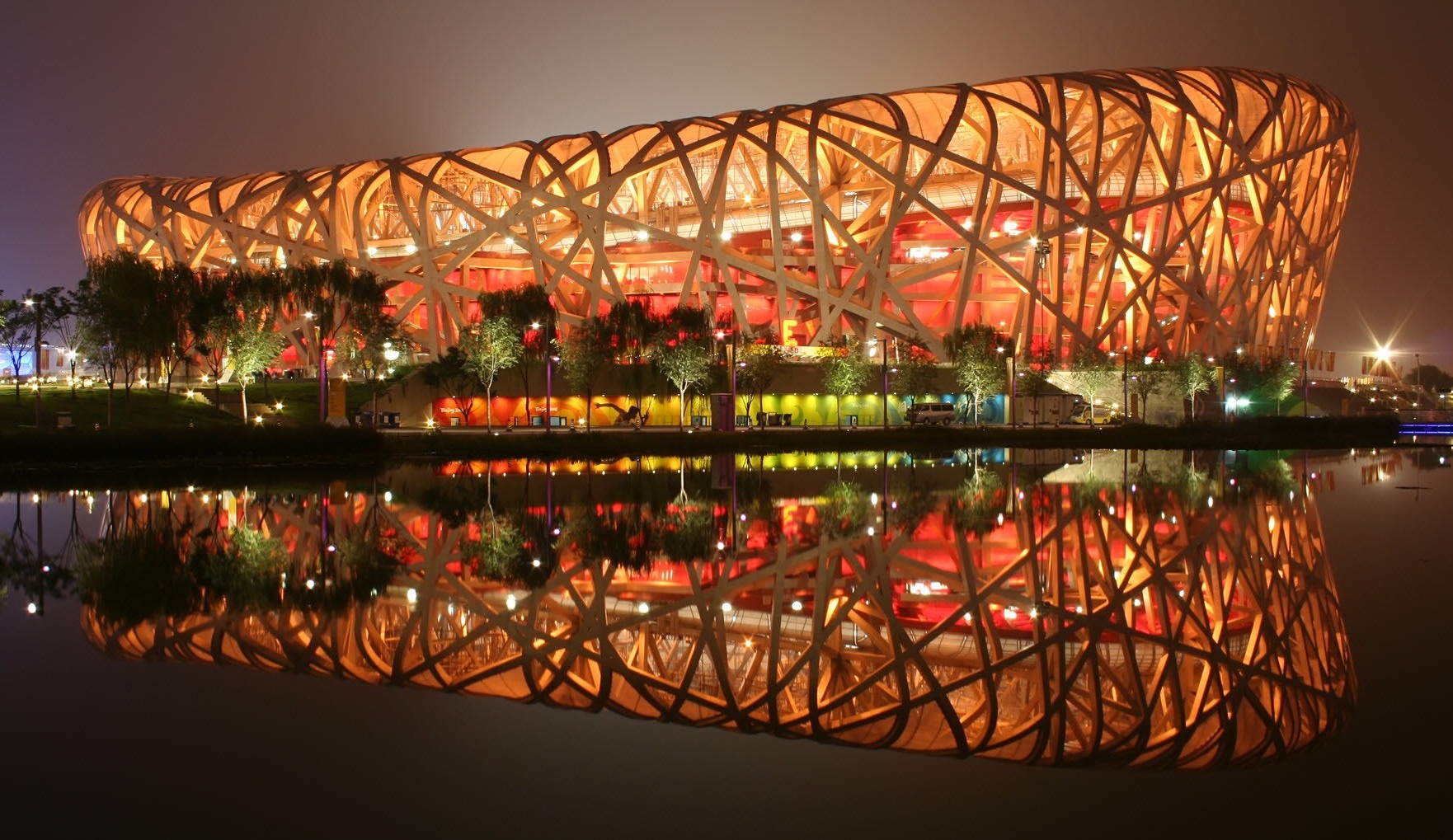 The Bird's Nest
in Beijing is a stadium that uses more structural steel than any other building
on earth. This fairly recent large
building was built in the design style of Chinese ceramics-something porous and
yet collective. The total capacity is
80,000 feet, and it has been built for maximum ventilation and comfortable
airflow. The Bird's Nest
in Beijing is a stadium that uses more structural steel than any other building
on earth. This fairly recent large
building was built in the design style of Chinese ceramics-something porous and
yet collective. The total capacity is
80,000 feet, and it has been built for maximum ventilation and comfortable
airflow.
The International
Space Station is collaborative effort and was once constructed on land
before being launched, in parts, into space via rocket or shuttle. Thus far, it remains the only building
assembled in space. In fact, each part
of the station had to be dry-fitted on land before being sent upwards, since
astronauts would be required to assemble parts later on. Many consider this the greatest effort in
human history, not only for the technology but also the team effort
involved.
The Ice Hotel is indeed one of
the greatest attractions in modern accommodations, given the fact that it is
entirely made of ice. Because of its
uniqueness, it must be rebuilt every year to accommodate changes in ice
structure. Even the workers inside have
to become accustomed to -40 degrees temperatures. Hardly a new experiment, the hotel has been
functioning for 22 years in Jukkasjärvi, Norway.
Once we start building land on water,
we've really started a whole new level of possibilities in civil
engineering. The artificial Palm Tree Islands
found on the coast of Dubai are made from 1.1 billion cubic meters of sand and
rock from the ocean.
The Oasis of the Seas is
literally an ocean city, a vessel with 100,000 tons to accommodate cruise
travelers and even a living park contain thousands of live plants and
trees.
While certainly not new, the Great Pyramid of Giza
remains a wonder of the world, given its two and a third million stone blocks,
while Great Wall of China is a five thousand
and a half mile long wall made special by the fact that rice flour was used to
create the mortar.
These are structures that not
only amaze but have really advanced what human civilization is capable of. We can only imagine what the future holds,
should we continue producing great and practical architecture.
image
| 


 Re: 8 Civil Engineering Creations Worth Studying


"Almost" Good Answers: