|
Ever since
the jet engines of the Concorde were extinguished nearly 12 years ago, the
world has awaited the next supersonic transport (SST). Amid rising fuel costs,
diminished government discounts, a fatal crash, reduced air travel and a
manufacturer that eliminated maintenance services, the Concorde was essentially
forced into retirement.
This left a
niche branch of air travel that remains unfulfilled. Whether it be for novelty
or functionality, there remains a need for a new generation of SST. The technology
is there, as it has been since 1963, but airplane OEMs and operators haven't felt
compelled to rush a new supersonic plane into service. After all, a Boeing 747
can carry thrice the passengers while using the same amount of fuel.
 There have
been a few developments of note, however. Since last check-in, Supersonic
Aerospace International has re-envisioned its Quiet SST concept as a 737-sized supersonic
passenger transport. SAI believes it has eliminated sonic booms with a redesigned fuselage and by
using extremely powerful electric turbofans for propulsion that receive power
from a superconductive electrical storage system. SAI is expected to release
feasibility studies in 2015, but for the second time in five years, it seems
the SAI QSST is on hiatus. There have
been a few developments of note, however. Since last check-in, Supersonic
Aerospace International has re-envisioned its Quiet SST concept as a 737-sized supersonic
passenger transport. SAI believes it has eliminated sonic booms with a redesigned fuselage and by
using extremely powerful electric turbofans for propulsion that receive power
from a superconductive electrical storage system. SAI is expected to release
feasibility studies in 2015, but for the second time in five years, it seems
the SAI QSST is on hiatus.
This is just
one of a number of SST concepts that have gone quiet recently. In late 2013 a
Gulfstream executive said that there isn't a current
viable market for its
supersonic x-54A concept. The Tupolev Tu-444 has seemingly been cancelled. Other projects, like the Lockheed N+2 and HyperMach SonicStar, are promised
to be available in the 2020s. Meanwhile Aerion Corporation has begun taking orders for its $120 million AS2
business-class supersonic jet, yet it won't be delivered until 2021, at
earliest. The Spike S-512 seems poised to launch in 2018 or
2019. Right now it's a two-horse race for SSTs.
Despite the
considerable development still ahead of all these planes, engineers are already
envisioning the subsequent generation of aerospace travel: hypersonic
transportation. Supersonic planes travel over Mach 1, but hypersonic planes
will travel Mach 5 (3,800 mph). In July, the U.S. Air Force announced its
intention to have a hypersonic aircraft ready by 2023, and a full weapons platform in its
hands by 2040. Considering most supersonic passenger planes won't ready until
after this deadline, it seems the military is rushing the maturity of this
technology a bit.
Nonetheless,
commercial hypersonic planes are on the horizon too. Airbus recently filed a patent on hypersonic plane technology. The 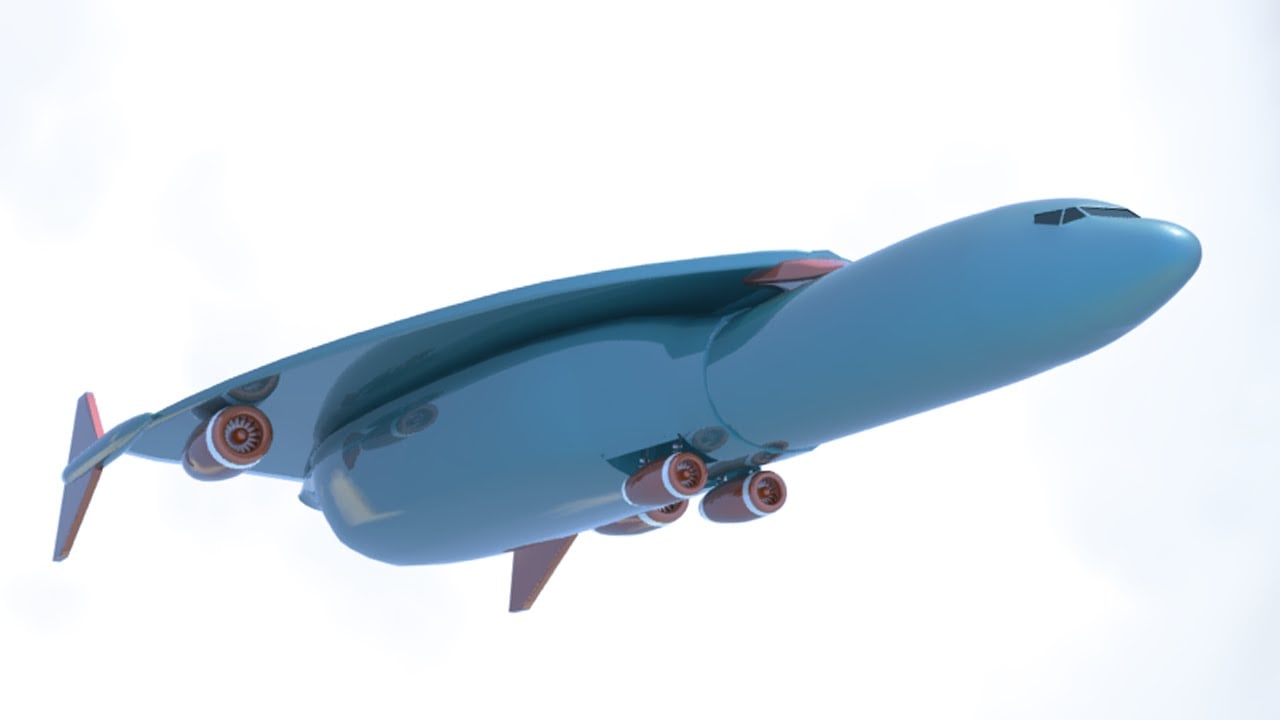 concept aircraft would use regular
jet engines to take-off before rocket boosters would send the plane on a steep
ascent. Once above the atmosphere, ramjet engines would propel the plane to
3,400 mph. Of course, patents typically are intellectual property tactics and
don't always represent realized technologies. But leading aerospace engineers
believe the day will come when flying Tokyo to Paris takes just three hours. concept aircraft would use regular
jet engines to take-off before rocket boosters would send the plane on a steep
ascent. Once above the atmosphere, ramjet engines would propel the plane to
3,400 mph. Of course, patents typically are intellectual property tactics and
don't always represent realized technologies. But leading aerospace engineers
believe the day will come when flying Tokyo to Paris takes just three hours.
Is it too
early to innovate hypersonic technologies? Probably not. But a lot remains to
be seen-especially financially-with the next era of supersonic travel.
| 


 Re: Who's Ready for Hypersonic Airplanes?


"Almost" Good Answers: