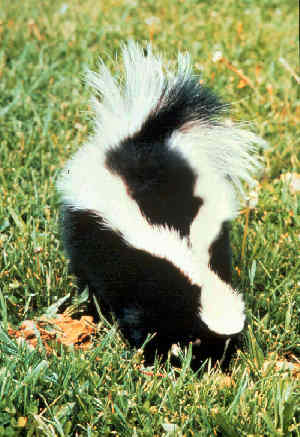
Skunks are often known for their smell and black-and-white
striped appearance, but otherwise, not many people know much about them. Mostly
seen as victims of road traffic, skunks are crepuscular and solitary
creatures.
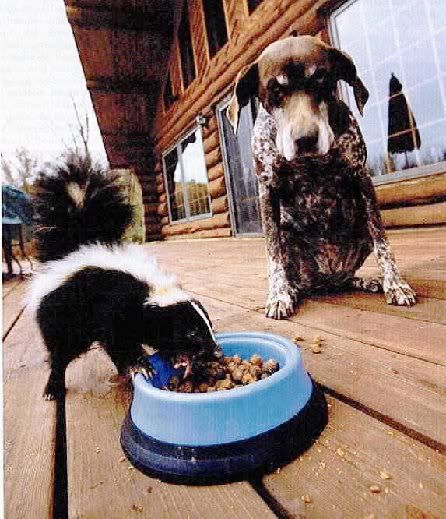
Skunks for Pets
Keeping skunks as pets is legal in the UK, although it
has been made illegal to remove their scent glands; sadly, when people hoping
to keep a skunk as a pet learn this fact, the skunks are usually deemed
impractical and are often dumped into the wild.
Keeping skunks as pets is only legal in certain US
states and the scent glands are removed. Skunks can survive for as few as ten
years and up past twenty years with a domesticated lifestyle. There is a lack
of genetic diversity amongst the US varieties of skunks because the
few breeders out there are using the same genetic stock. No skunks are allowed
to be taken from the wild.
Strengths and
Weaknesses
Skunks have excellent senses of smell and hearing, but
rather poor vision. Not being able to see clearly more than ten feet away makes
them especially vulnerable to road traffic. Fewer than ten percent of skunks
will live past three years old, with half of their deaths being human related.
Due to their thick fur, skunks are one of the primary
predato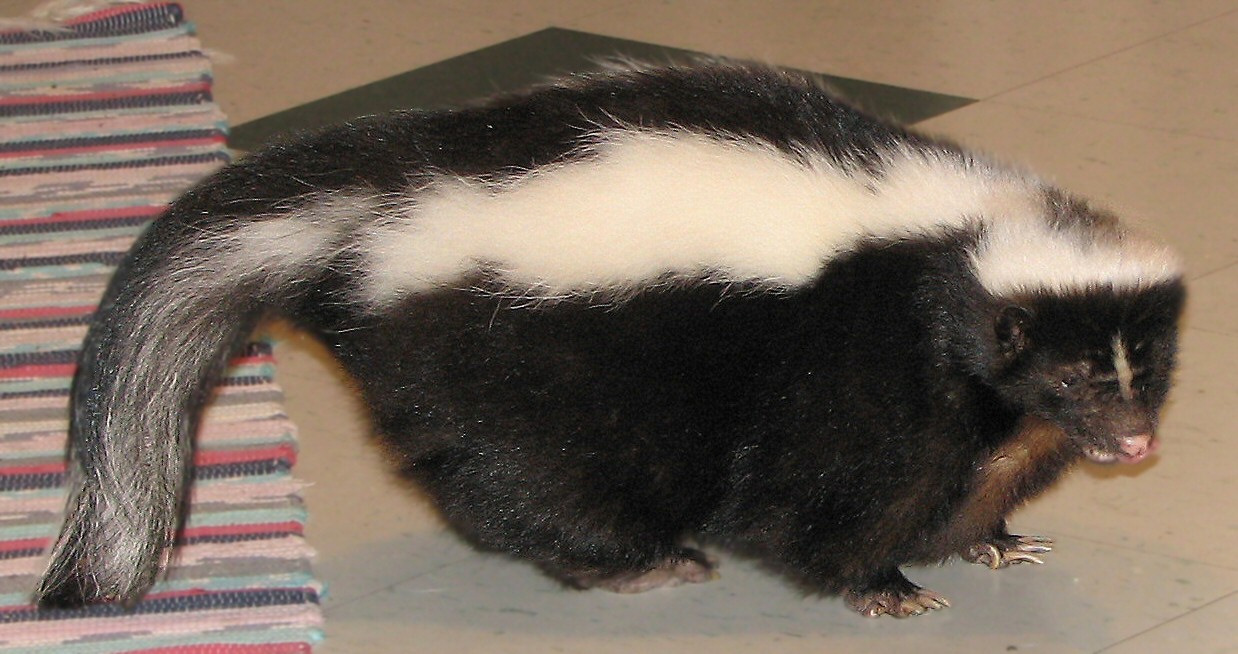 rs of the honeybee. Mother skunks teach their young how to scratch the
front of a beehive and eat the guard bees. They are generally omnivorous and
sometimes act as scavengers, eating carcasses left by other animals. In settled
areas, skunks are also drawn to eat human garbage. rs of the honeybee. Mother skunks teach their young how to scratch the
front of a beehive and eat the guard bees. They are generally omnivorous and
sometimes act as scavengers, eating carcasses left by other animals. In settled
areas, skunks are also drawn to eat human garbage.
Their notorious anal scent glands are used as a defensive
weapon as they produce the "spray" that humans and many animals fear. The spray is strong enough to ward off bears,
wolves, foxes, and many other predators. The skunks' main predator is the great
horned owl as its sense of smell is very poor. If sprayed, people and animals
may experience irritation and temporary blindness.
Will Skunks Spray Me?
Skunks are generally reluctant to use their spray. It takes
about ten days to produce a supply of the chemical and skunks only harbor
enough for five-to-six uses. They will usually resort to trying to warn the
threatening creature to stay away by hissing, foot stamping, and other tail-high
threat positions. Although, this will not hold true for a mother protecting her
kits as mothers often spray at any danger.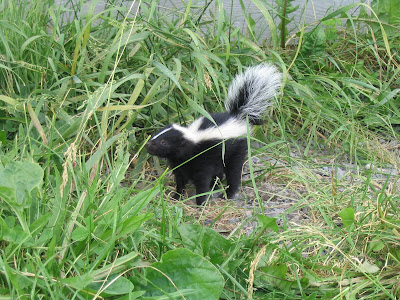
Regardless of whether skunks will spray first, I would
rather not take my chances and give them plenty of space. I see skunks often
where I reside. When I see them, my first instinct is to stop dead in my
tracks, an action that I have been made fun of. I have been told that I act as
if "an axe murderer is headed my way." Do you encounter skunks often? What do
you do when you see them? Would you ever want to own one as a pet?
Resources:
http://en.wikipedia.org/wiki/Skunk
http://www.opsi.gov.uk/ACTS/acts2006/pdf/ukpga_20060045_en.pdf
http://www.humboldt.edu/~wfw2/chemofskunkspray.html
| 


 Re: Would You Want a Pet Skunk?