Previous in Forum: Material Abstraction   Next in Forum: Color Absorption
Close
Close
Close
57 comments
Rating: Comments: Nested
Power-User

Join Date: Sep 2015
Posts: 482

Why Don't Electrons and Protons Annihilate Each Other?

10/15/2015 3:08 AM

Forgive my poor of understanding and lack of knowledge, but I've got an insight.

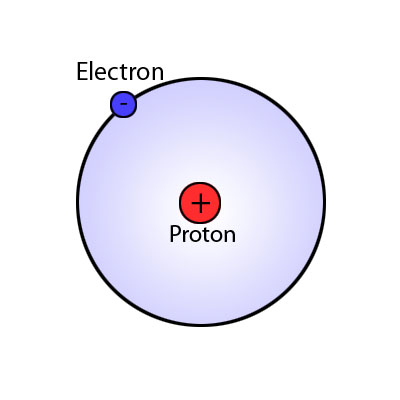
I wonder why does electron and proton does not annihilate each other? What is the force or factor behind (a good example is Hydrogen) electron stays on orbit on a distance from a proton? Opposite charges attract and probably want to neutralize one another, but somehow, it stays on their own premise.

__________________
The doctor said "just one post or reply aday in CR4, take it or leave it". I said, "what does that mean?"
Register to Reply
Pathfinder Tags: Electron and Proton
Interested in this topic? By joining CR4 you can "subscribe" to
this discussion and receive notification when new comments are added.

Good Answers:

These comments received enough positive votes to make them "good answers".

"Almost" Good Answers:

Check out these comments that don't yet have enough votes to be "official" good answers and, if you agree with them, vote them!
Guru

Join Date: Mar 2007
Location: by the beach in Florida
Posts: 33392
Good Answers: 1817
#1

Re: Why not Electron and Proton Annihilate each Other

10/15/2015 3:17 AM
__________________
All living things seek to control their own destiny....this is the purpose of life
Register to Reply
Guru

Join Date: Mar 2012
Location: Out of your mind! Not in sight!
Posts: 4424
Good Answers: 108
#2

Re: Why Don't Electrons and Protons Annihilate Each Other?

10/15/2015 5:30 AM

As far as I know if you put opposing people on different sides of the fence they will have to overcome the fence in order to express their opposition.

You forgot about the fence!

__________________
Common Sense Dictates
Register to Reply
Guru

Join Date: Apr 2010
Location: About 4000 miles from the center of the earth (+/-100 mi)
Posts: 9912
Good Answers: 1141
#3

Re: Why Don't Electrons and Protons Annihilate Each Other?

10/15/2015 5:53 AM

Protons and electrons are not the same thing at all. A proton is roughly 1836 times as heavy as an electron. The opposite particle from an electron is a positron, which weighs the same as the electron. An electron and positron will annihilate each other with the release of gamma rays. The proton also has an anti-particle, the anti-proton. The proton and anti-proton also will annihilate each other with the release of radiation.

Register to Reply Score 1 for Good Answer
8
Guru
Engineering Fields - Electrical Engineering - Been there, done that. Engineering Fields - Control Engineering - New Member

Join Date: Dec 2008
Location: Long Island NY
Posts: 15602
Good Answers: 982
#4

Re: Why Don't Electrons and Protons Annihilate Each Other?

10/15/2015 9:54 AM

I think what you actually asked is not what is puzzling you. Annihilation of two sub-atomic particles only happens when one has exact perfect matches of matter and antimatter particles like an electron and positron, or a proton and anti-proton. Neutron and anti-neutron subatomic particles also exist. When an actual annihilation happens, all of the mass of the two particles get converted into energy.

I think what actually puzzles you is the major problem with what is wrong with the Bohr atom model you show in your image. This model is very useful in explaining many things. This model is also elegantly simple to understand other complex interactions between atoms. However, why the electron(s) in orbit won't eventually loose enough energy to collapse their orbit and become stuck to the nucleus is not at all explained by this model. To accurately explain this requires a much better understanding of quantum mechanics, particularly Schroedinger's probability wave equations on the atom and the strong force that binds the nucleus together. To discuss these topics requires a good foundation in mathematics that cannot be taught in a public forum.

The simple, heuristic explanation is that the electron has so much less mass than the lightest nucleus (Hydrogen) that the slightest amount of energy applied to the atom will cause the electron to move rapidly in comparison with the nucleus. This is the simplest explanation why the electrons form the shell and not a mix of the two charged particles. If this energy is greater than the ionization of the atom then the electron might leave the atom and thus make an ion. When this energy is less than the ionization energy the electron must continue to move around the nucleus to retain this energy (conservation of energy).

Once one gets more into the weird world of quantum mechanics, one should see glaring complications and contradictions with this model, too. This is nowhere near the last word on the mechanics of an atom, too. (It's not even my word, but I cannot remember who coined this explanation.) We are still exploring this tiny realm.

__________________
"Don't disturb my circles." translation of Archimedes last words
Register to Reply Good Answer (Score 8)
Guru

Join Date: Feb 2011
Posts: 7025
Good Answers: 207
#6
In reply to #4

Re: Why Don't Electrons and Protons Annihilate Each Other?

10/15/2015 11:02 AM

a quality answer as usual although I doubt it registered at the target

Register to Reply
Guru
Engineering Fields - Electrical Engineering - Been there, done that. Engineering Fields - Control Engineering - New Member

Join Date: Dec 2008
Location: Long Island NY
Posts: 15602
Good Answers: 982
#7
In reply to #6

Re: Why Don't Electrons and Protons Annihilate Each Other?

10/15/2015 11:29 AM

Thank You!

__________________
"Don't disturb my circles." translation of Archimedes last words
Register to Reply Off Topic (Score 4)
Guru

Join Date: Oct 2008
Posts: 42355
Good Answers: 1693
#9
In reply to #7

Re: Why Don't Electrons and Protons Annihilate Each Other?

10/15/2015 2:54 PM

Not sure why this is OT.

Both you and James deserve an Atta Boy for feeding the troll two very good responses.

Register to Reply
Guru
Engineering Fields - Electrical Engineering - Been there, done that. Engineering Fields - Control Engineering - New Member

Join Date: Dec 2008
Location: Long Island NY
Posts: 15602
Good Answers: 982
#10
In reply to #9

Re: Why Don't Electrons and Protons Annihilate Each Other?

10/15/2015 3:03 PM

My "Thank you" was directed to Fredski not the original topic. Hence my selection of OT. I do appreciate whomever gave my "Thank you" a GA.

Before this turns into one of my favorite cartoon skits, lets end this here.

Thank You.

__________________
"Don't disturb my circles." translation of Archimedes last words
Register to Reply Off Topic (Score 5)
Guru

Join Date: Mar 2012
Location: Out of your mind! Not in sight!
Posts: 4424
Good Answers: 108
#14
In reply to #4

Re: Why Don't Electrons and Protons Annihilate Each Other?

10/15/2015 7:36 PM

Good information. Just to add to this the Bohr model is insofar incomplete since it omits the Neutrons. Here is something about the atom model development.

I think the Neutrons play a vital role in keeping the Electrons and Protons from each other.

__________________
Common Sense Dictates
Register to Reply
Power-User

Join Date: Nov 2011
Posts: 258
Good Answers: 2
#16
In reply to #4

Re: Why Don't Electrons and Protons Annihilate Each Other?

10/16/2015 12:38 AM

Good answer to one may not be a satisfactory answer to another. I too have had this doubt as to why electron does not collide with proton (opposite charges attract) and annihilate. After going through different answers and reading through various links- I still not got any satisfactory explanation. Scientists too have tried to come up new terms like positron, anti matter etc etc.

Is atom like our Earth? Earth has liquid molten lava, spins on its axis, has a magnetic field with N & S along the axis of rotation (or is axis of rotation and alignment of N & S are still different?). Then we have outer core- which is solid mud etc etc This is nonmagnetic. So we can continue to use magnetic material, move it around on the surface of earth. If not imagine we would never have been able to make or move steel and other magnetic material on the surface of the earth.

So is Proton, a positive charge at the core, with neutrons coating around and electron spinning on the neutron? Does electron spin in a plain and are different orbits of electrons in the same plain or different plains? What is the speed of rotation of electrons around the inner core of protons and neutrons? Is it same for all atoms or different for different atoms?

Register to Reply
Guru

Join Date: Mar 2012
Location: Out of your mind! Not in sight!
Posts: 4424
Good Answers: 108
#17
In reply to #16

Re: Why Don't Electrons and Protons Annihilate Each Other?

10/16/2015 1:29 AM

Does electron spin in a plain and are different orbits of electrons in the same plain or different plains?

For this bit check "electron valence".

Its all more or less knowledge that can easily be found in the internet.

__________________
Common Sense Dictates
Register to Reply
2
Guru
Safety - Hazmat - New Member United States - US - Statue of Liberty - New Member Engineering Fields - Chemical Engineering - Old Hand

Join Date: Mar 2011
Location: Lubbock, Texas
Posts: 14331
Good Answers: 162
#22
In reply to #16

Re: Why Don't Electrons and Protons Annihilate Each Other?

10/16/2015 10:15 AM

If you start back to thinking of the electron as a BB rolling around in a mechanical orbit (like a satellite) you will miss it completely. First of all the proton has nearly nothing for volume and is very nearly a point charge in space with mass, but even that still has its own wave function. The electron should be thought of more as a diffuse cloud of charge density that is symmetric (even higher levels and orbital have symmetry), and that tells us the probability of finding the electron at a point in space. It tells us for example that the electron will not be found (with any probability) at 10 times the atomic radius. Since there are well-defined quantum energy states (not a continuum of possible energies for the electron), the electron can only be in certain orbitals, until it reaches sufficient energy to reach ionization threshold where the electron is kicked off the atom, and the result is a free electron and a free proton (in space). Only X-rays of a maximum wavelength or particles with more energy than that can produce this ionization. When the electron comes back to the atom, typically X-ray radiation is produced consistent with the difference in energy from the ionization to one of the quantum shell energy levels.

There is an actual probability in the wave equations for hydrogen of finding the electron at the proton, and it still does not "annihilate", collapse the atom, or otherwise change the physical identity of what is present - a hydrogen atom.

During the early days of quantum physics/chemistry, Dirac had a mathematical model of an electron in orbit around a proton, but the mathematics description seemed to produce a spiral decaying orbit that resulted in a "catastrophe". Even after this was fixed, there was a noted problem with modeling hydrogen-like (1 electron) ions with high Z (atomic number). New models (see hyperlink below) correct the known flaw of Dirac theory by introducing a radius for the nucleus, not a point charge in space. It is some fairly steep mathematics, so drink some coffee and wade through, I still do not completely grasp, even having had more than a moderate exposure to quantum chemistry/physics.

http://arxiv.org/ftp/arxiv/papers/1307/1307.0209.pdf

__________________
If it ain't broke, don't fix it. Just build a better one.
Register to Reply Good Answer (Score 2)
Power-User

Join Date: Nov 2011
Posts: 258
Good Answers: 2
#47
In reply to #22

Re: Why Don't Electrons and Protons Annihilate Each Other?

10/27/2015 12:43 PM

I am still puzzled.

  1. What you state id electron is like a cloud- I too learnt about this in college nearly 48 years ago.
  2. Then you say electron keeps going round in an orbit.
  3. The orbit size is bigger than the size of Proton + Neutron- so the electron and proton will not collide.
  4. Let us consider many other elements which are solids like iron, Copper etc etc. They have a very high hardness !!!
  5. Does it mean that electron in an orbit around the proton can hold back even under high compression force?!!! Obviously there is a repulsive force (force of compression is opposed by some force of repulsion!!) which gives this harness property!!! There is no repulsive force always- if not the element would be swelling in size always!!!
  6. Anyway topic is interesting.

I wish I could get some more answers to my puzzle.

Register to Reply
Guru
Engineering Fields - Electrical Engineering - Been there, done that. Engineering Fields - Control Engineering - New Member

Join Date: Dec 2008
Location: Long Island NY
Posts: 15602
Good Answers: 982
#48
In reply to #47

Re: Why Don't Electrons and Protons Annihilate Each Other?

10/27/2015 2:47 PM

The cloud analogy is is a closer Newtonian approximation of the quantum mechanics. It still contains serious flaws. The electron does not go around the nucleus in an orbit. That's the incorrect but useful Bohr atom model. The energy level between electron and nucleus is in a probability distribution orbital. The S and P orbitals do have a known spatial orientation. However, these three dimensional shapes only define the probability shape where one will likely (50%?) find the electron for that orbital to reside. These are not trajectory paths of something in orbit.

The macroscopic forces applied to and from solid matter predominantly comes from the electromagnetic forces of electron clouds repelling each other as atoms get too close and one form or another chemical bond. This is an even more complicated topic than the simple wave equations of Hydrogen.

__________________
"Don't disturb my circles." translation of Archimedes last words
Register to Reply
Power-User

Join Date: Nov 2011
Posts: 258
Good Answers: 2
#49
In reply to #48

Re: Why Don't Electrons and Protons Annihilate Each Other?

10/28/2015 2:01 AM

Thank you for your explanation. I was also wondering about energy dissipated in any atom- if the electrons are supposed to be going round the nucleus. Electrons are not static!!!

Now what wonder - how the earth and the planets keep circling round the sun. I am sure huge amount of energy is needed for the erath to be circling the sun- where does it all come from?

It is only now we start appreciating what God is doing- how he is keeping so many planets moving and the universe surving and also the electrons supposed to be circling the nucleus at the tiny level- and keeping CR4 members engaged in discussions on Hydrogen atom!!! GOD IS GREAT!!!!

Register to Reply
Guru

Join Date: Apr 2011
Posts: 8006
Good Answers: 286
#50
In reply to #49

Re: Why Don't Electrons and Protons Annihilate Each Other?

10/28/2015 6:46 AM

Hmmmm, yes, God is adding all the energy needed to keep the planet in its orbital path..... finally, some theology that doesn't trigger empirical dissonance!

Yes we can say that is one good example of the contribution made by the invisible voyeur in the sky, celestial tea pot, flying spaghetti monster, or diety during jour.

__________________
Eternal vigilance is the price of knowledge. - George Santayana
Register to Reply
Guru

Join Date: Apr 2011
Posts: 8006
Good Answers: 286
#51
In reply to #48

Re: Why Don't Electrons and Protons Annihilate Each Other?

10/28/2015 7:06 AM

So, as a capacitor is charged to great potential between the plates, how much change in hardness or size occurs comparing one plate to the other?

Seems that if electrons are the agents of hardness and boundaries, that increasing/decreasing the population should effect hardness and dimensions. Does the positive plate get a little softer and smaller as the electrons leave?

__________________
Eternal vigilance is the price of knowledge. - George Santayana
Register to Reply
Guru
Safety - Hazmat - New Member United States - US - Statue of Liberty - New Member Engineering Fields - Chemical Engineering - Old Hand

Join Date: Mar 2011
Location: Lubbock, Texas
Posts: 14331
Good Answers: 162
#19
In reply to #4

Re: Why Don't Electrons and Protons Annihilate Each Other?

10/16/2015 8:47 AM

Amen to the excellent contribution you made with your posts. I think we much to learn about particle-wave duality (or perhaps string theory), although the physicists already seem to have some well-developed mathematics to describe this, I think we are only scratching the surface of how to exploit matter and energy.

__________________
If it ain't broke, don't fix it. Just build a better one.
Register to Reply
Guru

Join Date: Nov 2007
Location: Eastern Arizona mountains on Route 666 about a mile from God's country
Posts: 1676
Good Answers: 122
#43
In reply to #4

Re: Why Don't Electrons and Protons Annihilate Each Other?

10/22/2015 11:06 AM

Great answer!

__________________
They said; "Brain size?" I heard; "Train size?" so I said: "I'll take a small one, thank you."
Register to Reply
Guru

Join Date: Feb 2011
Posts: 7025
Good Answers: 207
#5

Re: Why Don't Electrons and Protons Annihilate Each Other?

10/15/2015 10:55 AM
Register to Reply
Guru
Safety - Hazmat - New Member United States - US - Statue of Liberty - New Member Engineering Fields - Chemical Engineering - Old Hand

Join Date: Mar 2011
Location: Lubbock, Texas
Posts: 14331
Good Answers: 162
#8

Re: Why Don't Electrons and Protons Annihilate Each Other?

10/15/2015 2:04 PM

Once again, I am late to the party! First of all these two elementary particles are both made of "normal" matter, not anti-matter and matter. Oppositely charged normal matter, got it? Having said that, there is nothing to say that if you totally localized a hydrogen atom within a metal lattice locked into a position so tightly, that the momentum (energy) of said hydrogen atom could not be considerable (even though it is apparently cold and motionless), based upon the Heisenberg uncertainty principle.

Now suppose you send a Q wave of electric current through the metal lattice. The metal is known to undergo a high stress wave within the lattice, compressing and rarifying the lattice. During the compression, this represents available energy to this fixed hydrogen atom such that there is sufficient for the production of a cold neutron from the atom that was there previously.

Cold neutrons have absorption cross-sections that are many orders of magnitude higher than thermal neutrons, previously reported in the literature for Uranium isotope(s). Now, suppose this cross section is high enough that the neutron (that is no longer bound by the lattice as would be the hydrogen atom) is free to diffuse/drift into a nearby fixed hydrogen atom. It is probable that a neutron capture event will take place, thereby producing a deuterium atom. This can be extended to a neutron drifting into a tritium atom, being captured, with the result being essentially hydrogen with an atomic mass of 4. This is Beta unstable, and quickly emits a Beta particle, and is converted to Helium. The net result of the process is basically nuclear fusion on a small, controlled scale, capable of releasing considerably more energy than the energy input.

Does this not sound interesting to you?

__________________
If it ain't broke, don't fix it. Just build a better one.
Register to Reply
Guru

Join Date: Mar 2007
Location: by the beach in Florida
Posts: 33392
Good Answers: 1817
#11

Re: Why Don't Electrons and Protons Annihilate Each Other?

10/15/2015 3:33 PM
__________________
All living things seek to control their own destiny....this is the purpose of life
Register to Reply
Guru
Safety - Hazmat - New Member United States - US - Statue of Liberty - New Member Engineering Fields - Chemical Engineering - Old Hand

Join Date: Mar 2011
Location: Lubbock, Texas
Posts: 14331
Good Answers: 162
#12
In reply to #11

Re: Why Don't Electrons and Protons Annihilate Each Other?

10/15/2015 3:56 PM

I am sure that could produce enough energy for a warp drive, if you could afford or produce enough energy to make the anti-hydrogen, but that is what dilithium is for, is it not?

__________________
If it ain't broke, don't fix it. Just build a better one.
Register to Reply
Guru

Join Date: Mar 2007
Location: by the beach in Florida
Posts: 33392
Good Answers: 1817
#15
In reply to #12

Re: Why Don't Electrons and Protons Annihilate Each Other?

10/15/2015 7:38 PM

I duuna no the in and outs of it laddie...I just work the dials....

__________________
All living things seek to control their own destiny....this is the purpose of life
Register to Reply
Power-User

Join Date: Sep 2015
Posts: 482
#23
In reply to #11

Re: Why Don't Electrons and Protons Annihilate Each Other?

10/16/2015 10:29 AM

The article seems a little bit exaggerating. Like how would one find an anti-particle? Or is it to be made by efforts? Certainly, it is subject to inevitable entropy production.

Particle and anti-particle can be paralleled like the simple noise cancellation process. You would need effort to make an anti-particle and is subject for losses along the making, so it is not that efficient at all.

Couple of times, i tried it with a song on audicity and invert it then played both together at the same time, it's worked cancelling the other.

The energy involve in their annihilation is simply the differential area bounded by the anti-particle(red wave in figure above) and particle wave(blue wave), so you would expect a bigger Kabooom!

Einstien's absolute euquation of energy E=mc2 has got an imaginary part of solution. This is the part when c becomes imaginary and still satisfies his equation.

Hawking is right, even black holes generates entropy.

I remember the post of Wwwheaty this is the answer to the sqrt (-1)

__________________
The doctor said "just one post or reply aday in CR4, take it or leave it". I said, "what does that mean?"
Register to Reply
Guru
Engineering Fields - Electrical Engineering - Been there, done that. Engineering Fields - Control Engineering - New Member

Join Date: Dec 2008
Location: Long Island NY
Posts: 15602
Good Answers: 982
#26
In reply to #23

Re: Why Don't Electrons and Protons Annihilate Each Other?

10/16/2015 3:40 PM

Actually antimatter is created all of the time, even naturally here on Earth. The hard part is capturing and storing the antimatter. Often antimatter will be created by pair production that produces both matter and antimatter at the same time. These pair productions will quickly self annihilate each each other but for a brief amount of time both particles exist.

__________________
"Don't disturb my circles." translation of Archimedes last words
Register to Reply
Commentator

Join Date: Nov 2007
Posts: 85
Good Answers: 2
#27
In reply to #23

Re: Why Don't Electrons and Protons Annihilate Each Other?

10/17/2015 12:47 AM

Is it possible to cancel the noise of a jet engine by taking feedback and generating opposite waves so that our airports become noise free?

Register to Reply
Guru
Engineering Fields - Electrical Engineering - Been there, done that. Engineering Fields - Control Engineering - New Member

Join Date: Dec 2008
Location: Long Island NY
Posts: 15602
Good Answers: 982
#28
In reply to #27

Re: Why Don't Electrons and Protons Annihilate Each Other?

10/17/2015 7:23 AM

As the great Yogi Berra once said:

In theory there is no difference between theory and practice. In practice there is.

Yogi Berra

Read more at http://www.brainyquote.com/quotes/quotes/y/yogiberra141506.html#ck50hUD2K4bHJ1sQ.99

Wave cancellation makes both node and anti-node locations. So while it is possible to reduce the sound to nearly zero for one location, another location will now be twice as loud.

__________________
"Don't disturb my circles." translation of Archimedes last words
Register to Reply
Guru

Join Date: Apr 2011
Posts: 8006
Good Answers: 286
#13

Re: Why Don't Electrons and Protons Annihilate Each Other?

10/15/2015 5:29 PM

When an electron and proton combine it just yields a different 'normal' matter particle, a neutron. As well a neutrino if emitted. Beta capture decay is a real world process in which this transformation occurs. Beta capture is a type of decay that occurs in isotopes that have too many protons relative to neutrons.

The reverse happens for free thermal neutrons with a half life on the order of several minutes. Neutrons decay into a proton, electron and antineutrino.....so hydrogen plus an anti-neutrino.

You can extrapolate one good reason then that hydrogen atoms don't commonly experience the proton ane electron combining; because the electron proton form is lower energy than the neutron form. The solitary neutron is uphill from the more stable protium.

__________________
Eternal vigilance is the price of knowledge. - George Santayana
Register to Reply
Guru
Safety - Hazmat - New Member United States - US - Statue of Liberty - New Member Engineering Fields - Chemical Engineering - Old Hand

Join Date: Mar 2011
Location: Lubbock, Texas
Posts: 14331
Good Answers: 162
#18
In reply to #13

Re: Why Don't Electrons and Protons Annihilate Each Other?

10/16/2015 8:33 AM

Yes, that is true, but perhaps sufficient energy is available for a "lattice trapped" hydrogen atom, where suddenly a strong ripple in the metal lattice fabric occurs (as in Q wave excitation), thus the whole diatribe about cold neutrons being formed. The question is where is the neutrino (kinda hard to detect these anyway).

__________________
If it ain't broke, don't fix it. Just build a better one.
Register to Reply
Guru
Engineering Fields - Electrical Engineering - Been there, done that. Engineering Fields - Control Engineering - New Member

Join Date: Dec 2008
Location: Long Island NY
Posts: 15602
Good Answers: 982
#20
In reply to #13

Re: Why Don't Electrons and Protons Annihilate Each Other?

10/16/2015 9:33 AM

Electron capture clearly does happen with certain isotopes as part of the decay process. However, knowing only about the net results of this process can lead a novice to an incorrect conclusion. An electron is not contained in any nucleus. At no time can an electron be confined to the space of a nucleus. To properly understand why this is true requires first an understanding DeBroglie wavelength of any particle. and the uncertainty principle. Then to see why the very, very, very tiny electron with its almost (but not actually) zero rest mass cannot exist inside a nucleus, one should see the rules for Particle confinement.

As I said earlier, quantum mechanics is a weird realm. Virtually all engineering works well with the easy to observe and measure Newtonian laws of nature. When multiple dimensions approach zero, things get weird.

__________________
"Don't disturb my circles." translation of Archimedes last words
Register to Reply
Guru
Safety - Hazmat - New Member United States - US - Statue of Liberty - New Member Engineering Fields - Chemical Engineering - Old Hand

Join Date: Mar 2011
Location: Lubbock, Texas
Posts: 14331
Good Answers: 162
#24
In reply to #20

Re: Why Don't Electrons and Protons Annihilate Each Other?

10/16/2015 10:35 AM

And the corrected Dirac model accounts for that by not having the nucleus exist as a point charge. Are you stating that no particle can be contained in a "package" any smaller than its DeBroglie wavelength? Do we have Shroedinger and DeBroglie at loggerheads here?

__________________
If it ain't broke, don't fix it. Just build a better one.
Register to Reply
Guru
Engineering Fields - Electrical Engineering - Been there, done that. Engineering Fields - Control Engineering - New Member

Join Date: Dec 2008
Location: Long Island NY
Posts: 15602
Good Answers: 982
#25
In reply to #24

Re: Why Don't Electrons and Protons Annihilate Each Other?

10/16/2015 12:12 PM

No, Schroedinger developed his work from De Broglie's work. The energy required to confine an electron to the volume of a nucleus is at least three orders of magnitude greater than the energy found in any nucleus.

You really should read your own citations and think a little clearer about what is being said. The first sentence of the abstract states:

The "catastrophe" in solving the Dirac equation for an electron in the field of a point electric charge, which emerges for the charge numbers Z > 137, is removed in this work by new method of accounting of finite dimensions of nuclei.

The Dirac model using a point charge distribution works for nuclei with 136 protons or less. The heaviest element created so far on Earth has only 118 protons in the nucleus. The one sentence long second paragraph in the abstract agrees with my observation:

As a result, for all nuclei of the periodic table the calculated energy levels practically coincide with the energy levels in standard solutions of the Dirac equation in the external field of the Coulomb potential of a point charge.

It should also be noticed that this paper discusses the theoretically available stable energy levels for the electrons around these proposed nuclei. Not that these electrons ever exist inside these nuclei.

__________________
"Don't disturb my circles." translation of Archimedes last words
Register to Reply
Guru
Safety - Hazmat - New Member United States - US - Statue of Liberty - New Member Engineering Fields - Chemical Engineering - Old Hand

Join Date: Mar 2011
Location: Lubbock, Texas
Posts: 14331
Good Answers: 162
#35
In reply to #25

Re: Why Don't Electrons and Protons Annihilate Each Other?

10/20/2015 10:30 AM

Could you please educate me on this topic a bit more? Is this an "electron-in-a-box" energy question?

__________________
If it ain't broke, don't fix it. Just build a better one.
Register to Reply
Guru
Engineering Fields - Electrical Engineering - Been there, done that. Engineering Fields - Control Engineering - New Member

Join Date: Dec 2008
Location: Long Island NY
Posts: 15602
Good Answers: 982
#36
In reply to #35

Re: Why Don't Electrons and Protons Annihilate Each Other?

10/20/2015 11:55 AM

Yes, it is precisely the energy required to put an electron in a box the size of a nucleus problem.

__________________
"Don't disturb my circles." translation of Archimedes last words
Register to Reply
Guru
Safety - Hazmat - New Member United States - US - Statue of Liberty - New Member Engineering Fields - Chemical Engineering - Old Hand

Join Date: Mar 2011
Location: Lubbock, Texas
Posts: 14331
Good Answers: 162
#37
In reply to #36

Re: Why Don't Electrons and Protons Annihilate Each Other?

10/20/2015 2:14 PM

I can see I need to review my stuff.

__________________
If it ain't broke, don't fix it. Just build a better one.
Register to Reply
Guru
Safety - Hazmat - New Member United States - US - Statue of Liberty - New Member Engineering Fields - Chemical Engineering - Old Hand

Join Date: Mar 2011
Location: Lubbock, Texas
Posts: 14331
Good Answers: 162
#38
In reply to #36

Re: Why Don't Electrons and Protons Annihilate Each Other?

10/20/2015 2:49 PM

I found this on HyperPhysics, and it helped me some.

http://hyperphysics.phy-astr.gsu.edu/hbase/uncer.html

Maybe this will help others also understand it better. I had trouble understanding how confinement would require all that energy, but it is precisely in the solutions of a 3D particle in a box (Shrodinger equation) where E (energy) is explicitly linked to the inverse of the L (length of a side of the box).

This tells me a great deal more how proton confinement on (within) a metal lattice could result in electron capture energies being a reality (as long as neutrino flux of the correct kind is present, and it is). It all has to do with wave-particle duality, confined particle energetics, and known nuclear processes that already take place.

The Q wave experiments simply "encourage" the event to take place more frequently, I suppose by offering an even tighter confinement for an instant of time.

__________________
If it ain't broke, don't fix it. Just build a better one.
Register to Reply
Guru
Engineering Fields - Electrical Engineering - Been there, done that. Engineering Fields - Control Engineering - New Member

Join Date: Dec 2008
Location: Long Island NY
Posts: 15602
Good Answers: 982
#39
In reply to #38

Re: Why Don't Electrons and Protons Annihilate Each Other?

10/20/2015 2:56 PM

Funny, your citation is the same page as my fourth citation in reply #20, titled Particle confinement.

__________________
"Don't disturb my circles." translation of Archimedes last words
Register to Reply
Guru
Safety - Hazmat - New Member United States - US - Statue of Liberty - New Member Engineering Fields - Chemical Engineering - Old Hand

Join Date: Mar 2011
Location: Lubbock, Texas
Posts: 14331
Good Answers: 162
#40
In reply to #39

Re: Why Don't Electrons and Protons Annihilate Each Other?

10/20/2015 3:39 PM

I guess it's "funny" I forgot to click on all your highlighted text items. I guess I feel pretty darn stupid today. Thank you for pointing out rather neatly that you had all this covered in spades.

__________________
If it ain't broke, don't fix it. Just build a better one.
Register to Reply
Guru
Engineering Fields - Electrical Engineering - Been there, done that. Engineering Fields - Control Engineering - New Member

Join Date: Dec 2008
Location: Long Island NY
Posts: 15602
Good Answers: 982
#41
In reply to #40

Re: Why Don't Electrons and Protons Annihilate Each Other?

10/20/2015 4:40 PM

I apologise for being a little sharp in my last reply. You should never feel more stupid than anybody else about making a mistake on quantum mechanics. It is a very weird science that simultaneously solves perplexing problems while it baffles "common sense" ideas.

__________________
"Don't disturb my circles." translation of Archimedes last words
Register to Reply
Guru
Safety - Hazmat - New Member United States - US - Statue of Liberty - New Member Engineering Fields - Chemical Engineering - Old Hand

Join Date: Mar 2011
Location: Lubbock, Texas
Posts: 14331
Good Answers: 162
#42
In reply to #41

Re: Why Don't Electrons and Protons Annihilate Each Other?

10/21/2015 3:32 PM

Somebody here (in maintenance) was telling where one of our co-workers was at the moment, and he added, "...and he doing real work."

That got me to thinking (not well I am afraid), that what if the mechanical work we are used to is only the Re(work), and the Im(work) is still out there in the complex plane somewhere? I found zip on this train of thought, and it is most likely a blind alley tunnel with the train (light) headed in my direction.

Then somehow I landed on a mechanics page where the topic was the conversion of LaGrange operator by LaPlace Transform into the Hamiltonian operator, and I was only a bit confused, seemingly remembering some of this stuff from graduate school quantum chemistry class with Henry Eyring. It does have some neat ways of relating velocities with energy in relativistic systems (and non-relativistic ones down to low speeds). Also it related momenta and position, I think.

Then, somehow, I clicked on lie operators, and got off into mathematics that totally blew me away. That stuff is about as foreign to me as symmetry groups were when I first delved into that.

__________________
If it ain't broke, don't fix it. Just build a better one.
Register to Reply
Guru

Join Date: Apr 2011
Posts: 8006
Good Answers: 286
#30
In reply to #20

Re: Why Don't Electrons and Protons Annihilate Each Other?

10/18/2015 9:21 AM

You seem to be suggesting there is something misleading about noting the reversible conversion of neutron to proton and electron with anti-neutrino.

That an electron does not fit with a nucleus as per QM, does not change reality of the conversion occuring.

.

"All models are wrong. Some are useful." - George E P Box

__________________
Eternal vigilance is the price of knowledge. - George Santayana
Register to Reply
Guru
Engineering Fields - Electrical Engineering - Been there, done that. Engineering Fields - Control Engineering - New Member

Join Date: Dec 2008
Location: Long Island NY
Posts: 15602
Good Answers: 982
#31
In reply to #30

Re: Why Don't Electrons and Protons Annihilate Each Other?

10/18/2015 11:07 AM

The misleading aspect is not stressing that QM is not in any way intuitive to our Newtonian mechanic (NM) instincts.

The electron capture process converts a proton and electron into a neutron and anti-neutrino and this process is certainly reversible. This accurate information can easily cause somebody to jump a wrong NM conclusion.

6.5*10^10 neutrinos stream through every cross sectional square centimeter of a person from the sun every second. These neutrinos also oscillate between the three types of neutrinos as they hurtle away at relativistic velocities. Yet in most matter that make us up, neutrons do not spontaneously change into protons and electrons from neutrino interaction at any noticeable rate.

It is so easy to misapply QM information. This is why Richard Feynman made the famous quote "If you think you understand quantum mechanics, you don't understand quantum mechanics."

__________________
"Don't disturb my circles." translation of Archimedes last words
Register to Reply
Guru

Join Date: Apr 2011
Posts: 8006
Good Answers: 286
#32
In reply to #31

Re: Why Don't Electrons and Protons Annihilate Each Other?

10/18/2015 1:29 PM

Tell me again why I should worry about someone not having the right idea about something, for which its biggest proponents claim no one knowingly understands?

__________________
Eternal vigilance is the price of knowledge. - George Santayana
Register to Reply
Guru
Engineering Fields - Electrical Engineering - Been there, done that. Engineering Fields - Control Engineering - New Member

Join Date: Dec 2008
Location: Long Island NY
Posts: 15602
Good Answers: 982
#33
In reply to #32

Re: Why Don't Electrons and Protons Annihilate Each Other?

10/19/2015 7:25 AM

You can do any thing you wish. I stride to present honest integrity. I'm sorry that offends you.

__________________
"Don't disturb my circles." translation of Archimedes last words
Register to Reply
Guru

Join Date: Apr 2011
Posts: 8006
Good Answers: 286
#34
In reply to #33

Re: Why Don't Electrons and Protons Annihilate Each Other?

10/19/2015 12:26 PM

If you believe that response reflects a good understanding if my comment, you don't have a good understanding of my comment.

__________________
Eternal vigilance is the price of knowledge. - George Santayana
Register to Reply Score 1 for Good Answer
Guru
Safety - Hazmat - New Member United States - US - Statue of Liberty - New Member Engineering Fields - Chemical Engineering - Old Hand

Join Date: Mar 2011
Location: Lubbock, Texas
Posts: 14331
Good Answers: 162
#44
In reply to #31

Re: Why Don't Electrons and Protons Annihilate Each Other?

10/22/2015 1:13 PM

I do believe there is a slight energy mismatch for neutron formation (if the source proton is non-confined). Neutron lifetimes are what? several orders of magnitude more than the age of the universe, as long as they are within a nucleus? Free neutrons have lifetimes of the order of 15 minutes. Wikipedia on free neutrons: { A free neutron is unstable, decaying to a proton, electron and antineutrino with a mean lifetime of just under 15 minutes (881.5±1.5 s). }

Does this mean that to produce a neutron from electron capture by a proton, one needs another antineutrino? OR is this possible just by adding sufficient energy. I think energy, as basically the antineutrino is more or less just a packet of energy of small mass leaving the decay event.

__________________
If it ain't broke, don't fix it. Just build a better one.
Register to Reply
Guru

Join Date: Apr 2011
Posts: 8006
Good Answers: 286
#45
In reply to #44

Re: Why Don't Electrons and Protons Annihilate Each Other?

10/25/2015 10:45 PM

neutrinos one way antineutrinos the other. Easier to give something than catch its antithesis.....at least from my time perspective.

.

I don't think much useful comes from defining halflives of thinks not yet independentl Asking about the halflife of a neutron in a nucleus is like asking about the halflife of a fission daughter decay product if no fission occurs.

mu

__________________
Eternal vigilance is the price of knowledge. - George Santayana
Register to Reply
Guru

Join Date: Apr 2011
Posts: 8006
Good Answers: 286
#46
In reply to #31

Re: Why Don't Electrons and Protons Annihilate Each Other?

10/25/2015 11:32 PM

If one of the truths of QM known to you is "If you think you understand QM, you don't understand QM', how do you deal with the paradox of explaning some nuance of QM in any manner that might pass for 'striving to present honest integrity' ?

.

Is the key this puzzle the use of 'honest integrity'? Integrity implies honesty. By implicitly stating it, is there then an implied negation?

.......in a similar fashion that "to tell the trruth....'' or ''to be perfectly honest'' are frequently excellent contraindicators?

__________________
Eternal vigilance is the price of knowledge. - George Santayana
Register to Reply
Guru
Popular Science - Cosmology - Let's keep knowledge expanding Engineering Fields - Retired Engineers / Mentors - Hobbies - HAM Radio - New Member

Join Date: Dec 2006
Location: North America, Earth
Posts: 4528
Good Answers: 106
#21

Re: Why Don't Electrons and Protons Annihilate Each Other?

10/16/2015 9:53 AM

I've replied to one of your posts today, so no more says your doctor.

__________________
“I would rather have questions that can't be answered than answers that can't be questioned.” - Richard Feynman
Register to Reply
Guru
Engineering Fields - Civil Engineering - Member

Join Date: Mar 2011
Location: ''but, don't we get PAID to ask questions?...''
Posts: 1661
Good Answers: 17
#29

Re: Why Don't Electrons and Protons Annihilate Each Other?

10/17/2015 5:26 PM

Qualitatively speaking, could it be that, in the atomic family, they're just a couple of squabbling siblings, like normal families, have?...

__________________
''illigitimi non carborundum...''(i.e.: don't let the fatherless (self-deluding,sabotaging, long-term-memory-impaired, knee-jerking, cheap-shotting, mono-syllabic, self-annointed, shadow-lurking, back-biting, off-topic-inquisitors) grind you down...)
Register to Reply
Power-User

Join Date: Nov 2011
Posts: 258
Good Answers: 2
#52

Re: Why Don't Electrons and Protons Annihilate Each Other?

10/31/2015 12:19 PM

Just to brighten up the discussion- is there any relation between electron orbits & Raman's effect to explain- why Carbon looks black or copper looks reddish or aluminum looks white and so on.

What can explains the fact that chlorine as a particular smell or hydrogen has no smell but Hydrogen sulphide (I think I am right) stinks of rotten egg, Sodium chloride (salt) has a particular taste and so on.

Register to Reply
Guru
Safety - Hazmat - New Member United States - US - Statue of Liberty - New Member Engineering Fields - Chemical Engineering - Old Hand

Join Date: Mar 2011
Location: Lubbock, Texas
Posts: 14331
Good Answers: 162
#53
In reply to #52

Re: Why Don't Electrons and Protons Annihilate Each Other?

11/04/2015 1:55 PM

Carbon absorbs most of the visible spectrum. The colors of metals is due to the interaction of light with surface plasmon polaritrons. Gold, copper are the ones that appear as "colored" to us. All of the metals having high reflectivity of visible (and other wavelengths) of light is from this same effect. This is also how charge carriers (electrons and holes) are coupled into and out of semiconductors to and from metals.

The artist that draws too many analogies can be confused into thinking the universe looks like an analogy also.

Classical physics - angular momentum, gravitation acceleration (in a gravity well of a massive object - not saying what the mass of that object is), are the basic aspects of a stable orbit in space between any two objects having mass. There is always velocity and acceleration in an orbit. If not in an orbit, two bodies accelerating toward each other by gravity may indeed collide. The universe is not a simple mechanical system, but a vast array of billions and billions of objects in motion, and many violent (collisions) have take place in the past, and it is a guarantee that there will be collisions in the future.

__________________
If it ain't broke, don't fix it. Just build a better one.
Register to Reply
Power-User

Join Date: Nov 2011
Posts: 258
Good Answers: 2
#54
In reply to #53

Re: Why Don't Electrons and Protons Annihilate Each Other?

11/08/2015 2:35 AM

Thanks for the explanation.I only sit back and am amazed by God's creation.

As you mention electrons are in motion- not static. So also earth is in motion and so many objects in motion/ not static !!! Once you say the bodies - be it tiny electrons or earth or galaxy- energy is needed as they are changing in space and time!!!! Stationery objects do not need energy. Imagine we are supposed to be dead- when we stop breathing (even if we are stationery). When the soul leaves the body- we say person is dead.

But a metal does not die/ atoms do not die!!! They have infinite life!!!! In nuclear (forgot what I learnt in college) physics we say something has half life!!! But even in that material there are atoms- within which there will be electrons which will be moving (needing energy). Just sit back, think and one can only praise nature/ God. No explanations possible.

Register to Reply
Guru
Safety - Hazmat - New Member United States - US - Statue of Liberty - New Member Engineering Fields - Chemical Engineering - Old Hand

Join Date: Mar 2011
Location: Lubbock, Texas
Posts: 14331
Good Answers: 162
#55
In reply to #54

Re: Why Don't Electrons and Protons Annihilate Each Other?

11/09/2015 9:00 AM

There was a hymn we used to sing in church: "How Great Thou Art!" Even the most astute of physicist, astronomer, or chemist, or biologist must stand in wonder at the complexity of our universe, realizing that the more knowledge we gain, it appears the less we actually know (the knowledge frontier just keeps growing, challenging us to press forward in learning).

Unfortunately in this cynical age, people seem hardened against the possibility of an omnipotent, omniscient, omnipresent being (God) who could actually care about each individual human being, love them, and desire only for their eternal happiness and fellowship with "Him". Some can only envision God as having characteristics we as mankind have, but the scriptures teach that God has none of our weaknesses and failures.

There is either a God, and we should all live in a way to glorify God by striving our utmost to bring equality, peace, and harmony to the world, or there is no God, and we should still strive our utmost to accomplish the same work in the name of morality, and civilization. I am willing to place my bet in the God column, and if I am wrong I will never know it after I am deceased.

We all owe a death, and all will eventually pay it in full. The question is did we each attempt to live our lives to the best of our abilities to help others along the way?

__________________
If it ain't broke, don't fix it. Just build a better one.
Register to Reply
Power-User

Join Date: Nov 2011
Posts: 258
Good Answers: 2
#56
In reply to #55

Re: Why Don't Electrons and Protons Annihilate Each Other?

11/15/2015 4:59 AM

Just a nice and great response! I keep wondering how THE GOD gives employment opportunities and gives work to so many scientists to keep guessing, discovering , unraveling for centuries together and still we know so little. Imagine we are told about momentum of a body in motion and we write a formula for it. Now how much of energy is needed for the earth to be in constant motion around the sun- God created vacuum, so that frictional loss will be less !!!!

Scientists talk of life on Mars and if you compute density of sun light on Mars , may be our solar cells will fail to generate any power. So NASA scientists have (I suppose) a nuclear source to power the Rover on Mars. Ingenious too!!!!

Just amazing!!

Register to Reply
Guru
Safety - Hazmat - New Member United States - US - Statue of Liberty - New Member Engineering Fields - Chemical Engineering - Old Hand

Join Date: Mar 2011
Location: Lubbock, Texas
Posts: 14331
Good Answers: 162
#57
In reply to #56

Re: Why Don't Electrons and Protons Annihilate Each Other?

11/16/2015 9:51 AM

Actually the solar panels works OK on Mars, just not at the same intensity they would closer to the sun. AFAICT, there is no nuclear thermal reactor/thermopile arrangement on the rovers, or they would be the NASCAR of Mars.

__________________
If it ain't broke, don't fix it. Just build a better one.
Register to Reply
Register to Reply 57 comments

Good Answers:

These comments received enough positive votes to make them "good answers".

"Almost" Good Answers:

Check out these comments that don't yet have enough votes to be "official" good answers and, if you agree with them, vote them!
Copy to Clipboard

Users who posted comments:

Fredski (2); IdeaSmith (3); James Stewart (15); k.v.gopalakrishnan (1); Legolaz (1); lyn (1); MR. Guest (1); redfred (13); Rixter (1); SHOCKHISCAN (1); SolarEagle (3); StandardsGuy (1); truth is not a compromise (8); xyz (6)

Previous in Forum: Material Abstraction   Next in Forum: Color Absorption

Advertisement