The Lion Air crash was found to be due to a malfunctioning Maneuvering Characteristics Augmentation System (MCAS). This system detects the angle of attack using two angle-of-attack sensors. It forces the nose of the plane down when the sensed angle-of-attack is too high and a wing stall is imminent.
The problem had already been reported and a sensor had just been replaced. Apparently, this did not fix the problem. The pilots wrestled with the MCAS to maintain control of the plane.
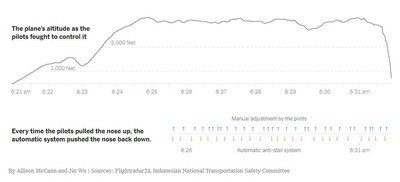
Apparently, the system had been modified so that it could not be overridden by the pilots pulling back the control yoke.
"Despite Boeing’s insistence that the proper procedures were in the handbook, also called the emergency checklist, pilots have said since the accident that Boeing had not been clear about one potentially vital difference between the system on the new 737s and the older models. In the older versions, pilots could help address the problem of the nose being forced down improperly — a situation known as “runaway stabilizer trim” — by pulling back on the control column in front of them, the pilots say.
In the latest 737 generation, called the Max, that measure does not work, they said, citing information they have received since the crash. The pilots on Lion Air Flight 610 appear to have forcefully pulled back on their control columns to no avail, before the final dive, according to the information from the flight data recorder."
https://www.nytimes.com/2018/11/27/world/asia/indonesia-lion-air-crash-.html


 2
2 Lion Air Crash Due to Malfunctioning MCAS

 Re: Lion Air crash due to malfunctioning MCAS




Good Answers: