Previous in Forum: Chimney of Electrical Transmission Tower   Next in Forum: Fuse Selection for Distribution Line
Close
Close
Close
11 comments
Rate Comments: Nested
Active Contributor

Join Date: Dec 2018
Posts: 15

Electrical Hysteresis Help

12/10/2018 4:05 PM

Is this what eletrical hystersis
In ferroelectric materials, Relenship between input and output of magnetic feild and voltage. Voltage roduced lapses behind changing magnetic feild.
i dont understand electrical stuff by and tried to piece what i know of hystersis ingeneral.

its for assigment

can understand it

Register to Reply
Interested in this topic? By joining CR4 you can "subscribe" to
this discussion and receive notification when new comments are added.

Good Answers:

These comments received enough positive votes to make them "good answers".
2
Guru

Join Date: Apr 2010
Location: About 4000 miles from the center of the earth (+/-100 mi)
Posts: 9913
Good Answers: 1141
#1

Re: Electrical Hysteresis Help

12/10/2018 5:01 PM

Dielectrics

When you apply an electric field (not magnetic), the molecules in a dielectric are distorted so that the positive and negative charges separate, and more energy can be stored than if the dielectric were not there. This separation of charges is called polarization. The amount of polarization is proportional to the electric field.

Dielectric Polarization

Paraelectrics

Some materials, called paraelectric, have a nonlinear relationship of polarization to electric field. There will be more polarization until the electric field reaches a certain strength, and then they will behave like dielectrics.

Paraelectric Polarization

Ferroelectrics

Ferroelectric materials behave like paraelectric materials except that the material stays polarized after the electric field is removed. When the electric field is reversed, when it becomes strong enough, the material becomes polarized in the opposite direction. If the electric field is repeatedly reversed, the polarization will follow a curve called a hysteresis because the polarization doesn't change until after the electric field is applied in the reverse direction. It is called ferroelectric because it behaves the same way that iron behaves in an alternating magnetic field.

Ferroelectric Polarization

https://en.wikipedia.org/wiki/Ferroelectricity

Register to Reply Good Answer (Score 2)
Active Contributor

Join Date: Dec 2018
Posts: 15
#2
In reply to #1

Re: Electrical Hysteresis Help

12/10/2018 5:18 PM

hey thanks

can i just check i understood

so hystersis electrical would be

in Ferroelectric materials, in which the the polarity (storage of charges) lags behind the change in eletric field . when it repeat . it retain degree of polarity

Register to Reply
Guru

Join Date: Apr 2010
Location: About 4000 miles from the center of the earth (+/-100 mi)
Posts: 9913
Good Answers: 1141
#5
In reply to #2

Re: Electrical Hysteresis Help

12/10/2018 10:26 PM

Exactly!

Register to Reply
Active Contributor

Join Date: Dec 2018
Posts: 15
#10
In reply to #5

Re: Electrical Hysteresis Help

12/11/2018 2:23 PM

thank you so much

ive been at that so long making want to go insane

you have no idea how much u made my day

thank you

Register to Reply
Guru

Join Date: Mar 2007
Location: by the beach in Florida
Posts: 33392
Good Answers: 1817
#3

Re: Electrical Hysteresis Help

12/10/2018 5:33 PM

__________________
All living things seek to control their own destiny....this is the purpose of life
Register to Reply
Active Contributor

Join Date: Dec 2018
Posts: 15
#8
In reply to #3

Re: Electrical Hysteresis Help

12/11/2018 5:41 AM

sorry just started my hnc in engineering and electrical the worst part for me

is this right

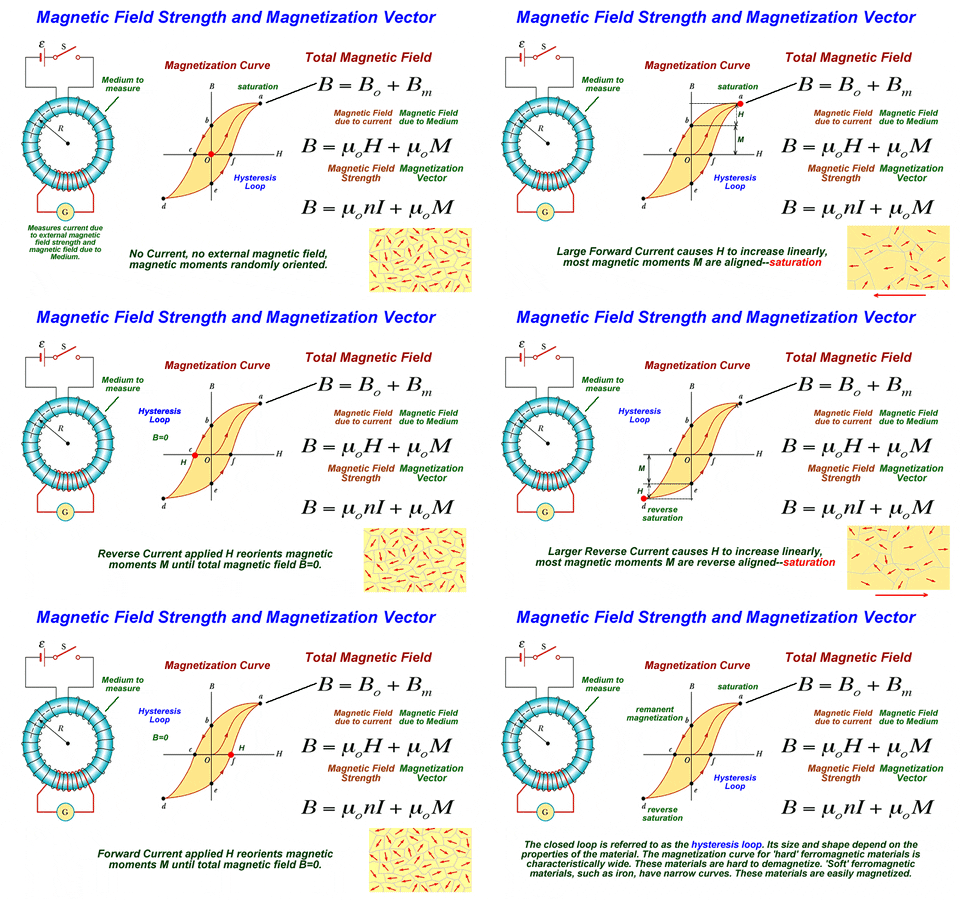
a current is applied a magnetic field is generated. current is reversed zeros its repeat. metal maintains degree of magnetizem dipole aligment. the magnetic feild lags behind the current change. producing electreical hystersis loop.

Register to Reply
2
Guru

Join Date: Oct 2008
Posts: 42355
Good Answers: 1693
#4

Re: Electrical Hysteresis Help

12/10/2018 6:22 PM

Think of it this way.

Electrons have no mass and can change polarity instantaneously.

Ferro fluid particles have mass and cannot change polarity instantaneously.

Register to Reply Good Answer (Score 2)
Active Contributor

Join Date: Dec 2018
Posts: 15
#6
In reply to #4

Re: Electrical Hysteresis Help

12/11/2018 4:46 AM

is this right

a current is applied a magnetic field is generated. current is reversed zeros its repeat. metal maintains degree of magnetizem dipole aligment. the magnetic feild lags behind the current change. producing electreical hystersis loop.

energy is lost as heat causing wire to heat up causing causing low effiency

Register to Reply
Guru

Join Date: Mar 2007
Location: by the beach in Florida
Posts: 33392
Good Answers: 1817
#7
In reply to #6

Re: Electrical Hysteresis Help

12/11/2018 5:23 AM
__________________
All living things seek to control their own destiny....this is the purpose of life
Register to Reply
Commentator

Join Date: May 2017
Posts: 70
Good Answers: 1
#9
In reply to #4

Re: Electrical Hysteresis Help

12/11/2018 10:22 AM

Example of mass of an e at rest:

https://cr4.globalspec.com/comment/13761/Re-E-mc-2

Register to Reply
Active Contributor

Join Date: Dec 2018
Posts: 15
#11

Re: Electrical Hysteresis Help

12/15/2018 3:55 AM

i think i got it know just checking, tried to word it differently each

In ferroelectric materials, Relenship between input and output of magnetic feild and voltage. Voltage roduced lapses behind changing magnetic feild. Present in metals.

in Ferroelectric materials, in which the the polarity (storage of charges) lags behind the change in eletric field . when it repeat . it retain degree of polarity.

current is applied a magnetic field is generated. current is reversed zeros its repeat. metal maintains degree of magnetizem dipole aligment. the magnetic feild lags behind the current change. producing electreical hystersis loop.

Register to Reply
Register to Reply 11 comments

Good Answers:

These comments received enough positive votes to make them "good answers".
Copy to Clipboard

Users who posted comments:

Jose1 (1); lee1234 (5); lyn (1); Rixter (2); SolarEagle (2)

Previous in Forum: Chimney of Electrical Transmission Tower   Next in Forum: Fuse Selection for Distribution Line

Advertisement