Previous in Forum: Error Message When Clicking on Link From My E-mail   Next in Forum: Moving Artificial Leaves Out of the Lab and Into the Air
Close
Close
Close
96 comments
Rate Comments: Nested
Guru
United Kingdom - Member - New Member

Join Date: Aug 2010
Location: Resting under the Major Oak
Posts: 4347
Good Answers: 181

Removing “Milk Spots” From Silver

02/15/2019 1:27 PM

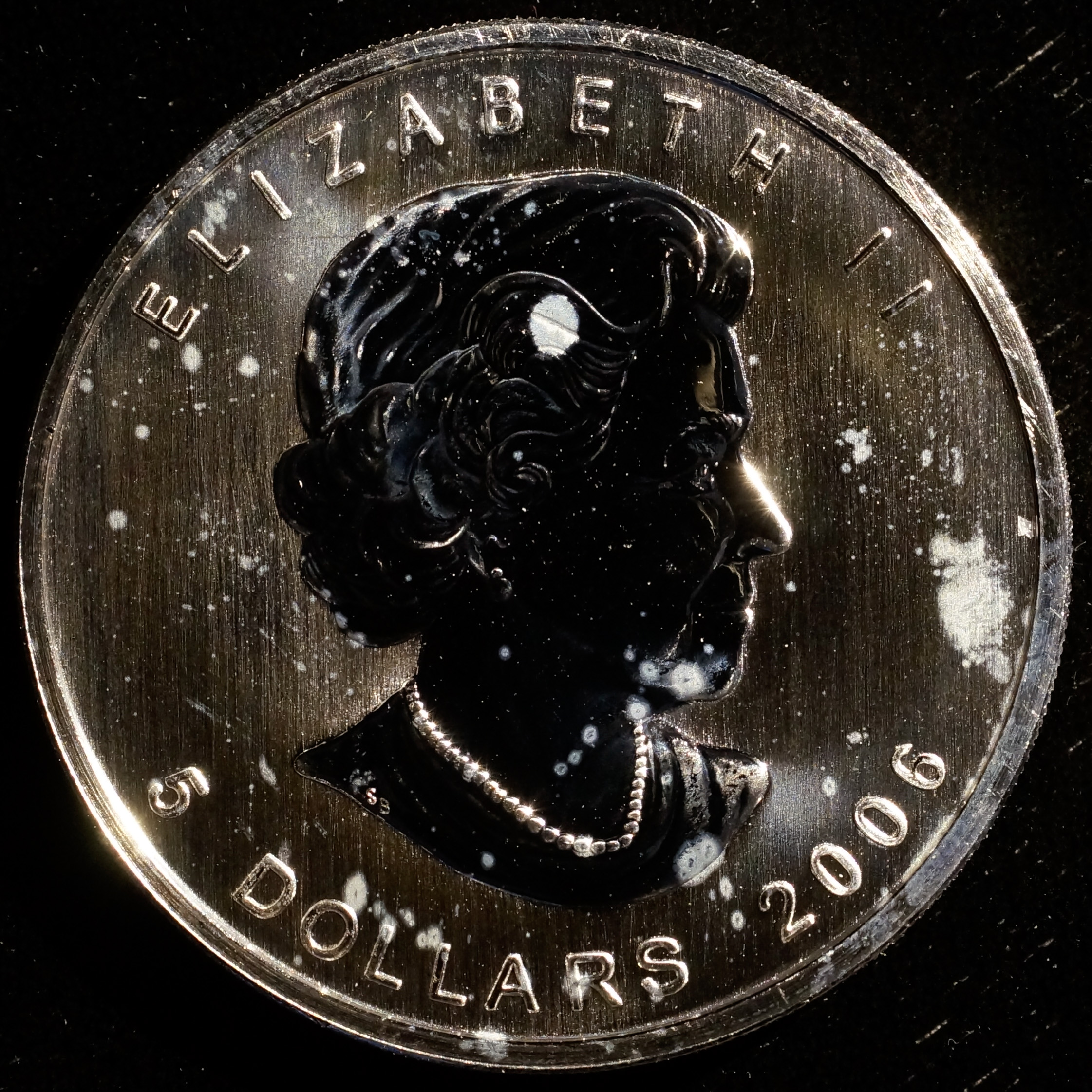
Silver bullion coins are prone to “milk spots”, a whitish stain that forms on the surface of a coin. It is thought to be caused by detergents used in the minting process. The Royal Canadian Mint announced they had found a process to counteract the spots. I’ve got news or them, it doesn’t work! Canadian Maples are notorious for spotting as do other 0.9999 (99.99%) pure silver coins. So far my Queens Beast collections aren’t showing any marks.

Anyone got non-destructive ideas for cleaning the coins?

__________________
The reports of my death are greatly exaggerated.
Register to Reply
Interested in this topic? By joining CR4 you can "subscribe" to
this discussion and receive notification when new comments are added.

"Almost" Good Answers:

Check out these comments that don't yet have enough votes to be "official" good answers and, if you agree with them, vote them!
Guru

Join Date: Mar 2007
Location: by the beach in Florida
Posts: 33392
Good Answers: 1817
#1

Re: Removing “milk spots” from silver:

02/15/2019 1:37 PM

I never clean coins....I keep them in plastic cases...

__________________
All living things seek to control their own destiny....this is the purpose of life
Register to Reply
Guru

Join Date: Apr 2011
Posts: 8006
Good Answers: 286
#2

Re: Removing “Milk Spots” From Silver

02/15/2019 3:35 PM

It is probably best not to clean the coins. If it bothers you too much and you have to do something...

Wear clean gloves. Use clean cotton balls or cuetips. Start with distilled or better water. Try dabbing away the spot. A weak solution of ammonia will help if pure water is taking too long. Be sparing. When done, rinse with distilled water or better and dab dry. At no time should you rub. No matter how clean your materials, you are likely to leave scratches if you rub.

__________________
Eternal vigilance is the price of knowledge. - George Santayana
Register to Reply Score 1 for Off Topic
Guru

Join Date: May 2006
Location: Placerville, CA (38° 45N, 120° 47'W)
Posts: 6215
Good Answers: 248
#13
In reply to #2

Re: Removing “Milk Spots” From Silver

02/16/2019 12:50 AM

Pardon my asking, but what kind of water is better than distilled for cleaning?

__________________
Teaching is a great experience, but there is no better teacher than experience.
Register to Reply
Guru

Join Date: Apr 2011
Posts: 8006
Good Answers: 286
#14
In reply to #13

Re: Removing “Milk Spots” From Silver

02/16/2019 1:45 AM

Doubly distilled, DI water(usually but not always), any ultra pure water.

I just meant use distilled at least. I don't know that the higher purity water will clean noticeably better.

__________________
Eternal vigilance is the price of knowledge. - George Santayana
Register to Reply
Guru

Join Date: Apr 2008
Location: Chicago
Posts: 3990
Good Answers: 144
#3

Re: Removing “Milk Spots” From Silver

02/15/2019 4:15 PM

Is it just me or are the new quarters more prone changes in color than the old ones?

__________________
High Tolerance is Beautiful
Register to Reply
Guru
Hobbies - CNC - New Member Popular Science - Biology - New Member Hobbies - Musician - New Member

Join Date: Dec 2008
Location: Canada
Posts: 3523
Good Answers: 146
#18
In reply to #3

Re: Removing “Milk Spots” From Silver

02/16/2019 9:26 AM

Some of the coin pages I looked at yesterday gave a history - this problem didn't exist before the 1980's. You won't find milk spots on silver coin minted before that.

They also said that spots primarily affected .999 silver coins. Since I'm finding it on .999 material (not on sterling material at all) that is another clue as to where in the process it's coming from.

__________________
incus opella
Register to Reply
Guru

Join Date: Mar 2007
Location: by the beach in Florida
Posts: 33392
Good Answers: 1817
#4

Re: Removing “Milk Spots” From Silver

02/15/2019 4:15 PM

..."“Chemically pure acetone may work in removing the spots,” Swiatek advises. Of course, if you decide to go the acetone route, be sure to hit the hardware store. Most of the acetone-based nail polish removers you find in the beauty supply aisle of your local grocer aren’t pure acetone and often contain additives that could damage your coin.

Milk spots are bad enough, right?

Before crossing your fingers and dropping acetone on your milk-bespotted silver coins, be sure to take the proper safety precautions. Only use acetone in a properly ventilated area, wear gloves, and keep the flammable chemical away from sparks and flames."...

https://coinweek.com/education/coin-grading/ngc/coin-analyst-collectors-crying-milk-spotted-american-silver-eagles/

I never heard of this, and haven't noticed any on any of my coins....but maybe I should be on the lookout...anyway here's your fix...maybe

..."Miguel Murillo, a customer service representative at PCGS, further outlines the company’s policy today.

“We’re doing what we call a modern spot review,” he told me over the phone. “For a fee of $5, plus shipping and handling, we will evaluate your coin, remove the spots, and then return your piece.”

He says the service is applicable to all American Silver Eagles dating back to 1986. The policy does not apply to older coins, which he said would be treated as restorations and are handled on a different fee structure.

As PCGS points out, milk spots indeed trace their origin back to manufacturing issues at the U.S. Mint. As much was affirmed by U.S. Mint Quality Division Chief Stacy Kelley-Scherer, who, in 2012, remarked that the white spots on American Silver Eagles are attributed to minting procedures. Unfortunately, Kelly-Scherer went on the record as saying that the U.S. Mint has not been able to find a panacea for preventing milk spots.

Part of the problem the Mint and others in the numismatic community see is that milk spotting isn’t a black and white issue with a tried-and-true solution. As PCGS succinctly stated in a 2012 policy update, “there seems to be no rhyme or reason as to why some coins spot and others don’t.”[2]"...

I guess sooner or later someone will scrape off some of these milk spots from some bullion coins and do a gas chromatography test to see what it is exactly...then backwards engineer a possible cause and cure.......

Without knowing the cause whether biological, as in some kind of mold or fungus, or chemical, as in some two or more elements reacting, I can't make a specific recommendation....other than to buy gold coins instead....

__________________
All living things seek to control their own destiny....this is the purpose of life
Register to Reply
Guru

Join Date: Oct 2008
Posts: 42355
Good Answers: 1693
#5

Re: Removing “Milk Spots” From Silver

02/15/2019 4:38 PM

I suggest NOT cleaning them at all.

I'm not a numismatist, but wouldn't those spots be a part of the patina of the coin?

I'd think that any alteration/cleaning would reduce the value of the coin.

Register to Reply
Guru
Hobbies - CNC - New Member Popular Science - Biology - New Member Hobbies - Musician - New Member

Join Date: Dec 2008
Location: Canada
Posts: 3523
Good Answers: 146
#6

Re: Removing “Milk Spots” From Silver

02/15/2019 6:12 PM

Please show us a picture of the spots on your coins.

I have had significant problems with supply of fine (.999) silver round wire, having white (or whitish) material/spots on the surface and/or embedded in scratches/grooves, notably in 2010 and again in 2017. I got no satisfaction from my suppliers, changed suppliers, had the same problem with multiple suppliers in both US and Canada (in 2010) . No reasonable explanation was offered by any of them. ("Sorry!" doesn't cut it if you can't offer to take back and provide something better in return)

I can give you a long list of things that do not work to remove these spots and associated waxes, including acetone, brake degreaser, and a host of proprietary metal cleaners solid, liquid, you name it, none works. As regards ordinary tarnish on silver a mild liquid soap and warm water is very effective. Acids are effectively used to remove severe tarnish (or firescale) from sterling but have no effect on the white spots.

Some of the contaminant appeared to be applied in the forming process - beeswax is the traditional lubricant for drawplates (and perhaps for coin stamping dies?) so one hypothesis was that another lubricant was substituted which has very different properties when it comes to removal - designed to stay in place not be removed, sticky, impervious, or complexed with a plastic contaminant?.... But this didn't entirely explain it all. Spots which were hard and clearly part of the round wire, and not material embedded in a drawplate groove, also turned black or dark in the annealing process. One supplier admitted that the wire I returned was tested and did not score .999 purity. That is consistent with the anneal results. So it is not strictly a surface contaminant, it is in some degree incorporated into the metal and hard at room temp, but unknown composition. Actually it is harder than pure silver, as particles also mar the work.

I have yet to obtain a satisfactory explanation, or method of remediating the substandard material. I can only offer that my best assessment is that the contaminant is a plastic, possibly introduced in the recycling process. Since the melting point of silver is much higher than (about 3X) the nominal mp of thermoplastic, possibly the plastic contaminant has complexed with the metal in the purification/melting process. Or the purification process did not remove contaminant plastic of lower mp. Either way, the application of surface cleaners designed for tarnish is fruitless.

Anything I can learn about this would really help. I have not found any way to deal with it other than sanding it off with abrasives. The material mixed or incorporated into the drawplate wax will also contaminate your tools as well as your product, so hammer, bench block contacted with the bad material also must be sanded down and refinished after contact with this impervious crap. I would venture some particles are hard enough to scratch steel tools when worked on, but overall it contaminates everything with a cloudy veneer - tools, workpiece, the lot.

I have a coil of 14 ga .999 wire right now, that was unfit to use, and have to decide what to do/how to approach the supplier about it again. (They claim their remaining stock tested .999).

__________________
incus opella
Register to Reply
Guru
Australia - Member - New Member

Join Date: Feb 2008
Location: Australia
Posts: 2181
Good Answers: 255
#11
In reply to #6

Re: Removing “Milk Spots” From Silver

02/15/2019 10:31 PM

You mention beeswax as the lubricant and possible surface treatment for dies. Pure Beeswax is renowned for forming a cloudy surface during storage, whether as sheets of foundation for beehives or as candles or as blocks. This might be something for the coin enthusiasts to follow.

This suggestion though does not match your description of the hardness of the impurities that you are describing. I had heard that in aluminium die casting, the crucible/pot developed rubies or similar contaminant materials that dispersed into the contents causing all sorts of issues with later machining processes since they seemed to concentrate at the surfaces during solidification. Maybe your wire is from .999 source material but your surface scrapings have the higher concentrations of contaminants.

__________________
Just an Engineer from the land down under.
Register to Reply
Guru
Hobbies - CNC - New Member Popular Science - Biology - New Member Hobbies - Musician - New Member

Join Date: Dec 2008
Location: Canada
Posts: 3523
Good Answers: 146
#29
In reply to #11

Re: Removing “Milk Spots” From Silver

02/16/2019 2:25 PM

According to what I read, the dies are cleaned with detergent so no beeswax there. But beeswax is also very soft and easy to remove, whereas some other waxes are not so easy.

I bet you're right about the similarity to aluminium casting issues, some hard particles dispersed in the process. It is maybe a side issue and a different type of particle to the actual milky spot stuff - anything will mar fine silver, but scratching tool steel is something else!

__________________
incus opella
Register to Reply
Guru
United Kingdom - Member - New Member

Join Date: Aug 2010
Location: Resting under the Major Oak
Posts: 4347
Good Answers: 181
#42
In reply to #6

Re: Removing “Milk Spots” From Silver

02/17/2019 10:39 AM

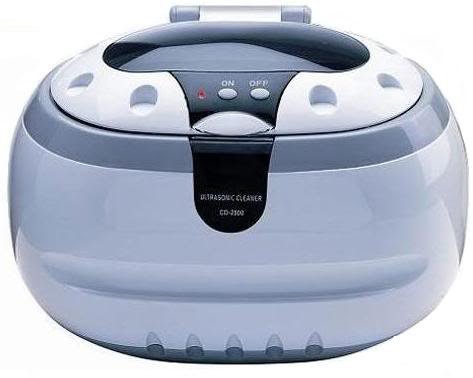
I can’t post photographs as my son has taken the affected coins to his works laboratory for a trial using an ultrasound bath. He won’t be back here until July.

__________________
The reports of my death are greatly exaggerated.
Register to Reply
Guru
Hobbies - CNC - New Member Popular Science - Biology - New Member Hobbies - Musician - New Member

Join Date: Dec 2008
Location: Canada
Posts: 3523
Good Answers: 146
#43
In reply to #42

Re: Removing “Milk Spots” From Silver

02/17/2019 12:15 PM

Good luck with that - if it doesn't help entirely, you could try a jeweler's polishing cloth or similar, which may help in some cases at least make it less noticeable. Since it's going to be under glass, I would think any finish/ tarnish resistance treatment would be longer lasting to boot.

These might do some good. The yellow one gives a high luster, but blue might be the best for coins (haven't tried it myself).

__________________
incus opella
Register to Reply
Guru
United Kingdom - Member - New Member

Join Date: Aug 2010
Location: Resting under the Major Oak
Posts: 4347
Good Answers: 181
#7

Re: Removing “Milk Spots” From Silver

02/15/2019 6:59 PM

Milk spots don’t reduce the value of a bullion coin as 1 ounce of silver is what it is, 1 ounce of silver.

I want to make a glass topped table for my son with coins embedded in the wooden substrate below the glass. (I just hope I survive long enough to get the last coins of the Queens Beasts to complete my sets in 2020.) Like the Maples, QB’s are 0.9999 but as of now they aren’t showing any surface marks.

__________________
The reports of my death are greatly exaggerated.
Register to Reply
Guru
Hobbies - CNC - New Member Popular Science - Biology - New Member Hobbies - Musician - New Member

Join Date: Dec 2008
Location: Canada
Posts: 3523
Good Answers: 146
#8
In reply to #7

Re: Removing “Milk Spots” From Silver

02/15/2019 8:25 PM

According to the Perth mint, “an accumulation of microscopic silver chloride debris are responsible for leaving the blotches.”

Others blame detergent residues baked into the metal. And yet they are unable to stop it from happening.

Glad you posted about this, I had not thought about looking for answers in coin forums.

http://news.coinupdate.com/milk-spots-on-modern-silver-coins-how-big-of-an-issue/

__________________
incus opella
Register to Reply
Guru

Join Date: Mar 2007
Location: by the beach in Florida
Posts: 33392
Good Answers: 1817
#9
In reply to #8

Re: Removing “Milk Spots” From Silver

02/15/2019 9:05 PM

..."Silver chloride is a chemical compound with the chemical formula AgCl. This white crystalline solid is well known for its low solubility in water. Upon illumination or heating, silver chloride converts to silver, which is signaled by grey to black or purplish coloration to some samples ...

AgCl dissolves in solutions containing ligands such as chloride, cyanide, triphenylphosphine, thiosulfate, thiocyanate and ammonia.

Melting point‎: ‎455 °C (851 °F; 728 K)"...

I would try 'Truth non compriso's' suggestion ammonia and water, or just leave it alone...If you could heat it in some way as not to have any tarnishing or discoloration, that would be interesting to try....on a bullion coin anyway...I don't think I would mess with a collector coin....

https://en.wikipedia.org/wiki/Silver_chloride

__________________
All living things seek to control their own destiny....this is the purpose of life
Register to Reply
Guru
Hobbies - CNC - New Member Popular Science - Biology - New Member Hobbies - Musician - New Member

Join Date: Dec 2008
Location: Canada
Posts: 3523
Good Answers: 146
#10
In reply to #9

Re: Removing “Milk Spots” From Silver

02/15/2019 10:22 PM

It may ruin a coin perhaps, but I will certainly try ammonia on some of my raw material, and see what happens.

__________________
incus opella
Register to Reply
Guru

Join Date: Mar 2007
Location: by the beach in Florida
Posts: 33392
Good Answers: 1817
#12
In reply to #10

Re: Removing “Milk Spots” From Silver

02/15/2019 10:37 PM

Well I'm a little concerned by "dissolves", this may erode the white part leaving some sort of skeletal cratering in the surface...but heating then carries the the risk of discoloration, which would require further treatment...no easy answer it seems....

__________________
All living things seek to control their own destiny....this is the purpose of life
Register to Reply
Guru
Hobbies - CNC - New Member Popular Science - Biology - New Member Hobbies - Musician - New Member

Join Date: Dec 2008
Location: Canada
Posts: 3523
Good Answers: 146
#17
In reply to #12

Re: Removing “Milk Spots” From Silver

02/16/2019 9:17 AM

That is exactly the problem, for a coin or a finished piece. A 'cratered' piece of material that will be hammered or worked in some way is not ideal but it is way better than trying to work metal that contains impurities and spreading it around. I don't remember trying ammonia, so I will give it a shot before the weekend is over, and report back... silver chloride is the obvious suspect in this case, since it darkened on heating.

I will add that the contaminant in this case is (like silver chloride) completely insoluble in water, and will not yield to hot soapy water either.

__________________
incus opella
Register to Reply
Guru

Join Date: Mar 2007
Location: by the beach in Florida
Posts: 33392
Good Answers: 1817
#19
In reply to #17

Re: Removing “Milk Spots” From Silver

02/16/2019 11:22 AM

Aha,, more clues...might require some experimentation with strength of solution and time of silver in solution, two variables...a third variable being the depth and size of the anomaly... might help to perform the exposure in a ultrasonic jewelry cleaner...

__________________
All living things seek to control their own destiny....this is the purpose of life
Register to Reply
Guru
Hobbies - CNC - New Member Popular Science - Biology - New Member Hobbies - Musician - New Member

Join Date: Dec 2008
Location: Canada
Posts: 3523
Good Answers: 146
#22
In reply to #19

Re: Removing “Milk Spots” From Silver

02/16/2019 11:40 AM

Ultrasonic cleaner was a fail in my epic past attempts.

__________________
incus opella
Register to Reply
Guru

Join Date: Mar 2007
Location: by the beach in Florida
Posts: 33392
Good Answers: 1817
#25
In reply to #22

Re: Removing “Milk Spots” From Silver

02/16/2019 12:26 PM

Good to know, but in fairness you lacked the proper working fluid...if indeed we have guessed correctly...

__________________
All living things seek to control their own destiny....this is the purpose of life
Register to Reply
Guru
Hobbies - CNC - New Member Popular Science - Biology - New Member Hobbies - Musician - New Member

Join Date: Dec 2008
Location: Canada
Posts: 3523
Good Answers: 146
#20
In reply to #10

Re: Removing “Milk Spots” From Silver

02/16/2019 11:28 AM

I'm giving ammonia a "no". Three minute soak does not work. It will remove patina from a coin, though.

Interestingly some of the spots on this material had darkened over time. Those disappeared, or went back to white, after a couple minutes immersed in undiluted plain "unscented" household ammonia, q tip rub with the same, rinsed in water. I also found the sample that had darkened after heat - that dark color had faded in the interim or not detectable in overall tarnish level (lying on a bench for a few months). It too went in the ammonia and milky spots are still clearly visible (tarnish gone).

Hammer tested this piece of wire - wax and impurities still present.

__________________
incus opella
Register to Reply
Guru

Join Date: Mar 2007
Location: by the beach in Florida
Posts: 33392
Good Answers: 1817
#21
In reply to #20

Re: Removing “Milk Spots” From Silver

02/16/2019 11:39 AM

I don't think 3 minutes is enough time...I would say an hour to start...and a 50/50 solution should be plenty....

__________________
All living things seek to control their own destiny....this is the purpose of life
Register to Reply
Guru
Hobbies - CNC - New Member Popular Science - Biology - New Member Hobbies - Musician - New Member

Join Date: Dec 2008
Location: Canada
Posts: 3523
Good Answers: 146
#23
In reply to #21

Re: Removing “Milk Spots” From Silver

02/16/2019 11:50 AM

Okay, I'll try an hour at 50/50 and throw in some Dawn with it for good measure. In a container with a lid, the ammonia reeks..

__________________
incus opella
Register to Reply
Guru

Join Date: Mar 2007
Location: by the beach in Florida
Posts: 33392
Good Answers: 1817
#24
In reply to #23

Re: Removing “Milk Spots” From Silver

02/16/2019 12:23 PM

There should be some off gassing, so not too tight on the lid....mkay

__________________
All living things seek to control their own destiny....this is the purpose of life
Register to Reply
Guru

Join Date: Mar 2007
Location: by the beach in Florida
Posts: 33392
Good Answers: 1817
#26
In reply to #20

Re: Removing “Milk Spots” From Silver

02/16/2019 12:49 PM

Can you manage higher magnification on this wire sample?

__________________
All living things seek to control their own destiny....this is the purpose of life
Register to Reply
Guru
Hobbies - CNC - New Member Popular Science - Biology - New Member Hobbies - Musician - New Member

Join Date: Dec 2008
Location: Canada
Posts: 3523
Good Answers: 146
#28
In reply to #26

Re: Removing “Milk Spots” From Silver

02/16/2019 2:18 PM

The same at higher magnification.

Here are the two pieces after the hour soak, followed by a hot soapy lather, hot rinse. Ammonia not working for me. This material is crap. It's harder to get a pic of the round wire, but pretty darn clear on the flat.

__________________
incus opella
Register to Reply
Guru

Join Date: Mar 2007
Location: by the beach in Florida
Posts: 33392
Good Answers: 1817
#32
In reply to #28

Re: Removing “Milk Spots” From Silver

02/16/2019 3:20 PM

Excellent.....and this won't polish out with silver polish...?

__________________
All living things seek to control their own destiny....this is the purpose of life
Register to Reply
Guru
Hobbies - CNC - New Member Popular Science - Biology - New Member Hobbies - Musician - New Member

Join Date: Dec 2008
Location: Canada
Posts: 3523
Good Answers: 146
#33
In reply to #32

Re: Removing “Milk Spots” From Silver

02/16/2019 3:42 PM

Any noticeable spot can be sanded off with abrasives of one kind or another. Rouge or other polishing cloth will improve the appearance, but you can't give it a top notch finish.

__________________
incus opella
Register to Reply
Guru

Join Date: Mar 2007
Location: by the beach in Florida
Posts: 33392
Good Answers: 1817
#34
In reply to #33

Re: Removing “Milk Spots” From Silver

02/16/2019 3:53 PM

...so it's mostly on the surface, but does have some penetration...? ...sort of like a pore excreting sweat...?

__________________
All living things seek to control their own destiny....this is the purpose of life
Register to Reply
Guru
Hobbies - CNC - New Member Popular Science - Biology - New Member Hobbies - Musician - New Member

Join Date: Dec 2008
Location: Canada
Posts: 3523
Good Answers: 146
#36
In reply to #34

Re: Removing “Milk Spots” From Silver

02/16/2019 4:06 PM

I would have to say that varies a lot - the depth of it that is. it's not strictly a surface thing. Spotty, it is.

__________________
incus opella
Register to Reply
Guru
Hobbies - CNC - New Member Popular Science - Biology - New Member Hobbies - Musician - New Member

Join Date: Dec 2008
Location: Canada
Posts: 3523
Good Answers: 146
#40
In reply to #36

Re: Removing “Milk Spots” From Silver

02/16/2019 6:00 PM

A bit dark to be taking pics, but FWIW here's what it looks like after flowing the surface. Not a coin collectors solution. The round wire end is really pitted - not a way for me to get back a fresh clean round wire either. I really don't know if I vaporized the contaminant, or just covered it with fresh silver. (Because, if melting temperature of silver was enough to remove it, how did it get there after all? re: recycled metal hypothesis. )

__________________
incus opella
Register to Reply
Guru

Join Date: Mar 2007
Location: by the beach in Florida
Posts: 33392
Good Answers: 1817
#15

Re: Removing “Milk Spots” From Silver

02/16/2019 2:06 AM

So that's how they do it...

__________________
All living things seek to control their own destiny....this is the purpose of life
Register to Reply
Guru

Join Date: Mar 2007
Location: by the beach in Florida
Posts: 33392
Good Answers: 1817
#16

Re: Removing “Milk Spots” From Silver

02/16/2019 2:46 AM

It seems to me that the problem might be the silver from the smelter not being completely processed...I've seen videos of these smelting operations where the guy keeps adding material after the crucible has heated up a quantity of silver already, so I'm thinking there might be some silver with some impurities that has not reached the correct temperature for a long enough period of time...this being the case the silver flats the mint is receiving are already destined to have a problem and the mint is not to blame, at least not fully, who can say what raw material quality controls are in place...It's not hard to imagine some pencil pusher rushing an operation to increase the bottom line at the expense of the product quality...one possibility I see....

__________________
All living things seek to control their own destiny....this is the purpose of life
Register to Reply
Guru

Join Date: Mar 2007
Location: by the beach in Florida
Posts: 33392
Good Answers: 1817
#27

Re: Removing “Milk Spots” From Silver

02/16/2019 1:19 PM

Found this...

..."

Can professional conservation from NCS remove white spots?

Numismatic Conservation Services (NCS), an independent affiliate of NGC, has conducted extensive research but has been unable to determine a conservation technique that can prevent or remove white spots without damaging the coin. In some cases white spots can be minimized, but they cannot be removed."...

I read someplace that the Canadian mint is now coating their coins with a proprietary coating to minimize or prevent spotting...no report on the effectiveness of this process yet...but would lead one to believe, that they believe, oxidation is involved...

__________________
All living things seek to control their own destiny....this is the purpose of life
Register to Reply
Guru
Hobbies - CNC - New Member Popular Science - Biology - New Member Hobbies - Musician - New Member

Join Date: Dec 2008
Location: Canada
Posts: 3523
Good Answers: 146
#30
In reply to #27

Re: Removing “Milk Spots” From Silver

02/16/2019 2:34 PM

I read this too, and have to agree with them, there appears to be no solution.

I haven't seen the one about a coating to prevent spots. Disagree about oxidation, which would have to be brown or black not "milky" - we're talking about 'pure' metal coins here, supposedly.

__________________
incus opella
Register to Reply
Guru

Join Date: Mar 2007
Location: by the beach in Florida
Posts: 33392
Good Answers: 1817
#31
In reply to #30

Re: Removing “Milk Spots” From Silver

02/16/2019 3:18 PM

I agree about the oxidation....

..."The metal does not react with moist air or dry oxygen but is oxidized superficially by moist ozone."...

I find this interesting for some reason....anyway good read here..

https://www.britannica.com/science/silver

__________________
All living things seek to control their own destiny....this is the purpose of life
Register to Reply
Guru
Hobbies - CNC - New Member Popular Science - Biology - New Member Hobbies - Musician - New Member

Join Date: Dec 2008
Location: Canada
Posts: 3523
Good Answers: 146
#35
In reply to #31

Re: Removing “Milk Spots” From Silver

02/16/2019 3:54 PM

I'm still stuck on the idea that there's plastic involved (maybe complexed with metal salts like the chloride). Why are there no milky spots before the 1980's? When did eg silver from circuit boards become part of the recycle metal stream? Or did something else change about metal supply or processing?

__________________
incus opella
Register to Reply
Guru

Join Date: Mar 2007
Location: by the beach in Florida
Posts: 33392
Good Answers: 1817
#37
In reply to #35

Re: Removing “Milk Spots” From Silver

02/16/2019 4:20 PM

Well I was just thinking the same thing, if the source of the silver has changed, and what countries use other metals mixed with silver, other than copper that is....can't find any info on this yet....It just says "other metals" ....so what oxidizes white with a similar melting point as silver...? zinc?

https://socratic.org/questions/what-will-be-the-product-when-zinc-and-silver-nitrate-undergo-a-single-replaceme

__________________
All living things seek to control their own destiny....this is the purpose of life
Register to Reply
Guru
Hobbies - CNC - New Member Popular Science - Biology - New Member Hobbies - Musician - New Member

Join Date: Dec 2008
Location: Canada
Posts: 3523
Good Answers: 146
#39
In reply to #37

Re: Removing “Milk Spots” From Silver

02/16/2019 4:43 PM

From the Brittanica link:

"Jewelry sweeps, the fine dust generated in the polishing and grinding of precious metals, are usually smelted to form an impure silver, which is electrorefined. Because of the much lower value of silver scrap, recycling techniques applicable to gold (e.g., cyanidation of low-grade scrap) are uneconomic for silver. Low-grade silver scrap is instead returned to a smelter for processing."

It stands to reason that recycling processes contain different contaminants than the original ores, which are usually found with other metal sulfides including, lead, copper, antimony, even arsenides.

Last hurrah for the piece tested today - heated to melting point and flowed the surface. This is past the anneal point which turned the other sample dark. As with other pieces in the past, the flowed piece of material is now bright metal but also pitted. Contaminant gone afaict. So my only option, other than returning the material, is to find another design use for it , in which surface melting is involved.

__________________
incus opella
Register to Reply
Guru

Join Date: May 2006
Location: Placerville, CA (38° 45N, 120° 47'W)
Posts: 6215
Good Answers: 248
#38
In reply to #35

Re: Removing “Milk Spots” From Silver

02/16/2019 4:36 PM

I don't know about the plastic, but I suspect you are pretty close with the recycled silver concept. Any recycled metal is going to contain some impurities, unless carefully refined (eg. electrolytic). I wonder if perhaps some Platinum atoms are acting as a catalyst to promote some chemical activity that would otherwise not occur..

__________________
Teaching is a great experience, but there is no better teacher than experience.
Register to Reply
Guru
Australia - Member - New Member

Join Date: Feb 2008
Location: Australia
Posts: 2181
Good Answers: 255
#41
In reply to #27

Re: Removing “Milk Spots” From Silver

02/17/2019 6:05 AM

From the image of the coin, it would seem clear that the "contaminant" is not alloyed with the silver as the bloom has distinct edges and is very localised.

If this is only happening for some mints around the world, then it might go back to their air handling units and filtration quality. These could (for instance) be lubricant "mist" from the presses or other mechanical items at the mint that are captured during the coining process especially if they changed to a lubricant that their cleaning process did not treat.

There was a low temperature process we used for processing PWBs to remove flux and greases. It was known as vapour degreasing and will be readily found in searches. Cleaning with no rubbing or mechanical contact other than holding the article while processing.

Someone earlier suggested mass-spec analysis. Surely a mint can forfeit one "mint" coin for investigation. It would still be OK for general circulation.

__________________
Just an Engineer from the land down under.
Register to Reply
Guru

Join Date: Mar 2007
Location: by the beach in Florida
Posts: 33392
Good Answers: 1817
#44

Re: Removing “Milk Spots” From Silver

02/17/2019 3:56 PM

..."The Parkes process is a pyrometallurgical industrial process for removing silver from lead during the production of bullion. It is an example of liquid–liquid extraction.

The process takes advantage of two liquid-state properties of zinc. The first is that zinc is immiscible with lead, and the other is that silver is 3000 times more soluble in zinc than it is in lead. When zinc is added to liquid lead that contains silver as a contaminant, the silver preferentially migrates into the zinc. Because the zinc is immiscible in the lead it remains in a separate layer and is easily removed. The zinc-silver solution is then heated until the zinc vaporizes, leaving nearly pure silver."...

https://en.wikipedia.org/wiki/Parkes_process

__________________
All living things seek to control their own destiny....this is the purpose of life
Register to Reply
Guru
Hobbies - CNC - New Member Popular Science - Biology - New Member Hobbies - Musician - New Member

Join Date: Dec 2008
Location: Canada
Posts: 3523
Good Answers: 146
#45
In reply to #44

Re: Removing “Milk Spots” From Silver

02/17/2019 5:49 PM

This is interesting because zinc could be left behind if not heated sufficiently to vaporize.

However the milk spots don't resemble zinc. They more closely resemble a plastic of some kind - and I am assuming a silver content within the 'plastic' very likely the silver salt of chloride which you pointed out earlier which is aggregated if not polymerized with a plastic contaminant or lubricant. If it was plain silver chloride then the ammonia should have removed it.

- it is sticky and can't be scrubbed or buffed off

- particles will sometimes fly off when you hammer it, scattering about

- sticks to steel tools too and can only be removed by sanding/grinding them down

I do think that the refining processes for ore, which have been in place forever, are not to blame. If they were, then there would be "milky spot" coins before the 1980's. I think recycling stream is likely culprit. Something in the mix that isn't in ore/ doesn't separate out readily. The use of electrochemical separation for low grade recycled sweeps raises the question, what about things that aren't ionic and don't separate in that process? What about crud like buffing compounds?

Stabbing in the dark here, but silver-plastic materials are not impossible:

https://www.tandfonline.com/doi/abs/10.1080/03602559708000656

Very high melting or vaporizing point, though, for a plastic. Anneal temp wasn't enough, melt seems to do it (if pitting of the wire is an indication of burn-out/vaporization).

Gee I'm as baffled as.... all the experts. If not more...

__________________
incus opella
Register to Reply
Guru

Join Date: Mar 2007
Location: by the beach in Florida
Posts: 33392
Good Answers: 1817
#46
In reply to #45

Re: Removing “Milk Spots” From Silver

02/17/2019 6:27 PM

I think we still need a good gas chromatography test to identify the substance......until we do we are flying blind....

__________________
All living things seek to control their own destiny....this is the purpose of life
Register to Reply
Guru
Hobbies - CNC - New Member Popular Science - Biology - New Member Hobbies - Musician - New Member

Join Date: Dec 2008
Location: Canada
Posts: 3523
Good Answers: 146
#47
In reply to #46

Re: Removing “Milk Spots” From Silver

02/17/2019 7:10 PM

Fair enough... so why aren't the makers of coins and other .999 material on it? They want to move what they have to sell, everyone is told the purity is as advertised, even if it's obviously defective. I am not impressed with them at all, that's for sure.

__________________
incus opella
Register to Reply
Guru

Join Date: Mar 2007
Location: by the beach in Florida
Posts: 33392
Good Answers: 1817
#48
In reply to #47

Re: Removing “Milk Spots” From Silver

02/17/2019 7:32 PM

Well one one thousandth is nothing to sneeze at...yet it is an allowance that is generally ignored...so it is possible that they are producing silver within spec....shinyness is not guaranteed, it's just expected....Very few material specs go beyond .999 purity, so they could make a valid argument that this is just the nature of the beast, and they have no further obligation than to meet spec....If somebody could find out what the problem is and correct it in a post smelting process, then perhaps a new purer source will be born....

__________________
All living things seek to control their own destiny....this is the purpose of life
Register to Reply
Guru

Join Date: Mar 2007
Location: by the beach in Florida
Posts: 33392
Good Answers: 1817
#49
In reply to #45

Re: Removing “Milk Spots” From Silver

02/17/2019 9:08 PM

The only thing with plastic it seems to me that it would be there immediately, not surface some months or years later...It looks more like a slow oxidation process, and zinc oxidizes white, and zinc would commonly be found in silver at some point in the refining process, at least in some types of ore processing...the amount would have to be very small but seems widely spread throughout the metal, that would seem then to be present through the refining process...It could be some form of mildly radioactive zinc...

https://en.wikipedia.org/wiki/Zinc

__________________
All living things seek to control their own destiny....this is the purpose of life
Register to Reply
Guru

Join Date: Mar 2007
Location: by the beach in Florida
Posts: 33392
Good Answers: 1817
#50
In reply to #49

Re: Removing “Milk Spots” From Silver

02/17/2019 9:26 PM

Zinc coated bolts after salt spray test....

PVC damage from soft flips...

https://www.thesprucecrafts.com/pvc-damage-on-coins-768300

__________________
All living things seek to control their own destiny....this is the purpose of life
Register to Reply Score 1 for Good Answer
Guru

Join Date: May 2006
Location: Placerville, CA (38° 45N, 120° 47'W)
Posts: 6215
Good Answers: 248
#52
In reply to #50

Re: Removing “Milk Spots” From Silver

02/17/2019 10:17 PM

Really interesting! Thanks! Fortunately, none of the few coins I have are stored in any kind of plastic.

__________________
Teaching is a great experience, but there is no better teacher than experience.
Register to Reply
Guru
Hobbies - CNC - New Member Popular Science - Biology - New Member Hobbies - Musician - New Member

Join Date: Dec 2008
Location: Canada
Posts: 3523
Good Answers: 146
#53
In reply to #50

Re: Removing “Milk Spots” From Silver

02/17/2019 10:20 PM

why PVC? what is the chemistry behind it?

As regards spots that surface 'later' on coins, it may be that some polishing compound is used to mask these defects? Which wears off over time. Just another guess, of course....

__________________
incus opella
Register to Reply
Guru

Join Date: Mar 2007
Location: by the beach in Florida
Posts: 33392
Good Answers: 1817
#54
In reply to #53

Re: Removing “Milk Spots” From Silver

02/17/2019 10:34 PM

..."PVC damage on coins is the result of improperly storing coins in soft plastic flips or other plastic coin holders that contain PVC. The PVC chemical in the flips interacts with the metal of the coin creating a slightly acidic reaction, which causes residual deposits to appear on the coin's surface. "...

https://en.wikipedia.org/wiki/Polyvinyl_chloride

__________________
All living things seek to control their own destiny....this is the purpose of life
Register to Reply
Guru

Join Date: Apr 2011
Posts: 8006
Good Answers: 286
#56
In reply to #49

Re: Removing “Milk Spots” From Silver

02/18/2019 1:50 PM

".....It could be some form of mildly radioactive zinc...."

.

How? What leads you to suggest that?

The longest halflife of a nonstable zinc isotope is a little less than 250 days. Radioactive zinc isn't going to hang around long enough to be in there in appreciable amounts accidentally.

__________________
Eternal vigilance is the price of knowledge. - George Santayana
Register to Reply
Guru

Join Date: Mar 2007
Location: by the beach in Florida
Posts: 33392
Good Answers: 1817
#57
In reply to #56

Re: Removing “Milk Spots” From Silver

02/18/2019 4:04 PM

..."The most abundant isotope 64Zn and the rare 70Zn are theoretically unstable on energetic grounds, though their predicted half-lives exceed 4.3×10¹⁸ years[32] and 1.3×10¹⁶ years,[31] meaning that their radioactivity could be ignored for practical purposes."...

I'm thinking that it may be possible that during the heating process that some zinc gas could be trapped in the silver...that then leaches out over time at a molecular level...

https://en.wikipedia.org/wiki/Zinc#Isotopes

__________________
All living things seek to control their own destiny....this is the purpose of life
Register to Reply
Guru
Hobbies - CNC - New Member Popular Science - Biology - New Member Hobbies - Musician - New Member

Join Date: Dec 2008
Location: Canada
Posts: 3523
Good Answers: 146
#58
In reply to #57

Re: Removing “Milk Spots” From Silver

02/19/2019 10:37 AM

Some clues to the zinc question here:

https://www.911metallurgist.com/refining-precipitates-form-zinc-after-cyanide-leaching-of-gold-silver-extraction/

I will comment that when heating the contaminated piece, I could see the white swirl of 'milk spot' on the glowing surface right up to the melt point. The alloy formation described by metallurgist does suggest that an alloy of silver and zinc, if not zinc itself, may explain it. The annealing temp of fine silver is around 400 compared to zinc mp 419 C, so entirely possible zinc if present was not heated to vaporization. Silver mp is much higher though 961.8 C so the persistence of the spot close to that temperature would suggest an alloy of silver/zinc with significant silver content to push up the mp. I need to read up on the properties of alloys.

Zinc gas escaping as you suggest would cause some cavitation, the worst spots should have detectable pitting if that's the case. The material is solid at room temperature and hard surface but internally crumbly as I mentioned, detaching under physical force and scattering.

__________________
incus opella
Register to Reply
Guru

Join Date: Mar 2007
Location: by the beach in Florida
Posts: 33392
Good Answers: 1817
#59
In reply to #58

Re: Removing “Milk Spots” From Silver

02/19/2019 12:12 PM

Interesting article...

..."This precipitate, after very fine sifting, which undoubtedly removes most of the free zinc, still contains a high percentage of zinc, although but little can be seen by the microscope. Moreover, when the metal-content of the solution is above a certain point, the zinc assumes the color of gold or silver, as the case may be; and the gold or silver is precipitated in the metallic state, or a near approach to it."...

These "milk spots" from the coin above when looked at closely reveal a dark spot at the center....as if there is indeed something leaking from a microscopic crack, too small to see with ordinary exploratory magnification...so it seems we need maybe a look with a scanning electron microscope....still this may not give us the answer we seek...and even if we recommend a higher melt temp and stirring and perhaps even further refining techniques, we still would not know the answer for many years....

__________________
All living things seek to control their own destiny....this is the purpose of life
Register to Reply
Guru
Hobbies - CNC - New Member Popular Science - Biology - New Member Hobbies - Musician - New Member

Join Date: Dec 2008
Location: Canada
Posts: 3523
Good Answers: 146
#60
In reply to #59

Re: Removing “Milk Spots” From Silver

02/19/2019 3:09 PM

From the same article: (zinc-silver alloys from cyanide solutions - experiments)
" the silver was deposited in a hard, thin, adherent coating, which could not be removed for separate analysis."

This sounds familiar. The contaminant/alloy on my material however does get dislodged when the material is hammered. If even a small amount was present in the stamping process, it would likely adhere to the die and may be incompletely removed by their 'detergents', so making faint smeary thin deposits on subsequent stampings.

These might be camouflaged or certainly minimized in the polishing process (assuming the minted coins go through a polishing) only to show up as spots when the protective coating has worn off. Or perhaps over time this very thin layer of stuff begins to separate from the pure metal surface due to another cause.

__________________
incus opella
Register to Reply
Guru

Join Date: Mar 2007
Location: by the beach in Florida
Posts: 33392
Good Answers: 1817
#68
In reply to #60

Re: Removing “Milk Spots” From Silver

02/21/2019 5:48 PM

Only proof coins are polished to my knowledge....

__________________
All living things seek to control their own destiny....this is the purpose of life
Register to Reply
Guru
Hobbies - CNC - New Member Popular Science - Biology - New Member Hobbies - Musician - New Member

Join Date: Dec 2008
Location: Canada
Posts: 3523
Good Answers: 146
#70
In reply to #68

Re: Removing “Milk Spots” From Silver

02/21/2019 8:51 PM

You could be right. I read about the planchet prep today. Annealing the 'blank', pickling and cleaning, then burnishing before the rim goes on and it's a ready "planchet" for striking. So it's highly polished by the burnishing just before striking.

Some of the problems that can arise in the planchet prep are discussed here too.

https://www.ngccoin.com/boards/topic/2398-the-minting-process-planchet-preparation/

__________________
incus opella
Register to Reply
Guru

Join Date: Mar 2007
Location: by the beach in Florida
Posts: 33392
Good Answers: 1817
#71
In reply to #70

Re: Removing “Milk Spots” From Silver

02/22/2019 3:24 AM

..."Planchets are pickled (passivated) in dilute sulfuric acid prior to the Oakite wash. This operation stabilizes the surface molecules after the rolling and blanking operations then the Oakite neutralizes any small amount of residual acid still on the coin surfaces. This operation is done to deactivate surface molecules that become more "active" (prone to oxidation) after being worked by the prior operations."...

..."Silver reacts with warm concentrated sulfuric acid to generate silver sulfate and sulfur dioxide."...

https://pubs.acs.org/doi/abs/10.1021/j100408a044?journalCode=jpchax

So some sulfuric acid could penetrate the planchet surface and generate silver sulfate, presenting as a whitish appearance that is actually part of the coin...

Silver sulfate (Ag2SO4) is an ionic compound of silver.....still looking for a conversion process that doesn't include melting it....

https://en.wikipedia.org/wiki/Silver_sulfate

__________________
All living things seek to control their own destiny....this is the purpose of life
Register to Reply
Guru

Join Date: Mar 2007
Location: by the beach in Florida
Posts: 33392
Good Answers: 1817
#73
In reply to #71

Re: Removing “Milk Spots” From Silver

02/22/2019 4:49 PM

So I'm thinking that it may be possible to steam new coins in a pressure cooker with a neutralizing agent(baking soda or oakite) to penetrate the coin surface and neutralize any acidic residues...what do you think? I think once the milk spots form the only fix(sic) is to melt the silver with lye or something to precipitate the silver sulfate....

__________________
All living things seek to control their own destiny....this is the purpose of life
Register to Reply
Guru
Hobbies - CNC - New Member Popular Science - Biology - New Member Hobbies - Musician - New Member

Join Date: Dec 2008
Location: Canada
Posts: 3523
Good Answers: 146
#74
In reply to #73

Re: Removing “Milk Spots” From Silver

02/22/2019 5:20 PM

Coins in a pressure cooker.... you're mad! Wait, it's Friday... you're drinking!

I haven't had any personal experience with Silver Sulphate but it's a water soluble powder... I don't see any chance of that being the 'milk spots', really.

https://pubchem.ncbi.nlm.nih.gov/compound/10294-26-5#section=Top

__________________
incus opella
Register to Reply
Guru

Join Date: Mar 2007
Location: by the beach in Florida
Posts: 33392
Good Answers: 1817
#75
In reply to #74

Re: Removing “Milk Spots” From Silver

02/22/2019 7:55 PM

__________________
All living things seek to control their own destiny....this is the purpose of life
Register to Reply Score 1 for Good Answer
Guru
Hobbies - CNC - New Member Popular Science - Biology - New Member Hobbies - Musician - New Member

Join Date: Dec 2008
Location: Canada
Posts: 3523
Good Answers: 146
#79
In reply to #75

Re: Removing “Milk Spots” From Silver

02/23/2019 7:32 AM

I believe you have captured the essence of this problem!! Best answer yet....

__________________
incus opella
Register to Reply Off Topic (Score 5)
Guru

Join Date: Apr 2011
Posts: 8006
Good Answers: 286
#76
In reply to #74

Re: Removing “Milk Spots” From Silver

02/22/2019 8:48 PM

"... but it's a water soluble powder. ..."

.

Maybe its a powder, maybe its a film, but as to the solubility, it is barely soluble. A full liter of water at 100° C will dissolve a mere 13.3 grams before becoming saturated and resisting any further.

__________________
Eternal vigilance is the price of knowledge. - George Santayana
Register to Reply
Guru

Join Date: Mar 2007
Location: by the beach in Florida
Posts: 33392
Good Answers: 1817
#77
In reply to #76

Re: Removing “Milk Spots” From Silver

02/22/2019 9:58 PM

So I think I might try it...at some point I'll have to retrieve my silver coins from the safety deposit box, they've been there for years, there must be some that have these spots....It's at least worth a try....on one anyway....

__________________
All living things seek to control their own destiny....this is the purpose of life
Register to Reply
Guru
Hobbies - CNC - New Member Popular Science - Biology - New Member Hobbies - Musician - New Member

Join Date: Dec 2008
Location: Canada
Posts: 3523
Good Answers: 146
#78
In reply to #77

Re: Removing “Milk Spots” From Silver

02/23/2019 7:30 AM

Be forewarned, the annealing point of fine silver is pretty low, and pressure may contribute to that. So if your coins are pure silver, you may end up with something out of Salvador Dali.

__________________
incus opella
Register to Reply
Guru

Join Date: Apr 2011
Posts: 8006
Good Answers: 286
#80
In reply to #78

Re: Removing “Milk Spots” From Silver

02/23/2019 8:20 AM

".... annealing point of fine silver is pretty low, ...."

.

You are confused about annealing point. The "softening" that occurs at the annealing point is a removal of work hardening. This may occur as low as a 300° C - 600°C for high purity silver. Pure silver would require significantly higher temps to see marked reductions in integrity needed for Daliesque alterations.

__________________
Eternal vigilance is the price of knowledge. - George Santayana
Register to Reply
Guru
Hobbies - CNC - New Member Popular Science - Biology - New Member Hobbies - Musician - New Member

Join Date: Dec 2008
Location: Canada
Posts: 3523
Good Answers: 146
#82
In reply to #80

Re: Removing “Milk Spots” From Silver

02/23/2019 8:45 AM

I am exaggerating with Dali, of course. The thickness of the coin also affects how malleable it will become after heating. However it is a fact, that heat treatment AND the rate of cooling afterwards is going to affect the temper of the metal. It may be softer than it was, and could be more easily dented or marred, or depending on the cooling rate, it could also become more brittle than the optimal temper for a coin. How pressure contributes to the known effects of heating and cooling silver... I can only guess.

Solar Eagle may be the one to carry out that inaugural experiment. Pictures or it didn't happen.

__________________
incus opella
Register to Reply
Guru

Join Date: Apr 2011
Posts: 8006
Good Answers: 286
#83
In reply to #82

Re: Removing “Milk Spots” From Silver

02/23/2019 7:44 PM

"... However it is a fact, that heat treatment AND the rate of cooling afterwards is going to affect the temper of the metal. It may be softer than it was, and could be more easily dented or marred, or depending on the cooling rate, it could also become more brittle than the optimal temper for a coin ...."

.

This is true for numerous alloys, sterling silver, for example is greatly affected by cooling rate due to copper silver eutectic precipitating out with time in certain temperature bands.

However, that does not hold true for very pure silver. There is nothing to precipitate out in sufficient quantities to cause a measurable change. This is why annealing temp for high purity silver is so much lower than for sterling...different processes. High purity silver isn't being made softer by any more that just the amount work hardening induced in the material.

Silver isn't an oddity in this respect. This is a standard for high purity metals, i.e. annealing of high purity metals abates work hardening and generally occurs at a lower temp with little to no time requirement other than the amnealing temps be reached through the entirety. Additonally, cooling rate (aside from stresses brought about by differential contraction) does not affect the annealing of high purity metals.

Skeptical? Good. Want a readily available test? Grab some soft copper tubing and hammer it flat. Cut it in half and heat both pieces up with a torch till red hot all over through and through. Throw one in a bucket of cold water and put the other in a metal container filled with vermiculite then cover the container and wait for it to cool. You will find both are anealed back to being bendable easily without cracks.

__________________
Eternal vigilance is the price of knowledge. - George Santayana
Register to Reply
Guru
Hobbies - CNC - New Member Popular Science - Biology - New Member Hobbies - Musician - New Member

Join Date: Dec 2008
Location: Canada
Posts: 3523
Good Answers: 146
#84
In reply to #83

Re: Removing “Milk Spots” From Silver

02/23/2019 9:24 PM

Do you have some idea of the degree of work hardening in these coins? I admit I don't own any, but I'm assuming they are quite hard, very work hardened in the minting process. You probably wouldn't dent the coin if you nipped it with pliers. Annealed fine silver, otoh, is pretty darn soft. Anneal your bullion, you can wrap it around your coffee mug and then stack it like Pringles if you like.

The crystalline structure of pure silver is altered if you go above the anneal temperature in one part of the piece or another. If cooled without quenching, there is a risk of cracking when the piece is worked. This I know from experience, working with pure silver and a torch. I have no idea how that compares with pressure cooking. With a torch, the raised parts (features of your stamping in a coin) will heat first and are the most likely part to be overheated, or to reach anneal temp and be softened before the body of the coin. Those softer parts will lose their features over time from handling (if handled of course!).

Now it is a fact that these coins are not being 'worked' and they aren't seeing a lot of handling being mainly kept stashed in a hoard until doomsday, afaict. They may not be at any serious risk of damage, even if all these changes to temper happened 'accidentally by experiment with a pressure cooker'. They will probably harden up some, waiting for doomsday (which never seems to come), but if annealed, the coin will never really be 'minty fresh' again.

__________________
incus opella
Register to Reply
Guru

Join Date: Apr 2011
Posts: 8006
Good Answers: 286
#85
In reply to #84

Re: Removing “Milk Spots” From Silver

02/24/2019 2:59 AM

"... If cooled without quenching, there is a risk of cracking when the piece is worked. This I know from experience, working with pure silver and a torch..."

.

If cooled even with quenching there is a risk of cracking if pure silver is worked in excess.

Still the annealing of pure silver occurs starting at just 300° C anf is not dependent on rate of cooling. Annealing of silver alloys occurs at higher temps and generally is depemdent on rate of cooling.

__________________
Eternal vigilance is the price of knowledge. - George Santayana
Register to Reply
Guru
Hobbies - CNC - New Member Popular Science - Biology - New Member Hobbies - Musician - New Member

Join Date: Dec 2008
Location: Canada
Posts: 3523
Good Answers: 146
#81
In reply to #76

Re: Removing “Milk Spots” From Silver

02/23/2019 8:34 AM

Silver sulphate, if indeed the cause (or one of, causes), should be one of the salts removed (or reduced to metallic silver) by ammonia, along with silver chloride.

https://www.researchgate.net/post/Does_anyone_know_how_to_dissolve_silver_sulfate_Ag2SO4_into_an_aqueous_solution

So for milk spots on a coin, a mix of one part ammonia to two parts hot water (and a drop of liquid soap why not, it sure smells better!), would remove both of those salts.

__________________
incus opella
Register to Reply
Guru
Hobbies - CNC - New Member Popular Science - Biology - New Member Hobbies - Musician - New Member

Join Date: Dec 2008
Location: Canada
Posts: 3523
Good Answers: 146
#86
In reply to #76

Re: Removing “Milk Spots” From Silver

02/24/2019 9:47 AM

A few more thoughts about silver - sulfur chemistry.

A dilute sulphuric acid pickle is standard for cleaning silver metal after anneal (this is not required for pure silver, which also doesn't require a flux). In the workshop, the smith has an eye on the piece for timing when to remove it. This could be where problems arise in the mass finishing steps where blanks are being prepped for planchets - some pieces not entirely cleaned since the timing is general.

I have read reports that silver left for a long time (as in forgotten, much longer than normal) in the pickle formed a grey deposit on the surface which then had to be removed by starting over and reheating the piece. But I believe in a mass finishing process, too long a pickle is less likely than too short, with the industrial objective of reducing process time and choosing an appropriate timing for every step based on the average condition of the blanks.

I don't know if silver sulphate would appear grey, but silver sulphide is the grey or black patina, deliberately applied to silver items using liver of sulphur (a mix of potassium sulphides). Ammonia is sometimes added to obtain different colors, and ammonia is recommended as a pre-treatment of the metal surface to which patina is being applied. Therefore a higher pH on the surface of the metal seems most conducive to these reactions.

https://www.ganoksin.com/article/using-liver-of-sulfur/

http://www.cooltools.us/v/vspfiles/assets/images/article-a_jewelry_artists_guide_to_liver_of_sulfur_patinas.pdf

For removal of silver sulphide patina, acid dips or pickle are the most commonly used methods. That is in agreement with the above observations about pH.

https://orchid.ganoksin.com/t/liver-of-sulphur-removal/28713

In the workshop, not every item taken from the pickle is given a neutralizing bath. Only items which are recessed/concave or porous (castings) need more than a good water rinse, to ensure that there is no acid left to eat away at the metal. Tight linked or woven chains cleaned with commercial acid dips also need a neutralizing soak, otherwise they will rapidly tarnish again due to acid retained in the interior of the piece.

The preparation of coin blanks is very thorough in neutralizing after pickling and then burnishing to make the surface very hard and smooth before striking. But some producers have blamed 'detergent' for milky spots. This suggests to me that spots of high pH remaining on the planchet are a possible contributing cause of reactions that show up later. Also I am not clear whether there is a rinsing step to flush away sulphuric acid before applying the soapy alkaline wash. So it seems possible that some sulphur could be carried over into the alkaline environment, which is then prone to react on the alkaline residue 'spots'.

One more comment about cleaning with ammonia, from curators:

"Surfaces newly cleaned with ammonia tend to tarnish rapidly and thus soon lose their brightness."
www.vam.ac.uk/content/articles/c/cleaning-metals-basic-guidelines/

I would suggest that any use of ammonia to clean coins should be followed by a neutralizing treatment. Acids likewise. A long lasting perfect appearance may be best achieved with a neutral (or close) silver metal surface after cleaning.

__________________
incus opella
Register to Reply
Guru

Join Date: Mar 2007
Location: by the beach in Florida
Posts: 33392
Good Answers: 1817
#87
In reply to #86

Re: Removing “Milk Spots” From Silver

02/24/2019 1:56 PM

..."Ying said his study led to using a metal burnishing formulation that provides lubrication, corrosion inhibition, and metal protectant for the blank burnishing process. The formula calls for getting dimethyl didecyl ammonium bicarbonate to react with benzotriazole."...

https://www.moderncoinmart.com/forum/threads/us-mint-engineer-receives-award-that-will-prolong-life-of-coin-die.4813/

https://forums.collectors.com/discussion/721661/what-tools-did-the-mint-workers-have-to-polish-dies-with

__________________
All living things seek to control their own destiny....this is the purpose of life
Register to Reply
Guru
Hobbies - CNC - New Member Popular Science - Biology - New Member Hobbies - Musician - New Member

Join Date: Dec 2008
Location: Canada
Posts: 3523
Good Answers: 146
#88
In reply to #87

Re: Removing “Milk Spots” From Silver

02/24/2019 2:52 PM

Do you know if this has stopped the milk spot problem?

I can certainly relate to the old fashioned polishing methods ... it sounds like the old coins... have a lot of character. Bits of metal actually sticking in the die, and even better, using a wire brush on it, hahahaha. Nice.

__________________
incus opella
Register to Reply
Guru

Join Date: Mar 2007
Location: by the beach in Florida
Posts: 33392
Good Answers: 1817
#89
In reply to #88

Re: Removing “Milk Spots” From Silver

02/24/2019 3:00 PM

No haven't found any info on that yet...

__________________
All living things seek to control their own destiny....this is the purpose of life
Register to Reply
Guru
Hobbies - CNC - New Member Popular Science - Biology - New Member Hobbies - Musician - New Member

Join Date: Dec 2008
Location: Canada
Posts: 3523
Good Answers: 146
#90
In reply to #89

Re: Removing “Milk Spots” From Silver

02/27/2019 2:17 PM

See comment by Watchman, voice of experience, about the effects of ammonia, specifically on coins or other work hardened surfaces.

https://orchid.ganoksin.com/t/silver-chain-polishing/29167/4

"The problem with using ammonia is that it can cause
embrittlement of the metal and lead, over a period of time, to the
metal literally turning to dust."

"When an ammonia solution is used it penetrates into any
cracks or gaps in the metal structure. These micro cracks are most
often found in metals which have been forged or coined where the
hammer blows have flattened the individual grains of metal into hard
plates......The rinsing
of the metal does not remove this ammonia from deep within the crack.
As the metal dries, the ammonia is concentrated and drawn into the
furthest recesses of the cracks by capillary action until it forms a
compact anhydrous plug at the bottom of the crack. Now, the next time
the metal gets wet or the atmospheric humidity changes, this
anhydrous material swells as it takes in the water and exerts a very
strong force on the metal grains. Over a period of time this
continual prising action loosens the grains and they simply fall
away. This is the primarily physical action..."

__________________
incus opella
Register to Reply
Guru

Join Date: Mar 2007
Location: by the beach in Florida
Posts: 33392
Good Answers: 1817
#91
In reply to #90

Re: Removing “Milk Spots” From Silver

02/27/2019 4:17 PM

So I might try pressure cooking the coin with distilled water and some mild detergent, then put it in an ultrasonic cleaner with distilled water only, then dry thoroughly in the oven on low, and finally coat it with the protective spray coating......?

__________________
All living things seek to control their own destiny....this is the purpose of life
Register to Reply
Guru

Join Date: Apr 2011
Posts: 8006
Good Answers: 286
#93
In reply to #91

Re: Removing “Milk Spots” From Silver

02/27/2019 6:11 PM

You might want to verify that your detergent does not include sulfur compounds....though some are more detrimental than others.

__________________
Eternal vigilance is the price of knowledge. - George Santayana
Register to Reply
Guru
Hobbies - CNC - New Member Popular Science - Biology - New Member Hobbies - Musician - New Member

Join Date: Dec 2008
Location: Canada
Posts: 3523
Good Answers: 146
#95
In reply to #91

Re: Removing “Milk Spots” From Silver

02/27/2019 7:19 PM

Given the discussion of micro-cracks in stamped/hammered/coined surfaces, do you think pressure cooking might force steam into these cracks, and generally weaken the coin?

I guess it depends what you paid per ozt for the coin, and whether you're willing to 'spend' a coin on an experiment that might reduce it to its recycled silver value.

__________________
incus opella
Register to Reply
Guru

Join Date: Apr 2011
Posts: 8006
Good Answers: 286
#92
In reply to #90

Re: Removing “Milk Spots” From Silver

02/27/2019 5:58 PM

Watchman may very well be the voice of experience, and I don't have any reason to doubt the observation of corrosion phenomena described. I do, however, have reason to doubt the mechanism provided as explanation.

Ammonia is a gas a room temperature. It has a high vapor pressure and aqueous solutions left exposed to atmosphere don't readily concentrate. Aqueous ammonia does pretty much the opposite when left open to atmosphere at stp.

The idea of a 'plug' of anhydrous ammonia suggests something solid stuck in a crevice of the metal. Once again ammonia at stp is a gas, not a liquid and certainly not a solid plug.

There are indeed ammoniacal stress cracking corrosions, though the description of turning things to powder doesn't fit well with that.

Alternately there are combinations which leach silver metal, though more than just water and ammonia are needed. As an example, copper ions in solution with sulfides, ammonia and oxygen will degrade pure silver readily.

I suspect the observed powdering phenomena is a degradation brought on a mix of some low concentration contaminants (perhaps some sulfur containing compound and along with metal ions transfered when handling other coins) with Oxygen, and perhaps some trace residual ammonia and atmospheric water.

The easy reliable thing to do to prevent odd corrosions/degradation like this would be to store the coins under dry nitrogen. Removing oxygen and most water from the equation is going to stop or severely hamper any such reactions.

__________________
Eternal vigilance is the price of knowledge. - George Santayana
Register to Reply
Guru
Hobbies - CNC - New Member Popular Science - Biology - New Member Hobbies - Musician - New Member

Join Date: Dec 2008
Location: Canada
Posts: 3523
Good Answers: 146
#94
In reply to #92

Re: Removing “Milk Spots” From Silver

02/27/2019 7:14 PM

Ammonia reacts with water to form ammonium hydroxide, as you know - we aren't talking about cleaning silver with a gas, are we? Especially in mixtures with soap (as done historically) I don't find it difficult to believe that a film of the liquid could resist rinsing and remain in cracks, and that the film could then dry in the innermost cracks (maybe the word plug is not the best image but for a very thin crack a very thin film would "plug" it), with the possibility of rehydrating and exerting pressure on the crack in future. The fact that it is basic also may promote some reactions with silver and environmental oxidants - just as was noted in a previous post, where ammonia is used to prep for sulfide patina.

What is the basis for using dry nitrogen? Is this actually done by responsible conservators and collectors? I would think that the best practice recommended by a professional in the field would be the way to care for a rare or valuable coin.

OTOH if the point of the coin is to serve as money for exchange in the event of a major crash of the present currencies, then the best practice would be to do nothing to the coin which would make it different from the same recognizable coins in any way. Don't clean. Keep the 'milk spots' which do not affect currency value whatsoever, and if anything are a mark of authenticity which people trading in that coin would learn to recognize quickly. A coin that is noticeably altered by annealing or cracks is more likely to be suspected as a fake in that context.

As regards the OP question, coins for display in a glass topped table, a dry, soft jeweler's polishing cloth will probably do as good a job as anything mentioned, to minimize the look of milky spots without risk of scratches and without introducing water, ammonia, or acid residues into the microcracks which are likely present in the coin surface.

If the soft cloth doesn't produce a satisfactory appearance, use an eraser-like material first, to carefully remove the spots, then touch up to remove any scratches very carefully with high grit polishing paper (3M) . The 8000 grit/ 1 micron will leave a surface unscratched to the naked eye, certainly well enough finished for the intended purpose, if removing the spots is important enough to justify the time spent. And finish with the soft polishing cloth before covering in resin or glass.

__________________
incus opella
Register to Reply
Guru

Join Date: Apr 2011
Posts: 8006
Good Answers: 286
#96
In reply to #94

Re: Removing “Milk Spots” From Silver

02/27/2019 8:56 PM

"... Ammonia reacts with water to form ammonium hydroxide, as you know - ..."

Well techically, yes, a very small portion of ammonia in aqueous solution does form ammonium hydroxide. It is an equilibrium reaction, that lopsidedly favors most remaining as ammonia and a small fraction converting to ammonium hydroxide.

Kb = [NH4+][OH−]/[NH3] = 1.8×10⁻⁵

.

That doesn't keep the ammonia gas in solution from outgassing if the partial pressure of ammonia in the surrounding atmosphere is below the partial pressure ammonia would develop at that temperature/condition. As the ammonia offgasses, the equilibrium reaction occurs that moves toward the ionization constant, depleting the ammonium hydroxide to supply more ammonia and water...which leads to more offgassing.Aqueous ammonia for this reason does not concentrate when left open to normal atmosphere. It would require being in a sealed atmosphere with high percentage of ammonia for concentration to occur.

I don't know what your point about cleaning with liquids or gasses is getting at.

Finally, about dry nitrogen. The point I was making was that the various odd corrosions of high purity silver and similar are likely brought about by contamination of the coins with minute amount of substances that might seem at first blush as pretty nonthreatening, i.e. contamination from other coins; that might be extremely difficult to prevent for typical small collectors. One effective way to combat a whole slew of various corrosions of this sort would be to remove one or two of the things absolutely required for these corrosions to occur. While various dust contamination is difficult to completely avoid, it would be straight forward to remove oxygen gas and most of the water, by sealing in dry nitrogen.

That's all. Just a suggestion. Not a slight on curators' current practices. Who knows, this might already be happening.

__________________
Eternal vigilance is the price of knowledge. - George Santayana
Register to Reply
Guru

Join Date: May 2006
Location: Placerville, CA (38° 45N, 120° 47'W)
Posts: 6215
Good Answers: 248
#51
In reply to #44

Re: Removing “Milk Spots” From Silver

02/17/2019 10:15 PM

It should be noted that vapors of zinc are highly toxic.

"Metal fume fever associated with inhalation of fumes of ZnO is characterized by fatigue, chills, fever, myalgias, cough, dyspnea, leukocytosis, thirst, metallic taste and salivation. ZnCl2 inhalation results in edema in the alveolar surface and the protein therein the lavage fluid is elevated. Particular pathological changes associated with zinc intoxication include: pale mucous membranes; jaundice; numerous Heinz bodies; and marked anemia. Adequate ambient air monitors for permissible exposure limits, excellent ventilation and extraction systems, and approved respirators are all important in providing adequate protection."

from https://www.ncbi.nlm.nih.gov/pmc/articles/PMC2796768/

Further down the same paper: "Initial symptoms following exposure to concentrated hexite smoke, vomiting, cough and dyspnea, disappear after a few hours.[3] Thereafter, 48h later, acute respiratory distress syndrome appears requiring tracheal intubation and mechanical ventilation for eight days).[3] The patient left hospital 10 days after extubation. Spirometry at this time revealed a restrictive defect (vital capacity 50% predicted)."

So don't try to boil the zinc out of your contaminated silver!

__________________
Teaching is a great experience, but there is no better teacher than experience.
Register to Reply
Guru
Hobbies - CNC - New Member Popular Science - Biology - New Member Hobbies - Musician - New Member

Join Date: Dec 2008
Location: Canada
Posts: 3523
Good Answers: 146
#61
In reply to #51

Re: Removing “Milk Spots” From Silver

02/19/2019 3:26 PM

From what is written in the same page above about acid refining, I would expect that the alloy would be dissolved in a warm pickle (sulphuric acid solution) if soaked long enough - standard in silversmith's workshop but requiring a fume hood.

"One trouble in acid-refining is the formation of poisonous gases when the acid attacks the precipitate. Any cyanide remaining in the latter will thus form the deadly hydrocyanic acid. Arsenic (which may have been in the ore or in the zinc) forms hydrogen arsenide, which is fatal if inhaled."

The zinc-precipitates described by the author "..(containing from 4 to 50 per cent, of bullion, and from 20 to 40 per cent, of zinc, together with base metals, metalloids, silica, lime, etc.), from which it is difficult to obtain clean bullion without loss." are far from pure zinc either. Lead is common, arsenic, nothing particularly healthy! in the mix.

"Cadmium, resembling zinc in its chemical behavior and being a strongly positive metal, probably forms similar alloys when present in the zinc used for precipitation.
Finally, there are in the precipitates complex organic com-pounds, of doubtful nature. The numerous impurities mentioned above, coming from the ore, the zinc (which is, in practice, never pure), and the lime used for neutralizing acidity of ore, render the refining difficult."

So the fumes from either fire or acid treatment are unfit to breathe.

__________________
incus opella
Register to Reply
Guru

Join Date: May 2006
Location: Placerville, CA (38° 45N, 120° 47'W)
Posts: 6215
Good Answers: 248
#62
In reply to #61

Re: Removing “Milk Spots” From Silver

02/19/2019 3:32 PM

I've done no research, but how about electrolytic refining using a very closely controlled voltage source?

__________________
Teaching is a great experience, but there is no better teacher than experience.
Register to Reply
Guru
Hobbies - CNC - New Member Popular Science - Biology - New Member Hobbies - Musician - New Member

Join Date: Dec 2008
Location: Canada
Posts: 3523
Good Answers: 146
#64
In reply to #62

Re: Removing “Milk Spots” From Silver

02/20/2019 12:53 PM

Personally, I am wondering about the mechanics of separating the deposits cleanly from the underlying metal.

Thinking about those 'milk spots' on the coin surface which appear or become more prominent after time. It seems to me this effect of 'appearing' has to do with the material beginning to separate from the substrate.

Possible causes include:

chemical or pH changes - air chemistry, pvc contact

- other internal chemical processes that continue over time ?

since zinc and alloys are very reactive that's possible afaik

But I also wondered if hardness transitions in response to time/temperature fluctuations may also be causing the alloy to separate from the metal surface, because of their difference in hardening rate/hardening responses to temperature changes in the environment

Thinking about tossing some samples in the freezer to see if I can produce a separation effect, or loosen the material so it can be removed. Any thoughts?

__________________
incus opella
Register to Reply
Guru

Join Date: Mar 2007
Location: by the beach in Florida
Posts: 33392
Good Answers: 1817
#65
In reply to #64

Re: Removing “Milk Spots” From Silver

02/20/2019 1:29 PM

If you could accumulate a small amount of this white substance and heat it up to see if it melts into silver/zinc/? or vaporizes into thin air, that might tell us something....though accumulating enough to actually be sure would, it seems, take some time...the powder conversion to solid/liquid would be a possibly significant reduction, so perhaps a quarter of a gram?..and very slow heating....seems like an impossible task...

__________________
All living things seek to control their own destiny....this is the purpose of life
Register to Reply
Guru

Join Date: May 2006
Location: Placerville, CA (38° 45N, 120° 47'W)
Posts: 6215
Good Answers: 248
#66
In reply to #64

Re: Removing “Milk Spots” From Silver

02/20/2019 2:15 PM

I can't imagine that freezing and thawing would have any undesirable side effects. Repeated changes from warm to cold just might show some results... Perhaps something similar to work hardening.

Clearly, if the deposits are an oxide, chloride, etc., the deposits will have a different Coefficient of Thermal Expansion than the metal, so should tend to break loose during the process. A mild (radiant?) heating upon removal from the freezer could help.

__________________
Teaching is a great experience, but there is no better teacher than experience.
Register to Reply
Guru
Hobbies - CNC - New Member Popular Science - Biology - New Member Hobbies - Musician - New Member

Join Date: Dec 2008
Location: Canada
Posts: 3523
Good Answers: 146
#67
In reply to #66

Re: Removing “Milk Spots” From Silver

02/21/2019 10:58 AM

Last trial this morning. Two samples I froze last night.

Saw some YouTube video using a white eraser for mechanical removal to good effect. Tried that on unfrozen material last night, IMO it removed some but not all. Tried the samples from the freezer this morning - one was an old sample with a lot of spots, the other was the sample that's been through many tests and has gotten cleaner but still has small impervious spots. Hammered the end so I could see them clearly.

The eraser was then used for mechanical removal on the frozen metal. I saw no difference with the unfrozen piece I tried last night. Some of the material was easily removed or smeared around with the eraser on the very spotty piece - smears afterwards removed with a polishing cloth. Some spots remain which might or might not be removed by further effort. The material that was removed (a lot in this case) also scratched the surface noticeably in the process. The eraser didn't produce visible scratches on the cleaner piece, but it did not remove those last impervious bits (they are too small, SolarEagle, to cut out for an isolated treatment/test).

Ultimately, we are dealing with a mixed bag of causes/material contaminants here. The chloride of silver is removed by ammonia; the chloride of zinc is water soluble so that would be gone with soapy hot water and rinse (which would also remove any normal drawplate wax). In theory sulphuric acid should dissolve the alloy of silver and zinc, a dip such as Tarnex tried and failed, and several hours soak in dilute cold Sparex did not fully remove it for me (some junk came off though and floating about in the old pickle). The 911metallurgist noted "..the best results are obtained by using rather dilute acid (1 part of concentrated acid to from 8 to 10 parts of water), at least for the first treatment. If the acid is too strong, there is greater danger of the formation of the less soluble base-metal salts, which cannot be completely removed by washing.." I suspect that the remaining impervious bits belong to that category, and that the material I got simply came from 'the bottom of the barrel'.

I do think a very soft eraser (with no abrasives in it) is in the right direction for mechanical removal of surface deposits, because it has the ability to bond with the 'sticky' material. It is also easier to contain the eraser residues than fine dust produced by eg 3M polishing cloths. The smeary surface left by eraser has to be followed up with a soft polishing cloth. (The 3M high grit cloths and flapwheels are great for removing scratches, if appearance is of more value to the owner than the tiny amount of silver removed). Something along the lines of a rubber flapwheel (no grit) might work for the coins, but it would have to be single use/disposable.

As for my defective material, there is no profit to be made from working with this, it can be cleaned up to some extent but the process is so time consuming, all hope of being paid for your time is long gone.

__________________
incus opella
Register to Reply
Guru

Join Date: Mar 2007
Location: by the beach in Florida
Posts: 33392
Good Answers: 1817
#69
In reply to #67

Re: Removing “Milk Spots” From Silver

02/21/2019 5:57 PM

I wonder if a clay bar like the type used for automobile finishing would work better than the eraser?

__________________
All living things seek to control their own destiny....this is the purpose of life
Register to Reply
Guru
Hobbies - CNC - New Member Popular Science - Biology - New Member Hobbies - Musician - New Member

Join Date: Dec 2008
Location: Canada
Posts: 3523
Good Answers: 146
#72
In reply to #69

Re: Removing “Milk Spots” From Silver

02/22/2019 6:38 AM

I would think it would work. The wrong kind of eraser contains some abrasives and would scratch on its own. The one I found was vinyl and didn't seem to contain abrasives, but the problem is, the moment you get some contaminant adhering to the cleaning compound, it has the potential to scratch the piece. Someone working in coin restoration would definitely be tweaking their tools and techniques to remove a little at a time without scrubbing the next bit of surface.

__________________
incus opella
Register to Reply
Guru
Australia - Member - New Member

Join Date: Feb 2008
Location: Australia
Posts: 2181
Good Answers: 255
#55

Re: Removing “Milk Spots” From Silver

02/18/2019 6:21 AM

Sorry for what might be a long story but maybe the "problem" relates to improved Quality Control.

Pre 1980, imagine if the analysis process could only report the presence of the impurities with uncertainty say +/- 500ppm, so they refined the heck out of it because they had to be better than .9995 to guarantee the .999 claim. Then imagine they improved their analysis to be +/- 5ppm, so now they will "PASS" .999005, or 100 times the previous contamination levels, even though the specification hasn't changed. This lower quality refining outcome will be cheaper to achieve and still satisfies the specification, but provides unwanted outcomes.

Failure of QC methods almost caused collapse of Japan through crop failure. They had a specification for protective film that was 1mm +/- 0.2mm. From memory it was used in rice farming to protect from hail or frost. The industry was producing a product with that manufacturing capability and on average everyone was satisfied. Then one manufacturer found that they could hold a +/-0.025 tolerance, so they manufactured product at 0.83mm. Everything within industry tolerance and so much cheaper to manufacture. They cornered the market, but the following year when over 80% of the crop was covered by their sheeting, it failed and the crop wasn't enough to feed the country.

One of the foundation lessons in process control is to understand what the specification/tolerance s trying to describe. Tolerance is an engineering term, not financial!

__________________
Just an Engineer from the land down under.
Register to Reply Score 1 for Good Answer
Guru

Join Date: Mar 2007
Location: by the beach in Florida
Posts: 33392
Good Answers: 1817
#63

Re: Removing “Milk Spots” From Silver

02/19/2019 5:10 PM

An ounce of prevention is worth a pound of cure...

__________________
All living things seek to control their own destiny....this is the purpose of life
Register to Reply
Register to Reply 96 comments

"Almost" Good Answers:

Check out these comments that don't yet have enough votes to be "official" good answers and, if you agree with them, vote them!
Copy to Clipboard

Users who posted comments:

artsmith (38); dkwarner (6); JE in Chicago (1); Just an Engineer (3); lyn (1); SolarEagle (35); TonyS (2); truth is not a compromise (10)

Previous in Forum: Error Message When Clicking on Link From My E-mail   Next in Forum: Moving Artificial Leaves Out of the Lab and Into the Air

Advertisement