On January 14, 2020, a gravitational wave signal was detected by all three LIGO detectors. It was unusual, occurring as a fast burst, unlike the merging of two black holes or neutron stars which generates a chirp of increasing frequency as the two participants spiral in, broadcasting gravitational energy.
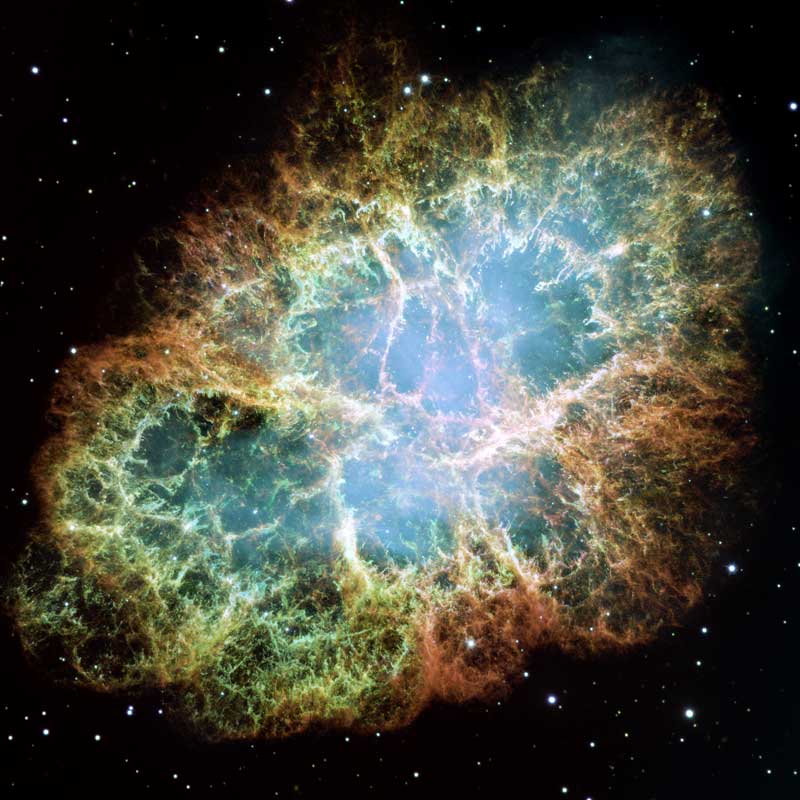
It's possibly an exploding star. No gravitational waves have ever been detected from supernovae, so there is nothing to compare it with. However, there were no neutrinos detected, which would be expected from an exploding star.
"A mysterious cosmic event might have ever-so-slightly stretched and squeezed our planet last week. On Jan. 14, astronomers detected a split-second burst of gravitational waves, distortions in space-time … but researchers don't know where this burst came from.
The gravitational wave signal, picked up by the Laser Interferometer Gravitational-Wave Observatory (LIGO) and the Virgo interferometer, lasted only 14 milliseconds, and astronomers haven't yet been able to pinpoint the burst's cause or determine whether it was just a blip in the detectors."
https://www.space.com/mysterious-gravitational-burst.html
https://gracedb.ligo.org/superevents/S200114f/


 Gravitational Waves Detected


 Re: Gravitational Waves detected







"Almost" Good Answers: