Previous in Forum: Mail Charges in USA   Next in Forum: Moonlighting: What's Wrong with My 3D Perception?
Close
Close
Close
56 comments
Rating: Comments: Nested
Participant

Join Date: Jun 2020
Posts: 3

Obtaining Maximum Vacuum in Wall Panel

06/01/2020 2:12 AM

I hope to build wall panels that use a vacuum as insulation.

Can anyone please advise what is the best way to obtain a high vacuum?

The panels will be a maximum of 2.4 meters x 1.2 meters with a cavity of 50 mm.

I have not yet decided on the internal structural material to prevent it collapsing in on itself.

Register to Reply
Pathfinder Tags: Vacuum
Interested in this topic? By joining CR4 you can "subscribe" to
this discussion and receive notification when new comments are added.

Good Answers:

These comments received enough positive votes to make them "good answers".

"Almost" Good Answers:

Check out these comments that don't yet have enough votes to be "official" good answers and, if you agree with them, vote them!
2
Guru

Join Date: Mar 2007
Location: by the beach in Florida
Posts: 33392
Good Answers: 1817
#1

Re: Obtaining maximum vacuum in wall panel

06/01/2020 3:12 AM

The problem with this is that the vacuum won't hold for very long and you have to keep pumping the air out, so you need all the panels to be interconnected and have a fitting to hook a vacuum pump up to...and when it springs a leak you need to inject a traceable gas to detect the location...The desired results are easily realized with styrofoam panels, which are much cheaper and require no maintenance....

__________________
All living things seek to control their own destiny....this is the purpose of life
Register to Reply Good Answer (Score 2)
Guru

Join Date: May 2006
Location: Placerville, CA (38° 45N, 120° 47'W)
Posts: 6215
Good Answers: 248
#8
In reply to #1

Re: Obtaining maximum vacuum in wall panel

06/01/2020 11:29 PM

I totally agree with your concept, but not necessarily the illustration. That looks like styrofoam with an aluminum layer. Around 20 or so years ago, I had plastic siding put on my house. They added a half inch of styrofoam with an aluminum reflective layer under the new siding, which was great at the time, but that was before cellphones. The aluminum layer on the styrofoam makes my house close to a Faraday cage, so quite commonly I have no service inside, except via my WiFi.

Use styrofoam panels with NO aluminum!

__________________
Teaching is a great experience, but there is no better teacher than experience.
Register to Reply
Guru

Join Date: Mar 2007
Location: by the beach in Florida
Posts: 33392
Good Answers: 1817
#16
In reply to #8

Re: Obtaining maximum vacuum in wall panel

06/02/2020 12:01 PM

Just test it first...anyway I think most everybody uses wifi at home....the radiative barrier is very important for radiating heat...and a faraday cage doesn't work with windows....

__________________
All living things seek to control their own destiny....this is the purpose of life
Register to Reply
Guru

Join Date: May 2006
Location: Placerville, CA (38° 45N, 120° 47'W)
Posts: 6215
Good Answers: 248
#17
In reply to #16

Re: Obtaining maximum vacuum in wall panel

06/02/2020 1:34 PM

he was talking about radiant barriers in the ceiling and attic. mine is on the walls. And yes, I'm in the fringe of my cell tower's range. I get 1 bar outside, sometimes two in the winter when the leaves have dropped from most of the trees.

If it weren't for my living-room window, I'd have no service inside without WiFi.

As far as heat is concerned, I have a smooth, pure white roof that was put on just a couple of years ago, and it makes a very significant difference compared to the previous grey gravel surface.

__________________
Teaching is a great experience, but there is no better teacher than experience.
Register to Reply
Guru
United Kingdom - Member - Indeterminate Engineering Fields - Control Engineering - New Member

Join Date: Jan 2007
Location: In the bothy, 7 chains down the line from Dodman's Lane level crossing, in the nation formerly known as Great Britain. Kettle's on.
Posts: 32175
Good Answers: 839
#2

Re: Obtaining maximum vacuum in wall panel

06/01/2020 4:30 AM
  • Thermal <...insulation...>: <...the internal structural material...> will provide a thermal conductive path far greater than the radiant path through a vacuum.
  • Acoustic <...insulation...>: <...the internal structural material...> will provide an acoustic conductive path far greater than the path through a vacuum.

The prospect sounds like the proverbial "rocket science"; <...the best way to obtain a high vacuum...> is to launch the thing into space. Given there are now commercial successes taking place into space there will no doubt be someone who can provide a quote for this service...

__________________
"Did you get my e-mail?" - "The biggest problem in communication is the illusion that it has taken place" - George Bernard Shaw, 1856
Register to Reply
Guru
United Kingdom - Member - Indeterminate Engineering Fields - Control Engineering - New Member

Join Date: Jan 2007
Location: In the bothy, 7 chains down the line from Dodman's Lane level crossing, in the nation formerly known as Great Britain. Kettle's on.
Posts: 32175
Good Answers: 839
#3

Re: Obtaining maximum vacuum in wall panel

06/01/2020 4:42 AM

[Deleted at edit.]

__________________
"Did you get my e-mail?" - "The biggest problem in communication is the illusion that it has taken place" - George Bernard Shaw, 1856
Register to Reply Off Topic (Score 5)
Guru
United Kingdom - Member - Indeterminate Engineering Fields - Control Engineering - New Member

Join Date: Jan 2007
Location: In the bothy, 7 chains down the line from Dodman's Lane level crossing, in the nation formerly known as Great Britain. Kettle's on.
Posts: 32175
Good Answers: 839
#4

Re: Obtaining Maximum Vacuum in Wall Panel

06/01/2020 11:26 AM

<...the best...> according to what criteria and weighting arrangements, please?

__________________
"Did you get my e-mail?" - "The biggest problem in communication is the illusion that it has taken place" - George Bernard Shaw, 1856
Register to Reply
3
Guru
Engineering Fields - Electrical Engineering - Been there, done that. Engineering Fields - Control Engineering - New Member

Join Date: Dec 2008
Location: Long Island NY
Posts: 15600
Good Answers: 981
#5

Re: Obtaining Maximum Vacuum in Wall Panel

06/01/2020 11:33 AM

<Sigh.>

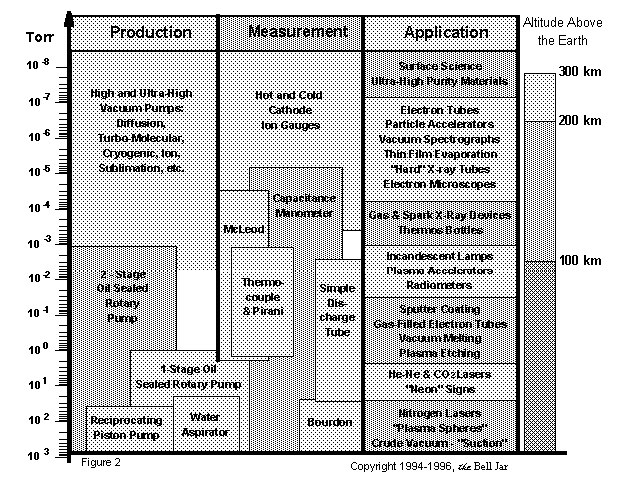
Vacuum technology is a very complicated field. From the link is a nice chart collecting a lot of introductory information on vacuum technology and some of those few industries that must operate in the various vacuum levels. I don't know what application you are attempting that you believe you need high vacuum levels.

You will notice a Dewar (Thermos) flask vacuum level is just barely into the 10^-3 to 10^-4 torr region known as high vacuum. This is because convection/conduction heat transfer ceases to become dominant at these pressures.

To achieve this pressure level one must control the cleanliness of all of the exposed surfaces to prevent out gassing from spoiling the vacuum. Residue cutting oils on metal surfaces can easily spoil a vacuum. One lotion softened fingerprint can out gas for months. This is one of the reasons that a Dewar flask is made of glass even though glass is very brittle and prone to cracking.

Sealing a vacuum chamber is a tricky process itself. Most think a simple flexible gasket completely seals a chamber from outside gasses but the out gassing of the gasket itself and the slightest irregularity of the surfaces the gasket contacts can provide a path for outside air to spoil a vacuum. Fasteners and other potential sources of trapped gas inside the chamber are but one of the surprising complications in vacuum design.

Another surprising complication is how long it takes to pump down to high vacuum level conditions. When initially pumping down the drop in pressure appears to be linear as the molecules in the chamber readily collide with one another but it is actually an exponential curve. The factors that establish this time constant are the volume the pump(s) can move and the mean free path the molecules in the chamber must travel to reach the evacuating pump.

__________________
"Don't disturb my circles." translation of Archimedes last words
Register to Reply Good Answer (Score 3)
Power-User

Join Date: Nov 2011
Location: NASA-Glenn Research Center, Cleveland Ohio
Posts: 389
Good Answers: 17
#13
In reply to #5

Re: Obtaining Maximum Vacuum in Wall Panel

06/02/2020 7:43 AM

lots of good points.

i would like to add, that surface smoothness is needed to reduce surface area for all that you stated (yes i saw you mentioned glass which is inherently smooth). Most people that are not familiar with vacuum systems have no idea how much force is exerted from Ambient pressure. A good visual is when a 55 gal drum is put into a fire, the air is heated inside, and the exit port is then sealed when allowed to cool. I am sure SE could find a good demo on-line showing this.

one other point, usually to achieve an ultra high vacuum, we need to heat the walls to speed up the out-gassing of the surfaces.

on the ultra high vacuum equipment many of the joints use copper gaskets for the reasons you stated. If a door is needed to enter the chamber on a regular basis, we do use viton o-rings without grease (or very very little high vac silicone grease). i love going to a lab to help out a researcher who is having problems achieving high vac only to see enough grease on the o-ring to lubricate a wheel bearing.

Register to Reply
Guru
Engineering Fields - Electrical Engineering - Been there, done that. Engineering Fields - Control Engineering - New Member

Join Date: Dec 2008
Location: Long Island NY
Posts: 15600
Good Answers: 981
#14
In reply to #13

Re: Obtaining Maximum Vacuum in Wall Panel

06/02/2020 7:49 AM

There is always this classic demonstration of atmospheric pressure.

(Yes, the safety valves were defeated in this demonstration.)

__________________
"Don't disturb my circles." translation of Archimedes last words
Register to Reply
Power-User

Join Date: Nov 2011
Location: NASA-Glenn Research Center, Cleveland Ohio
Posts: 389
Good Answers: 17
#22
In reply to #14

Re: Obtaining Maximum Vacuum in Wall Panel

06/03/2020 7:38 AM

yep, that gets the point across, thanks

Register to Reply
Guru

Join Date: Mar 2007
Location: by the beach in Florida
Posts: 33392
Good Answers: 1817
#23
In reply to #13

Re: Obtaining Maximum Vacuum in Wall Panel

06/03/2020 10:23 AM

__________________
All living things seek to control their own destiny....this is the purpose of life
Register to Reply
Guru
New Zealand - Member - Kiwi Popular Science - Weaponology - New Member Engineering Fields - Power Engineering - New Member Engineering Fields - Electrical Engineering - New Member

Join Date: Sep 2006
Location: Auckland, New Zealand
Posts: 8777
Good Answers: 376
#6

Re: Obtaining Maximum Vacuum in Wall Panel

06/01/2020 3:35 PM

As others have said there are simpler and better alternatives depending on the application. Do you really need vacuum insulation and to what vacuum level?

What exactly is the application?

__________________
jack of all trades
Register to Reply
Power-User

Join Date: Nov 2011
Posts: 249
Good Answers: 4
#7

Re: Obtaining Maximum Vacuum in Wall Panel

06/01/2020 10:34 PM

Creation of vacuum will be the lesser of the problems. There any number of types of vacuum pumps available.

The design if the panel could be plain surface on one side and on the other sheet, a number of craters pressed with the rims touching each other, with the bottom most point of each crater, brazed to the plain faced sheet . The sheets will have to attached to each other on all four sides . Since there would be space around the craters on all sides, there would be perfect connectivity. Because of the design the hollow panel would be quite strong whether there is vacuum or reasonable pressure inside .

I will fish out a photograph and send earliest . The material could be plain cold rolled steel .

Perhaps there would be Some amount of heat transfer from the spots that were brazed/welded .

Register to Reply
Participant

Join Date: Jun 2020
Posts: 3
#9

Re: Obtaining Maximum Vacuum in Wall Panel

06/02/2020 5:34 AM

Thank you everyone for your comments.

I was once a builder until retiring.

I am living in an area in Australia where we have temperatures in the summer up around 40 degrees centigrade and minus 8 or 10 degrees in winter.

I know that's not really cold compared to some places but trying to do aquaponics makes it is very difficult?

I was surprised how good a vacuum panel is for insulation so with lots of time on my hands I thought I would try and build a small structure and make my own panels!

This graph is what started my interest in doing this.

Register to Reply Score 1 for Good Answer
Guru
Engineering Fields - Electrical Engineering - Been there, done that. Engineering Fields - Control Engineering - New Member

Join Date: Dec 2008
Location: Long Island NY
Posts: 15600
Good Answers: 981
#12
In reply to #9

Re: Obtaining Maximum Vacuum in Wall Panel

06/02/2020 7:42 AM

I believe the inclusion of a vacuum panel in your chart is just a reference of the theoretical ideal insulator and not a practical product for use. A critical impracticality of a vacuum panel is the fragility to maintain a vacuum. Most high vacuum systems have a pair of vacuum pumps operating constantly in series to maintain pressure levels by evacuating the gasses that slowly leak in. The other building material insulations in your chart do not require constant maintenance.

__________________
"Don't disturb my circles." translation of Archimedes last words
Register to Reply
Guru

Join Date: Mar 2007
Location: by the beach in Florida
Posts: 33392
Good Answers: 1817
#18
In reply to #9

Re: Obtaining Maximum Vacuum in Wall Panel

06/02/2020 4:43 PM

No doubt the vacuum panels have the highest R value per inch....but the problem is that as the vacuum is compromised over time, nothing can hold a vacuum indefinitely, then it becomes pretty much useless...or if you puncture it during installation, very easy to do, you've just wasted over $100-200 dollars...So what is the point if after a while you have to tear out the walls and re-insulate again....For a temporary small installation, in a very cold climate, on a project with plenty of money, they might work well in that scenario...3 months in Antarctica, gov grant money, one time use...Remember you can't cut the panels, they need to be ordered to size, that adds to the cost as well....

https://en.wikipedia.org/wiki/Vacuum_insulated_panel

https://en.m.wikipedia.org/wiki/Materials_for_use_in_vacuum

__________________
All living things seek to control their own destiny....this is the purpose of life
Register to Reply
Guru

Join Date: Mar 2007
Location: by the beach in Florida
Posts: 33392
Good Answers: 1817
#20
In reply to #18

Re: Obtaining Maximum Vacuum in Wall Panel

06/03/2020 3:10 AM

I think I would try a rigid ceramic material as the filler, (this is common in filters and porous enough to be evacuated, with low out gassing)...and pressed into a rigid sheet...

http://www.madehow.com/Volume-5/Ceramic-Filter.html#:~:text=Raw%20Materials&text=These%20include%20aluminum%20oxide%2C%20zirconium,added%20to%20improve%20certain%20properties.

Then I would use structural fiberglass I beams for rigidity ....

Torr-seal for adhesive requirements...(Torr-Seal, or its generic equivalent Hysol-1C (USA brand name) or Loctite 9492 (EU brand name), is an epoxy with resin and hardener for use in vacuum environments. )

I would have the foil covering then covered with a hard clear plastic sheet, possibly a polyurethane to protect the surface...

...just spit balling here...but ya gotta start someplace

__________________
All living things seek to control their own destiny....this is the purpose of life
Register to Reply
Guru

Join Date: Mar 2007
Location: by the beach in Florida
Posts: 33392
Good Answers: 1817
#21
In reply to #20

Re: Obtaining Maximum Vacuum in Wall Panel

06/03/2020 5:28 AM
__________________
All living things seek to control their own destiny....this is the purpose of life
Register to Reply
Guru

Join Date: Mar 2007
Location: by the beach in Florida
Posts: 33392
Good Answers: 1817
#24
In reply to #21

Re: Obtaining Maximum Vacuum in Wall Panel

06/03/2020 6:27 PM
__________________
All living things seek to control their own destiny....this is the purpose of life
Register to Reply
Power-User

Join Date: Nov 2011
Location: NASA-Glenn Research Center, Cleveland Ohio
Posts: 389
Good Answers: 17
#26
In reply to #24

Re: Obtaining Maximum Vacuum in Wall Panel

06/04/2020 7:09 AM

Be careful how its used. it's not really considered insulation perse, but a radiant barrier,

and an air gap is needed for it to do what you would like it to do.

https://www.energyvanguard.com/blog/29497/The-Foil-Faced-Bubble-Wrap-Sham-Understanding-Radiant-Barriers

https://www.greenbuildingadvisor.com/article/stay-away-from-foil-faced-bubble-wrap

not trying to start an argument, just saying its not the next best thing since sliced bread. its disappointed me in the past.

Register to Reply Score 1 for Good Answer
Guru

Join Date: Mar 2007
Location: by the beach in Florida
Posts: 33392
Good Answers: 1817
#27
In reply to #26

Re: Obtaining Maximum Vacuum in Wall Panel

06/04/2020 8:41 AM

I've worked here in Florida for over 30 years in the HVAC industry, I don't need any instruction on the effectiveness of various types of insulation, I've seen it all, I've sold it all, and I know what a radiant barrier can do...After you've spent as much time as I have in attics in the summer time, then I'll listen to what you have to say....You can listen to advice from whomever you please, but I usually get paid for mine....You ever heard of a space blanket?

__________________
All living things seek to control their own destiny....this is the purpose of life
Register to Reply Score 1 for Off Topic
Guru
Engineering Fields - Electrical Engineering - Been there, done that. Engineering Fields - Control Engineering - New Member

Join Date: Dec 2008
Location: Long Island NY
Posts: 15600
Good Answers: 981
#28
In reply to #27

Re: Obtaining Maximum Vacuum in Wall Panel

06/04/2020 8:49 AM

Sheesh.

When I read setlock77's reply to you I did not take it as a rebuke of you, SolarEagle. I took it as a proffered clarification to the OP about your reply to them on this radiant barrier.

Don't take things so personally.

__________________
"Don't disturb my circles." translation of Archimedes last words
Register to Reply Off Topic (Score 4)
Guru

Join Date: Mar 2007
Location: by the beach in Florida
Posts: 33392
Good Answers: 1817
#29
In reply to #28

Re: Obtaining Maximum Vacuum in Wall Panel

06/04/2020 9:01 AM

He just said it needs an air gap to work, and at the same time said it has an air gap between the sheets of radiant barriers and doesn't work very well....I'm saying for what it is, it works extremely well...as an insulator...care to weigh in?

__________________
All living things seek to control their own destiny....this is the purpose of life
Register to Reply Off Topic (Score 5)
Guru
Engineering Fields - Electrical Engineering - Been there, done that. Engineering Fields - Control Engineering - New Member

Join Date: Dec 2008
Location: Long Island NY
Posts: 15600
Good Answers: 981
#30
In reply to #29

Re: Obtaining Maximum Vacuum in Wall Panel

06/04/2020 12:31 PM

You obviously did not read either article he proffered. Need I say more.

__________________
"Don't disturb my circles." translation of Archimedes last words
Register to Reply Off Topic (Score 5)
Guru

Join Date: Mar 2007
Location: by the beach in Florida
Posts: 33392
Good Answers: 1817
#31
In reply to #30

Re: Obtaining Maximum Vacuum in Wall Panel

06/04/2020 1:07 PM

Yes I watched both of them...The stuff works great if used for its intended purpose, a radiant barrier with an added insulating factor... "R" factor is based on heat transfer by conduction, not really relevant to radiant heat...Plus a radiant barrier can be installed over the studs of the structure leaving no part uncovered....Installing a radiant barrier in an attic can drop the temperature by 30°...I've been in before and after enough to know...a radiant barrier can block up to 97% of the radiant heat...Plus it's very easy to work with , it's flexible and you just staple it up, and you can cut it with scissors....it's fast, it's easy, and it works great...

__________________
All living things seek to control their own destiny....this is the purpose of life
Register to Reply Off Topic (Score 5)
Guru

Join Date: Mar 2007
Location: by the beach in Florida
Posts: 33392
Good Answers: 1817
#32
In reply to #31

Re: Obtaining Maximum Vacuum in Wall Panel

06/04/2020 1:27 PM

It's easy enough to test... get a baggie of ice cubes and put them in a box, wrap the box in the radiant double bubble stuff and tape it airtight, then leave it in the sun for several hours...for a control, do the same thing without the double bubble wrap and make a comparison...

__________________
All living things seek to control their own destiny....this is the purpose of life
Register to Reply Off Topic (Score 5)
Guru

Join Date: Mar 2007
Location: by the beach in Florida
Posts: 33392
Good Answers: 1817
#34
In reply to #32

Re: Obtaining Maximum Vacuum in Wall Panel

06/05/2020 3:29 AM

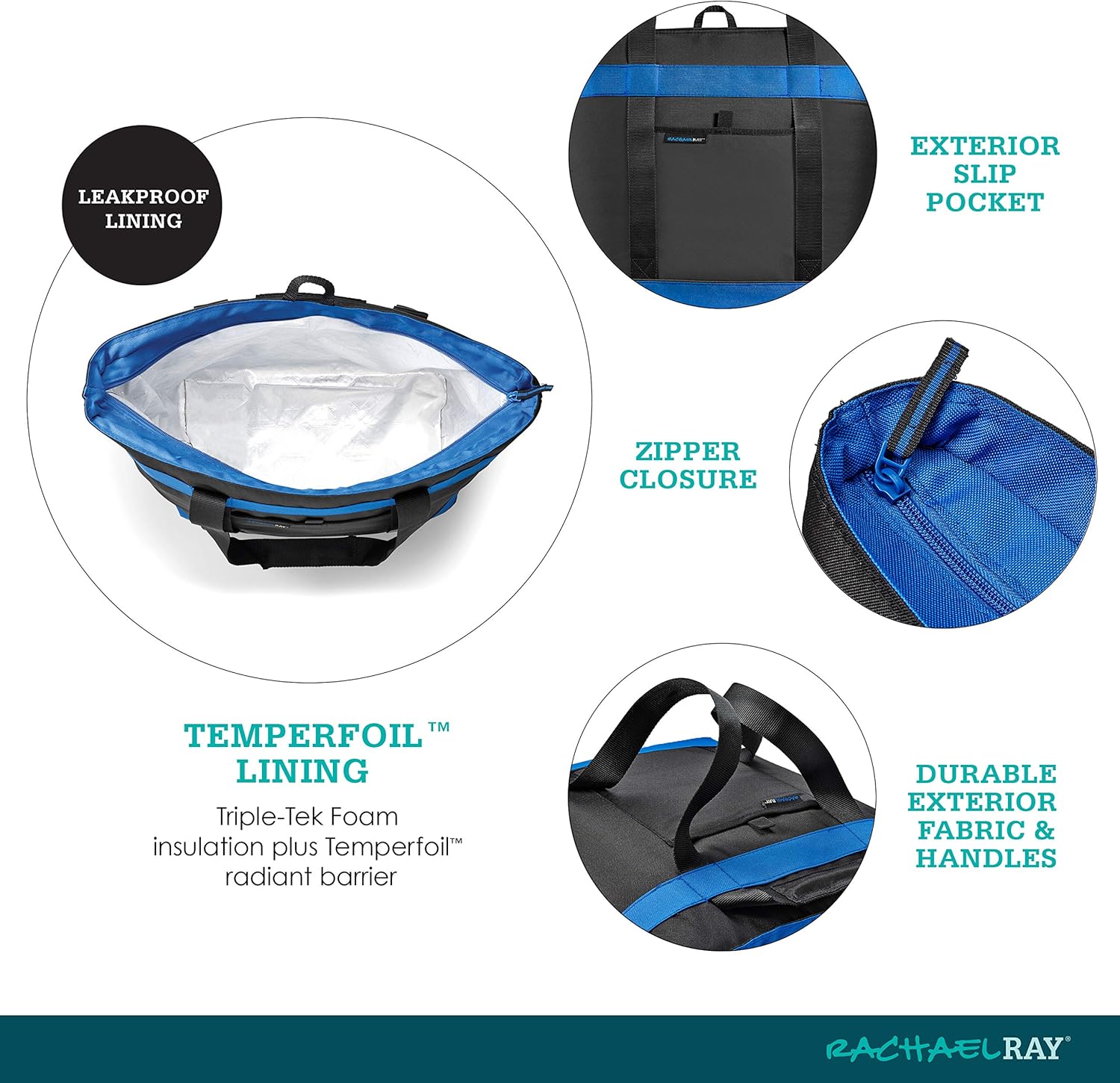
Here's another tip....Get one of these insulated grocery bags for when you go grocery shopping and put all your frozen and refrigerated items in this bag, and keep your ice cream from thawing out on the outside....

__________________
All living things seek to control their own destiny....this is the purpose of life
Register to Reply Off Topic (Score 5)
Guru

Join Date: Mar 2007
Location: by the beach in Florida
Posts: 33392
Good Answers: 1817
#41
In reply to #32

Re: Obtaining Maximum Vacuum in Wall Panel

06/10/2020 7:02 AM

Hey look somebody kind of did that....

__________________
All living things seek to control their own destiny....this is the purpose of life
Register to Reply
Guru

Join Date: Mar 2007
Location: by the beach in Florida
Posts: 33392
Good Answers: 1817
#43
In reply to #41

Re: Obtaining Maximum Vacuum in Wall Panel

06/10/2020 4:23 PM

Check the spec....

R-6.6 to R-15.2 (Horizontal & Downwards) ASTM C1224

Fire rated... class 1 / class A

http://cnbhnp.com/images/polycarb-sealing-insulation/rfoil-technical-data.pdf

__________________
All living things seek to control their own destiny....this is the purpose of life
Register to Reply
Guru

Join Date: Jul 2017
Posts: 520
Good Answers: 14
#33
In reply to #26

Re: Obtaining Maximum Vacuum in Wall Panel

06/05/2020 12:19 AM

Real Radiant Barriers No Sham, A Personal Perception

Decades ago, I was lukewarm on radiant barriers. I had heard proponents and detractors and had casually read what was available. Then I happened upon a bucket of paint on clearance in a big box store. The paint was aluminum colored and not just aluminum appearing to humans, but had a decent amount of genuine aluminum powder listed on the container. Summer in Texas had already asserted itself and the paint bucket had ugly silver drips down the side and was marked down massively. By weight I could tell that only a small quantity of paint had been used. Work was busy and I could only afford to apply the paint on weekends. Also, the sun was oppressive and the attic was hostile if not deadly(heat stroke.)

I applied some of the paint rather haphazardly to the underside of the wood in my low overhead attic(center crawling room only) where I could reach with the least difficulty by sliding a couple of pieces of thick plywood around on the 2x4's mounting the ceiling sheet rock beneath me. This was quite dicey since I could have easily fallen through the sheet rock. I did what I could (maybe coating 20% of the underside surface of the roof that first week.) On top of this thin plywood roof sheathing were asphalt shingles with nails and staples sticking through here and there. At first, I was not painting the 2x4's supporting the roof sheathing. Painting was more difficult because of all the points sticking through the thin plywood frequently interfered with the 3" wide synthetic bristle brush and, of course, painting overhead leads to a lot of dripping from all those nails if you load the brush very much. I was kicking myself for taking on this task. I did notice that the areas I painted felt cooler but I discounted that as volatile components of the paint evaporating and cooling the air that way.

The next Saturday morning, early, I got up and grudgingly went back up into the attic, thinking that I would fill in a lot of the unpainted areas of roof under-surface not so much for a radiant barrier but just to make the attic not appear so splotchy. The splotchy situation was aggravated massively by low weight, high volume stored Christmas yard ornamentation resting directly on the blown in insulation on top of the ceiling sheet rock and each with an unpainted area above. At first I perceived no difference between the painted areas and the unpainted ones. As the sun rose in the sky I noticed that although the paint applied the week before was now, after a very hot week, bone dry, there was still a dramatic difference on my face a few inches away from the thin plywood between painted and unpainted areas. The difference was so dramatic that I could see with my eyes shut, using just the heat sensitivity of my facial skin and lips, the 2x4's which I had mostly not painted and even nails sticking through the plywood which were painted but being metallic, conducted heat easily through the wood. Realize that I had one lonely 40w bare light bulb right at the access hatch and I had painted near it accurately and had incomplete coverage as the lighting became inadequate farther from the access hatch.

The second week I had a small flashlight in my pocket. I found that if I faced an area previously painted that I could "see" the 2x4's, the nails, and the unpainted blotches from the previous week by putting my face about 6" from the sheathing. That was my impression so I avoided the flashlight and painted with my newly found IR sensitivity. After completing a few square feet at a time, I would verify with the flashlight and found that I needed no visible light except that necessary to find the paint can beside me on the board. The hatch light was overhead and could adequately illuminate the can sitting beside me enough to target it with the brush. Except for the annoying nails and staples, thorough coverage amendments became easy even though the roof 2x4's mostly shadowed the plywood I was painting from the hatch light. I was pleased not to have to run an extension cord through the hatch and push around some big light source to continue painting. The sad thing is that in short order I would get forced from the attic because the air heated up to intolerable levels.

Now, it is true that the roof still has inadequate conductive heat resistance and the attic is still hostile after a couple of hours in the brutal Texas sun. Because my attic height is so minimal and the slope such an acute angle with horizontal, I have never completed applying radiant barrier paint to the outer edges of the roof sheathing. While I noticed a difference in my AC season power bills post radiant barrier, I did not retain those records so that I could present them here. At some point I might try SE's double bubble radiant barrier, or get a long reach spray device to paint the remainder. The personal, direct experience of "seeing" the infrared with my lips was compelling for me. It informed my painting of the 2x4's in addition to the sheathing. Unless I add pink fiberglass or something good at burying nails, the thermal short circuit of the nails penetrating beyond the plywood, there remains a large radiant heat source in the attic despite the radiant barrier over the wooden parts.

Be not fooled, aluminum colored paint with minimal aluminum dust ingredients does next to nothing. I have tried it. I can't "see" it.

My first conclusion is that the value of a radiant barrier is something you should be able to "see" for yourself in real time on a hot, sunny day.

A second conclusion from my experience is "always try to buy a house with enough stand up height in its attic and immediately apply plywood on all the 2x4's so you do not end up straddling insulation or kneeling on the short sides of 2x4's so you can slide around a chunk of plywood(thus plowing up irritating, dusty insulation) while you worry about the very real danger of falling through the ceiling."

____________

thewildotter

Register to Reply
Guru
Engineering Fields - Electrical Engineering - Been there, done that. Engineering Fields - Control Engineering - New Member

Join Date: Dec 2008
Location: Long Island NY
Posts: 15600
Good Answers: 981
#35
In reply to #33

Re: Obtaining Maximum Vacuum in Wall Panel

06/05/2020 8:30 AM

Yes, a radiant barrier works by reflecting away radiant energy. Depending on the application a thermal barrier mitigates the dominant thermal energy transfer. But as you pointed out with this excellent anecdote, a radiant barrier is not insulation for insulation slows the thermal transfer of conduction and convection.

__________________
"Don't disturb my circles." translation of Archimedes last words
Register to Reply
Guru

Join Date: Mar 2007
Location: by the beach in Florida
Posts: 33392
Good Answers: 1817
#36
In reply to #35

Re: Obtaining Maximum Vacuum in Wall Panel

06/05/2020 1:15 PM

The air space between the radiant barriers, in this case the double-bubble, does act as an insulator for heat conduction...

__________________
All living things seek to control their own destiny....this is the purpose of life
Register to Reply
Guru
Engineering Fields - Electrical Engineering - Been there, done that. Engineering Fields - Control Engineering - New Member

Join Date: Dec 2008
Location: Long Island NY
Posts: 15600
Good Answers: 981
#37
In reply to #36

Re: Obtaining Maximum Vacuum in Wall Panel

06/05/2020 2:32 PM

Quite true, but from radiant barrier to radiant barrier one has at most three trapped gas cells (bubble, bubble, inter-bubble) along the shortest path where internal gas convection can conduct heat. (The point of the low insulation 1R rating in the articles.) The better insulators, including your earlier styrofoam panels, have many, many more much smaller gas traps that tend to not internally circulate by convection. These materials are better thermal insulators.

__________________
"Don't disturb my circles." translation of Archimedes last words
Register to Reply
Guru

Join Date: Mar 2007
Location: by the beach in Florida
Posts: 33392
Good Answers: 1817
#38
In reply to #37

Re: Obtaining Maximum Vacuum in Wall Panel

06/05/2020 3:05 PM

Yes but they are not flexible, and the difference in thermal transfer for similar thickness is minimal....

__________________
All living things seek to control their own destiny....this is the purpose of life
Register to Reply
Guru
Engineering Fields - Electrical Engineering - Been there, done that. Engineering Fields - Control Engineering - New Member

Join Date: Dec 2008
Location: Long Island NY
Posts: 15600
Good Answers: 981
#39
In reply to #38

Re: Obtaining Maximum Vacuum in Wall Panel

06/05/2020 3:28 PM

Fine, I've repeatedly acknowledged your points. You continue to ignore mine. You now add a previously unstated conditional in an attempt to maintain superiority. This is getting childish.

Preventing convection of the insulating gas is critical to the effectiveness.

<unsubscribe>

__________________
"Don't disturb my circles." translation of Archimedes last words
Register to Reply
Guru

Join Date: Mar 2007
Location: by the beach in Florida
Posts: 33392
Good Answers: 1817
#40
In reply to #39

Re: Obtaining Maximum Vacuum in Wall Panel

06/05/2020 5:42 PM

Your points? you mean stating that 3 inches of foam insulation is better than 3/8" of this stuff....great point red....

..."Thermal insulation is the process of reduction of heat transfer between objects in thermal contact or in range of radiative influence. Thermal insulations consist of low thermal conductivity materials combined to achieve an even lower system thermal conductivity. Thermal insulation can be achieved with specially engineered methods or processes, as well as with suitable object shapes and materials."...

This from your own link, excellent resource by the way...there is no convection in the double-bubble, the gas is trapped in the bubbles...so I don't know what you mean by this...

So are you taking your ball and going home...?

__________________
All living things seek to control their own destiny....this is the purpose of life
Register to Reply
Power-User

Join Date: Nov 2011
Location: NASA-Glenn Research Center, Cleveland Ohio
Posts: 389
Good Answers: 17
#42
In reply to #33

Re: Obtaining Maximum Vacuum in Wall Panel

06/10/2020 8:24 AM

The only issue that i have with the paint or SE's magic bubbles on the opposite side of the shingle would be the integrity to the shingle. Shingle manufacturers will not insure a roof that doesn't have proper ventilation as it causes premature curling of the shingles. Maybe a better suggestion, and easier application would be to apply a thin sheet of plywood (or other even visquene) to the underside of the struts (2x4's) and leaving gaps at the ridge vent and soffits for proper air flow. Then paint this surface (or apply the magic bubbles) which would give the proper air flow and not negate the shingle warranty. A metal roof of course would be coated directly (which i have in my shop).

NOTE: So SE doesn't blow a gasket, i am not insinuating that SE said to put the magic bubbles on the opposite side of the shingle sheathing, i am merely adding to the aluminum paint discussion, which i found very interesting, thanks for posting.

Register to Reply
Guru

Join Date: Jul 2017
Posts: 520
Good Answers: 14
#45
In reply to #42

Re: Obtaining Maximum Vacuum in Wall Panel. Addnl Thoughts

06/10/2020 10:32 PM

Further Aluminum Paint and Double-Bubble Discussion

My gravel coated asphalt shingles are applied to thin plywood sheathing on top of the struts of the roof. The aluminum paint I applied to that thin plywood sheathing is not a vapor barrier. I am not sure what the underlying material was in the paint but it does not look like plastic(acrylic, vinyl, urethane,...) and it appears mat and porous not glossy and impermeable. I applied the paint decades ago and have not had any issues with condensation or accelerated deterioration of the gravel coated asphalt shingles above the thin plywood nor of the plywood itself. The roof is now aged and probably needs replacement due to the normal life span of the materials installed. Many of my neighbors with houses of similar age and originally had roofs of identical composition have had multiple roof replacements. This may be due to perceived hail damage which I have not aggressively pursued with insurance companies but I have no known roof leaks. I think the neighbors with newer roofs were probably taking advantage of pessimistic group-think to get a new roof when the actual impact of the hailstorms, while denting new cars in nearby dealership lots, did not actually poke holes through their shingles. This has happened at least two major times over the years and since I am sensitive and inquisitive about my house, I think I would have detected any resulting leaks by now. The upper surface of my skylights were cracked and punctured by the hail the first time. I repaired the damaged plastic with glue and installed springy expanded metal shields over the skylights which have prevented hail damage to the skylights ever since. UV damage to the first layer on the skylights and to my glue will probably force me to replace that upper transparent skylight layer soon.

I grant that SE's double bubble is almost certainly a vapor barrier and that application of any vapor barrier to a roof requires understanding and implementing some adequate ventilation strategy to minimize chances of condensation damage. It strikes me that a clever laser perforation of bubble connective surfaces could provide at least some level of permeability to the double-bubble wrap without seriously impacting the insulating and radiant barrier advantages.

I am concerned that aluminum paint directly on the underside of a metal roof may not be effective since I can still perceive heat from the nails sticking through the plywood under my shingles despite the fact that some of them are fully coated with aluminum paint. This may be due to conduction and convection rather than radiation but I cannot quantify how much, if any, good the aluminum paint did for reducing the heat intrusion into my attic via these metal items. I would have to run some tests before I would spend money to glibly apply a radiant barrier directly to the underside of a metal roof. Also, here in TX I would be concerned that the high temperatures against a double-bubble plastic film could rapidly destroy the plastic in the absence of some other layer(perhaps pink glass, perhaps some other breathing dead air space) used to drop the effective temps applied to the plastic.

_____________

thewildotter

Register to Reply
Power-User

Join Date: Nov 2011
Location: NASA-Glenn Research Center, Cleveland Ohio
Posts: 389
Good Answers: 17
#49
In reply to #45

Re: Obtaining Maximum Vacuum in Wall Panel. Addnl Thoughts

06/11/2020 2:39 PM

Thanks for the reply, sounds like radiant barrier doesn't have the same issue that insulation may have Since it reflects the heat causing energy and not holding it.

Register to Reply
Guru

Join Date: Jul 2017
Posts: 520
Good Answers: 14
#10

Re: Obtaining Maximum Vacuum in Wall Panel. Mfg Facility Reuse

06/02/2020 6:13 AM

Reuse of Light Bulbs or Light Bulb Manufacturing Facilities

The best way to "obtain a high vacuum" is to use one someone else created and for whatever reason is now discarding. What is an example of one of these which will fit in a wall ? Fluorescent tubes. Large buildings use a large number of these 8 foot long, highly evacuated glass envelopes. Unfortunately, they contain mercury. I do not recommend using them in an uncontrolled, high volume application because damage to the wall will release some mercury. However, I do not intend to judge your application for mercury contamination risk since you could possibly buy a fluorescent tube manufacturing facility and cease including the mercury.

For a prototype you could get some T12 used bulbs to construct a test wall and be careful about the mercury. I recommend T12 because they were very common and have a larger diameter than the newer T8 envelopes. I would sandwich the bulbs between SE's styrofoam panels because there is still a thermal path through the glass. I would use a hexagonal close packing of tubes for thick walls and I would use a "Great Stuff" or similar expand in place foam to fill the small gap between three bulbs and between the styrofoam and the outer layers of bulbs.

The T12's are 38.1 mm and the T8's are 25.4 mm officially but you may find some variability in those dimensions. Hexagonal close packing means that the average layer thickness is somewhat less than the official diameter but you may want to slightly space the bulbs from each other to allow easy ingress of your foam and to eliminate glass on glass vibration chatter and risk. The simplest for 50mm would be a single layer of T12's and fill the spaces with expand in place foam. You might be successful with a two layer T8 but may find it difficult to get perfect ingress of foam since not much spacing remains available for easy foam application. You may want to provide a thin aluminum foil layer to serve as a radiant barrier much as thermos bottle manufacturers aluminize their envelopes but it is probably good enough to put that on one outer foam flat surface or the other.

So, ultimately buy yourself a deprecated T12 manufacturing facility. Use it to provide your mercury free vacuum bottles. Sandwich the result with foam and add a radiant barrier. You, of course, do not need to coat the insides of the tubes with phosphors nor provide electrical conductors through the ends of the tubes. I suspect that the production costs as well as the shipping/handling costs of completed panels will be too high to be a viable product but this approach is probably the cheapest way of satisfying your original question on a production basis.

_______________

thewildotter

Register to Reply
Associate

Join Date: Dec 2017
Posts: 44
#15
In reply to #10

Re: Obtaining Maximum Vacuum in Wall Panel. Mfg Facility Reuse

06/02/2020 11:36 AM

Good day.

Instead of to use Litgth Bulb, it would be feasable to use a PVC pipe as an container of the Vaccum Air ?

Register to Reply
Guru

Join Date: Jul 2017
Posts: 520
Good Answers: 14
#19
In reply to #15

Re: Obtaining Maximum Vacuum in Wall Panel. Glass vs PVC

06/02/2020 9:53 PM

SuperCooled Bubbles

Thin shell PVC pipe might be quite cheap for dead air space but a thin PVC pipe will collapse under full atmospheric pressure. A thick PVC pipe might resist collapse but it will conduct a lot of heat through its envelope since it will be significantly thicker. It is a coin flip with heads I win, tails you lose results. Thin glass, on the other hand, can resist quite a bit of pressure with good symmetry because glass is a supercooled liquid bubble which performs well under high pressures. Except for helium, glass resists gas penetration very well relative to many other materials. HeNe lasers, for example, lose their helium in a few years if they have a glass envelope but retain most of their neon.

_____________

thewildotter

Register to Reply
Power-User

Join Date: Nov 2011
Location: NASA-Glenn Research Center, Cleveland Ohio
Posts: 389
Good Answers: 17
#11

Re: Obtaining Maximum Vacuum in Wall Panel

06/02/2020 7:25 AM

A rough pump will get you into the 10-3 torr and less. high vacuum is usually in the 10-4 to 10-6 torr range and then ultra high vacuum is higher than 10-9 torr and higher.

i can tell you right now, you will never achieve anything better than a low rough vacuum for an encapsulated wall. there will be too much surface area besides all the leaks inherent (unless you have some really big vacuum pumps) And you will need to constantly run that vacuum pump continuously which will negate the cost saving for heating/cooling the home.

Then lets talk about the material that will need to be used to hold the 14.5 PSI of our environment, your walls will collapse into itself.

Trapped air such as a closed porosity foam will be your best bet.for insulation. Spray insulation will be the best bet to seal the walls from drafts.

I would also like to say that a home needs a certain amount of air to enter and exchange the living space. This would be for the exchange of moisture from humans, CO2 from humans, CO (and H2O,CO2) from a gas stove and of course Oxygen. A clothes drier, fireplace, bathroom fans, kitchen exhaust fan also needs a draw to replace the air that has been expelled. Other toxins from things like carpet, furniture, paint, that memory foam mattress, ect. for a healthy living environment.

Just sayin'

Register to Reply
Participant

Join Date: Jun 2020
Posts: 3
#25

Re: Obtaining Maximum Vacuum in Wall Panel

06/03/2020 8:44 PM

Thank you everyone for all of your input.

Looks like I have a some work to do!!

Very interesting subject.

Register to Reply
Power-User

Join Date: Feb 2020
Posts: 482
Good Answers: 7
#44

Re: Obtaining Maximum Vacuum in Wall Panel

06/10/2020 7:21 PM

In reference to the original question, about the vacuum, an air inductor will give you the vacuum needed. It does not need to be a high vacuum, and if properly sealed, should last a long time. One can always "top it off" with a air hose in the future.

__________________
Light is only half of what you think it is.
Register to Reply
Guru

Join Date: Mar 2007
Location: by the beach in Florida
Posts: 33392
Good Answers: 1817
#46
In reply to #44

Re: Obtaining Maximum Vacuum in Wall Panel

06/11/2020 9:23 AM

What's an "air inductor"..?

__________________
All living things seek to control their own destiny....this is the purpose of life
Register to Reply
Guru

Join Date: May 2006
Location: Placerville, CA (38° 45N, 120° 47'W)
Posts: 6215
Good Answers: 248
#47
In reply to #46

Re: Obtaining Maximum Vacuum in Wall Panel

06/11/2020 10:37 AM

I was going to ask the same question. I believe that a vacuum cleaner would be an example. ...or a Venturi?

__________________
Teaching is a great experience, but there is no better teacher than experience.
Register to Reply
Guru

Join Date: Jul 2017
Posts: 520
Good Answers: 14
#48
In reply to #46

Re: Obtaining Maximum Vacuum in Wall Panel. Air Inductor

06/11/2020 2:21 PM

I was visualizing an enameled copper wire coil formed originally on a pencil. But, of course, it did not mesh with the context.

____________

thewildotter

Register to Reply
Power-User

Join Date: Nov 2011
Location: NASA-Glenn Research Center, Cleveland Ohio
Posts: 389
Good Answers: 17
#50
In reply to #44

Re: Obtaining Maximum Vacuum in Wall Panel

06/11/2020 2:42 PM

I'm stuck on the "top it off" statement.

sounds like one would fill it up with vacuum.

Register to Reply
Power-User

Join Date: Feb 2020
Posts: 482
Good Answers: 7
#51

Re: Obtaining Maximum Vacuum in Wall Panel

06/11/2020 5:55 PM

An air inductor is a nozzle device, the uses compressed air, to create a vacuum. Like blowing cross-wise across a straw. One use of such, is to establish a vacuum in a turbine condenser.
Topping off a vacuum is in quotes......because it has a backwards/inverse context.

__________________
Light is only half of what you think it is.
Register to Reply
Guru

Join Date: May 2006
Location: Placerville, CA (38° 45N, 120° 47'W)
Posts: 6215
Good Answers: 248
#52
In reply to #51

Re: Obtaining Maximum Vacuum in Wall Panel

06/11/2020 7:48 PM

In my world, that's called a Venturi. ExAir is one source.

__________________
Teaching is a great experience, but there is no better teacher than experience.
Register to Reply
Power-User

Join Date: Nov 2011
Location: NASA-Glenn Research Center, Cleveland Ohio
Posts: 389
Good Answers: 17
#56
In reply to #52

Re: Obtaining Maximum Vacuum in Wall Panel

06/16/2020 1:51 PM

yea me too. my backup sump pump uses city water to pump out the sump when electricity is down and the generator is off using a venturi system

Register to Reply
Guru

Join Date: Mar 2007
Location: by the beach in Florida
Posts: 33392
Good Answers: 1817
#53
In reply to #51

Re: Obtaining Maximum Vacuum in Wall Panel

06/11/2020 8:30 PM

Oh one of those things...I guess in high production this could pull a vacuum faster, is that the advantage?

__________________
All living things seek to control their own destiny....this is the purpose of life
Register to Reply
Power-User

Join Date: Feb 2020
Posts: 482
Good Answers: 7
#54

Re: Obtaining Maximum Vacuum in Wall Panel

06/11/2020 10:38 PM

The advantage of the air inductor, is that it is cheap, homebrew and can bring down a large volume quickly. The original poster, has decided to use a vacuum. I assume he knows the structural requirements.
Just trying to help. Whether to use a vacuum or not, is another matter. I am surprised we don't see much more use of it.
I have used a disposable styrofoam 20 oz. cup for years for my ice tea. My caretaker has a thin 20 oz. vacuum cup, which is far superior.

__________________
Light is only half of what you think it is.
Register to Reply
Guru

Join Date: Mar 2007
Location: by the beach in Florida
Posts: 33392
Good Answers: 1817
#55
In reply to #54

Re: Obtaining Maximum Vacuum in Wall Panel

06/12/2020 7:37 AM
__________________
All living things seek to control their own destiny....this is the purpose of life
Register to Reply
Register to Reply 56 comments

Good Answers:

These comments received enough positive votes to make them "good answers".

"Almost" Good Answers:

Check out these comments that don't yet have enough votes to be "official" good answers and, if you agree with them, vote them!
Copy to Clipboard

Users who posted comments:

animateau (2); dkwarner (4); Gadepalli Subrahmanyam (1); Haymaker (3); jack of all trades (1); PWSlack (3); redfred (8); setlock77 (8); SolarEagle (20); sqyuma (1); thewildotter (5)

Previous in Forum: Mail Charges in USA   Next in Forum: Moonlighting: What's Wrong with My 3D Perception?

Advertisement