I have been looking into how AI workloads are affecting data center design, and one question keeps coming up around structural capacity in colocation buildings.
For a long time, structural design assumptions were relatively stable. Most facilities were built around similar rack densities and cooling strategies, so floor loading, column grids, and ceiling heights did not vary too much between projects.
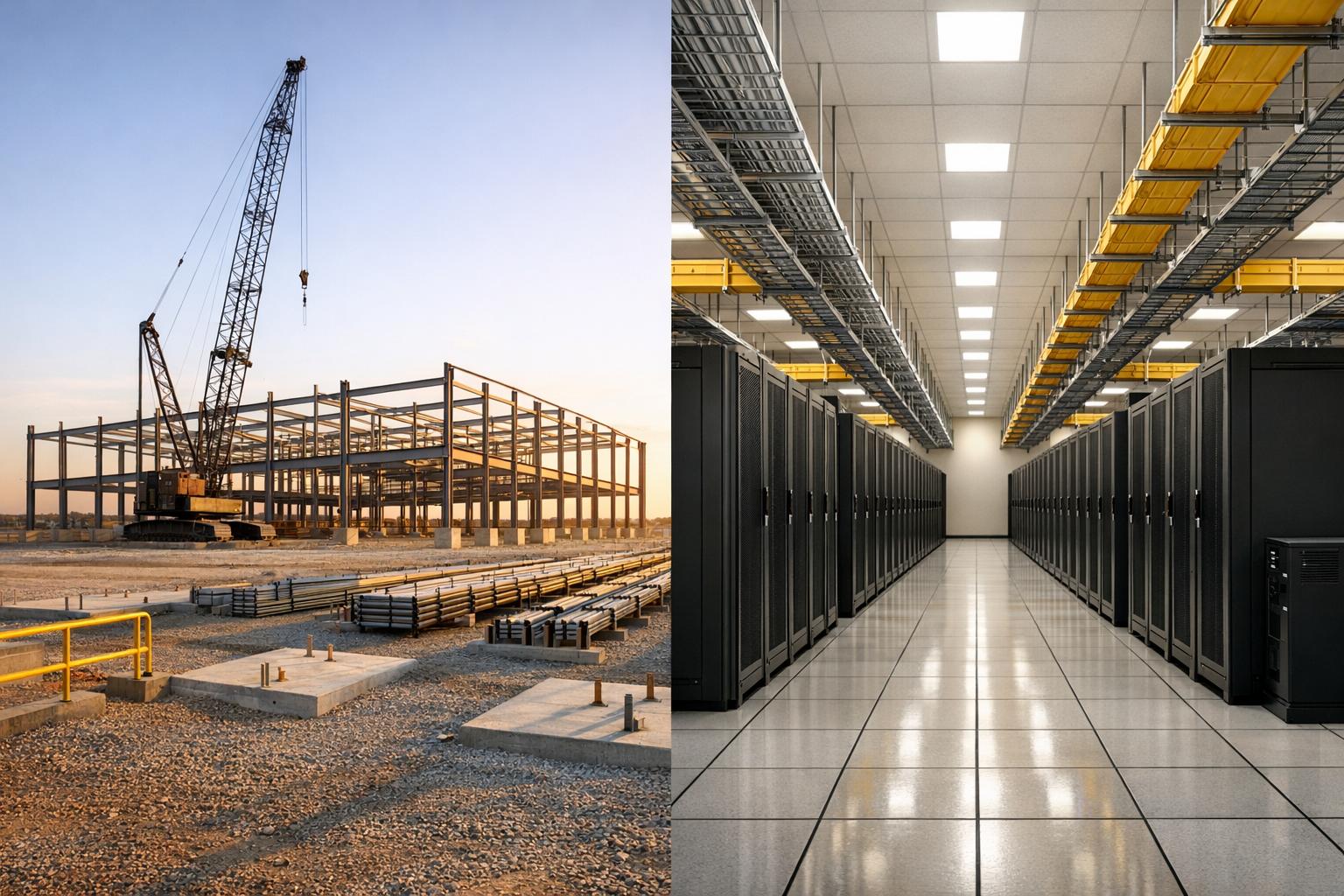
That seems to be changing, but not uniformly.
Average rack densities across many facilities are still moderate. The shift is happening in specific AI or high-performance zones, where loads can be significantly higher than what typical colocation floors were designed for.
This creates a more uneven requirement within the same building.
From what I see, the main structural considerations are:
- Floor loading in localized high-density areas
- Column spacing affecting layout flexibility
- Ceiling height limiting cooling and service routing
- Additional loads from cooling distribution and plant
The challenge is that colocation buildings are designed to remain flexible for different tenants over time. Not every tenant needs high-density capacity, but some increasingly do.
That leads to a practical design question early in the project:
Should the structure be designed with additional headroom to accommodate future AI demand, or should it follow typical specifications and deal with higher-density requirements only when they arise?
From experience, structural upgrades after construction are possible, but they tend to be the most disruptive and expensive type of modification compared to MEP adjustments.
I recently came across a detailed breakdown of how structural requirements are starting to diverge between hyperscale and colocation facilities, especially as AI density increases.
Interested to hear how others are handling this in practice:
Are you seeing projects move toward higher baseline structural capacity, or still designing around typical loads and evaluating high-density requirements case by case?


 How Much Structural Headroom Should Colocation Data Centers Allow for AI?


