Previous in Forum: ground water   Next in Forum: Removing hardened glue
Close
Close
Close
73 comments
Rate Comments: Nested
The Engineer
Engineering Fields - Engineering Physics - Physics... United States - Member - NY Popular Science - Genetics - Organic Chemistry... Popular Science - Cosmology - New Member Ingeniería en Español - Nuevo Miembro - New Member

Join Date: Feb 2005
Location: Albany, New York
Posts: 5060
Good Answers: 129

Using Photons to Provide Thrust, Science Fiction or Fact?

01/29/2008 2:16 PM

The Problem

A big problem with rockets is the fuel used to accelerate the rocket has mass, lots of it, so as you add more fuel, you add more mass, and acceleration becomes tougher. As a result, you get the Tsiolkovsky's rocket equation:

(Thanks to users Gavilan, Jorrie, and others for help with this)

where the velocity increases only by the natural log of the mass of the fuel.

So basically chemical fuel is doable for orbital missions where velocities aren't too high relatively speaking (pun intended), but once you start talking about the distances between stars (4 LY>) and the speeds required for reasonable missions to other stars, chemical fuel fails and different methods must be used.

Using the Momentum of Photons

Light is made up of wavelike particles called photons. Although photon of light has no mass, it does have momentum, given by the equation:
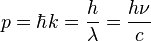
If you shot a laser off the back of a ship, due to conservation of momentum, the ship would feel a force in the opposite direction. Momentum of photons increase with decreasing wavelength (λ), meaning more force on the ship is produced by gamma rays than say Infrared Light.

Of course, you don't have to use just one laser to produce thrust. Many may be used so that a much larger thrust is produced. The trick has been trying to get this laser drive to be reliable and efficient.

The Problem - Not very efficient

Since photons don't have much momentum, even gamma rays, they aren't a very efficient way of producing thrust. However they scale well (work just as well producing large ΔV's as the do producing small ΔV's).

By bouncing photons between two ships over and over again, one can coax more momentum out of them and improve efficiency. Young Bae, founder of the Bae Institute in Tustin, Calif., first demonstrated his photonic laser thruster (PLT), which he built with off-the-shelf components, in December. (see link) The force produced by such a drive is on the order of microNewtons (μN), not very impressive in terms of magnitude, but precise and demonstrating an important idea, reusing photons. http://www.photonics.com/content/news/2007/September/7/88894.aspx

"For decades, rocket scientists have tried to overcome the inefficiency of photon thrusters by amplification based on optical cavities separated from laser sources, but failed," the institute said. "In contrast, Bae's PLT (patent pending) places the laser medium within a resonant optical cavity between two platforms to produce a very stable and reliable thrust that is unaffected by mirror movement and vibration -- ideal for spacecraft control or propulsion."

The Question I'm Asking CR4

Can this type of drive be used to produce reasonable thrust for travel over long distances (the distance between stars)? Equations and opinions welcome.

Register to Reply
Interested in this topic? By joining CR4 you can "subscribe" to
this discussion and receive notification when new comments are added.
Guru
Popular Science - Weaponology - New Member United Kingdom - Member - New Member

Join Date: May 2007
Location: Harlow England
Posts: 16512
Good Answers: 670
#1

Re: Using Photons to Provide Thrust, Science Fiction or Fact?

01/29/2008 5:09 PM

Maths isn't my strong suit...but self evidently a form of propulsion could be built, the simple radiometer demonstrates the momentum you describe.

The problem as I see it is you still need an energy source to power your laser or whatever...so the real problem is finding the most efficient 'stuff' to chuck out of the back of your spaceship be it photons or grand pianos (the KrisDelTM GP thruster is still tops secret... shhhhh).

Is it more efficient to produce photons or ions or protons or ....?

Sorry I'm not much help...but I'm just a cat

__________________
health warning: These posts may contain traces of nut.
Register to Reply
Anonymous Poster
#5
In reply to #1

Re: Using Photons to Provide Thrust, Science Fiction or Fact?

01/30/2008 1:25 AM

How does a radiometer work then?

It's not due to photons bouncing off the reflective side (as most people expect). ffeJ

Register to Reply
Guru
Popular Science - Weaponology - New Member United Kingdom - Member - New Member

Join Date: May 2007
Location: Harlow England
Posts: 16512
Good Answers: 670
#7
In reply to #5

Re: Using Photons to Provide Thrust, Science Fiction or Fact?

01/30/2008 2:46 AM

Radiation pressure..photons hitting one side and getting absorbed, whilst being reflected from the other..ask mr Wiki or mr Google... I can't describe it very well as I'm just a cat...

Now Grand Pianos... great legs for rubbing up against, and I even got inside one once nad had a nap

__________________
health warning: These posts may contain traces of nut.
Register to Reply Off Topic (Score 5)
Guru
United States - US - Statue of Liberty - New Member Hobbies - Fishing - New Member

Join Date: Nov 2007
Location: Gone to Alabama with my banjo on my knee...
Posts: 5595
Good Answers: 20
#9
In reply to #7

Re: Using Photons to Provide Thrust, Science Fiction or Fact?

01/30/2008 3:05 PM

"...got inside one once..."

So THAT'S where the hairballs came from! The truth will out, tuna breath...

__________________
Veni, vidi, video - I came, I saw, I got it on film.
Register to Reply Off Topic (Score 5)
Guru

Join Date: May 2007
Location: Geelong, Australia
Posts: 1084
Good Answers: 54
#18
In reply to #7

Re: Using Photons to Provide Thrust, Science Fiction or Fact?

01/30/2008 7:07 PM

Del, Sorry to be a pain but... As the Wiki article explains it's not photons that make a radiometer turn. ffej

__________________
If there's something you don't understand...Then a wizard did it. As heard on "The Simpsons".
Register to Reply Off Topic (Score 5)
Guru
Popular Science - Weaponology - New Member United Kingdom - Member - New Member

Join Date: May 2007
Location: Harlow England
Posts: 16512
Good Answers: 670
#21
In reply to #18

Re: Using Photons to Provide Thrust, Science Fiction or Fact?

01/31/2008 2:39 AM

See #15

But the Grand Piano drive still works...

__________________
health warning: These posts may contain traces of nut.
Register to Reply Off Topic (Score 5)
Power-User

Join Date: Jan 2006
Posts: 377
Good Answers: 2
#44
In reply to #1

Re: Using Photons to Provide Thrust, Science Fiction or Fact?

02/02/2008 1:13 PM

A cool cat, though.

Register to Reply Off Topic (Score 5)
Guru
Engineering Fields - Aerospace Engineering - Retired South Africa - Member - The Rainbow-nation Engineering Fields - Engineering Physics - Relativity & Cosmology Popular Science - Cosmology - The Big Picture!

Join Date: May 2006
Location: Pretoria, South Africa
Posts: 3804
Good Answers: 69
#2

Re: Using Photons to Provide Thrust, Science Fiction or Fact?

01/29/2008 11:00 PM

Hi Roger.

This is interesting and probably good for Mars type journeys for now. It is an open question as to whether it can work for interstellar propulsion. The basic scheme seems to look like this:

The laser launch platform are being kept static in space by some reverse thrust and a "Fabry-Perot cavity" is created between the launch platform and the spacecraft. This amplifies the laser energy some 3,000 times, it is claimed. This is fairly standard technology and I believe that it is easy to demonstrate thrust generated in the lab with a static setup. However, when the HR mirror are on a spacecraft that moves rapidly away from the launch platform and at great distances, the challenges to keep the cavity in resonance and focussed will become severe.

Another problem is that one still needs a huge nuclear reactor in space, because the energy efficiency of lasers are still lower than that of black body radiation. The benefit here is that the nuclear power station does not have to travel with the spacecraft.

There is another issue: when the reflecting mirrors move away from each other, the multiple reflections will Doppler shift the light for every round-trip. If there needs to be thousands of reflections, the frequency (and energy) will quickly diminish. Maybe what the "gain medium" on the setup does is to counteract this Doppler shift? I guess we will have to wait for the full papers to become available and see what the scientific reactions will be.

Jorrie

__________________
"Perplexity is the beginning of knowledge." -- Kahlil Gibran
Register to Reply
Guru

Join Date: Dec 2006
Location: Germany 49° 26' N, 7° 46' O
Posts: 1950
Good Answers: 109
#17
In reply to #2

Re: Using Photons to Provide Thrust, Science Fiction or Fact?

01/30/2008 6:49 PM

Hi,

this is an ordinary laser with a movable mirror.

So the internal intensity can be very high as in any oscillator.

The amplitude in resonance is only determined by damping and the inverse of dimensionless damping is the Q-factor or the ratio of amplitude to excitation .

So we have to look at damping: mirrors do not have a reflectivity of 1 but somewhat below: best aluminum only 92%, reflection enhancing thinfilm coating can boost this much higher. If small-band (around one frequency (or color) only) it can be made up to 99.999999 or more. This depends very much on purity of materials, smoothness of mirrors, ultra-clean transport and use equivalent to ultrahigh vacuum cleanliness.

So any outgassing from a spaceship will rapidly deteriorate these mirrors.

And as Jorry stated the frequency will shift with velocity and at any additional reflection. So a small-band reflector is not suitable and broadband reflectors have much worse reflection. The actual reflectivity very much depending on the range of frequencies (wavelengths) of the laser light that is used.

There is another loss mechanism by the side leakage of the energy distribution of the laser beam. The collimation of the laser beam (equivalent to divergence) is limited first by the mode structure of the beam: only the TEM00 mode is good enough for long distance transmission of some energy. This mode has a pure radial energy distribution with a maximum at the center and an exponential decay with radius. So some leakage of energy is occurring because the mirrors cannot have a sufficient diameter.

The TEM00 has a much worse efficiency compared to the multi-mode operation.

The sketch from Jorries post is giving only the geometrical approximation of the wave-optical reality. So think the red cone to have highest intensity in the center and fading radially but not to zero intensity within the radius of the mirrors.

In total I would not expect a total Q-factor above 100 (equivalent to 99% reflectivity for one pass).

So forget about this possibility - good for thinking but not good for reality.

I would switch back to ion drives. And I would search for possibilities to gather the necessary atoms and or ions in the vicinity of the spacecraft. Like a vacuum cleaner that sucks in some material, accelerates this and exhausts the accelerated mass.

This would be a possibility to circumvent the huge mass of fuel to be transported.

There is enough interstellar material existing.

RHABE

Register to Reply
Guru
United States - US - Statue of Liberty - New Member Hobbies - Fishing - New Member

Join Date: Nov 2007
Location: Gone to Alabama with my banjo on my knee...
Posts: 5595
Good Answers: 20
#23
In reply to #17

Re: Using Photons to Provide Thrust, Science Fiction or Fact?

01/31/2008 10:31 AM

"This would be a possibility to circumvent the huge mass of fuel to be transported."

Not to mention, one of the most elegant possible examples of recycling, since the same atoms and ions would still be there for reuse again later! An inexhaustible fuel supply provided by nature itself. Rather grand, isn't it?

__________________
Veni, vidi, video - I came, I saw, I got it on film.
Register to Reply
Guru
Engineering Fields - Aerospace Engineering - Retired South Africa - Member - The Rainbow-nation Engineering Fields - Engineering Physics - Relativity & Cosmology Popular Science - Cosmology - The Big Picture!

Join Date: May 2006
Location: Pretoria, South Africa
Posts: 3804
Good Answers: 69
#25
In reply to #17

Re: Using Photons to Provide Thrust, Science Fiction or Fact?

01/31/2008 12:15 PM

Hi RHABE. You wrote: "I would switch back to ion drives. And I would search for possibilities to gather the necessary atoms and or ions in the vicinity of the spacecraft. Like a vacuum cleaner that sucks in some material, accelerates this and exhausts the accelerated mass. This would be a possibility to circumvent the huge mass of fuel to be transported."

You must remember that for ion engines, it is not the "reaction mass fuel" (the ions) that is problematic. It is the nuclear fuel for creating those ions and then accelerating them that requires the huge mass to be carried along. Ion engines don't do very well in accelerating huge masses - they provide only micro-Newtons of thrust...

Jorrie

__________________
"Perplexity is the beginning of knowledge." -- Kahlil Gibran
Register to Reply
Guru
United States - US - Statue of Liberty - New Member Hobbies - Fishing - New Member

Join Date: Nov 2007
Location: Gone to Alabama with my banjo on my knee...
Posts: 5595
Good Answers: 20
#26
In reply to #25

Re: Using Photons to Provide Thrust, Science Fiction or Fact?

01/31/2008 12:39 PM

"...they provide only micro-Newtons of thrust..."

Yes, but if that thrust is constant, over time it will result in a pretty substantial ΔV, will it not? And since we're talking 8+ light years, I'm thinking time is going to be in pretty good supply...

__________________
Veni, vidi, video - I came, I saw, I got it on film.
Register to Reply
Guru
Engineering Fields - Aerospace Engineering - Retired South Africa - Member - The Rainbow-nation Engineering Fields - Engineering Physics - Relativity & Cosmology Popular Science - Cosmology - The Big Picture!

Join Date: May 2006
Location: Pretoria, South Africa
Posts: 3804
Good Answers: 69
#27
In reply to #26

Re: Using Photons to Provide Thrust, Science Fiction or Fact?

01/31/2008 1:25 PM

Hi EnviroMan, you wrote: "Yes, but if that thrust is constant, over time it will result in a pretty substantial ΔV, will it not?"

Not necessarily! Also check this comment in Roger's original thread.

http://cr4.globalspec.com/comment/175258/Re-Practicality-and-Cost-of-an-Interstellar-Probe

Quote: "1016 kg of ions to reach 1% c." It is just not a practical engine for interstellar trips, because you have to accelerate all that bulk with you.

Jorrie

__________________
"Perplexity is the beginning of knowledge." -- Kahlil Gibran
Register to Reply
Guru

Join Date: Dec 2006
Location: Germany 49° 26' N, 7° 46' O
Posts: 1950
Good Answers: 109
#28
In reply to #25

Re: Using Photons to Provide Thrust, Science Fiction or Fact?

01/31/2008 2:42 PM

http://ston.jsc.nasa.gov/collections/TRS/_techrep/TP-1995-3539.pdf

Hi Jorrie,

if you look at this report you will find some estimated performance for the Vasimr drive.

This is a variable impulse, variable thrust drive.

Below two copies from this report - excuse for bad quality.

The very big "if" is the required 10 MW electrical from a 16 MW thermal nuclear reactor.

There was one really big (in power) and small (in size) nuclear operated in the 70ies in Russia, said to have been only 70cm in diameter and not much longer, but cooled with vast amounts of hydrogen.

So there will be not only the big task to develop a medium power and low weight nuclear reactor but the low weight cooling fins and the connecting heat-pipes.

If the reactor is cooled by liquid metal circulation may be the heat pipes are not necessary. As I think it to be very likely that the reactor will have to operate at an elevated temperature in order to facilitate cooling it would not be a big task to get the waste heat radiated into a very cold surrounding. As a high temperature surface is radiating alot (approx. 56 KW/m² at 1000Kabs or 730°C) it will take around 300m² or a cylinder of 10m diameter and 10m length. (only outside calculated, in reality better as the inner side could be used partially too).

So I estimate Li-deuteride would be a good moderator and Li or Na or K a good cooling fluid.

As the developmental work on Vasimr is somewhat advanced and the suitable reactor not (?) is there any alternative?

RHABE

Register to Reply
Guru
Engineering Fields - Aerospace Engineering - Retired South Africa - Member - The Rainbow-nation Engineering Fields - Engineering Physics - Relativity & Cosmology Popular Science - Cosmology - The Big Picture!

Join Date: May 2006
Location: Pretoria, South Africa
Posts: 3804
Good Answers: 69
#34
In reply to #28

Re: Using Photons to Provide Thrust, Science Fiction or Fact?

02/01/2008 12:53 AM

Hi RHABE. You wrote: "... if you look at this report you will find some estimated performance for the Vasimr drive."

This type of drive is really a variant of reaction mass propulsion and maybe suitable for interplanetary missions in general (the Mars mission requires a ΔV of only 4 km/s). I don't think that the Vasimir drive is up-scalable by the ΔV factor of ~ 10,000 required for interstellar missions.

As we have calculated before, the mass of hydrogen, nuclear fuel and power station that you have to carry is prohibitive.

Jorrie

__________________
"Perplexity is the beginning of knowledge." -- Kahlil Gibran
Register to Reply
Guru

Join Date: Dec 2006
Location: Germany 49° 26' N, 7° 46' O
Posts: 1950
Good Answers: 109
#42
In reply to #34

Re: Using Photons to Provide Thrust, Science Fiction or Fact?

02/02/2008 5:48 AM

Hi Jorrie,

is there any difference between an ion drive and a reaction drive? (and a photon drive)

It is mass and velocity that is acting.

Mass flow and velocity generation is different but else?

So we have to optimise any of these.

Gather the mass where we are if we cannot carry with us.

"Heat" it with whatever is suitable.

Generate the heat by nuclear fission or fusion (we have to lear a lot).

RHABE

Register to Reply
Guru
Engineering Fields - Aerospace Engineering - Retired South Africa - Member - The Rainbow-nation Engineering Fields - Engineering Physics - Relativity & Cosmology Popular Science - Cosmology - The Big Picture!

Join Date: May 2006
Location: Pretoria, South Africa
Posts: 3804
Good Answers: 69
#48
In reply to #42

Re: Using Photons to Provide Thrust, Science Fiction or Fact?

02/03/2008 5:32 AM

Hi RHABE, you asked: "...is there any difference between an ion drive and a reaction drive? (and a photon drive) ... It is mass and velocity that is acting. Mass flow and velocity generation is different but else?"

You're right, no real difference, except that in the "normal reaction drive" (chemical), you throw most of the energy you carry out at the back. With ion- and photon-drives, you throw little out, but you need to carry a huge energy source with you.

The only non-reaction mass propulsion systems that I know off are solar sailing, pulsed nuclear detonation, photon reflectors and certain types of magnetic field propulsion systems (like Gavilan proposes).

Jorrie

__________________
"Perplexity is the beginning of knowledge." -- Kahlil Gibran
Register to Reply
Guru

Join Date: Dec 2006
Location: Germany 49° 26' N, 7° 46' O
Posts: 1950
Good Answers: 109
#53
In reply to #48

Re: Using Photons to Provide Thrust, Science Fiction or Fact?

02/03/2008 1:26 PM

Hi Jorrie,

"magnetic field propulsion systems"

may be you can tell me which geometry of coil will do this?

I did make coils for motors, torquers, scanners and more, I did make permanet magnets for these and for sputter-magnetrons but I did not find a solution of any coil that will give a force in a uniform and time-invariant magnetic field.

Thanks

RHABE

Register to Reply
Guru
Engineering Fields - Aerospace Engineering - Retired South Africa - Member - The Rainbow-nation Engineering Fields - Engineering Physics - Relativity & Cosmology Popular Science - Cosmology - The Big Picture!

Join Date: May 2006
Location: Pretoria, South Africa
Posts: 3804
Good Answers: 69
#54
In reply to #53

Re: Using Photons to Provide Thrust, Science Fiction or Fact?

02/03/2008 1:41 PM

Hi RHABE.

"may be you can tell me which geometry of coil will do this?"

This is more Gavalin's domain than mine, but I have a gut-feel that when you are moving rapidly through a magnetic field, you can find an orientation that would give you a force - either a braking force if you are wasting electrical energy, or a propulsive force if you are inputting electrical energy from some on-board source.

Jorrie

__________________
"Perplexity is the beginning of knowledge." -- Kahlil Gibran
Register to Reply
Guru
Popular Science - Evolution - New Member Popular Science - Weaponology - New Member

Join Date: May 2006
Location: The 'Space Coast', USA
Posts: 11119
Good Answers: 918
#22
In reply to #2

Re: Using Photons to Provide Thrust, Science Fiction or Fact?

01/31/2008 10:15 AM

Maybe a possible means to drive a craft, however, it is one way. You can't turn it around and come back.

Maybe that's a bonus. I think everyone can think of some "favorite" politicians that everyone would be happy to "volunteer" for such a trip for the good of humanity.

We could call it the "B" Ark.

Register to Reply
Guru
United States - US - Statue of Liberty - New Member Hobbies - Fishing - New Member

Join Date: Nov 2007
Location: Gone to Alabama with my banjo on my knee...
Posts: 5595
Good Answers: 20
#24
In reply to #22

Re: Using Photons to Provide Thrust, Science Fiction or Fact?

01/31/2008 10:34 AM

"...some "favorite" politicians..." "We could call it the "B" Ark."

Or simply 'the short bus' for those 'special' people we volunteer...

__________________
Veni, vidi, video - I came, I saw, I got it on film.
Register to Reply Off Topic (Score 5)
Anonymous Poster
#3

Re: Using Photons to Provide Thrust, Science Fiction or Fact?

01/29/2008 11:16 PM

As a quick rule of thumb regarding the amount of energy required to accellerate a spaceship using a "photonic drive" check out this excerpt from wikipedia.

http://en.wikipedia.org/wiki/CoDominium#Ships_of_the_CoDominium

The spaceships of the CD use "photon drive", which apparently produces only light to propel the craft in normal space. This allows an estimate of the power capabilities of such a ship. Radiation pressure can produce about 3.35 nanonewtons of force per watt of luminosity, so for a 1-gravity drive there would have to be about 3 gigawatts of luminosity per kilogram of ship mass. A typical ship might be 10,000 tonnes or 10 million kilograms, bringing the power level to 30 petawatts. For comparison, US electrical generating capacity is only in the terawatt range. 10 petawatts is about the equivalent of a megaton nuclear device exploding every second. Interstellar travel is accomplished by use of the Alderson drive which instantaneously warps ships along tramline paths between stars.

Register to Reply
The Engineer
Engineering Fields - Engineering Physics - Physics... United States - Member - NY Popular Science - Genetics - Organic Chemistry... Popular Science - Cosmology - New Member Ingeniería en Español - Nuevo Miembro - New Member

Join Date: Feb 2005
Location: Albany, New York
Posts: 5060
Good Answers: 129
#4
In reply to #3

Re: Using Photons to Provide Thrust, Science Fiction or Fact?

01/30/2008 12:54 AM

Guest,

The fact that you are referencing science fiction as your source, and the drive you recommend requires a wormhole, doesn't inspire confidence. Though that of course doesn't mean it isn't possible, its just that I'd like to stick to real science and engineering on this thread.

Register to Reply
Guru
Engineering Fields - Aerospace Engineering - Retired South Africa - Member - The Rainbow-nation Engineering Fields - Engineering Physics - Relativity & Cosmology Popular Science - Cosmology - The Big Picture!

Join Date: May 2006
Location: Pretoria, South Africa
Posts: 3804
Good Answers: 69
#6
In reply to #3

Re: Using Photons to Provide Thrust, Science Fiction or Fact?

01/30/2008 1:35 AM

"http://en.wikipedia.org/wiki/CoDominium#Ships_
of_the_CoDominium"

This sounds a bit "SciFi'ish", I must say. So are those figures facts or myths?

In a real photon-drive, one do not need 1g and also not such massive "ships". If one can get thrust into the 0.1g range and the technology issues can be solved for long distance transmission (unlikely in this case), the time to accelerate to 0.1c is only about one year. It will take 40+ years to reach our nearest stellar neighbor.

The kinetic energy of a one tonne craft at 0.1c is about 4.5x10¹⁷ Joule. Spread that over one year and I get about 15 GW of net power input rate. Scale it up 10 times for losses and the 150 GW does not sound too far-fetched! The big problem is beaming that energy for at least 500 billion km without losing much. That's roughly 10 times as far as Pluto from us. It's the distance over which the craft must accelerate at 1 m/s to get to 0.1c.

v3.00E+07m/s
m1000kg
KE4.50E+17J
kWh1.25E+11
hours8760h
kW1.43E+07
GW 14.27

I'll be grateful if someone could check my calcs...

Jorrie

__________________
"Perplexity is the beginning of knowledge." -- Kahlil Gibran
Register to Reply
Power-User

Join Date: Nov 2006
Location: Canada
Posts: 336
Good Answers: 5
#10
In reply to #6

Re: Using Photons to Provide Thrust, Science Fiction or Fact?

01/30/2008 3:44 PM

But shooting a star from Earth with a photonic rocket means the photons will be beamed to us and we can harvest them with solar panels ? So we get back all the energy we put on that interstelar ship...

Register to Reply
The Engineer
Engineering Fields - Engineering Physics - Physics... United States - Member - NY Popular Science - Genetics - Organic Chemistry... Popular Science - Cosmology - New Member Ingeniería en Español - Nuevo Miembro - New Member

Join Date: Feb 2005
Location: Albany, New York
Posts: 5060
Good Answers: 129
#12
In reply to #10

Re: Using Photons to Provide Thrust, Science Fiction or Fact?

01/30/2008 3:49 PM

Or at the very least piggy back a communications signal in the laser output.

Register to Reply
Power-User

Join Date: Nov 2006
Location: Canada
Posts: 336
Good Answers: 5
#19
In reply to #12

Re: Using Photons to Provide Thrust, Science Fiction or Fact?

01/30/2008 9:28 PM

Not a bad idea, but I was just joking. There is very unlikely for a spaceship to keep a straight course and to beam the earth with its nozzle.

Register to Reply
The Engineer
Engineering Fields - Engineering Physics - Physics... United States - Member - NY Popular Science - Genetics - Organic Chemistry... Popular Science - Cosmology - New Member Ingeniería en Español - Nuevo Miembro - New Member

Join Date: Feb 2005
Location: Albany, New York
Posts: 5060
Good Answers: 129
#11
In reply to #6

Re: Using Photons to Provide Thrust, Science Fiction or Fact?

01/30/2008 3:47 PM

Jorrie,

If I'm reading correctly, you're 40+ years is based on stopping acceleration after 1 year. Assuming we don't have to stop accelerating, .1 acceleration is much more reasonable for visiting other stars.

If the acceleration was continuous for half the journey

Where di is initial distance (0) and vi is initial velocity (0) leaving and d=2 Light Years, then

2 Light Years = 0 + 0 + 1/2(.98 m/s2)Δt2
Δt2= 4 Light Years / .98 m/s2
Δt2=3.8 x 10¹⁶ meter / .98 m/s2
Δt= 6.24 years

and decelerating by .98 m/s2 for the rest of the trip (2 LY) would take another 6.24 years for a total of 12.5 years to travel four light years.

With a high speed in the middle of the trip of


where again a=.98 m/s2 and vi is 0 and our time is 6.24 years giving us
Vf = .98 m/s2 x (2.8 x 108 s)
Vf = 1.9 x 10⁸ m/s which I know isn't true because Relativity would cause this velocity to be lower, which also means the trip would be slightly longer than the 12.5 years I'm saying.

Which brings me to a question. I know relativity would "adjust" newtons equations of motion. Jorrie, what equations would do that for me. In other words, if I wanted to know how long something constantly accelerating at .1 g would take to travel 4 Light Years including relativistic effects, what equation would I have to use? Please feel free to recommend a part of your website (Jorrie) if it covers it.

In the mean time, I'll try to calculate the thrust a single photon (under ideal conditions) can produce (which will be wavelength dependent).

Register to Reply
The Engineer
Engineering Fields - Engineering Physics - Physics... United States - Member - NY Popular Science - Genetics - Organic Chemistry... Popular Science - Cosmology - New Member Ingeniería en Español - Nuevo Miembro - New Member

Join Date: Feb 2005
Location: Albany, New York
Posts: 5060
Good Answers: 129
#13
In reply to #6

Re: Using Photons to Provide Thrust, Science Fiction or Fact?

01/30/2008 4:42 PM

Jorrie,

I checked your numbers and I too got a kinetic energy of 4.5 x 10¹⁷ Joules and a power of 14 GW when its assumed it takes a year to get up to speed. I think this is a good way to think about it. There is simply no getting around the enegy requirement and it gives us a feel when we assign time frames how much power we are talking about.

For comparison consider Niagara Falls which generates 2.4 GW. So essentially all we need to speed a 1000 kg space craft up to .1c within a year is roughly six nigara falls power plants. Yikes.

http://www.nypa.gov/facilities/niagara.htm

Roger

Register to Reply
Guru
Engineering Fields - Aerospace Engineering - Retired South Africa - Member - The Rainbow-nation Engineering Fields - Engineering Physics - Relativity & Cosmology Popular Science - Cosmology - The Big Picture!

Join Date: May 2006
Location: Pretoria, South Africa
Posts: 3804
Good Answers: 69
#20
In reply to #13

Re: Using Photons to Provide Thrust, Science Fiction or Fact?

01/31/2008 12:09 AM

Roger, you wrote: "So essentially all we need to speed a 1000 kg space craft up to .1c within a year is roughly six niagara falls power plants. Yikes."

Yea, a speed of 0.1c is probably a very optimistic upper limit for current technologies. I believe that the pulsed nuclear explosion type has an outside chance of reaching that speed. I have very little hope for photonic drives!

What is needed is an exotic propulsion method, like 'warp drives' creating local spacetime curvature so that a craft just "falls" into to gravitational well up front. However, the energy requirements for that, using hypothetical "negative matter" is also enormous. This smacks like "anti-gravity", which is probably impossible.

On you question of the relativistic effects during long acceleration. There are simple equations on page 54 of Relativity 4 Engineers, eq's 3.4 and 3.5. For those not in possession of the eBook, you can download the chapter on Linear Acceleration in PDF free from my website.

I use the 'ideal' acceleration for humans of 1g in my examples in that chapter, without speculating much where such energy will come from - I leave that for some future generation!

Jorrie

__________________
"Perplexity is the beginning of knowledge." -- Kahlil Gibran
Register to Reply
The Engineer
Engineering Fields - Engineering Physics - Physics... United States - Member - NY Popular Science - Genetics - Organic Chemistry... Popular Science - Cosmology - New Member Ingeniería en Español - Nuevo Miembro - New Member

Join Date: Feb 2005
Location: Albany, New York
Posts: 5060
Good Answers: 129
#29
In reply to #20

Re: Using Photons to Provide Thrust, Science Fiction or Fact?

01/31/2008 3:53 PM

Jorrie,

I read the recommended pdf. I'm not sure if I'm understanding correctly so please take a look and comment.

So if I'm understanding this correctly, if a spaceship was launched with a drive that produced a constant 1g of acceleration, after launch, from the Earth's point of view(reference frame), the acceleration of the ship would seem to decrease, in-perceptively at first, but then more and more as it approached the speed of light.

Around .3 C the change in the acceleration of the spaceship to observers on Earth would still be pretty small (which equation do I use? (R4E page number reference here is fine)), so its ok to ignore the effect.

Is that reasonable? I'm trying to get a handle on this.

Roger

Register to Reply
Guru
Engineering Fields - Aerospace Engineering - Retired South Africa - Member - The Rainbow-nation Engineering Fields - Engineering Physics - Relativity & Cosmology Popular Science - Cosmology - The Big Picture!

Join Date: May 2006
Location: Pretoria, South Africa
Posts: 3804
Good Answers: 69
#32
In reply to #29

Re: Using Photons to Provide Thrust, Science Fiction or Fact?

01/31/2008 11:46 PM

Hi Roger. "So if I'm understanding this correctly, if a spaceship was launched with a drive that produced a constant 1g of acceleration, after launch, from the Earth's point of view".

No, those equations are for a constant proper acceleration, as measured on the rocket with an accelerometer. In R4E page 54, eq. 3.4 is for rocket time (Pam's) and eq. 3.5 for Earth time (Jim's), but the acceleration (x-dot-dot) is always in the rocket frame. Distance is in the Earth's frame, due the use of space-propertime diagrams.

For this sort of calc, one can take 1g ~ 1 ly/year^2, making it nice and easy.

Jorrie

__________________
"Perplexity is the beginning of knowledge." -- Kahlil Gibran
Register to Reply
The Engineer
Engineering Fields - Engineering Physics - Physics... United States - Member - NY Popular Science - Genetics - Organic Chemistry... Popular Science - Cosmology - New Member Ingeniería en Español - Nuevo Miembro - New Member

Join Date: Feb 2005
Location: Albany, New York
Posts: 5060
Good Answers: 129
#33
In reply to #32

Re: Using Photons to Provide Thrust, Science Fiction or Fact?

02/01/2008 12:38 AM

I'm sorry Jorrie, I just want to make sure I understand. You quoted me but not my entire statement, but I think you did that to conserve space.

So the acceleration seems to decrease (x-dot-dot) from the point of view of the people on the rocket, is that what your saying?

Sorry to be thick headed in this but I'd like to understand so I can apply it to this problem.

Register to Reply
Guru
Engineering Fields - Aerospace Engineering - Retired South Africa - Member - The Rainbow-nation Engineering Fields - Engineering Physics - Relativity & Cosmology Popular Science - Cosmology - The Big Picture!

Join Date: May 2006
Location: Pretoria, South Africa
Posts: 3804
Good Answers: 69
#35
In reply to #33

Re: Using Photons to Provide Thrust, Science Fiction or Fact?

02/01/2008 1:06 AM

Hi Roger, "So the acceleration seems to decrease (x-dot-dot) from the point of view of the people on the rocket, is that what your saying?"

No, x-dot-dot is constant on the rocket, but it decreases for observers on Earth. In my example in the eBook, I provided a comfortable 1g for Pam all the the way...

For your scenario, stick x-dot-dot = 0.1 ly/y^2 into the equations and determine the times from rocket and Earth perspectives. If you want to stop your probe at Alpha Centauri, you work out the time for half the distance and then double it. You can find the maximum velocity relative to Earth from eq. 3.6.[1]

Remember, we are here talking about constant acceleration all the way, not up to a given speed!

Jorrie.

[1] For other readers, you can download the chapter on linear acceleration from my website here, (or obviously much better, get the eBook!)

__________________
"Perplexity is the beginning of knowledge." -- Kahlil Gibran
Register to Reply
The Engineer
Engineering Fields - Engineering Physics - Physics... United States - Member - NY Popular Science - Genetics - Organic Chemistry... Popular Science - Cosmology - New Member Ingeniería en Español - Nuevo Miembro - New Member

Join Date: Feb 2005
Location: Albany, New York
Posts: 5060
Good Answers: 129
#36
In reply to #35

Re: Using Photons to Provide Thrust, Science Fiction or Fact?

02/01/2008 2:10 PM

Jorrie,

I thought that was what I said originally which you said was wrong. You just wrote: "No, x-dot-dot is constant on the rocket, but it decreases for observers on Earth."

I originally wrote: "So if I'm understanding this correctly, if a spaceship was launched with a drive that produced a constant 1g of acceleration, after launch, from the Earth's point of view(reference frame), the acceleration of the ship would seem to decrease, in-perceptively at first, but then more and more as it approached the speed of light." (See Comment 29).

I only bring it up because I want to make sure I understand conceptually before I start doing the math. I think you may have misread my original comment but I'm not certain. I could just be missing a subtle distinction here.

Register to Reply
Guru
Engineering Fields - Aerospace Engineering - Retired South Africa - Member - The Rainbow-nation Engineering Fields - Engineering Physics - Relativity & Cosmology Popular Science - Cosmology - The Big Picture!

Join Date: May 2006
Location: Pretoria, South Africa
Posts: 3804
Good Answers: 69
#37
In reply to #36

Re: Using Photons to Provide Thrust, Science Fiction or Fact?

02/01/2008 2:36 PM

Hi Roger.

Yea, it seems I misread your original statement due to a bit of "difficult" semantics that you used! You wrote: "So if I'm understanding this correctly, if a spaceship was launched with a drive that produced a constant 1g of acceleration, after launch, from the Earth's point of view(reference frame),..."

I interpreted that as acceleration constant in the Earth frame, which is wrong and apparently not what you intended.

In any case, the equations that I gave in the eBook are for constant acceleration in the rocket frame, called "proper acceleration", i.e., what an accelerometer on the rocket would measure.

I'm confident that we have now reached common understanding.

Jorrie

__________________
"Perplexity is the beginning of knowledge." -- Kahlil Gibran
Register to Reply
The Engineer
Engineering Fields - Engineering Physics - Physics... United States - Member - NY Popular Science - Genetics - Organic Chemistry... Popular Science - Cosmology - New Member Ingeniería en Español - Nuevo Miembro - New Member

Join Date: Feb 2005
Location: Albany, New York
Posts: 5060
Good Answers: 129
#38
In reply to #37

Re: Using Photons to Provide Thrust, Science Fiction or Fact?

02/01/2008 3:46 PM

Ok, so now this makes sense to me.

Pretending for a moment that the rocket has some sort of laser drive that can produce 1 g of constant trust (in the rockets frame of reference), then from Earth's point of view the rocket will appear to accelerate slower and slower as it increases in speed.

The equation (Taken from Chapter 3 of Relativity 4 Engineers (See Jorrie for Details)) that allows us to calculate the acceleration from Earth's point of view is:

aearth=(1-v2/c2)3/2 arocket
aearth=(1-(3 x 10⁷ m/s)2/(3 x 108 m/s)2)3/2 (9.8 m/s2)
aearth=(1-(.1))3/2 (9.8 m/s2)
aearth= (0.9)3/2 (9.8 m/s2)
aearth= (.8538) (9.8 m/s2) = 8.37 m/s2

Awesome! If I did it right (Jorrie, if you don't mind checking I'd appreciate it) then if the spaceship got up to .1c speed it would only appear to be accelerating (from Earth's point of view) at 8.37 m/s2 , roughly 15% slower than the acceleration measured by the people on the spaceship.

Register to Reply
Guru
Engineering Fields - Aerospace Engineering - Retired South Africa - Member - The Rainbow-nation Engineering Fields - Engineering Physics - Relativity & Cosmology Popular Science - Cosmology - The Big Picture!

Join Date: May 2006
Location: Pretoria, South Africa
Posts: 3804
Good Answers: 69
#40
In reply to #38

Re: Using Photons to Provide Thrust, Science Fiction or Fact?

02/02/2008 12:15 AM

»Hi Roger. Hmm..., your answer of 8.37 m/s2 seems wrong to me, so where is the mistake? Ah! You did not square the v/c=0.1: do that and it the answer will be more like 1.5%, not 15% lower than g. A velocity of 0.1c is not very relativistic.

Also take note that the "easy" approximations (eq's 3.3 and 3.4 on page 54) are only good when aτ » c in conventional units, with τ in seconds. In the units I prefer, rocket time in years must be at least 5 times larger than 1/a, where a is expressed 'n ly/y^2 (recall that 1g ~ 1 ly/y^2). This gives engineering-like "good enough for all practical purposes" results. (The equation that you used above is fine, because it is not an approximation, but exact.)

If you insist on going for much shorter times of acceleration, you are forced to use the full equation 3.2 on page 53, which is not "easy" in the sense that you can't simply extract time τ to the left side (at least I don't know how) - perhaps Fyz or Eu can help?

Happy computing!

Jorrie

__________________
"Perplexity is the beginning of knowledge." -- Kahlil Gibran
Register to Reply
The Engineer
Engineering Fields - Engineering Physics - Physics... United States - Member - NY Popular Science - Genetics - Organic Chemistry... Popular Science - Cosmology - New Member Ingeniería en Español - Nuevo Miembro - New Member

Join Date: Feb 2005
Location: Albany, New York
Posts: 5060
Good Answers: 129
#43
In reply to #40

Re: Using Photons to Provide Thrust, Science Fiction or Fact?

02/02/2008 12:00 PM

Hi Jorrie,

Yes, you're right. Redoing the calculations I get the 1g rocket acceleration as viewed from Earth as 9.65 m/s2 (1.5% lower than 1g) at .1c and 8.5 m/s2 (13.2% lower than 1g) at .3c.


You Wrote: "If you insist on going for much shorter times of acceleration, you are forced to use the full equation 3.2 on page 53, which is not "easy" in the sense that you can't simply extract time τ to the left side (at least I don't know how) - perhaps Fyz or Eu can help?"

The .pdf I have doesn't have an equation labelled 3.2. Is it the equation I used for the calculations you're referring to, the first equation in section 3.4? Please let me know if it is and I'll give solving for τ a try.

Register to Reply
Guru
Engineering Fields - Aerospace Engineering - Retired South Africa - Member - The Rainbow-nation Engineering Fields - Engineering Physics - Relativity & Cosmology Popular Science - Cosmology - The Big Picture!

Join Date: May 2006
Location: Pretoria, South Africa
Posts: 3804
Good Answers: 69
#46
In reply to #43

Re: Using Photons to Provide Thrust, Science Fiction or Fact?

02/02/2008 11:47 PM

Hi Roger. You wrote: "The .pdf I have doesn't have an equation labelled 3.2. Is it the equation I used for the calculations you're referring to, the first equation in section 3.4?"

Yea, sorry, the .pdf on the website is outdated. The eBook has the numbering (I think you have one!) Anyway, it is the second equation in section 3.4, just above figure 3.3.

I'll upload an updated .pdf chapter as well. Thanks for letting me know...

Jorrie

__________________
"Perplexity is the beginning of knowledge." -- Kahlil Gibran
Register to Reply
Guru
Engineering Fields - Aerospace Engineering - Retired South Africa - Member - The Rainbow-nation Engineering Fields - Engineering Physics - Relativity & Cosmology Popular Science - Cosmology - The Big Picture!

Join Date: May 2006
Location: Pretoria, South Africa
Posts: 3804
Good Answers: 69
#41
In reply to #38

Re: Using Photons to Provide Thrust, Science Fiction or Fact?

02/02/2008 4:48 AM

Hi again Roger.

Just a correction on one of my previous posts, where I wrote: "You can find the maximum velocity relative to Earth from eq. 3.6." [from the referenced chapter of Relativity 4 Engineers].

That equation is specifically for 1g, plus it is an approximation for when aτ > c, i.e. for long duration constant 1 g. One can adapt it to any acceleration for a long duration as follows:

x-dot ≈ 1 - 1/(2 x-dot-dot1.5 x2), or in conventional units: v/c ≈ 1 - 1/(2a1.5x2).

You must just ensure that aτ > c, otherwise the approximation diverges. For a = 0.1g, it requires more than 10 years (rocket time) of acceleration before you can trust the approximation. For shorter times, I normally build a spreadsheet and integrate the changing acceleration over time to find the distance, proper time and speed.

Jorrie

__________________
"Perplexity is the beginning of knowledge." -- Kahlil Gibran
Register to Reply
The Engineer
Engineering Fields - Engineering Physics - Physics... United States - Member - NY Popular Science - Genetics - Organic Chemistry... Popular Science - Cosmology - New Member Ingeniería en Español - Nuevo Miembro - New Member

Join Date: Feb 2005
Location: Albany, New York
Posts: 5060
Good Answers: 129
#30
In reply to #20

Re: Using Photons to Provide Thrust, Science Fiction or Fact?

01/31/2008 4:01 PM

Or maybe the key is making lightweight probes. If we could (and I know this is extreme) shrink the probe to just 10kg (22lbs), then the power requirements are reduced by 100 (140 MW). If we stretch the acceleration out over 2 years we're talking 70 MW. Of course 10kg is pretty unrealistic, but 100kg (220lbs) may be possible with lightweight materials.

Register to Reply
Guru
United States - US - Statue of Liberty - New Member Hobbies - Fishing - New Member

Join Date: Nov 2007
Location: Gone to Alabama with my banjo on my knee...
Posts: 5595
Good Answers: 20
#8

Re: Using Photons to Provide Thrust, Science Fiction or Fact?

01/30/2008 2:59 PM

Given sufficient resolution of the need for focusing over significant distances, and enough time to raise the ΔV, all it will require is patience on the part of the crew. Most of the significant challenges are likely to be in the long-term life support and psychological factors areas. Call me a bloody optimist, but I think it is or soon will be technically feasable.

__________________
Veni, vidi, video - I came, I saw, I got it on film.
Register to Reply
Guru

Join Date: Dec 2006
Location: Germany 49° 26' N, 7° 46' O
Posts: 1950
Good Answers: 109
#14

Re: Using Photons to Provide Thrust, Science Fiction or Fact?

01/30/2008 5:11 PM

Hi,

a radiometer is not a photon drive!

The light energy is hitting two different surfaces in a rough vacuum.

The black surface will heat itself by absorption to a higher temperature than the silvery surface.

This higher temperature side will get a higher impulse from oncoming molecules giving a thrust and a motion - if suspended with low friction.

So this is moving with the black side trailing - any photon drive should move with the reflecting side trailing.

Rhabe

Register to Reply
Guru
Popular Science - Weaponology - New Member United Kingdom - Member - New Member

Join Date: May 2007
Location: Harlow England
Posts: 16512
Good Answers: 670
#15
In reply to #14

Re: Using Photons to Provide Thrust, Science Fiction or Fact?

01/30/2008 5:37 PM

meoooow

__________________
health warning: These posts may contain traces of nut.
Register to Reply Off Topic (Score 5)
Guru
Engineering Fields - Marine Engineering - New Member

Join Date: May 2007
Location: Australia.
Posts: 1642
Good Answers: 81
#16

Re: Using Photons to Provide Thrust, Science Fiction or Fact?

01/30/2008 6:08 PM

Hi Roger

In the mean time, I'll try to calculate the thrust a single photon (under ideal conditions) can produce (which will be wavelength dependent).

I remember many year ago watching a TV programme that showed an experiment, that was aimed at determining if a photon had any mass. The experiment was a large vertical glass tube containing a vacuum and suspended down the middle was a fine thread at the end of which was a small piece of metal foil. When a beam of light was shined at the foil it moved. The discussion that followed centred around whether the foiled moved because the photon had some small amount of mass or if it was due to the reaction of the atoms? So the problem I have with it is, if the target is stationary and a photon aimed at it, a thrust can be measured, but if it is free in space, and we are relying on reaction at an atomic level, would not the force created by that reaction be lost when the atom returned to its normal state?

Regards JD.

Register to Reply
Guru

Join Date: Nov 2007
Location: Earth. England/America -the birthplace of the C. S. A. - anywhere I imagine -home.
Posts: 773
Good Answers: 33
#31

Re: Using Photons to Provide Thrust, Science Fiction or Fact?

01/31/2008 8:06 PM

Between chemical boosters, solar sails, gravitational whips, ion drives and photon drives and all the rest we could get a probe to another star in a period of time. It may be a very long time so appreciable speed could be made, the limiting factor is the power supply and its efficiency. It would seem to require some type of nuclear power to operate the drive, so then comes the question of optimum size/mass of all the various drives compared with their energy consumption to the rate of acceleration and how long you want to accelerate and decelerate.

__________________
No technology is so obsolete that it won't work. A stone knife still can kill you as dead as a laser.
Register to Reply
Guru
Hobbies - Model Rocketry - New Member

Join Date: Jun 2007
Location: East of Seattle, Washington state Republic of the 50 states of America
Posts: 2045
Good Answers: 36
#39

Re: Using Photons to Provide Thrust, Science Fiction or Fact?

02/01/2008 7:08 PM

There are two issues that concern me with a Photon Rocket.

First a laser is very inefficient way to produce a light beam. Last time I looked 5-35% was considered very good.

Second whatever you point your ship away from is going to get cooked or at the very least a very bright (giant) flashlight. Tailgaters will not be a problem.

just a thought

Brad

__________________
(Larrabee's Law) Half of everything you hear in a classroom is crap. Education is figuring out which half is which.
Register to Reply
The Engineer
Engineering Fields - Engineering Physics - Physics... United States - Member - NY Popular Science - Genetics - Organic Chemistry... Popular Science - Cosmology - New Member Ingeniería en Español - Nuevo Miembro - New Member

Join Date: Feb 2005
Location: Albany, New York
Posts: 5060
Good Answers: 129
#45

Re: Using Photons to Provide Thrust, Science Fiction or Fact?

02/02/2008 11:05 PM

I've had some time now to do some calculations. Starting with the basic photon drive design, that is, point a laser out of the back of your ship and use conservation of momentum from the photons moving away to generate thrust. I'm assuming an ideal photon drive where the photons are perfectly collimated and non-diverging.

The Calculation

So here's what I've got:

As I noted at the top, the momentum of a photon can be expressed as

where h is Planck's constant and ν(sorry, we don't have a proper nu in the symbol tool above) is the frequency and c is the speed of light.

But we also know that energy of a photon can be described as

combining the two equations gives us:

P=E/c

If we take the derivative of both sides with respect to t we get:

dp/dt = (dE/dt)/c

Noting that the equation for force is:

F= dp/dt

and that the equation for power is:

Power = dE/dt

and substituting into our equation above we get:

F= Power/c

which basically means that an ideal photon drive would take 300MW (106 Watts) to produce one Newton of thrust.

How many watt laser is needed to accelerate a 1000kg ship to .1c in a year?

Well, leaving out relativistic effects for now, which Jorrie has shown me are not important at .1c, I'll just use the classical equation of motion:

v=at
a=v/t
but F=ma so a=F/m, subbing into the equation we get
F/m=v/t
F=vm/t
but F=Power/c, subbing into the equation we get
Power/c=vm/t
Power=vmc/t

Using that final equation to find how much laser power is necessary to accelerate a 1000kg ship to .1c in a year we get:

Power=tmc/v
Power = (3*107m/s)(1000kg)(3*108m/s)/(31556926 s)
Power = 285 GW (109 Watts)

To put this number in perspective, We are talking at least a 285GW continuous wave laser, to drive the ship. The most powerful continuous wave lasers I can find seem to be a few kilowatts (103 Watts)(FEL), so basically we'd need about 285 million of them, that's a problem.(**some lasers exist today that are called petawatt but are pulsed, which I think is misleading (NOVA))

So now what?

Assuming my calculations above are correct, which we never should assume and someone should check them if they have the time, we should look into ways to reduce that power number.

For instance, if instead of firing the laser out of the back of the ship like a thruster we instead used an external laser to hit a reflector on the ship that number is cut in half to 142.5 GW. Furthermore, since the laser isn't on the ship we could make it smaller, say 100kg which cuts that number to 14.25 GW. (Though I don't see how an external laser could work with the large distances required. Even a pointlike laser diverges a lot over lightyears of distance) It's also worth pointing out that a 14.25 GW laser would probably burn a hole through the ship rather than push it.

Things are not looking so good, but lets have some people check my math and in the mean time I'll look into what others have written on the subject.

Register to Reply
Guru
Engineering Fields - Aerospace Engineering - Retired South Africa - Member - The Rainbow-nation Engineering Fields - Engineering Physics - Relativity & Cosmology Popular Science - Cosmology - The Big Picture!

Join Date: May 2006
Location: Pretoria, South Africa
Posts: 3804
Good Answers: 69
#47
In reply to #45

Re: Using Photons to Provide Thrust, Science Fiction or Fact?

02/03/2008 1:01 AM

Hi again Roger. You wrote:

"To put this number in perspective, We are talking at least a 285GW continuous wave laser, to drive the ship."

I got values in the same ballpark in reply #6 above, using a different method, so for nett energy we are probably close enough. However, the number of lasers is just one problem: where do one get that power up in space. You simply cannot carry the nuclear power station with you, so you have to beam the energy.

I believe that due to the reactor mass, a nuclear fission reactor can accelerate itself by means of a "photonic drive" (black-body, not lasers, because they are very inefficient) at some 10-5g. It will take a thousand years to reach 0.1c!!!

Jorrie

__________________
"Perplexity is the beginning of knowledge." -- Kahlil Gibran
Register to Reply
Guru
Engineering Fields - Aerospace Engineering - Retired South Africa - Member - The Rainbow-nation Engineering Fields - Engineering Physics - Relativity & Cosmology Popular Science - Cosmology - The Big Picture!

Join Date: May 2006
Location: Pretoria, South Africa
Posts: 3804
Good Answers: 69
#49
In reply to #45

Re: Using Photons to Provide Thrust, Science Fiction or Fact?

02/03/2008 8:28 AM

Hi Roger. I think I've found the photonic drive and "design" that can achieve your original mission goal: "My goal would be to get the probe to Alpha Proxima within 8 years and to send telemetry back the entire time."

It is a modified Eugen Sänger positron-electron annihilation drive, where the resulting gamma rays are contained inside a suitable (hypothetical) structure that heats to incredible internal temperatures and serves as a collimated black-body emitter. If I can achieve a 10% conversion efficiency, I need only 25 kg of matter-anti-matter annihilation to propel a 1,000 kg craft to 0.84c at 0.4g acceleration. That will take 4 years of Earth time (just over 3 years of rocket time) and bring you halfway to Alpha Proxima. The craft is then turned around and decelerated at 0.4g for the next four years and viola!

The net energy input in the rocket frame for 1,000 kg to reach 0.84c is 2 x 10¹⁷ Joule[1], which requires only 2.5 kg of matter to be annihilated at E=mc2. Scale that up by 10 for inefficiencies and 25 kg should do the trick. My biggest technical problem is the material to make the black-body collimator from. It must be able to shield gamma rays and there must be a minimum of stray IR radiation from it. There are probably others that I have not though about...

I used the algorithm on page 65 of the eBook to integrate the equation of motion, because the approximated equations do not work for such a "short time".

Jorrie

[1] Interestingly, in the Earth frame, it appears as if the 1000 kg probe has a kinetic energy of 0.5mv2 = 3 x 10¹⁹ Joule at 0.84c. Kinetic energy is a relative concept and what counts is what happens on the probe itself. There the integrated energy requirement is only 1% of that. (Gavilan and myself had long arguments about this in a previous thread...)

__________________
"Perplexity is the beginning of knowledge." -- Kahlil Gibran
Register to Reply
Guru
Engineering Fields - Aerospace Engineering - Retired South Africa - Member - The Rainbow-nation Engineering Fields - Engineering Physics - Relativity & Cosmology Popular Science - Cosmology - The Big Picture!

Join Date: May 2006
Location: Pretoria, South Africa
Posts: 3804
Good Answers: 69
#56
In reply to #49

Re: Using Photons to Provide Thrust, Science Fiction or Fact?

02/03/2008 10:19 PM

I wrote: "If I can achieve a 10% conversion efficiency, I need only 25 kg of matter-anti-matter annihilation to propel a 1,000 kg craft to 0.84c at 0.4g acceleration."

Nah! That sort of conversion efficiency from raw (E=mc2) energy to kinetic energy is not possible with antimatter-photonic drives. More detailed calculations yielded something like a 0.2% raw energy conversion efficiency, pushing the antimatter fuel requirement up to 1250 kg, in the same order as the mass of the payload. Still, not too bad! (And still calculating to see if there are other catches!)

Jorrie

__________________
"Perplexity is the beginning of knowledge." -- Kahlil Gibran
Register to Reply
Guru
Engineering Fields - Aerospace Engineering - Retired South Africa - Member - The Rainbow-nation Engineering Fields - Engineering Physics - Relativity & Cosmology Popular Science - Cosmology - The Big Picture!

Join Date: May 2006
Location: Pretoria, South Africa
Posts: 3804
Good Answers: 69
#57
In reply to #56

Re: Using Photons to Provide Thrust, Science Fiction or Fact?

02/04/2008 12:26 PM

I wrote: "And still calculating to see if there are other catches!"

More accurate calculations revealed that a lot more (~ 8 times more) antimatter is required than what I reckoned earlier, making it difficult, but perhaps not impossible...

If I'm right this time around, Proxima Centauri is reachable with some 20,500 kg of matter-antimatter fuel, using a drive providing a constant 0.4g acceleration (hence variable thrust) for about 4 years, reaching the halfway point with a top speed of around 0.84c. Then the thrust must be reversed to decelerate the craft for another 4 years; otherwise it may ruin the observational goals. One presumably wants to be in some sort of orbit around the star. This calculation was made with a conversion efficiency of 0.5% of the mass-energy (E=mc2) of the fuel into kinetic energy of the rocket/fuel combination. The rest of the energy is lost as stray heat and the radiation energy of the exhaust photons.

An interesting question: if we do not decelerate this rocket, but let it accelerate until its fuel runs out, how far and how fast will it go? Answer: the fuel will run out at around 12 light years distance, reaching a speed of 0.985c. The duration until burnout will be around 14 Earth years, or 6 rocket years, due to time dilation. This also tells us that to just reach Proxima Centauri within 8 years (without stopping to observe) will take a lot less fuel. An acceleration of 0.2g for ~8 years will do the trick and requires "only" 3,600 kg of this exotic fuel.

Is this a realistic propulsion system? On the basis of the thrust requirements alone, maybe. It needs an initial thrust-to-mass ratio of 0.4, about the same as the Concorde airplane. For the example that I've worked, the initial thrust is about 80 kN, not excessive, but probably very hard to attain with a photon-rocket. As Roger worked out, the energy input per Newton of thrust is about 300MW. This translates to 25 Terra-Watt of power input. Fortunately, for an antimatter drive, this requires only about 2 kg of material to be annihilated per hour. The main problem remains containing/shielding that much energy; how and at what temperature?

I have uploaded a spreadsheet with the algorithm to one of my sites => here. You are welcome to download and play around with it… and "play-around" is the operative word. The algorithm does not automatically solve the problem for you – it is just a calculation tool and it takes a bit of trial-and-error to get the initial conditions right…

Jorrie

__________________
"Perplexity is the beginning of knowledge." -- Kahlil Gibran
Register to Reply
Guru
Popular Science - Evolution - New Member Popular Science - Weaponology - New Member

Join Date: May 2006
Location: The 'Space Coast', USA
Posts: 11119
Good Answers: 918
#58
In reply to #57

Re: Using Photons to Provide Thrust, Science Fiction or Fact?

02/04/2008 12:34 PM

Given our yearly production of antimatter is about 2 X10^-6 grams, I guess we had better get cranking the handle of production.

By the way, what would happen if 3,600 kg of antimatter should, god forbid, accidentally "detonate" upon launch?

How far away would be a safe distance be for that craft if it did?

Register to Reply
Guru
Engineering Fields - Aerospace Engineering - Retired South Africa - Member - The Rainbow-nation Engineering Fields - Engineering Physics - Relativity & Cosmology Popular Science - Cosmology - The Big Picture!

Join Date: May 2006
Location: Pretoria, South Africa
Posts: 3804
Good Answers: 69
#59
In reply to #58

Re: Using Photons to Provide Thrust, Science Fiction or Fact?

02/04/2008 1:22 PM

Yep, I suppose we must first find a thing made of antimatter and mine it - but how do we get there? If we do, the best would be to keep the stuff far away from Earth and have robots assemble the "fuel cells" and the drive up in distant space.

How much of a bang in 3600 kg of matter-antimatter? It's worth 1014 MJ in a 'flash'! How many megatons of TNT? Don't know...

Jorrie

__________________
"Perplexity is the beginning of knowledge." -- Kahlil Gibran
Register to Reply
Guru
United States - US - Statue of Liberty - New Member Hobbies - Fishing - New Member

Join Date: Nov 2007
Location: Gone to Alabama with my banjo on my knee...
Posts: 5595
Good Answers: 20
#60
In reply to #59

Re: Using Photons to Provide Thrust, Science Fiction or Fact?

02/05/2008 11:25 AM

"How many megatons of TNT? Don't know..."

Don't care - whatever the answer is, it's = too much! In other words, a very BIG...

__________________
Veni, vidi, video - I came, I saw, I got it on film.
Register to Reply Off Topic (Score 5)
Guru
Popular Science - Evolution - New Member Popular Science - Weaponology - New Member

Join Date: May 2006
Location: The 'Space Coast', USA
Posts: 11119
Good Answers: 918
#61
In reply to #60

Re: Using Photons to Provide Thrust, Science Fiction or Fact?

02/05/2008 11:28 AM

Ah, but there are no sounds in space! ;-)

Register to Reply Off Topic (Score 5)
Guru
United States - US - Statue of Liberty - New Member Hobbies - Fishing - New Member

Join Date: Nov 2007
Location: Gone to Alabama with my banjo on my knee...
Posts: 5595
Good Answers: 20
#62
In reply to #61

Re: Using Photons to Provide Thrust, Science Fiction or Fact?

02/05/2008 1:41 PM

You could HEAR mine?!? INCREDIBLE! I listened as hard as I could, and it never made a sound - you have some very sensitive ears, for sure...

__________________
Veni, vidi, video - I came, I saw, I got it on film.
Register to Reply Off Topic (Score 5)
Guru

Join Date: Dec 2006
Location: Germany 49° 26' N, 7° 46' O
Posts: 1950
Good Answers: 109
#63
In reply to #59

Re: Using Photons to Provide Thrust, Science Fiction or Fact?

02/05/2008 4:13 PM

2

Hi,

1Kcal = 4.2 KJ

1kg fuel (gasoline or similar) = 10 Mcal = 42 MJ

10 kg TNT = (+-) 1 kg fuel

0.5kg of matter plus 0.5 kg of matter will annihilate totally into electromagnetic radiation so m*c²=E

m=1Kg, c= 300,000Km/s, c²= 9*10exp16 m²/s²

(Superscripts are no longer working? what happened?)

m*c² = 9*10exp16 J (1Kg) = 9*10exp7GJ

9*10exp10 MJ/42 MJ = roughly 2*10exp9 Kg fuel per Kg matter-antimatter

or 20*10exp9 Kg TNT

if 3600Kg matter-antimatter then = 72*10exp12 Kg TNT

this is "only" 72 Gigatons!

RHABE

Register to Reply
The Engineer
Engineering Fields - Engineering Physics - Physics... United States - Member - NY Popular Science - Genetics - Organic Chemistry... Popular Science - Cosmology - New Member Ingeniería en Español - Nuevo Miembro - New Member

Join Date: Feb 2005
Location: Albany, New York
Posts: 5060
Good Answers: 129
#64
In reply to #57

Re: Using Photons to Provide Thrust, Science Fiction or Fact?

02/07/2008 4:05 PM

Really cool stuff. I too ran into the matter-antimater fuel source subject a couple of times in my research. I avoided it because it sounded too Star Trekky but the truth is, its probably one of the most realistic methods of powering a photonic drive. It's because the photons produced through the anniahlation of matter with antimatter is the very short λ Gamma Rays (which have much higher momentum than visible light).

Here is a story from PhysicsWorld.com. Viewing requires registration, so I've copied it below:

http://physicsworld.com/cws/Articles/ViewArticle.do?channel=news&articleId=31125

Matter-antimatter molecule makes its debut

The first ever molecule made from matter-antimatter pairs has been created by physicists in the US. Dubbed "dipositronium", it contains two electrons and two positrons that are bound together in much the same way as molecular hydrogen. The researchers claim that their technique could be improved to make the first matter-antimatter Bose Einstein condensate and ultimately the first "annihilation gamma-ray laser", which could be used to study objects as small as atomic nuclei (Nature 449 195).


First sighting of dipositronium

The Standard Model of particle physics says that every particle has an antimatter counterpart – the electron, for example, is paired with the positively charged positron. Although electrons and positrons annihilate each other, they can bind together temporarily to create a positronium atom, which resembles a hydrogen atom. In theory, two positronium atoms could join to form a dipositronium molecule. However, physicists had found it hard to make detectable quantities of dipositronium because it is very difficult to get enough atoms in the same place to react and form molecules.

Now, David Cassidy and Allen Mills of the University of California at Riverside have managed to collect and react enough positronium to confirm that dipositronium exists. The pair used a special positron trap developed by Clifford Surko and colleagues at the University of California at San Diego to collect positrons from the decay of sodium-22.

When about 20 million positrons were accumulated, the contents of the trap were focused onto a small spot on a piece of porous silica. The positrons made their way into the pores, where they reacted with electrons to form positronium. Some of these atoms stick to the surfaces of the silica, where they combine to form dipositronium. The surface plays a crucial role in encouraging the dipositronium to form because it stabilizes the molecules by absorbing energy that is given off when the molecule is formed.

The presence of dipositronium was confirmed by keeping an eye on electron-positron annihilation in the silica. Positronium atoms exist in two different quantum states depending on the relative orientation of the electron and positron spins. The "para" state only lasts about 125 ps before annihilating, while the "ortho" state hangs on for more than 1000-times longer (142 ns) before annihilating. Dipositronium is formed when two ortho atoms come together, but there is nothing to stop the two positrons in the molecule from exchanging their electron partners and creating para atoms. As a result, ortho atoms in molecules don't last as long as free ortho atoms.

By monitoring the gamma rays that are given off during annihilation, researchers saw a reduction in the overall lifetime of positronium in the silica, which they interpreted as evidence for the formation of dipositronium. According to Cassidy, this was confirmed by heating the silica, which prevents positronium from sticking and reduces the number of dipositronium molecules that can be created. When this was done, the lifetime of the positronium increased.

Cassidy told physicsworld.com that he and Mills are now working on creating a Bose-Einstein condensate (BEC) of positronium, in which all the molecules settle into the same quantum state. Calculations suggest that BEC could be made by boosting the density of positronium by a factor of 1000 and cooling it to about 15 K. Cassidy says that this could be done by accumulating more positrons in the trap and then firing a more intense beam at the silica. Improvements to the silica itself could also help, he says.

If the density were increased by another factor of 1000, the BEC could be used to create an annihilation gamma-ray laser. In such a device the positron/electron pairs could be made to annihilate in a cascade, which would produce a stream of coherent gamma-ray photons resembling laser light. Annihilation gamma rays have a very short wavelength, which means that such a laser could someday be used to study objects as small as atomic nuclei.

Register to Reply
Guru
Hobbies - Model Rocketry - New Member

Join Date: Jun 2007
Location: East of Seattle, Washington state Republic of the 50 states of America
Posts: 2045
Good Answers: 36
#65
In reply to #64

Re: Using Photons to Provide Thrust, Science Fiction or Fact?

02/08/2008 12:33 AM

Ok I'll bite, how do you reflect gamma rays?

You would have to have a coherent gamma ray source at the desired wave length and use the BSE as a once through pump. Of course I'm 20 years out of date on lasers cutting edge tech so a gamma ray mirror could exist now.

Be careful what you point this thing at. The king-size flashlight of hell. It slices, it dices, it cuts asteroids in a single flash.

Brad

__________________
(Larrabee's Law) Half of everything you hear in a classroom is crap. Education is figuring out which half is which.
Register to Reply
Guru
United States - US - Statue of Liberty - New Member Hobbies - Fishing - New Member

Join Date: Nov 2007
Location: Gone to Alabama with my banjo on my knee...
Posts: 5595
Good Answers: 20
#66
In reply to #65

Re: Using Photons to Provide Thrust, Science Fiction or Fact?

02/08/2008 7:34 AM

I can hear Ron Popiel's infomercial now - RonCo exclusive! The Popiel Pocket Death Ray! Only $19.99 - but if you call RIGHT NOW, we'll DOUBLE your order! Operators are standing by - 877.555.RAYGUN...

__________________
Veni, vidi, video - I came, I saw, I got it on film.
Register to Reply Off Topic (Score 5)
The Engineer
Engineering Fields - Engineering Physics - Physics... United States - Member - NY Popular Science - Genetics - Organic Chemistry... Popular Science - Cosmology - New Member Ingeniería en Español - Nuevo Miembro - New Member

Join Date: Feb 2005
Location: Albany, New York
Posts: 5060
Good Answers: 129
#67
In reply to #65

Re: Using Photons to Provide Thrust, Science Fiction or Fact?

02/08/2008 2:10 PM

It doesn't have to use a reflector. All you have to do is point this laser out of the back of the craft and you get you're thrust. As for where the gamma rays are pointed, space is big, you launch the rocket into space with traditional chemical rocket, point it so that Earth isn't behind it, then turn on the gamma ray laser. The gamma rays go off harmlessly into space.

Register to Reply
Guru
Engineering Fields - Aerospace Engineering - Retired South Africa - Member - The Rainbow-nation Engineering Fields - Engineering Physics - Relativity & Cosmology Popular Science - Cosmology - The Big Picture!

Join Date: May 2006
Location: Pretoria, South Africa
Posts: 3804
Good Answers: 69
#68
In reply to #67

Re: Using Photons to Provide Thrust, Science Fiction or Fact?

02/09/2008 3:51 AM

Hi Roger, I think UV has a point. The coherent gamma rays that they hope to produce still need to be collimated and that needs reflectors.

With my proposal, I avoid the reflection problem by absorbing the gamma rays first inside by black-body source and then I can collimate infra-red radiation, which is easy. I still have an absorption of gamma rays problem though...

Jorrie

__________________
"Perplexity is the beginning of knowledge." -- Kahlil Gibran
Register to Reply
The Engineer
Engineering Fields - Engineering Physics - Physics... United States - Member - NY Popular Science - Genetics - Organic Chemistry... Popular Science - Cosmology - New Member Ingeniería en Español - Nuevo Miembro - New Member

Join Date: Feb 2005
Location: Albany, New York
Posts: 5060
Good Answers: 129
#69
In reply to #68

Re: Using Photons to Provide Thrust, Science Fiction or Fact?

02/09/2008 9:12 PM

No need to collimate the gamma rays which would be difficult, because of conservation of momentum, the collision of the electron and positron can be situated in such a way that the resulting gamma rays are generally moving away from the ship (and thus can be used as thrust).

Register to Reply
Guru
Engineering Fields - Aerospace Engineering - Retired South Africa - Member - The Rainbow-nation Engineering Fields - Engineering Physics - Relativity & Cosmology Popular Science - Cosmology - The Big Picture!

Join Date: May 2006
Location: Pretoria, South Africa
Posts: 3804
Good Answers: 69
#70
In reply to #69

Re: Using Photons to Provide Thrust, Science Fiction or Fact?

02/09/2008 11:05 PM

Hi Roger. I have two issues with your proposal.

1. Your diagrams look like Feynman diagrams, which do not represent the dynamical movement of particles: Wikipedia says:

"Feynman diagrams are frequently confused with spacetime diagrams and bubble chamber images because of their visual similarity, but the connection is weak. Feynman diagrams are merely graphs; there is no concept of position or space in a Feynman diagram, and there is no concept of time aside from the distinction between incoming and outgoing lines. Additionally, only a collection of Feynman diagrams can be said to represent any given particle interaction; particles do not choose a particular diagram each time they interact."'

2. The annihilation for a photonic drive must be done at low velocities; otherwise you need a particle accelerator on your craft. One must just move the particles by a weak magnetic field into position where they can annihilate. The resulting radiation will be omnidirectional; hence a collimator is required, I think.

Jorrie

__________________
"Perplexity is the beginning of knowledge." -- Kahlil Gibran
Register to Reply
The Engineer
Engineering Fields - Engineering Physics - Physics... United States - Member - NY Popular Science - Genetics - Organic Chemistry... Popular Science - Cosmology - New Member Ingeniería en Español - Nuevo Miembro - New Member

Join Date: Feb 2005
Location: Albany, New York
Posts: 5060
Good Answers: 129
#72
In reply to #70

Re: Using Photons to Provide Thrust, Science Fiction or Fact?

02/10/2008 12:41 PM

Jorrie,

Those diagrams weren't Feynman diagrams, though I understand your objection. Keep in mind I wasn't presenting those diagrams as proof, but as a visual tool to convey what I was trying to say. Here's two Feynman diagrams of the electron-positron annihilation process:

What I was trying to say is that due to conservation of momentum, if both the electron and the positron are moving, or if only one is moving while the other is standing relatively still at the time of annihilation, the gamma rays must preserve momentum of the original system (as in the diagram below which I provided in that other post).


I'm aware of this paragraph from Wikipedia which seems to indirectly contradict what I'm saying "design proposed in the 1950s by Eugen Sänger used positron-electron annihilation to produce gamma rays. Sänger was unable to solve the problem of how to reflect, and collimate the gamma rays created by positron-electron annihilation; however, by shielding the reactions (or other annihilations) and absorbing their energy, a similar blackbody propulsion system could be created."


So what I'll do is do the math when I have time (I'm sorry I've been inconsistent in my postings, too many distractions). This is a classic physics problem so it shouldn't be too hard to find the equations. In solving I may find I'm greatly underestimating the initial momentum needed to produce a predictable direction in the gamma rays produced, which would explain how I'm at odds with the paragraph above. I'll try to do it soon.

Roger

Register to Reply
Guru
Hobbies - Model Rocketry - New Member

Join Date: Jun 2007
Location: East of Seattle, Washington state Republic of the 50 states of America
Posts: 2045
Good Answers: 36
#71
In reply to #69

Re: Using Photons to Provide Thrust, Science Fiction or Fact?

02/09/2008 11:32 PM

Interesting, you would loose some efficiency to multiple vectors but less hardware.

How do you get the electron and positron timed and aimed for a vectored emission?

I'm out of date but it would seem difficult to get 2 particles to meet at the same time at the proper angle. Much like shooting bullets from a quarter mile to meet at a 90o and getting them to change 90o on their same plane off of each other. The difference of a particle length in timing or plane could change your emission vectors.

I'm also making an assumption that electrons and positrons are attracted to each other. All types of wild vector interactions as the particle numbers go up.

Could fire them in timed pulses, parallel letting attraction to cause annihilation.

Also what pushes the ship if the matter is not reflected to make a difference in pressure? The electron and positron have been fired and the gamma rays continue on the same vectors of the electron and positron collision. As I understand the reaction that would be the pushing is the launch of the electrons.

Have to think about this some more

Brad

__________________
(Larrabee's Law) Half of everything you hear in a classroom is crap. Education is figuring out which half is which.
Register to Reply
The Engineer
Engineering Fields - Engineering Physics - Physics... United States - Member - NY Popular Science - Genetics - Organic Chemistry... Popular Science - Cosmology - New Member Ingeniería en Español - Nuevo Miembro - New Member

Join Date: Feb 2005
Location: Albany, New York
Posts: 5060
Good Answers: 129
#73
In reply to #71

Re: Using Photons to Provide Thrust, Science Fiction or Fact?

02/10/2008 12:44 PM

All that you need is a particular net momentum, so you could have the electron standing still and shoot the positron at it which makes the process much easier. I will do some calculations to see what speeds of the positron would be necessary to produce gamma rays in a particular direction. I may be vastly underestimating the speed required making the process unrealistic for a craft. Lets see what the math says when I do it (I don't have time now, sorry)

Register to Reply
Power-User

Join Date: Nov 2006
Location: Canada
Posts: 336
Good Answers: 5
#50
In reply to #45

Re: Using Photons to Provide Thrust, Science Fiction or Fact?

02/03/2008 9:10 AM

"For instance, if instead of firing the laser out of the back of the ship like a thruster we instead used an external laser to hit a reflector on the ship that number is cut in half to 142.5 GW."

Hi Roger Pink,

Your very interesting post still puzzles me. I have a hard time in understanding how thrust can be doubled by firing a laser to an on-board mirror. You probably assume that in the reflection process, much like in an elastic collision, photons are donating some of their momentum to the mirror, i.e. the ship and then, by leaving the ship through the "nozzle", they push again. OK, but how is applied the law of conservation of linear momentum in this case? My guess is that photons push just once, on the mirror, and the gained momentum is the same as in the case of on-board laser firing backwards, for the same photonic power.

BTW: F/m is not v/t but F/m=dv/dt=a.

Looking at the first equation p=hν/c and assuming that a reflector has no chromatic abberations (v is not modified), it means that through reflection, a photon is donating linear momentum to the mirror by losing some speed. In a lasing cavity, this is compensated through the optical pumping. Cutting the optical pumping leads to photons death after a few reflections.

Please "illuminate" me in this matter.

Regards

Register to Reply
Power-User

Join Date: Nov 2006
Location: Canada
Posts: 336
Good Answers: 5
#51
In reply to #50

Re: Using Photons to Provide Thrust, Science Fiction or Fact?

02/03/2008 9:49 AM

"My guess is that photons push just once, on the mirror, and the gained momentum is the same as in the case of on-board laser firing backwards, for the same photonic power."

I want to make a correction: my second thought is that an external laser has to hit a black body on the ship (complete absorption) in order to transfer all photons' linear momentum to it. A mirror gains momentum only due to its imperfections (absorption %) that make it to reflect less than 100% of the incident light.

Register to Reply
The Engineer
Engineering Fields - Engineering Physics - Physics... United States - Member - NY Popular Science - Genetics - Organic Chemistry... Popular Science - Cosmology - New Member Ingeniería en Español - Nuevo Miembro - New Member

Join Date: Feb 2005
Location: Albany, New York
Posts: 5060
Good Answers: 129
#52
In reply to #50

Re: Using Photons to Provide Thrust, Science Fiction or Fact?

02/03/2008 1:21 PM

Hi Hottech,

You Wrote "I have a hard time in understanding how thrust can be doubled by firing a laser to an on-board mirror."

To be clear, I'm talking about a laser that is not attached to the ship, say, on the surface of the Earth that fires into space and hits a mirror on the ship and reflects off of it.

The reason why that doubles your thrust is conservation of momentum. Think of it this way. When the light is approaching the ship it has mommentum P. After being reflected by the ship it will have mommentum of -P (Negative because it is now moving in the opposite direction). The change in momentum of the light is

(-P)-P=-2P

Since momentum must be conserved, the ship has gained +2P of momemtum.

You wrote "BTW: F/m is not v/t but F/m=dv/dt=a"

My first equation in that section was v=at. This equation came from the equation of motion:

Vf=Vi + at

but I was assuming Vi (initial velocity) to be zero which gave me:

Vf= 0 + at=at

so

a=Vf/t which I just wrote as V/t

To think of it another way

a=ΔV/Δt=(Vf-Vi)/(tf-ti)=(Vf-0)/(tf-0)=Vf/tf=v/t

Basically I just had Vi=0 and ti=0 assumed when I started.


You Wrote: "Looking at the first equation p=hν/c and assuming that a reflector has no chromatic abberations (v is not modified), it means that through reflection, a photon is donating linear momentum to the mirror by losing some speed."

You're close here but not correct. Light always travels at c, but as you noted, momentum is being transfered to the ship so some energy must be lost by the photon due to conservation of energy, but its not the velocity that changes, its the frequency (wavelength) that changes.

When I have time later I'll do the math in response to this post to show how much of a wavelength change there would be (It will bea small change).

Register to Reply
Power-User

Join Date: Nov 2006
Location: Canada
Posts: 336
Good Answers: 5
#55
In reply to #52

Re: Using Photons to Provide Thrust, Science Fiction or Fact?

02/03/2008 3:20 PM

Thanks Roger,

looking for more material, I found this:

http://books.google.com/books?id=FS-nTW7pdJMC&pg=PA53&lpg=PA53&dq=momentum+pressure+of+light&source=web&ots=xoz6xpmOpo&sig=aRUyFYFBv4aDnS1jFevdTE-TY4c#PPA51,M1

Anyway, looking again to your first equation, I realized that if light would lose some velocity through reflection, the reflected wave would have higher momentum than the incident one as c is the denominator. So, you say it changes frequency, i.e. color?

Register to Reply
Register to Reply 73 comments
Copy to Clipboard

Users who posted comments:

Anonymous Hero (3); Anonymous Poster (2); Bayes (17); electrone (1); EnviroMan (8); ffej (1); Hottech (5); jdretired (1); Jorrie (21); RHABE (6); Taganan (1); U V (3); user-deleted-1105 (4)

Previous in Forum: ground water   Next in Forum: Removing hardened glue

Advertisement