Previous in Forum: Electrolysis Test of water   Next in Forum: corrosion, rust, oxidation
Close
Close
Close
9 comments
Rate Comments: Nested
Associate

Join Date: Apr 2007
Posts: 26

vulcanized rubber

04/16/2008 5:34 PM

Is it true that vulcanized rubber breaks down over time when exposed to water?

i've heard that it is not as stable a material as urethane is, and that eventually it dry rots.


Is this true?

Register to Reply
User-tagged by 1 user
Interested in this topic? By joining CR4 you can "subscribe" to
this discussion and receive notification when new comments are added.

Good Answers:

These comments received enough positive votes to make them "good answers".

"Almost" Good Answers:

Check out these comments that don't yet have enough votes to be "official" good answers and, if you agree with them, vote them!
Associate
Hobbies - Target Shooting - New Member Hobbies - Automotive Performance - New Member

Join Date: Mar 2007
Posts: 31
#1

Re: vulcanized rubber

04/17/2008 10:40 PM

We have a lot of rubber conveyor belts out in the weather and we don't seem to have a lot of trouble with them.

Rex Dev.

Register to Reply
Anonymous Poster
#2

Re: vulcanized rubber

04/17/2008 10:46 PM

it is not true!it not happen to the rubber ! i could assure !

Register to Reply
Commentator

Join Date: Apr 2007
Location: Montreal, Canada
Posts: 56
#3

Re: vulcanized rubber

04/18/2008 1:21 AM

Well, in fact it is half true: rubber breaks down over time when exposed to water but it is basically because of the glue they use to get it bond to the surface. Best example: street sweeper they lined them with rubber, to get bonded to the metal (or SS sometimes) they use glue. When all kind of material enter the bin (the speed is similar to a tornado inside the bin) most of the time the rubber get puncture and then the water get underneath the rubber: eventually it break down because of the glue failure

We use a urethane lining in some of these street sweeper because the steel has been sandblasted and the urethane get spayed directly on, the bond is much stronger.

As far as I know rubber is a stable material under normal condition like urethane, I am not aware of a failure (breaking down) if the rubber itself is just in immersion (plain water even waste water) unless another chemical is involved such aromatic or aliphatic solvent type for example. Just think how long it take to desintegrate a tire in a lake or in the sea!

Rubber drys like urethane over time and may become brittle and once again the failures I have seen were cause by another chemical, an external factor (rocks, glasses etc) or badly installed in both case. Of course if you choose the wrong type of rubber or urethane for the service you are looking for, you will end up with failure

Hope this clarify the question

Register to Reply
Guru
Popular Science - Weaponology - Cardio-7

Join Date: Oct 2006
Posts: 621
Good Answers: 10
#4

Re: vulcanized rubber

04/18/2008 8:10 AM

That statement is likely taken out of context. It would depend on the crosslink density of the rubber, the antioxidant package used, the heat history, etc, but in general, rubber is quite weather resistant. Re urethanes, most urethanes are good for general usage, but be aware that the term "urethanes" covers a multitude of materials. For example, polyether-based urethanes, especially PTMEG-ethers, are generally more weather resistant than polyester based urethane, with polycarbonate-based polyurethane being significantly better than other types of urethanes. That's why they are usually the choice for body implants where hydrolysis by body fluids and body enzymes can hydrolyze lesser stability PUs, and polyether-based PUs are susceptable to metal-ion oxidation, etc. In addition, in general, polyurerthanes formulated with aliphatic diisocyanates are much more stable than PUs based on aromatic diisocyanates. MDI and PUs based on MDI, can suffer proton-abstraction, resulting in a --C = C--, which is susceptable to hydrolysis, free radical scission, etc.

Register to Reply Score 1 for Good Answer
2
Participant

Join Date: Mar 2006
Posts: 3
Good Answers: 1
#5

Re: vulcanized rubber

04/18/2008 9:57 AM

Rubber came originally from the rubber plant and as such was an organic material which disintegrates over timedue to light and to some degree water. Vulcanizing rubber, as a process, was discovered accidentally when an experimenter (you can look it up) left some of the raw rubber from the tree in a desk drawer overnight. The next day the material had changed. It was later shown that the exposure to another chemical which had been left in the drawer previously, sulfer, had converted the raw organic material into a more stable condition. Today much is known about these proceeses and rubber materials are manufactured into many products each with their own characteristics. The old simple tan rubberband remains useful; the black rubber of tires is quite a bid different. Tire rubber has been egnineered to have particular properties depending upon use. In race car applications tire manufactureres supply ranges of "sticky-ness" for the race teams pick from depending upon track tempuratures. Of note is that a bacteria was discovered living along roads which eats the spalled off bits of rubber from tires, converting it back into organic matter.

Register to Reply Good Answer (Score 2)
Active Contributor

Join Date: Aug 2006
Posts: 17
#6

Re: vulcanized rubber

04/18/2008 2:18 PM

I do know that wolves find the kind used to built inflatable boats to be tasty. That was a rough learning experience...Actually, my point is that boats are made of it so I would hope not. But that bit with the wolves really did happen.

Register to Reply
Participant

Join Date: Oct 2011
Posts: 2
#7
In reply to #6

Re: vulcanized rubber

10/15/2011 2:06 AM

We don't have this trouble,I don't think it is true

Register to Reply
Guru
United Kingdom - Member - Indeterminate Engineering Fields - Control Engineering - New Member

Join Date: Jan 2007
Location: In the bothy, 7 chains down the line from Dodman's Lane level crossing, in the nation formerly known as Great Britain. Kettle's on.
Posts: 32175
Good Answers: 839
#8

Re: vulcanized rubber

11/25/2022 3:56 PM

The tyres/tires on most private motor cars decompose more readily by wear attibutable to distance travelled and surfaces encountered than the water they encounter on the way.

__________________
"Did you get my e-mail?" - "The biggest problem in communication is the illusion that it has taken place" - George Bernard Shaw, 1856
Register to Reply
Guru

Join Date: Mar 2007
Location: by the beach in Florida
Posts: 33392
Good Answers: 1817
#9

Re: vulcanized rubber

11/25/2022 4:43 PM

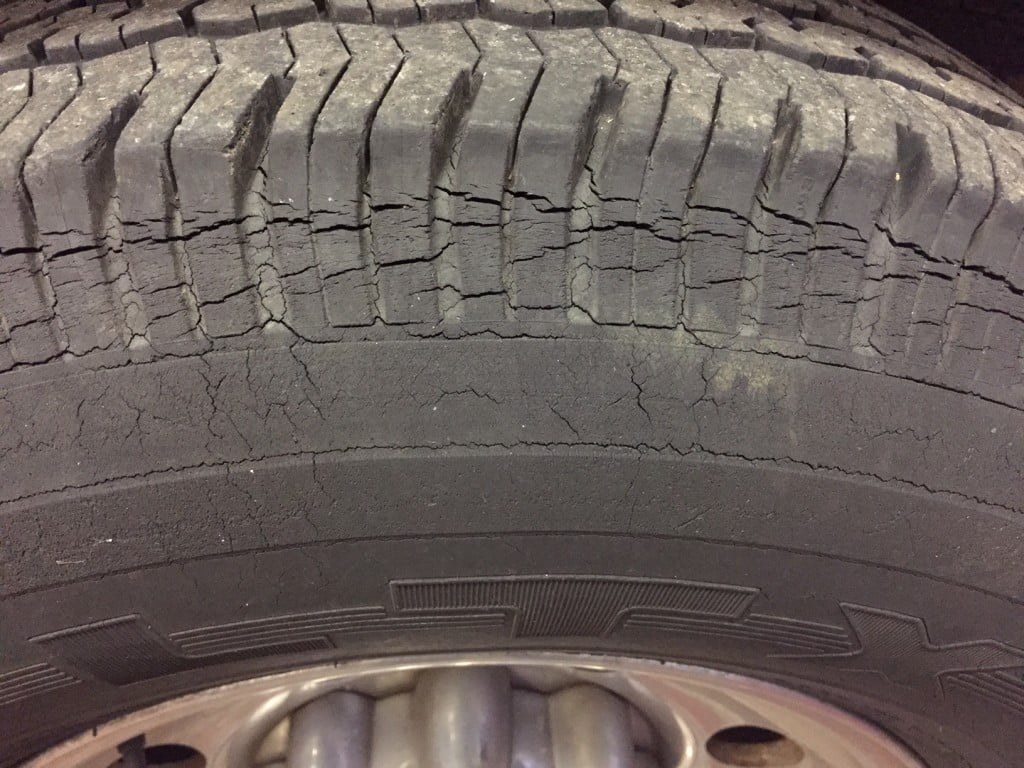
Depends on the composition of the rubber....but generally speaking yes it does...

That's why tires have a date of manufacture stamped on....and a stated safe use of 6 years from that date...

https://pubs.acs.org/doi/pdf/10.1021/ie50258a012

__________________
All living things seek to control their own destiny....this is the purpose of life
Register to Reply
Register to Reply 9 comments

Good Answers:

These comments received enough positive votes to make them "good answers".

"Almost" Good Answers:

Check out these comments that don't yet have enough votes to be "official" good answers and, if you agree with them, vote them!
Copy to Clipboard

Users who posted comments:

Anonymous Poster (1); Cardio07 (1); Madmax1997 (1); nick.name (1); PWSlack (1); Rex Devantier (1); seanlsy (1); Shandy (1); SolarEagle (1)

Previous in Forum: Electrolysis Test of water   Next in Forum: corrosion, rust, oxidation

Advertisement