Previous in Forum: Joule-Thomson Coefficient pT   Next in Forum: Turbidity & TSS
Close
Close
Close
18 comments
Rate Comments: Nested
Active Contributor

Join Date: Feb 2011
Posts: 12

Chemical Reactors Materials

02/23/2011 5:28 AM

Hi all,

I am a phD student starting with my project, and I have to know which materials are the most used in Chemical reactor (really in Emulsion Polymerization Reactors). I supposed that more or less I could ask how I could find material employed in chemical reactors, ASTM??? Where please?? I mean, I know that Stainless Steel is going to be a mayor material, but I would need specifically if 304 or 316 is the most employed, if mild carbon is used, in some commercial websites I find Hastelloy or Inconel.... and if it is possible to have a book or something serious to citation please.

I am from Spain but I am working with european companies.

Thanks in advance!

Jone

Register to Reply
Interested in this topic? By joining CR4 you can "subscribe" to
this discussion and receive notification when new comments are added.

"Almost" Good Answers:

Check out these comments that don't yet have enough votes to be "official" good answers and, if you agree with them, vote them!
Active Contributor

Join Date: Feb 2011
Posts: 12
#1

Re: Chemical Reactors Materials
02/23/2011 5:50 AM

I will add because maybe is helpful that the chemical reactor would be a stirred tank

Register to Reply
Guru
United Kingdom - Member - Indeterminate Engineering Fields - Control Engineering - New Member

Join Date: Jan 2007
Location: In the bothy, 7 chains down the line from Dodman's Lane level crossing, in the nation formerly known as Great Britain. Kettle's on.
Posts: 32175
Good Answers: 839
#2

Re: Chemical Reactors Materials

02/23/2011 6:54 AM

It would be extremely unlikely for mild/carbon steel to be used in contact with such a top-end material. Wetted materials are likely to be 316 stainless steels or possibly borosilicate glass, depending upon the wetting fluid, its temperature and pressure.

Background reading (usual disclaimer).

More background reading (usual disclaimer).

Even more background reading (usual disclaimer).

__________________
"Did you get my e-mail?" - "The biggest problem in communication is the illusion that it has taken place" - George Bernard Shaw, 1856
Register to Reply
Active Contributor

Join Date: Feb 2011
Posts: 12
#4
In reply to #2

Re: Chemical Reactors Materials

02/23/2011 8:47 AM

Thanks!!! I am going to look these links that I saw are companies links. Do you know if there exit some standard where I could find "for chemical reactors using acids (for example) Stainless steel 316 instead of 304 is prefered" or whatever it would be...

Register to Reply
Guru
United Kingdom - Member - Indeterminate Engineering Fields - Control Engineering - New Member

Join Date: Jan 2007
Location: In the bothy, 7 chains down the line from Dodman's Lane level crossing, in the nation formerly known as Great Britain. Kettle's on.
Posts: 32175
Good Answers: 839
#6
In reply to #4

Re: Chemical Reactors Materials

02/23/2011 9:18 AM

That step is carried out by the vessel designer with details of the process fluids, their temperatures and pressures, and some corrosion charts to hand. Try the Cole-Parmer materials compatibility database for starters. A Google search will find it.

As processes are proprietary information, standards are few and far between, however there are standards for construction of tanks and pressure vessels that can be followed once the wetted material has been selected.

304 is preferred for things such as trash rakes, screens and general stainless steel construction for parts that don't merit being painted. 304 is readily available as strip, bar, channel and other sections, and sheet.

Most process equipment that needs to be stainless steel will veer towards the various 316s, which are widely available as pipe, flange and plate. It can be readily rolled to produce dished ends for pressure vessels.

Stainless steels are resistant to some acids, though not all of them. The corrosion chart gives more detail, so have the steel number, the acid and its temperature to hand.

Don't rule out the use of plastics for vessels provided the temperatures are modest and the pressures near ambient. Plastic tanks and pipework are finding much favour these days. Pump casings can also be made entirely in plastic for such nasties as, oh, say 30% hydrochloric acid.

Only the process fluids and the corrosion chart can determine whether stainless steel is the correct material, or whether something more exotic is required, like a rubber or glass lining to the inside of a mild-steel pressure vessel.

Without details of the process fluids, temperatures and pressures, this is about as far as any contributor can go to help. Beyond this point, start talking to vessel manufacturers to obtain an impression of vessel value versus size, though it might not come as a surprise to know that not much commercial detail will be forthcoming without the whiff of a purchase order in the distance.

__________________
"Did you get my e-mail?" - "The biggest problem in communication is the illusion that it has taken place" - George Bernard Shaw, 1856
Register to Reply Score 1 for Good Answer
Active Contributor

Join Date: Feb 2011
Posts: 12
#3

Re: Chemical Reactors Materials

02/23/2011 8:38 AM

I would like also to know which finishes are used in Stainstess steel chemical reactor (specifically in polymer emulsion reactors), I mean, if is possible for a company to have a reactor electropolishes, or if always is 2B finish or what.

I am chemist, not engineer, so if someone could tell me which standards I could read (cause I see in internet some webs that talk about ASTM etc....)

Register to Reply
Guru
United Kingdom - Member - Indeterminate Engineering Fields - Control Engineering - New Member

Join Date: Jan 2007
Location: In the bothy, 7 chains down the line from Dodman's Lane level crossing, in the nation formerly known as Great Britain. Kettle's on.
Posts: 32175
Good Answers: 839
#7
In reply to #3

Re: Chemical Reactors Materials

02/23/2011 9:28 AM

For hygienic use in the pharmaceutical industry, it is not uncommon for stainless steel internals to be fine grit blasted followed by electropolishing. There are any number of vessel fabricators that can do this, and stainless fabrication will take place on a national radius rather than a global one.

Coarser grit blasting and surface passivation of internals may be applicable for less demanding applications.

Glass-lining and glass plant is a global radius, as there are so few companies able to do it; the investment needed to produce process equiipment reliably in specialised corrosion-resistant glass is not insubstantial.

The standards to be followed may well be proprietary ones from the operating companies and, again, not much commercial detail will be forthcoming without the hint of a distant purchase order.

__________________
"Did you get my e-mail?" - "The biggest problem in communication is the illusion that it has taken place" - George Bernard Shaw, 1856
Register to Reply Score 1 for Good Answer
Active Contributor

Join Date: Feb 2011
Posts: 12
#10
In reply to #7

Re: Chemical Reactors Materials

02/23/2011 11:47 AM

Thanks a lot PWSlack for both clear answers!! So really there is not an aswer to my question. let's say the most typical could be SS 316 but always we have to take into account reaction medium, temperature, pressure, etc. But considering that I have to "find" materials for a typical emulsion polymerization, not acidic, not basic medium, not so many polyelectrolytes, no pressure, low temperatures (usually less than 100 ºC), SS 316 looks nice ;-)

Register to Reply
Guru

Join Date: Oct 2008
Posts: 42355
Good Answers: 1693
#5

Re: Chemical Reactors Materials

02/23/2011 9:02 AM

We can't do your project for you. You'll need to do much research on your own.

Here's a materials site. I hope your project isn't due next week.

Material Type - MatWeb

Register to Reply
Active Contributor

Join Date: Feb 2011
Posts: 12
#8
In reply to #5

Re: Chemical Reactors Materials

02/23/2011 11:35 AM

Thanks lynlynch. Of course I am not trying to get the work done. I am chemist and my boss ask me to find which were the most used stainless steel and glass materials in polymer reactors and i have spent almost 2 weeks searching in internet (polymer reactor, chemical reactor, pressure vessel, reaction vessel, stainless steel vessel and so on) and I have been not able to find anything "nice" enough, and as I chemist and I ahve never deal with chemical reactor design, I supposed that maybe there would be any standard document to choose the materials. So now I see that I will not find what i am looking in such a general way...Thanks again

Register to Reply
Guru

Join Date: Oct 2008
Posts: 42355
Good Answers: 1693
#9
In reply to #8

Re: Chemical Reactors Materials

02/23/2011 11:38 AM

I'd contact some suppliers of these types of reactors and ask them about their materials of construction.

Register to Reply
Active Contributor

Join Date: Feb 2011
Posts: 12
#11
In reply to #9

Re: Chemical Reactors Materials

02/23/2011 11:56 AM

Thanks!! The truth is that I only search large scale reactors manufacturers and I found so many materials available in their websites (Carbon steel, mild steel, SS, SS304, SS316, SS316L, Hastelloy, Monel, Inconel, rubber lined, glass lined that i got crazy!). But with your answers I know that the main option will be related with the process fluid possible corrosion. I should contact manufacturers trying to get some information but I don't trust so much in their option ;-)

Register to Reply
Guru

Join Date: Oct 2008
Posts: 42355
Good Answers: 1693
#12
In reply to #11

Re: Chemical Reactors Materials

02/23/2011 12:05 PM

The way you have llisted them is probably close to their chemical resistance properties.

Carbon steel, mild steel, SS, SS304, SS316, SS316L, Hastelloy, Monel, Inconel,

I don't know it titanium is used in this industry, but it has excellent chemical resistance also.

Register to Reply Score 1 for Off Topic
Power-User

Join Date: Apr 2010
Location: Moncks Corner, South Carolina, USA
Posts: 157
Good Answers: 6
#15
In reply to #11

Re: Chemical Reactors Materials

02/24/2011 8:09 AM

Not trusting your manufacturers and suppliers is not a good idea. Remember they are paid to supply a product which will work for your (an for others) application(s). If they supply an inadequate product they will not stay in business. You are the expert on the process and they are the expert on providing a vessel which will service your needs. They can give you recommendations on materials and coatings or linings for use with the chemicals involved. These recommendations should include service life and reactivity of the materials. Your job is to take these recommendations and figure out which is best for your application considering what is suspended in the liquid, speed of travel etc. Suppliers also like to brag about others they have supplied with similar needs. You may be able to use this information to develop contacts doing similar work and gain from their mistakes.

My 2 cents or 2p depending on your location.

__________________
You can always tell a Nuke because you can't tell him anything!
Register to Reply
Active Contributor

Join Date: Feb 2011
Posts: 12
#16
In reply to #15

Re: Chemical Reactors Materials

02/24/2011 8:31 AM

Sorry but I explain myself wrong (my english is limited). I mean that I will not buy any reactor, I need to know the polymerization materials reactor to let's say "simmulate", so in that way I tried to say I don't trust to get an answer from suppliers as they will not receive anything back

Register to Reply
Guru
United Kingdom - Member - Indeterminate Engineering Fields - Control Engineering - New Member

Join Date: Jan 2007
Location: In the bothy, 7 chains down the line from Dodman's Lane level crossing, in the nation formerly known as Great Britain. Kettle's on.
Posts: 32175
Good Answers: 839
#13
In reply to #8

Re: Chemical Reactors Materials

02/23/2011 12:26 PM

It isn't a popularity contest as regards the selection of reactor materials, and the boss should know that. The reactor materials will be selected to cater for the process fluids, temperatures and pressures, the method of handling, and to a certain extent the volume.

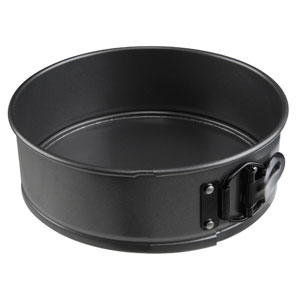
  • For example: a cake mixture can be made in a glass, ceramic or Teflon-coated mild steel reactor. Glass or ceramic bowl-shaped process vessels cater well for the process fluids at ambient temperatures as these can be made circular quite easily to make sufficient room for the agitation processes needed in charge preparation. However, on transferring it to an oven a glass or ceramic reactor will be too heavy and unwieldy and may break with the heat treatment; a Telfon-lined mild steel reactor with a flatter circular or more rectangular shape would be a better choice for this step, certainly if several cakes are to be baked at the same time and space in the oven is usually constrained. And if the reactor is needed to be flexed to remove the process product, a glass or ceramic reactor simply will not do.
  • A common pressure vessel containing water intended for use at higher temperatures than 100degC would not be made of mild steel as it would be too heavy to lift, and glass or ceramic would fail catastrophically were the vessel to suffer mechanical damage while at pressure and elevated temperature. Rolled, spun and pressed aluminium alloy plate is a better choice for the domestic pressure cooker.

__________________
"Did you get my e-mail?" - "The biggest problem in communication is the illusion that it has taken place" - George Bernard Shaw, 1856
Register to Reply
Active Contributor

Join Date: Dec 2010
Posts: 11
#14

Re: Chemical Reactors Materials

02/24/2011 6:48 AM

hi

as i have seen in many cases SA516 GRADE 70 is used .

best regards

Register to Reply
Associate

Join Date: Feb 2011
Location: Rhode Island, USA
Posts: 50
Good Answers: 4
#17

Re: Chemical Reactors Materials

02/25/2011 10:03 AM

The choice of construction material for a polymerization reactor will depend on a variety of factors, most importantly the specific polymerization to be performed. I have been involved in the design and building of a number of polymer plants in my past engineering career and in each the choice of materials was always a carefully considered question. In those I worked on, PVC reactors were most often glass lined steel vessels. Polystyrene plants and the various copolymers of styrene used stainless steels. Plants for the condensation polymers and the epoxies used stainless steels. Plants making polyvinly alcohols and similar copolymers used stainless steel. That is not to say that glassteel reactors are never used in some of those types of plants. Local reasons may control the decision there and glassteel may be used. There are some options in glass-lined steel relative to the glass formulation, but this is special know-how of these vessel manufacturers and the choice reduces to which of the few world class companies making that type of equipment you choose to go with.

Stainless steel construction offers a lot more options and has many things to consider. The particular alloy of stainless steel to be used involves a balance of economics, corrosion engineering, and pressure vessel mechanical design. Process heat transfer issues may also enter the decision.

Type 304 has a higher allowable stress than 316 but a somewhat narrower spectrum of corrosion resistance. It is also a little less expensive material. So it may be indicated for plants that require large, higher pressure reactors. However if there is a component of the polymerization that is corrosive to 304 then 316 might be preferred. Typically the monomers are not corrossive, but other components of the polymerization are. Certainly in emulsion polymerization, aqueos systems at high and low pH are serious corrosive environments. Corrosion test data or good plant historical experience is essential to making the best selection. Generally if Type 316 is selected it is the 316L grade that is selected for those plants. Surface finish is important. Typically a higher level of surface finish is needed and normally a mill finish or 2B would not be suitable. These reactors are often built with a No. 4 finish or equivalent. The way to achieve that depends on the size of the vessel, the fabricator's capabilities, and economics. Small, low pressure vessels can be built from sheet materials that have a high level surface finish. Large vessels built from rolled plate may be ground and polished. Some intermediate sizes may be electropolished. Other alloys in the 300 series of austinitic stainless are sometimes used, like 321 and 347 but these are mainly special situations, often driven by a certain fabricators welding capabilities and specific corrosivitiy situations. These things are more expensive and need a good reason for their selection. As to mild carbon steel, I have not seen that used for emulsion polymerization reactors in my experience. That's not to say it is not used somewhere, but I would be surprised if anyone can make a consistently good quality emulsion polymer product in a mild carbon steel vessel.

As to the literature on this subject there are a few complete books on polymer plant design that you can find in a Google search, and a multitude of books and technical literature on corrosion engineering that are applicable for any of the specific environments that you are dealing with. You will have to deal with it like a research investigation. There is no one simple answer.

__________________
Communiter Bona profundere Deum est
Register to Reply Score 1 for Good Answer
Active Contributor

Join Date: Feb 2011
Posts: 12
#18
In reply to #17

Re: Chemical Reactors Materials

02/28/2011 10:13 AM

Thanks a lot Joconco, it's a really good answer!

Register to Reply
Register to Reply 18 comments

"Almost" Good Answers:

Check out these comments that don't yet have enough votes to be "official" good answers and, if you agree with them, vote them!
Copy to Clipboard

Users who posted comments:

alinazarian (1); joconco (1); jonetxunava (8); lyn (3); PWSlack (4); XNuke (1)

Previous in Forum: Joule-Thomson Coefficient pT   Next in Forum: Turbidity & TSS
You might be interested in: Reactors, Process Reactors, Sequencing Batch Reactors

Advertisement