Previous in Forum: Oriented Strand Board (OSB) Warping   Next in Forum: NEI Fact Sheet on Fukushima Fuel Pools
Close
Close
Close
9 comments
Rate Comments: Nested
Anonymous Poster #1

Protection Against Effects of Japan

03/17/2011 1:44 AM

Please help me out of my misery

How do one protect yourselves against radioactive rain?

How do one store heavy water?

Can one use heavy water for crop production?

Reply
Interested in this topic? By joining CR4 you can "subscribe" to
this discussion and receive notification when new comments are added.
Commentator

Join Date: Feb 2011
Posts: 70
Good Answers: 1
#1

Re: Protection against effects of Japan

03/17/2011 3:28 AM

Use an umbrella

heavy water? where are you going to get that ? store in any container

Try Google

Reply Off Topic (Score 5)
Commentator

Join Date: Feb 2011
Posts: 70
Good Answers: 1
#2

Re: Protection against effects of Japan

03/17/2011 4:57 AM

this may be of use

http://www.radmeters4u.com/

http://www.ehow.com/how_5329307_measure-radiation.html

http://www.hps.org/publicinformation/ate/faqs/radiation.html

What Types of Radiation are There?

The radiation one typically encounters is one of four types: alpha radiation, beta radiation, gamma radiation, and x radiation. Neutron radiation is also encountered in nuclear power plants and high-altitude flight and is emitted from some industrial radioactive sources.

  • Alpha Radiation

    Alpha radiation is a heavy, very short-range particle and is actually an ejected helium nucleus. Some characteristics of alpha radiation are:
    1. Most alpha radiation is not able to penetrate human skin.
    2. Alpha-emitting materials can be harmful to humans if the materials are inhaled, swallowed, or absorbed through open wounds.
    3. A variety of instruments has been designed to measure alpha radiation. Special training in the use of these instruments is essential for making accurate measurements.
    4. A thin-window Geiger-Mueller (GM) probe can detect the presence of alpha radiation.
    5. Instruments cannot detect alpha radiation through even a thin layer of water, dust, paper, or other material, because alpha radiation is not penetrating.
    6. Alpha radiation travels only a short distance (a few inches) in air, but is not an external hazard.
    7. Alpha radiation is not able to penetrate clothing.
    Examples of some alpha emitters: radium, radon, uranium, thorium.
  • Beta Radiation

    Beta radiation is a light, short-range particle,and is actually an ejected electron. Some characteristics of beta radiation are:

    1. Beta radiation may travel several feet in air and is moderately penetrating.
    2. Beta radiation can penetrate human skin to the "germinal layer," where new skin cells are produced. If high levels of beta-emitting contaminants are allowed to remain on the skin for a prolonged period of time, they may cause skin injury.
    3. Beta-emitting contaminants may be harmful if deposited internally.
    4. Most beta emitters can be detected with a survey instrument and a thin-window G-M probe (e.g., "pancake" type). Some beta emitters, however, produce very low-energy, poorly penetrating radiation that may be difficult or impossible to detect. Examples of these difficult-to-detect beta emitters are hydrogen-3 (tritium), carbon-14, and sulfur-35.
    5. Clothing provides some protection against beta radiation.
    Examples of some pure beta emitters: strontium-90, carbon-14, tritium, and sulfur-35.
  • Gamma and X Radiation

    Gamma radiation and x rays are highly penetrating electromagnetic radiation. Some characteristics of these radiations are:

    1. Gamma radiation or x rays are able to travel many feet in air and many inches in human tissue. They readily penetrate most materials and are sometimes called "penetrating" radiation.
    2. X rays are like gamma rays. X rays, too, are penetrating radiation. Sealed radioactive sources and machines that emit gamma radiation and x rays respectively constitute mainly an external hazard to humans.
    3. Gamma radiation and x rays are electromagnetic radiation like visible light, radiowaves, and ultraviolet light. These electromagnetic radiations differ only in the amount of energy they have. Gamma rays and x rays are the most energetic of these.
    4. Dense materials are needed for shielding from gamma radiation. Clothing provides little shielding from penetrating radiation, but will prevent contamination of the skin by gamma-emitting materials.
    5. Gamma radiation is easily detected by survey meters with a sodium iodide detector probe.
    6. Gamma radiation and/or characteristic x rays frequently accompany the emission of alpha and beta radiation during radioactive decay.

http://www.google.co.uk/search?q=how+to+measure+radiation&sourceid=ie7&rls=com.microsoft:en-US&ie=utf8&oe=utf8&rlz=1I7ADFA_en&redir_esc=&ei=LsyBTZnJO4KLhQfq1tHNBA

you need to either trust your goverment regarding radiation

or you need to be able to measure the radiation

and make your own arrangements

Reply
Commentator

Join Date: Feb 2011
Posts: 70
Good Answers: 1
#3

Re: Protection against effects of Japan
03/17/2011 4:59 AM

Basic protection keep skin covered if out in the rain

you cannot easily protect from gamma as it goes through walls as though they are not there

i did some work some years ago on X-Rays scary stuff

Reply
Commentator

Join Date: Feb 2011
Posts: 70
Good Answers: 1
#4

Re: Protection Against Effects of Japan

03/17/2011 9:38 AM

Below taken from this link

http://www.tepco.co.jp/en/challenge/energy/nuclear/safety-e.html

TOKYO ELECTRIC POWER COMPANY

Challenges of TEPCO

  1. Corporate Information
  2. TEPCO News

Challenges of TEPCO

Challenges of TEPCO Top

  1. Energy & Resources
  2. Environment & Community
  1. Energy & Resources

Nuclear / TEPCO-Safety Measures The safety measures at nuclear power plants derive directly from our top priority: "To ensure that, under all conceivable circumstances, the community will be protected from hazardous radioactive substances."

To that end, we have thoroughly incorporated the "defense in depth concept," which is the foundation of genuine safety. Thus, safety measures are built in at every stage of the process.

Defense in Depth ( so long as it doesnt include Tsunamis)
1. Measures to prevent unexpected events

  • All designs provide margins of safety capable of withstanding even natural disasters.
  • Strict quality control at every stage, from design to construction to operation.
  • In addition to the elaborate regular inspections that take place every year, interlock and fail-safe systems are incorporated at every turn to prevent erroneous operations or actions.

2. Measures to prevent the escalation of unexpected events

  • Detection devices to detect abnormalities immediately
  • Equipment that automatically and safely shuts the reactor down

3. In the extremely unlikely event of an accident But not Tsunamis it would appear
[to prevent release of radioactive substances]

  • Emergency Core Cooling System (ECCS)
  • Airtight structure of the primary containment vessel and the reactor building

Anti-Earthquake Measures

Designed for the Largest Conceivable Earthquake
Before constructing a nuclear power plant, the site is carefully studied for previous earthquake records and geological features. This study establishes that there is no active fault under the site. Then, the building, the equipment, the piping, and other equipment are all designed to withstand the strongest possible earthquake in the area.

Hard-to-Shake Structure
Reactor buildings are built directly on solid bedrock after all soil has been removed. Furthermore, the reinforced concrete walls are far thicker than those used in other buildings. The building itself is a strong dice-like structure. Therefore, in the event of an earthquake, reactor buildings shake far less than an ordinary building.

Automatic Shutdown
Seismic detecting devices in the reactor building are designed to automatically shut the reactor down if they sense an earthquake of level 5 or greater.

Operation / Skills Training
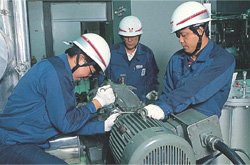
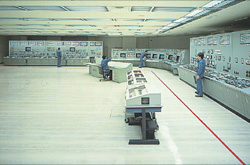
In addition to the many safety measures related to plant and equipment, the operators and maintenance personnel receive periodic strict and thorough training on the job and in the training center. Every effort is made to ensure safe operation.


BWR Operation Training Center


Skills Training Center

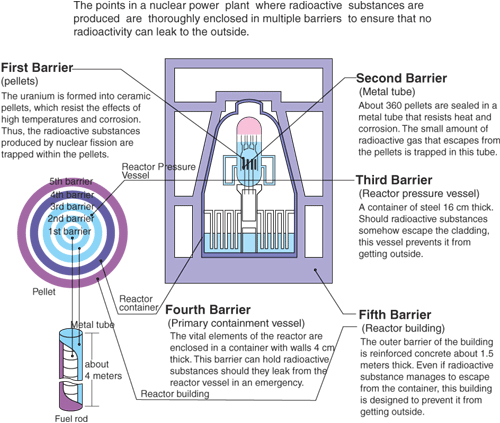
Five Barriers Enclosing Radioactive Substances

Reply
Commentator

Join Date: Feb 2011
Posts: 70
Good Answers: 1
#5

Re: Protection Against Effects of Japan

03/17/2011 12:53 PM
Reply
Guru
New Zealand - Member - Kiwi Popular Science - Weaponology - New Member Engineering Fields - Power Engineering - New Member Engineering Fields - Electrical Engineering - New Member

Join Date: Sep 2006
Location: Auckland, New Zealand
Posts: 8777
Good Answers: 376
#6

Re: Protection Against Effects of Japan

03/17/2011 2:20 PM

Is this personal protection? If so, where are you (country, state, city, etc).

The first thing you need to deduce is whether or not any (possible) radioactive fallout will even reach you! Then you need to calm down a bit (try watching less news). After that, try a Wikipedia search for more details regarding radioactive rain, fallout and world weather patterns.

How do one store heavy water?

Quite simply it's just water! Try a Wikipedia search for more details.

Can one use heavy water for crop production?

Why would you, it would be like trying to water your crops with expensive bottle water.

______________________________________________________

"DON'T PANIC!!!" (Hitchhikers Guide to the Galaxy)

__________________
jack of all trades
Reply
Commentator

Join Date: Feb 2011
Posts: 70
Good Answers: 1
#7

Re: Protection Against Effects of Japan

03/17/2011 5:57 PM

Figures provided by Tokyo Electric Power on Thursday show that most of the dangerous uranium at the power plant is actually in the spent fuel rods, not the reactor cores themselves. The electric utility said that a total of 11,195 spent fuel rod assemblies were stored at the site.

That is in addition to 400 to 600 fuel rod assemblies that had been in active service in each of the three troubled reactors. In other words, the vast majority of the fuel assemblies at the troubled reactors are in the storage pools, not the reactors.

Now those temporary pools are proving the power plant's Achilles heel, as the water in the pools either boils away or leaks out of their containments, and efforts to add more water have gone awry. While spent fuel rods generate significantly less heat than newer ones, there are strong indications that the fuel rods have begun to melt and release extremely high levels of radiation. Japanese authorities struggled Thursday to add more water to the storage pool at reactor No. 3.

Four helicopters dropped water, only to have it scattered by strong breezes. Water cannons mounted on police trucks - equipment designed to disperse rioters - were deployed in an effort to spray water on the pools. It is unclear if they managed to achieve that.

Nuclear engineers around the world have been expressing surprise this week that the storage pools have become such a problem. "I'm amazed that they couldn't keep the water in the pools," said Robert Albrecht, a longtime nuclear engineer who worked as a consultant to the Japanese nuclear reactor manufacturing industry in the 1980s and visited the Fukushima Daiichi reactor then.

Very high levels of radiation above the storage pools suggest that the water has drained in the 39-foot-deep pools to the point that the 13-foot-high fuel rod assemblies have been exposed to air for hours and are starting to melt, he said. Spent fuel rod assemblies emit less heat than fresh fuel rod assemblies inside reactor cores, but the spent assemblies still emit enough heat and radioactivity that they must still be kept covered with 26 feet of water that is circulated to prevent it from growing too warm.

Gregory Jaczko, the chairman of the United States Nuclear Regulatory Commission, made the startling assertion on Wednesday that there was little or no water left in the storage pool located on top of reactor No. 4, and expressed grave concern about the radioactivity that would be released as a result. The spent fuel rod assemblies there include 548 assemblies that were only removed from the reactor in November and December to prepare the reactor for maintenance, and may be emitting more heat than the older assemblies in other storage pools.

Even without recirculating water, it should take many days for the water in a storage pool to evaporate, nuclear engineers said. So the rapid evaporation and even boiling of water in the storage pools now is a mystery, raising the question of whether the pools may also be leaking.

Michael Friedlander, a former senior nuclear power plant operator who worked 13 years at three American reactors, said that storage pools typically have a liner of stainless steel that is three-eighths of an inch thick, and they rest on reinforced concrete bases. So even if the liner ruptures, "unless the concrete was torn apart, there's no place for the water to go," he said.

At each end of a pool are 16-foot-tall steel gates with rubber seals, used to swing fresh fuel rod assemblies into a reactor and to swing out and store the spent assemblies. The gates are designed to withstand earthquakes, Mr. Friedlander said, but could have sprung leaks given the power of last Friday's quake, now estimated to have had a magnitude of 9.0.

Even if water gushed out of the gates, there would still be about 10 feet of water left on top of the fuel rod assemblies.

When the water in a storage pool disappears, residual heat in the fuel rods' uranium left over from their time in a nuclear reactor continues to heat the rods' zirconium cladding. This causes the zirconium to oxidize, or rust, and even catch fire. This breaks the seal of the rods, and pressurized radioactive gases like iodine, which accumulated in the rods while they were in the reactor, suddenly spurt out, Mr. Albrecht said.

Each rod inside the assembly holds a vertical stack of cylindrical uranium oxide pellets. These pellets sometimes become fused together while in the reactor, in which case they may stay standing up even as the cladding burns off. If the pellets stay standing up, then even with the water and zirconium gone, nuclear fission will not take place, Mr. Albrecht said.

But Tokyo Electric said this week that there was a chance of "recriticality" in the storage ponds - that is to say, the uranium in the fuel rods could become critical in nuclear terms and resume the fission that previously took place inside the reactor, spewing out radioactive byproducts. Oh Great it gets worse

Reply
Guru

Join Date: May 2010
Location: in optimism
Posts: 4050
Good Answers: 130
#8
In reply to #7

Re: Protection Against Effects of Japan

03/18/2011 1:00 AM

Still Ere;

You are sorta spamming the same stuff on every thread in spite of OP relevance.

And 'overloading' the copyright rule.

Just saying

(self OT)

__________________
There is no sin except stupidity. (Oscar Wilde, Irish dramatist, novelist, & poet (1854 - 1900))
Reply Off Topic (Score 5)
Commentator

Join Date: Feb 2011
Posts: 70
Good Answers: 1
#9
In reply to #8

Re: Protection Against Effects of Japan

03/18/2011 5:21 AM

sorry

Reply Off Topic (Score 5)
Reply to Forum Thread 9 comments
Copy to Clipboard

Users who posted comments:

34point5 (1); jack of all trades (1); still ere (7)

Previous in Forum: Oriented Strand Board (OSB) Warping   Next in Forum: NEI Fact Sheet on Fukushima Fuel Pools

Advertisement