Previous in Forum: a Q   Next in Forum: Electrical Engineering - SF6 Circuit Breaker
Close
Close
Close
12 comments
Rate Comments: Nested
Participant

Join Date: Aug 2011
Posts: 3

Does VFD Cable Really Eliminate dv/dt Problems?

08/02/2011 2:31 PM

I've heard some people say that using VFD cable eliminates dv/dt spikes at the motor.

Should I use VFD cable or not?

Register to Reply
Interested in this topic? By joining CR4 you can "subscribe" to
this discussion and receive notification when new comments are added.

Good Answers:

These comments received enough positive votes to make them "good answers".

"Almost" Good Answers:

Check out these comments that don't yet have enough votes to be "official" good answers and, if you agree with them, vote them!
Guru
United States - Member - USA! Hobbies - Musician - Sound Man Engineering Fields - Mechanical Engineering - More than a Hobby Technical Fields - Technical Writing - New Member

Join Date: Oct 2008
Location: City of Roses.
Posts: 2056
Good Answers: 101
#1

Re: Does VFD Cable Really eliminate dv/dt problems?

08/02/2011 2:51 PM

If you are running a VFD/VSD I would have to say you should probably use VFD/VSD Cable. There is a reason special cable is used for VFD's.

__________________
Don't believe everything you read on the Internet!
Register to Reply
Participant

Join Date: Aug 2011
Posts: 3
#2

Re: Does VFD Cable Really eliminate dv/dt problems?

08/02/2011 3:46 PM

I guess I was really wondering if VFD cable protects the motor insulation by eliminating high voltage spikes caused by dv/dt (rise time) of the output IGBT circuit. I know that shielded VFD cable reduces EMI/RFI noise and common mode problems like bearing currents, but does it impact or effect the cause of high voltages present at the motor terminals?

Register to Reply
Guru
United States - Member - USA! Hobbies - Musician - Sound Man Engineering Fields - Mechanical Engineering - More than a Hobby Technical Fields - Technical Writing - New Member

Join Date: Oct 2008
Location: City of Roses.
Posts: 2056
Good Answers: 101
#3
In reply to #2

Re: Does VFD Cable Really eliminate dv/dt problems?

08/02/2011 4:16 PM

I would assume not, but I'm no expert in this field, maybe someone who is will come along with a definite answer for you.

__________________
Don't believe everything you read on the Internet!
Register to Reply
2
Power-User
New Zealand - Member - Kiwi

Join Date: Oct 2007
Location: Christchurch, New Zealand
Posts: 328
Good Answers: 29
#4
In reply to #2

Re: Does VFD Cable Really eliminate dv/dt problems?

08/02/2011 4:41 PM

No, the cable will have a minimal effect on the voltage spikes the only possible effect will be due to cable capacitance which is not going to be particularly significant.

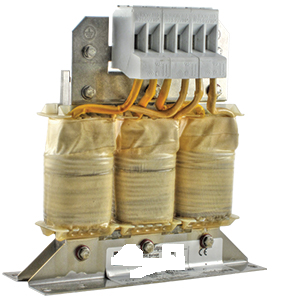
If you want to cut the dv/dt spikes back, an output filter on the VFD is the best method of smoothing the output waveform to something resembling a sine wave.

__________________
paulusgnome
Register to Reply Good Answer (Score 2)
Guru

Join Date: Nov 2006
Posts: 729
Good Answers: 2
#8
In reply to #2

Re: Does VFD Cable Really eliminate dv/dt problems?

08/04/2011 3:24 AM

What is VFD cable.

__________________
To avoid crticism do nothing,say nothing,be nothing
Register to Reply
Guru
United States - Member - USA! Hobbies - Musician - Sound Man Engineering Fields - Mechanical Engineering - More than a Hobby Technical Fields - Technical Writing - New Member

Join Date: Oct 2008
Location: City of Roses.
Posts: 2056
Good Answers: 101
#9
In reply to #8

Re: Does VFD Cable Really eliminate dv/dt problems?

08/04/2011 11:45 AM

VFD - Variable Frequency Drive. (also known as a VSD, or Variable Speed Drive)

VFD Cable is a shielded cable specifically designed for VFD drives. The cable is shielded from any outside electrical interferences which may cause issues with the drive. They are also rated and matched to the drive they will supply power for.

__________________
Don't believe everything you read on the Internet!
Register to Reply
Guru

Join Date: Nov 2006
Posts: 729
Good Answers: 2
#10
In reply to #9

Re: Does VFD Cable Really eliminate dv/dt problems?

08/04/2011 12:59 PM

It is a cable with shield.Please note the length makes a big factor.If the distance is too long between the motor and the VFD refelcted voltages can build up to a dangerous level.dv/dt as far as I know is a design part of VFD and devices used.The motors are built to withstand high dv/dt rise.Special motors are now available for use with VFD

__________________
To avoid crticism do nothing,say nothing,be nothing
Register to Reply
Associate

Join Date: Jun 2019
Posts: 50
Good Answers: 1
#11
In reply to #2

Re: Does VFD Cable Really eliminate dv/dt problems?

06/24/2019 12:44 AM

The dv/dt depends on the carrier frequency selected in VFD. The higher the carrier frequency the higher the dv/dt. The cable can't eliminate dv/dt. The rate of rise of the voltage can be reduced by installing the sinus filter at the output of the VFD. The bearing current depends on the followings.

  1. Rise time of the output PWM wave- Can be reduced if filter is installed at the output of the VFD.
  2. Also by installing the VFD near to the motor reduce the standing wave voltage.By reducing the cable length dv/dt can be reduced.
  3. Common Mode voltage : The bearing current can be reduced by selecting the VFD of 12,24,36 pulse. The NDE side bearing must be insulated to break the path of bearing current.
  4. By selecting the lower carrier frequency

Read More: Why V/F ratio is kept constant in VFD

Register to Reply
Participant

Join Date: Aug 2011
Posts: 3
#5

Re: Does VFD Cable Really eliminate dv/dt problems?

08/02/2011 4:50 PM

Thanks all for the help. I'm looking into the TCI filter now.

Register to Reply
Guru
United Kingdom - Member - Indeterminate Engineering Fields - Control Engineering - New Member

Join Date: Jan 2007
Location: In the bothy, 7 chains down the line from Dodman's Lane level crossing, in the nation formerly known as Great Britain. Kettle's on.
Posts: 32175
Good Answers: 839
#6

Re: Does VFD Cable Really eliminate dv/dt problems?

08/03/2011 3:54 AM

No CE-marked drive needs a special cable.

__________________
"Did you get my e-mail?" - "The biggest problem in communication is the illusion that it has taken place" - George Bernard Shaw, 1856
Register to Reply
Guru

Join Date: Oct 2009
Posts: 2061
Good Answers: 169
#7

Re: Does VFD Cable Really eliminate dv/dt problems?

08/03/2011 10:28 AM

Do you mean a special cable called "VFD Cable"?

Register to Reply
Guru
United States - Member - New Member Engineering Fields - Power Engineering - New Member

Join Date: Sep 2006
Location: California, USA, where the Godless live next door to God.
Posts: 4665
Good Answers: 804
#12

Re: Does VFD Cable Really Eliminate dv/dt Problems?

06/25/2019 10:59 AM

It’s not something that has a definitive “one size fits all” answer. But first, understand that depending on where you are, there are different rules and regulations in this regard, so some of the previous responses are along those lines. I’m going to assume from your syntax and references that you are in North America, where we have no regulatory imperatives about this issue, it is strictly voluntary. Outside of NA most people have no choice but to use VFD cable, so pondering the consequences is for them, pointless.

From a cabling issue, there is a major difference between NA and most of the rest of the world in that we use a lot more conduit, whereas a lot of others use the cables directly, similarly to what we would call “tray cable” or the Canadians call “Tech Cable”. When we use STEEL conduit (and properly ground it) on the output of a VFD, the conduit acts as the EMI/RFI shield. But without that, you need to do something else, hence the shielding requirement. So if you use PVC conduit, cable tray, wire duct or you are going to mix VFD output cables with other conductors in the same wire way, you absolutely MUST use shielded cable, aka “VFD cable”. There is nothing yet in the NEC (and CEC) compelling you to, but they about fire safety, not equipment longevity.

Cable capacitance is an issue that has virtually no significance in short runs, but increases with distance. Where that distance lies is the subject of much debate and also depends on several technical factors, but 25’ (7.5m) is generally considered the only “safe” distance. But some VFD mfrs have developed special transistor firing algorithms that reduce the formation of reflected waves and can go upwards of 400’ (122m) with no special treatment of the output circuit. Either way however, carrier frequency makes a huge difference in this regard so any time you increase your CF above 4kHZ, you are rapidly DECREASING the cable length at which you will have problems with reflected waves and thereby, dV/dt issues at the motor.

What “VFD cable” does in this regard is to assure a consistent conductor geometry; the bundling of the conductors remains constant, so the capacitance between conductors is even and predictable, which means some of the flux differences between conductors negate each other consistently. This is compared to individual conductors pulled randomly in conduit where those differences are random so the negation effects are inconsistent, helping to lead to the standing waves of higher voltages that then lead to dV/dt damage in the windings. Capable capacitance is a small effect to be sure, but again one that increases with distance between the drive and motor. This is the aspect that the VFD cable mfrs are referring to when they say that the cable itself will reduce dV/dt problems. Reduce? Yes. Eliminate? No. You need other measures to effectively eliminate it, such as the dV/dt filters.

But remember, for much of the world they are REQUIRED to use shielded VFD cable, and statistically those installations do not see the same amount of dV/dt damage to motor windings as we do here in NA, so empirical data appears to back up that claim. My take on this however, based on almost 40 years of applying VFDs in the US, is that most of the motor problems are due to a total disregard to ALL issues on how to properly install VFDs for success. Most electricians have had little to no training in this regard and just hook them up like any other motor starter. Then when someone tells them to use VFD cable, they look at the cost and blow it off as a “ripoff”. But if they were to actually READ the installation manuals of their drives, it’s always in there.

RTFM* is the first rule to success with VFD installations.

* Read The “Factory” Manual ...

__________________
** All I every really wanted to be, was... A LUMBERJACK!.**
Register to Reply Score 1 for Good Answer
Register to Reply 12 comments

Good Answers:

These comments received enough positive votes to make them "good answers".

"Almost" Good Answers:

Check out these comments that don't yet have enough votes to be "official" good answers and, if you agree with them, vote them!
Copy to Clipboard

Users who posted comments:

electricalexpert65 (1); ELECTRICFUN (2); JRaef (1); nesubra (2); Paulusgnome (1); PWSlack (1); Rajesh52 (1); RVZ717 (3)

Previous in Forum: a Q   Next in Forum: Electrical Engineering - SF6 Circuit Breaker

Advertisement