Previous in Forum: Space Contracts   Next in Forum: Where Did I Park that Lander?
Close
Close
Close
29 comments
Rate Comments: Nested
Guru
Hobbies - DIY Welding - New Member

Join Date: Apr 2008
Location: Bristol, Tennessee
Posts: 1177
Good Answers: 58

Charging a Supercap

09/20/2014 1:27 PM

A theoretical situation where a very large supercap is floating in the air, in an aircraft. Can the cap charge from potential in the air, since it would be of a lower potential? Lightning jumps from cloud to cloud...the cap would then be drained to power the craft.

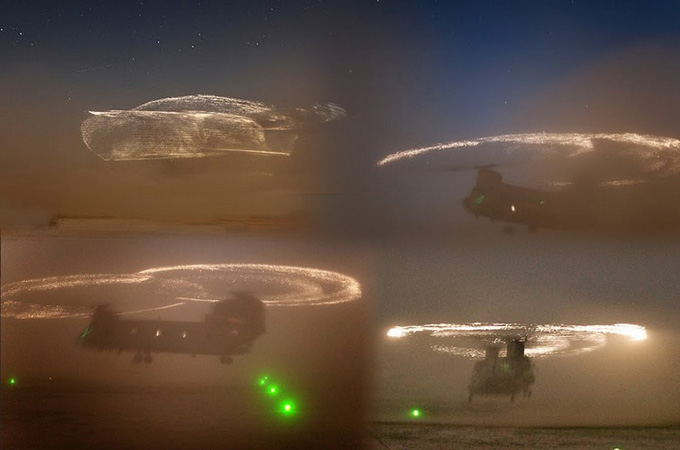
Also on the same topic, I have seen pics of helicopters discharging potential at landing. Is this every time? How about videos of relief helicopters taking on passengers while hovering...how did they discharge the potential?

__________________
mike k
Reply
Interested in this topic? By joining CR4 you can "subscribe" to
this discussion and receive notification when new comments are added.

Good Answers:

These comments received enough positive votes to make them "good answers".

"Almost" Good Answers:

Check out these comments that don't yet have enough votes to be "official" good answers and, if you agree with them, vote them!
Guru
Popular Science - Evolution - New Member Popular Science - Weaponology - New Member

Join Date: May 2006
Location: The 'Space Coast', USA
Posts: 11119
Good Answers: 918
#1

Re: Charging a supercap

09/20/2014 1:36 PM

No.

In theory, if one side of the cap was connected to the ground and the other to a long wire above the earth you could charge it, but free floating leads in the air will be at the same potential, so no charging will take place.

Reply Score 1 for Good Answer
Guru

Join Date: Apr 2014
Posts: 1869
Good Answers: 67
#2

Re: Charging a supercap

09/20/2014 2:33 PM

In order to power your craft, you will have to transport charge across a potential difference.

In other words, the charge on your 'supercap' is going to have to do work and not just float at some potential. Those charges have to go somewhere before real work is done. You might as well propose that the extra batteries (still in their blister-pack) in my desk drawer will power my torch (in the closet) without actually being connected to the bulb through a physical circuit.

How you get the charge is not important, but what you do with it and, what you don't have here is a circuit - a means to transport that charge through a potential difference. You need that, too.

Lots of charge with nowhere to go does ... nothing.

Reply
Guru

Join Date: Mar 2007
Location: by the beach in Florida
Posts: 33392
Good Answers: 1817
#3
In reply to #2

Re: Charging a supercap

09/20/2014 3:14 PM
__________________
All living things seek to control their own destiny....this is the purpose of life
Reply
Guru

Join Date: Apr 2014
Posts: 1869
Good Answers: 67
#5
In reply to #3

Re: Charging a supercap

09/20/2014 3:25 PM

Charged particles from the solar wind - protons, electrons and helium nuclei, mainly - funnelled toward the Earth's magnetic poles and colliding with the atmosphere (oxygen and nitrogen ionisation responsible for the colors seen here). Related more to particle kinetic energy than to electric charge, but beautiful all the same.

You ought to *hear* one of these auroras as well as watch it (you'll need a VLF receiver. Easy to build). Very interesting, like flocks of birds all chirping at once!

Reply
Guru

Join Date: Apr 2014
Posts: 1869
Good Answers: 67
#4

Re: Charging a supercap

09/20/2014 3:16 PM

Are you proposing that your circuit path consist of lightning? If not, then what are you proposing in its place?

Helicopters are not always charged, but read on. I know that with some winged aircraft, surplus charge is dissipated by means of small, sharp points located at or near the wingtips (points possibly containing small amounts of radioactive material to aid in ionising the air). As an electric field is hightest near sharp, electrically-conductive, charged objects, the ions produced are left behind along with their charge. Possibly with helicopters the blades serve the same purpose?

Reply
Guru

Join Date: Feb 2011
Posts: 7025
Good Answers: 207
#6

Re: Charging a supercap

09/20/2014 3:42 PM

you might want to watch thishttp://www.youtube.com/watch?v=EoWMF3VkI6U

Reply
Guru
Hobbies - DIY Welding - New Member

Join Date: Apr 2008
Location: Bristol, Tennessee
Posts: 1177
Good Answers: 58
#7

Re: Charging a supercap

09/20/2014 4:58 PM

Thanks, sounds ok so far. I do plan to use the cap's power to propel the theoretical craft, using an electric motor. Tapping lightning is frightening, I was hoping to drain static charge off from the edges before things got so powerful. The mention of both ends of the cap is interesting. I was hoping that the pole of the cap with the lowest potential would appear as earth to the charge. Somehow, like I said, and we all know, lightning does pass from cloud to cloud, neither one grounded. Just a transfer of potential. That's what I'm hoping to duplicate, on a small scale. As the caps are wired in series, the operating voltage rises, but lightning is really high voltage.

__________________
mike k
Reply
Guru

Join Date: Mar 2007
Location: by the beach in Florida
Posts: 33392
Good Answers: 1817
#9
In reply to #7

Re: Charging a supercap

09/20/2014 5:50 PM

Traveling through the clouds at the proper time, like during heat lightning, with a long trailing wire might gather some charge....this then connected to one side of the capacitor....there must be some data on this with the use of midair refueling operations....

http://www.military.com/video/military-aircraft-operations/refueling-in-flight/sparks-fly-during-aerial-refueling/813012158001/

From comments section....

"Clouds are electrically charged and will put a static charge on the plane. Flying on gunships I would hang out the right side if flying as scanner. When flying through a cloud I could usually make sparks fly from my fingertips."

__________________
All living things seek to control their own destiny....this is the purpose of life
Reply
2
Guru

Join Date: Apr 2014
Posts: 1869
Good Answers: 67
#10
In reply to #7

Re: Charging a supercap

09/20/2014 9:17 PM

How would you arrange one side of the cap to be at a different potential than the other without expending energy?

Let's say one 'plate' of your 'supercapacitor' is at airframe potential, how would you arrange for the other 'plate' to be at a different potential?

One way might be to apply the same techniques used to dissipate charge from an airframe, say, using those those wingtip ionisers I mentioned earlier, except that now they are insulated from the airframe and connected only to the second capacitor plate.

(You'd better beef them up while you're at it, btw. A lot.)

Now, how much power does it take to fly a plane, one large enough to present a significant area for collecting charge? Several hundred horsepower, at least? What is a horsepower? Something like 745 watts?

Power is the rate of energy flow. One watt for one second is one Joule. One horsepower is 745 Joules per second of energy used.

Just for the sake of discussion, let's say your plane requires 1000 horsepower. That is, 745,000 Joules per second. More than that because nothing is one hundred percent efficient.

Now look at how much capacitance you'll need to store enough energy for one second of flight. Knowing this number will allow you to estimate the energy requirement (ideally) for a flight of any length.

The energy stored in a capacitor is given by E = 1/2 * C * V^2, where

E = energy, in Joules

C = capacitance, in Farads and

V = voltage in volts

Let's say your voltage is 10000 V and the energy you need will be something greater than 745,000 Joules (for one second of flight). How much capacitance will you need for one second of flight?

You do the math.

Now extend that to practical flight times, just to give you a rough idea of your actual energy budget for a flight of meaningful duration.

Now look up energy densities of high-voltage capacitors, particularly energy density per unit weight for the best ones. Not looking hopeful, is it? It gets worse - much worse.

Where are you going to get all that electric charge? And how? Once your airframe is charged to the same potential as its surroundings, what would motivate accumulation of any more charge (which would raise the airframe voltage, repelling any nearby charges)?

Now look at the charge density of the atmosphere under the best conditions (for your plane to hopefully work, ie, in stormy weather). How much charge per unit volume of air mass? This will tell you how much air through which you'd have to fly to accumulate the needed charge, and your energy budget will tell you how fast you'll have to do it.

Now, just for fun, look up or calculate how much energy is dissipated by an average lightning stroke. How many coulombs of charge and at what voltage, and compare that with the number of coulombs of charge at 10000 volts it would take per second to keep your plane flying. Express the result in terms of the number of average lightning strokes *per second.* (spoiler: a lot)

Now run the numbers for clear skies and nary a storm in sight - and little available charge.

Are you beginning to get a feel for why this is not done? You're not the first to think of this problem, btw, but it's a good exercise in getting a better perspective of things; a perspective on the sorts of engineering problems you'd need to solve were such a thing even practical.

Reply Good Answer (Score 2)
Guru
Hobbies - DIY Welding - New Member

Join Date: Apr 2008
Location: Bristol, Tennessee
Posts: 1177
Good Answers: 58
#11
In reply to #10

Re: Charging a supercap

09/20/2014 11:36 PM

Thanks so much for your informative response. Notice my avatar. The ZMC2 was quite large, over 100 foot long, I can get the surface area for you. The skin is the theoretical outer plate. The ship was made of aluminum. Theoretically, the outer shell could be the whole capacitor. A few engineering challenges, but this is just an exercise. Flying around in stormy weather is stupid. An airship answers a lot of your very good questions. It just floats up there, no energy needed to keep it up. The energy drawn from the skies is stored in supercaps, maybe the shell would be enough. That's a lotta shell. An electric motor uses up the energy to propel the ship. Moving through the air to locations of more charge the ship drags the antenna mentioned in another reply, which I thought was a good idea. The motor using power causes one side of the cap to go low, making room for more recharge. If I were to build this ship, I would have it solar powered, electric propulsion, that is feasible. Solar panels are getting lighter all the time. Picking up a little free energy from the skies was just a thought experiment, I wanted to see where the flaws were. CR4 is a great place to run these ideas up the flagpole. Thanks again for your polite answer. Mike K.

__________________
mike k
Reply
Guru

Join Date: Apr 2014
Posts: 1869
Good Answers: 67
#12
In reply to #11

Re: Charging a supercap

09/21/2014 3:27 AM

In a typical thunderstorm (where you will find the most charge in a given volume of atmosphere) the charge density averages around 6.7 nC (nano-Coulombs) per cubic meter and has been measured as high as 13 nC/m3 in some storms. Per cubic kilometer of atmosphere this comes out to the same number of Coulombs; 6.7 C/km3 and 13 C/km3, respectively. That's not much charge, all things considered. But not only, it is distributed through a volume much larger than your airship, and so you also have the problem of collecting it - not just from one cubic kilometer of atmosphere, but from many such volumes and on a continuing basis.

Back to 6.7 Coulombs: what is 6.7 Coulombs of charge in everyday terms? You will remember from uni that one ampere is one Coulomb of charge moving past a given point per second; 6.7 amperes for one second and you've captured all of the charge in one cubic kilometer of a typical thunderstorm. That's not much. Worse - much worse for you - without a thunderstorm, the charge density drops to microscopic.

In other words, you're screwed.

You haven't said so outright, but I suspect you are proposing to charge your capacitor by means of the ambient electric field, yes? True, there is a sizeable ambient electric field generally, but electric fields and electric charges are different: the second produces the first but, in order do work on the electric field, you have to move physical charges through it and, in order to do that, you must first have that charge on hand. Without electric charge you can do no work on an electric field, so where and how are you going to get it in fair weather? If you're going to bring it with you, you'd make far, far better use of the space and lifting capacity of your airship by using batteries or some other high-energy-density source (petrol being of the better-known ones).

Without electric charge, an electric field is just a potential; you cannot do work on an electric field without electric charge. It simply is, it does not do anything without something to do it with, and so, avoiding thunderstorms (good idea in an airship) is paramount to avoiding the very source of the thing that would power your craft.

Reply Score 1 for Good Answer
Guru

Join Date: Apr 2010
Location: About 4000 miles from the center of the earth (+/-100 mi)
Posts: 9910
Good Answers: 1141
#14
In reply to #12

Re: Charging a supercap

09/21/2014 10:04 AM

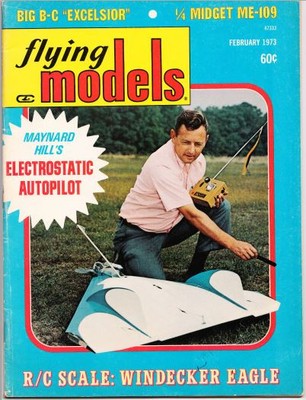
In fair weather there is an atmospheric electric field of about 100 v/m typically. I recall back in 1973 reading an article of a model airplane autopilot utilizing this electric field. Op-amps with insulated gate transistor inputs were fairly new and it required an ultra high input impedance to work. Trying to charge a super capacitor would take a very, very long time!

http://aerospaceindustrynews.webs.com/Flying%20Models.pdf (Sorry! Link no longer available.)

Reply Score 1 for Good Answer
Guru

Join Date: Feb 2011
Posts: 7025
Good Answers: 207
#16
In reply to #14

Re: Charging a supercap

09/21/2014 10:16 AM
Reply
Guru
Hobbies - DIY Welding - New Member

Join Date: Apr 2008
Location: Bristol, Tennessee
Posts: 1177
Good Answers: 58
#17
In reply to #14

Re: Charging a supercap

09/21/2014 11:17 AM

Wow, a really good article. I bookmarked it for the great autopilot plans.

I presume the voltage gradient mentioned is too weak to tap for power, would like to know if any experiments were ever done. A large craft bringing a field coil through this gradient might create some energy, I wonder how much.

Imagine a balloon with a ring of wires around its equator passing through a gradient. Doesn't that make for an electrical generator?

__________________
mike k
Reply
Guru

Join Date: Apr 2010
Location: About 4000 miles from the center of the earth (+/-100 mi)
Posts: 9910
Good Answers: 1141
#19
In reply to #17

Re: Charging a supercap

09/21/2014 11:56 AM

I presume the voltage gradient mentioned is too weak to tap for power...
The voltage is there, but there's almost no current, and power = voltage x current. It's why you need ultra high impedance mosfet op-amps to detect it.

Reply
Guru
Hobbies - DIY Welding - New Member

Join Date: Apr 2008
Location: Bristol, Tennessee
Posts: 1177
Good Answers: 58
#15
In reply to #12

Re: Charging a supercap

09/21/2014 10:12 AM

Thanks for the info. I like supercaps and am waiting for thin film solar panels to become affordable. Heavy motors and fuel tanks make a ship larger and more expensive quickly.

I was impressed by the reports of how much power is in a lightning bolt. Can that power be skimmed off, just a little, by some device that collects energy? Sort of like getting energy from the bow wave of a ship, rather than being struck by it directly.

__________________
mike k
Reply
Guru

Join Date: Apr 2014
Posts: 1869
Good Answers: 67
#21
In reply to #15

Re: Charging a supercap

09/21/2014 3:07 PM

"Sort of like getting energy from the bow wave of a ship, rather than being struck by it directly."

The energy from the bow wave of a ship: think about it. Why is there a bow wave? Because the ship is moving? What is making it move? Its engines, yes? Were it not moving would there be a bow wave? No. And so to collect energy from the bow wave is essentially to collect it from the ship's engines, except that you're doing it through a middleman: water.

Those engines have to work to make that bow wave and so, rather than collecting energy from the bow wave, you'd be better off to eliminate the bow wave entirely, thus making less work for your engines, no?

Reply
Guru
Hobbies - DIY Welding - New Member

Join Date: Apr 2008
Location: Bristol, Tennessee
Posts: 1177
Good Answers: 58
#22
In reply to #21

Re: Charging a supercap

09/21/2014 3:17 PM

You got me backwards, boss. I am the surfer riding the bow wave. The lightning bolt is the ship. I just wanted to grab some energy as it passed. Like how an ammeter uses the field around a wire to move the needle. It's not in series or even parallel, it's just nearby. Lightning bolts are supposed to have massive amounts of energy, I just want a little.

The whole idea here depends on supercaps being able to charge really fast.

__________________
mike k
Reply
Guru

Join Date: Apr 2014
Posts: 1869
Good Answers: 67
#23
In reply to #22

Re: Charging a supercap

09/21/2014 7:18 PM

How much energy in a bolt of lightning versus how much energy to fly an airship? Unless your craft is tethered, you will need some kind of propulsion system for travel and station-keeping? Do you know what your energy budget might be for such tasks?

More questions for you to consider (possibly you have already done so but, if not):

How much charge can you store on the (presumably metallised) surface of an airship without its spawning lightning of its own? You realise of course that the more charge you accumulate, the higher the electric field which results. That electric field, in turn, means that you have work harder bringing those charges to your craft because you're working against your own electric field. They will not come to your craft simply because it is there. They need a motive, an electric field, which favors making the trip. But if the electric field is directed the wrong way - and it will be if your ship is charged - they will go the other way.

Oops.

Have you considered what are the carriers of atmospheric charge and their impact on your collection efforts? Most atmospheric charge is attached to something else - water droplets, ice crystals, dust particles, etc. - and, when you collect that charge, you also collect the carrier particles as well? The same principle on which the operation of electrostatic precipitators/filters is based?

How will you transport your collected charge to a region of lower potential (thereby establishing a current) and how will that current path alter the local electric field and the consequences for your charge-collection efforts?

How will you collect charge from the necessarily large huge volume of atmosphere surrounding your airship, most of it quite distant, and how will you transport your collected charge to your craft without its 'seeing' the charge already collected?

Airships are not known for their speed and so, once you've depleted the charge in your local airspace, what then? You will have to go to another region to harvest more charge, and you will have to do so on continuing basis. How fast must your airship be in order to keep up? Do you know?

You realise that the faster you must move your craft, the more energy you will require which, in turn, means you will have to collect even more charge to supply that extra energy. Assuming you've solved all the other problems, have you considered that you may never break even, energy-wise? What is the break-even point? Do you know?

Here's an idea, which you mentioned, and one which is far more practical. So practical, in fact, that it's already being done: thin-film photovoltaic arrays covering the top surface of your airship, high-energy-density batteries to store surplus energy for operation in darkness and highly-efficient electric motors for propulsion. Simple, straightforward, reliable and getting cheaper every day. The best part is: you can do it today. Maybe even with supercapacitors instead of batteries, but are they optimal for this application?

Supercapacitors (conductive airship skins do not qualify as 'supercapacitors,' btw, the term having to do with a specific kind of capacitor technology) are all well and good, but are they the best solution, however your energy is collected, whether electrostatic or solar? What qualifies as a 'best solution' in this case? What parameters make a particular energy-storage technology optimal for an airship? Gravimetric energy density? Weight is certainly a consideration and so something that stores the most energy for the least amount of weight certainly seems to be a good objective, yes? Do supercapacitors have the best energy densities available, or do batteries? Not power density, which is different, but energy density.

Lots and lots of things to consider, but isn't that what makes engineering fun?

Reply
Guru
Hobbies - DIY Welding - New Member

Join Date: Apr 2008
Location: Bristol, Tennessee
Posts: 1177
Good Answers: 58
#24
In reply to #23

Re: Charging a supercap

09/21/2014 8:48 PM

Thanks for the attention, this is good. My flying plans are for long range, and low cost. Speed is not important. Drifting with the wind is fine with me. Like I said, heavy motors and such make for a larger, more expensive ship. Just think of how many party balloons it would take to lift a single pound. Many builders have lost everything in pursuit of a ship too large for their budget.

Anyway, I'm figuring supercaps will outpace l-ion batteries. I like the idea of a fast charge, hence the research.

Primarily, I think solar power will do fine, I was just curious to see if I could get a quick shot of energy from the skies.

__________________
mike k
Reply
Guru

Join Date: Apr 2010
Location: About 4000 miles from the center of the earth (+/-100 mi)
Posts: 9910
Good Answers: 1141
#27
In reply to #15

Re: Charging a supercap

09/23/2014 7:35 PM

There are several problems with trying to tame lightning: All the energy is delivered in microseconds resulting in really high peak power; when and where the lightning will strike is hard to predict.

http://en.wikipedia.org/wiki/Harvesting_lightning_energy

Reply
Guru
Hobbies - DIY Welding - New Member

Join Date: Apr 2008
Location: Bristol, Tennessee
Posts: 1177
Good Answers: 58
#28
In reply to #27

Re: Charging a supercap

09/23/2014 8:20 PM

Yeah, I was probably thinking of Atmospheric electricity, looking at my original post. Somehow got diverted to lightning. This would only work if supercaps can be charged instantly, or some way figured out how to slow down the discharge.

__________________
mike k
Reply
Guru

Join Date: Apr 2014
Posts: 1869
Good Answers: 67
#29
In reply to #27

Re: Charging a supercap

09/23/2014 8:43 PM

Yes, and using supercaps is ill advised. They are low-voltage devices (typically 2-4 volts) whose effective capacitance (not just capacitive reactance) is frequency-dependent such that their *net* impedance increases radically with increasing frequency, Most are not generally usable above 10-20 Hz. This frequency dependence is due to limited ion mobility within the layers inside the capacitor, and the thickness of the layers (on the order of a few Angstroms) imposes severe constraints on the maximum voltage which can be safely applied. Voltages above the maximum will puncture the dielectric, turning it into an expensive resistor.

Thanks to lightning's transient nature (milliseconds, typically), lightning is rich in harmonics, with most of the energy concentrated at VLF and above. These harmonics impose additional constraints on conductor geometry .

Conductors of lightning (such as in a lightning protection system) must have as large a surface area as practical, thanks to Skin Effect. Wide, flat copper ribbons or straps, rather than round or square conductors, make for the lowest impedance under the conditions. As most of the high-frequency current is constrained to within a surface layer measuring only tens of microns thick, conductors having a large surface-area-to-volume ratio are preferable. Litz wire, btw, is ill-advised where lightning conductors are concerned, as the insulation can catch fire. Best to use bare flat copper strapping in your lightning-protection system and not the round or square bar-stock you see in more traditional installations.

Reply
Guru

Join Date: Apr 2010
Location: About 4000 miles from the center of the earth (+/-100 mi)
Posts: 9910
Good Answers: 1141
#8

Re: Charging a supercap

09/20/2014 5:23 PM

Helicopters discharging potential...

Reply
Guru

Join Date: Feb 2011
Posts: 7025
Good Answers: 207
#13

Re: Charging a Supercap

09/21/2014 8:07 AM

the P 38 Lightning

Reply
Guru

Join Date: Apr 2014
Posts: 1869
Good Answers: 67
#25
In reply to #13

Re: Charging a Supercap

09/21/2014 9:14 PM

The AAF (Amish Air Force) F-35 Blitzschlag

Powered by Ethanol Made From Real Pennsylvanian Corn-Fed Silage - Nature's Own Biofuel®

© 2014 Jacob Ammon Fruit Company - Kicking Technology's Arse Since 1693™

Reply
Guru
Safety - Hazmat - New Member United States - US - Statue of Liberty - New Member Engineering Fields - Chemical Engineering - Old Hand

Join Date: Mar 2011
Location: Lubbock, Texas
Posts: 14331
Good Answers: 162
#26
In reply to #13

Re: Charging a Supercap

09/22/2014 12:31 PM

To my way of thinking, THAT is the only lightning that was ever worth flying! Unless you are talking Thunderbolt, that also is one awesome ride!

__________________
If it ain't broke, don't fix it. Just build a better one.
Reply
Guru
Fans of Old Computers - ZX-81 - New Member

Join Date: Feb 2011
Location: 18N 65W o
Posts: 1003
Good Answers: 28
#18

Re: Charging a Supercap

09/21/2014 11:52 AM

We always grounded the helo using a ground strap/ and hook. We had taps on the flight deck for that purpose. When fueling they always were attached. The soles of most shoes are sufficient unless wet. When retrieving rescue swimmers etc, the basket was dropped in the water a few yards from the swimmer and then dragged to them.

And yes it was SOP, even in the rain you could occasionally draw an arc.

Reply
Guru
Hobbies - DIY Welding - New Member

Join Date: Apr 2008
Location: Bristol, Tennessee
Posts: 1177
Good Answers: 58
#20
In reply to #18

Re: Charging a Supercap

09/21/2014 1:46 PM

That's what I was I was referencing, I had seen pics of them being grounded while landing by ground crew. They wouldn't be doing that if it wasn't necessary. I'm not sure, but I think airship ground crews have the same risk and procedures.

I always flash back to the Hindenburg, it blew at about the same time the ropes were dropped.

__________________
mike k
Reply
Reply to Forum Thread 29 comments

Good Answers:

These comments received enough positive votes to make them "good answers".

"Almost" Good Answers:

Check out these comments that don't yet have enough votes to be "official" good answers and, if you agree with them, vote them!
Copy to Clipboard

Users who posted comments:

Anonymous Hero (1); europium mkII (9); Fredski (3); James Stewart (1); JWthetech (1); mike k (8); Rixter (4); SolarEagle (2)

Previous in Forum: Space Contracts   Next in Forum: Where Did I Park that Lander?

Advertisement