Previous in Forum: (Electric) Rotary Wing   Next in Forum: Smarter Safer Cars
Close
Close
Close
22 comments
Rate Comments: Nested
Active Contributor

Join Date: Sep 2014
Posts: 12

How to Burn Stale RFG in a Carburated Car?

10/23/2014 9:51 AM

RFG in Indiana goes stale in my car, then it won't start. I have a carburator that requires the "gas" to lift up out of the fuel bowl into the venturies and idle nozzles. (Fomoco/Autocraft/Motorcraft 2bbo). Down draft carburators are too tall.

My gas tank which I replaced with a new one in 2008 is designed for real gasoline, and is not a pressure vessel. I have put a non-vented cap on it for storage (it requires a vent for driving, I have to change it) and plugged the auxillary vent line, but the volatile part of the RFG now blows out through the needle valve into the float bowl and out the vent. I don't drive enough to keep the RFG fresh, with its full compliment of butane or whatever the volatile part is. So I'm stuck with a tank full of amyl butyl ether, and the car won't start. It starts fine when I pour laquer thinner down the venturies. It started fine in 1972 after 6 years storage on old gasoline, but they won't let me buy that anymore.

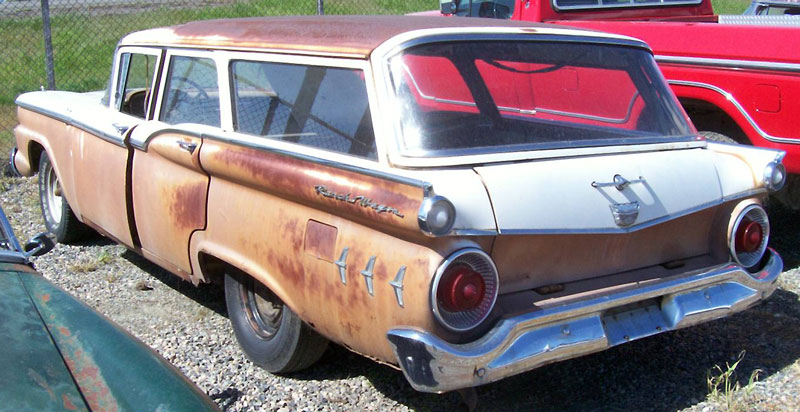
I'm seriously against electric fuel injection. I was nearly arrested in a customer car when I was a transmission mechanic and a fan belt broke on a road test. I got two miles before the battery died and the car stalled. Then the police stopped to "help" me. I've driven this 1959 car 220 miles at night with the generator light on (bad generator brushes), and 25 miles with a piece of twine as a fan belt. These modern cars are so dependent on tow trucks, a cell phone, and a fat credit card. Besides, run over a railroad tie at 60 mph or a curb at 25 with the brakes locked, in a modern car and see how much it costs you - it didn't hurt this car at all, except the dents in the wheels which I knocked out with a hammer.

I did put a nozzle in the air leaner, connected through a needle valve, pressure regulator, and solenoid valve that drips RFG into the carb throat, to get past the no-idle circuit problem. If I can get the car started, it works, then when the RFG is heated by the warm engine, I can shut the auxillary nozzle off. But later, (less butane, I suppose) the car won't start. Not for two years.

I tried to put a LPG 15 lb tank in the trunk, for starting, with a nozzle in the air cleaner, but ASCO won't sell me Vitron sealed 12 VDC solenoid valves because I am not a business. I was going to use a 1 psi loss check valve to inject the LPG into the same nozzle I'm using for the idle RFG circuit.

I'm not installing a LPG tank in without a solenoid NC valve BEFORE the rubber diaphagm regulator, in case of an accident. I saw a motor home burned down to the motor wheels and axles on I40 in 2012, with a lot of high school kids in athleltic trophy jackets standing around looking lost. You know motor homes can have a dual LPG tank auto switchover device involving two rubber regulators with the tank valves open at all times? This motor home hadn't even been in a two vehicle accident as far as I could see. I did find LPG tank to pipe thread adapters, and bought one, but am stuck at the shut off valve part.

Alternatively I have put a NEMA C laminate spacer under the carb and put electric heaters in it. I originally put eight 68 ohm three watt resistors and four 62 ohm in there. This started the car with the nozzle drip on, which ran for one second. I had noticed, for the first five miles my car always got 5 mpg, which for short household trips was all I got. I suppose it was only burning the volatile (butane) part of the RFG. On 50 minutes to my country property I was getting 17 mpg at the end, a record milage for this 4000 safety cage.

On the theory that the heaters ae not hot enough, I put 4 watt 39 ohm resistors, (ceramic fireproof Vishay) twelve of them under the carburato. I got the car to start and run three seconds before something made me shut it off. These resistors are going to need a voltage regulator to 11 VDC if I power them after the alternator is charging to 14 vdc, which complication annoys me.

I did put a 11 ga steel plate under the spacer with 1/8" holes in it, in case a backfire shatters a resistor case, to keep big ceramic shards from getting in the cylinders.

So far I'm still riding a bicycle everywhere. Fuel injected cars are not an option, I would drive maybe 1000 miles per year and the wire harnesses force the check engine light on and "limp home" mode after average 8 years, with the *****y brass and phosphor bronze connectors manufacturers use on the computers. So for a $30000 3/4 ton supercab pickup (equivalent to my 59 ranch wagon in carrying capacity) I could get 8 trouble free years for only $4 a mile. My brother sold off a 2006 Ford pickup in 2012 with only 90000 miles on it, because nobody could repair it where the check engine light would stay off. The 2008 Chevrolet I bought the wife had a check engine event at 33000 miles and 37 months on a 36 month warrenty, where the temperatur reading was reporting "------* because the thermostat was off. The heater was working fine and the car wasn't boiling over, how are you supposed to know the temperature is off value if the ***-**** computer won't let you see what the temperature is? And the code was "temperature sensor failure" which was a big lie.

Imported cars are not an option; I need a manufacturing job and those ******a production workers never bought anything made in Southern Indiana in their lives.

I've thought of something really wild, and electric pressure vessel with catalyst that converts diesel fuel to methane-ethane-propane-butane right under the hood, but I'm afraid that sort of experiment is a bit beyond my skill. Besides, the vendors probably won't sell anything to me because I am not a business. I'm lucky mcmaster.com wll sell me things, at one point newark.com would not, until debit cards and the internet were invented.

BTW, the buna-n solenoid valve I bought from mcmaster for the RFG drip at idle system lasted two weeks before RFG dissolved the rubber (I presume) and it stuck closed. Terrible stuff, RFG. I did get one vitron sealed solenoid valve out of the old ASCO distributor in my territory, but the new distributor won't answer my e-mails or phone calls, and the factory rep told me I have to buy from them, or not at all. Skinner stainless valves are $110 each, and nobody stocks 12 VDC or vitron seals in those, either.

So what would you do? I'm making fenders for my bicycle this week, since everything you buy for a consumer is made in a country that is beating up on the Phillipines tourist industry this week; it was Japan they were boycotting last month. My heart and lungs are in great shape as a result, but you can't carry home cement or plywood for building projects, or a piano for your country estate, on a bicycle. I could rent a truck, but I'd like to start and drive my car.

Register to Reply
Pathfinder Tags: Reformulated RFG
Interested in this topic? By joining CR4 you can "subscribe" to
this discussion and receive notification when new comments are added.

Good Answers:

These comments received enough positive votes to make them "good answers".

"Almost" Good Answers:

Check out these comments that don't yet have enough votes to be "official" good answers and, if you agree with them, vote them!
Guru

Join Date: Mar 2007
Location: by the beach in Florida
Posts: 33392
Good Answers: 1817
#1

Re: How to Burn Stale RFG in a Carburated Car?

10/23/2014 10:42 AM

A fuel stabilizer will help with keeping RFG from going stale....and good old starter fluid should help starting that pig classic...I would remove any heater assy in the carb....

http://www.amazon.com/STA-BIL-22214-Fuel-Stabilizer-oz/dp/B000B68V6I

__________________
All living things seek to control their own destiny....this is the purpose of life
Register to Reply
Guru

Join Date: Mar 2007
Location: by the beach in Florida
Posts: 33392
Good Answers: 1817
#2
In reply to #1

Re: How to Burn Stale RFG in a Carburated Car?

10/23/2014 11:04 AM

__________________
All living things seek to control their own destiny....this is the purpose of life
Register to Reply
Active Contributor

Join Date: Sep 2014
Posts: 12
#3

Re: How to Burn Stale RFG in a Carburated Car?

10/23/2014 11:06 AM

How is fuel stabilizer going to keep the butane from vaporizing out? The fuel stabilizer's I'm familiar with are for preventing the "varnish" from solidifying all over the carburator. Fuel IMHO hasn't contained varnish for years. Downdraft carburators, like Briggs & Stratton OHV engines use, cope with stale RFG fine, in my experience. The downdraft carburators on old farm tractors run much too rich, but they do run. The Briggs L-head engnes won't run on RFG cold stale or fresh, it is too heavy to make the turns in the manifold. A guy I know converts old Briggs L-heads to LPG, but he doesn't have solenoid shutoff valve, only the tank valves. Riding lawnmowers look really stupid with a huge 15 lb LPG tank on them, I converted my L-head twin briggs motor to a OHV 16 hp single cylinder engine. Only $475, pity briggs doesn't make a 60 hp engine.

Starter fluid is a "great" way to run the car until it warms up, as long as you are standing there spraying it. I helped a mechanic set fire to a Dodge truck with starter fluid one time, me in the cab, him spraying the can in the carburator. I like to keep the air cleaner on the carburator while cranking it to keep the fires pointed down, if at all possible. I had to give my Gulf card to the gas station attendant to buy the fire extinguisher, to limit the fire to burning the wire harness off the engine.

The laquer thinner I've been using is "only" $15 a gallon. I pour it in, put the air cleaner back on, then start the car for one second. That doesn't warm it up enough for the RFG to lift or evaporate. I've thought of putting a separate 5 gallon tank in the trunk to contain laquer thinner or E85, but it has to be a pressure vessel because fo the vapor pressure. It needs to be 8" square (or round) by 24-30" long, I'd have to weld the ***** thing up myself. And E85 is not for sale south of Memphis, my trips on Greyhound tell me. I'd have to buy ethanol in cans at the paint store for $15 a gallon.

Besides, I've got 6 cars full of stale RFG, what am I supposed to do with it, rent a barrel from safety clean and pay a $500 disposal fee? Autozone and the gas station won't take it in their oil recycling tanks. Stale RFG won't burn in the Mercedes diesel. I'm not pouring it on the ground or down the drain.

Somebody made a lowball offer on my 59 Wagon last week. Not many left. I've had mine since 1968, and Dad 7 years before that.

Register to Reply
Guru

Join Date: Mar 2007
Location: by the beach in Florida
Posts: 33392
Good Answers: 1817
#4
In reply to #3

Re: How to Burn Stale RFG in a Carburated Car?

10/23/2014 11:41 AM

Well I think you need to take the carburetor off and soak it for a day, then rebuild it....then I would keep it sealed with a plastic bag when not in use...I would attach an expander bladder to the fuel tank vent...The fuel stabilizer keeps the ethanol from evaporating...starting fluid should be used sparingly, as you should now know.... The thing with these old cars is that they need a lot of maintenance and tweaking and fiddling...you seem to have been overwhelmed with your maintenance duties....maybe it's time to lighten the load a little....

__________________
All living things seek to control their own destiny....this is the purpose of life
Register to Reply
Active Contributor

Join Date: Sep 2014
Posts: 12
#5
In reply to #4

Re: How to Burn Stale RFG in a Carburated Car?
10/23/2014 12:22 PM

My carb is fine, just the fuel is too heavy IMHO. Ive run wires and blown air through the passages, they are openI am sure. I've tried three different carburators. This one works when the fuel is warm. Warming the fuel in a mini tank would take too much electricity to work in a cold motel parking lot. I do drive to Texas when the car will start.

No ethanol in Indiana RFG. You do know there are 5 or 6 different RFG formulas, don't you? States made their own agreements with the EPA. I did okay on the gasohol stuff they sold until 1989, then the MBTE stuff was fine, until that was banned for polluting the groundwater. I don't know what this stuff is, but wikipedia suggests Amyl Butyl Ether. Whatever, it smells different after it sits around. I tried running 40% E85, but the car wouldn't go over 40 mph. Also, if it sits around, the ethanol floats to the top and the heavy stuff sinks down to the pickup. So you are starting the car on pure heavy stuff. Fuel injection cars stir the gas by pumping up to the engine then through the relief valve back to the tank, but my new 2008 tank has no provision for the third hose. I did run a second line through the sensor flange, stir the fuel from bottom to top with an electric fuel pump, but the car still did not start. E85 on top, sludge on the bottom, that's the rule.

I'm a ****y tree cutter, I'm built too lightly to use a chainsaw, so that is how I spend my time all summer, cutting trees and vines. I'd rather be doing mechanical or electronic work, but if I stay in the city the ozone tears my lungs up. Thus, I own a country property high on a windy ridge between the Ohio and White river drainages- I breath fine up ther. 70 miles per week on a bicycle has been good for my heart, but I need to fix a roof eaten by raccoons, a carport eaten by raccoons, and other projects requiring heavy hauling.

My Dad rested after he retired, he hired people to mow the lawn and vacuum the house. Mini-strokes took away his ability to understand what he was reading in two years, and he died with congestive heart disease 8 years after retirement. His older brother that worked on the chuch maintenance just died at 97, and his younger brother that ran a day care for his great-grandchildren, is still alive at 97. I'm doing it their way. I take off exercise on rainy days, except I go to the gym if the bad weather goes on too long. Use it or lose it.

Thanks for thinking about this.

Register to Reply
Guru

Join Date: Mar 2007
Location: by the beach in Florida
Posts: 33392
Good Answers: 1817
#6
In reply to #5

Re: How to Burn Stale RFG in a Carburated Car?

10/23/2014 1:51 PM

I'm not sure of your exact location but here is a map from the EPA showing RFG area's....

http://www.epa.gov/otaq/fuels/gasolinefuels/rfg/areas.htm

AFAIK there are 2 additives in use as oxygenates, ethanol and TBA(tertiary butyl alcohol) both should be compatible with stabilizer...

http://www.goldeagle.com/brands/sta-bil-faqs

Once the fuel has separated it has to be reconditioned....see link

http://www.eriecounty.oh.gov/departments-and-agencies/environmental-resources/department-of-environmental-services/recycling/how-what-where-to-recycle/special-material-recycling/gasoline-and-fuel/

__________________
All living things seek to control their own destiny....this is the purpose of life
Register to Reply
Guru
Hobbies - Fishing - Old Salt Hobbies - CNC - New Member United States - US - Statue of Liberty - New Member

Join Date: Mar 2007
Location: Rosedale, Maryland USA
Posts: 5197
Good Answers: 266
#7

Re: How to Burn Stale RFG in a Carburetors Car?

10/23/2014 3:18 PM

Stale fuel can be mixed and thinned out with good fuel. Which should make it run the car. That's if the carburetor is working properly. The gums and varnish is a product of oxidation of some of the hydrocarbon in the gasoline blend. Which if the car has set long the carburetor is most likely gummed up. The bowl is not that large so it doesn't take long for the lighter hydrocarbons to evaporate off. Needle valve usually gets glued into place by the gums and will not open to let fuel in.

Fuel stabilizers help to slow the oxidation, absorb moisture and have additives to reduce corrosion. Use them the work.

__________________
Life is not a journey to the grave with the intention of arriving in a pretty, pristine body but rather to come sliding in sideways, all used up and exclaiming, "Wow, what a ride!"
Register to Reply
Guru
Australia - Member - New Member

Join Date: Feb 2008
Location: Australia
Posts: 2181
Good Answers: 255
#8

Re: How to Burn Stale RFG in a Carburated Car?

10/23/2014 4:24 PM

What do you think of a simple tap in the fuel line to the carb??

When not in use, turn it off and fit your non-vented cap. Tank is then sealed and contains all the volatiles.

Alternative 2: Drain the tank after each time you drive and put the fuel into sealed container to retain the volatiles. Simply refill the tank when wanting to drive.

__________________
Just an Engineer from the land down under.
Register to Reply
Guru

Join Date: Jun 2009
Location: South of Minot North Dakota
Posts: 8376
Good Answers: 775
#9

Re: How to Burn Stale RFG in a Carburated Car?

10/24/2014 12:33 AM

WOW even by my standards.

Register to Reply
Guru

Join Date: Mar 2007
Location: by the beach in Florida
Posts: 33392
Good Answers: 1817
#10
In reply to #9

Re: How to Burn Stale RFG in a Carburated Car?

10/24/2014 1:14 AM

There's at least a 50%+ chance this is a relative of yours....

__________________
All living things seek to control their own destiny....this is the purpose of life
Register to Reply
Guru

Join Date: Jun 2009
Location: South of Minot North Dakota
Posts: 8376
Good Answers: 775
#14
In reply to #10

Re: How to Burn Stale RFG in a Carburated Car?

10/24/2014 9:41 PM

Not likely. None of my relatives over the age of 12 ride bicycles and no one ever wore a helmet when they did!

Register to Reply
Guru

Join Date: Mar 2007
Location: by the beach in Florida
Posts: 33392
Good Answers: 1817
#17
In reply to #14

Re: How to Burn Stale RFG in a Carburated Car?

10/25/2014 10:55 PM

Not that guy,, the op....that guy is demonstrating that a piano can be moved with a bicycle....if you have the right setup....

__________________
All living things seek to control their own destiny....this is the purpose of life
Register to Reply
2
Guru
Hobbies - RC Aircraft - New Member Hobbies - Automotive Performance - New Member Hobbies - DIY Welding - New Member

Join Date: Jul 2007
Location: Fort Lauderdale Florida
Posts: 5708
Good Answers: 123
#11

Re: How to Burn Stale RFG in a Carburated Car?

10/24/2014 2:23 AM

I believe you should get results with the fuel stabilizer. If you are still determined to find a 12 volt powered Viton sealed valve, look at the Aro brand of solenoid valves. I have used the Alpha series valves, but they also have smaller designs. Grainger sells them if you need a source.

__________________
Bob
Register to Reply Good Answer (Score 2)
Active Contributor

Join Date: Sep 2014
Posts: 12
#12

Re: How to Burn Stale RFG in a Carburated Car?

10/24/2014 11:08 AM

Erie County's theory that my stale gasoline is contaminated by water and particals is fairly useless. I have a 50 micron filter before the fuel pump, of 1 quart size, (sunflower) which when the tank was rusty and had a hole in the top, did a very adequate job of separating out the rust and water. Since the tank is new and kept sealed at all times except when I drive, water has no way to enter. The tank has been nearly full now for two years, very little chance for atmospheric water to get in.

Keeping RFG in a sealed container is both a fire hazard, and in the case of the commercial gas can I bought, useless. The volatiles blew the top off the gas can last summer, exposing that two gallons to the air. Those are in fact contaminated by water.

The float valve is not stuck closed. Volatiles have no problem pushing it open and letting themselves out the carburator vent (plus some liquied as a marker). Just the stale RFG is too heavy to lift up over the top cold. I tried mixing in 4 gal of E85, filling the tank, but I can't get it to mix well enough to make it to the carburator. Pulling out the bottom with an electric fuel pump, through the filter, and back in the top of the tank for ten minutes, did not mix it adequately.

I will try to buy an ARO 12 VDC viton sealed solenoid valve, thanks for the suggesion. I hope it is not plastic body - the ASCO valve I was trying to buy to shut of LPG tanks was brass body and fire resistant with the spring closing it for a few seconds anyway. If I can do that I can proceed with the LPG gas starting apparatus, most of which I've purchased already. LPG tanks can be exchanged anywhere, using them would allow me to drive to Texas confidently.

Register to Reply
Associate

Join Date: Jan 2010
Location: Adelaide South Australia
Posts: 40
#13

Re: How to Burn Stale RFG in a Carburated Car?

10/24/2014 5:30 PM

Hi Have a read of this
Have a tech question? Ask Dave
WHAT IS REFORMULATED GASOLINE (RFG)?
****Updated for 2013!****
Even though this article was written almost 10 years ago, it's content remains unchanged except that government regulations have allowed (in some cases mandated) reformulated fuels contain up to 15% alcohol and that has resulted in a huge increase in service issues directly related to these fuels. In short, older fuel systems were never designed for this level of concentration, and water saturation of these fuels has become an ongoing issue in our service schedule. Read the following article if you have time, if you don't, use only PREMIUM fuel in your boat (as most do not contain alcohols) and keep your tank FULL during the off season. Do NOT be sucked into thinking a "snake oil" additive will magicallically convert your ethanol laced fuel into something your engine won't mind - it cannot does not! Read on for the full scoop:
RFG is simply an "environmentally friendlier" version of gas. In a nutshell, RFG is gas that has been supplemented with fuel oxygenates (alcohols such as ethanol and methanol). Most components found in conventional gasoline are made up of hydrogen and carbon (hydrocarbons). Oxygenates are made up of hydrogen, carbon, and oxygen, and therefore add oxygen to the fuel air mixture (hence the term oxygenates). It is these oxygenates that help turn harmful carbon monoxide emissions into harmless carbon dioxide. In fact, oxygenates actually chemically lean out the fuel/air ratio (rather than mechanically through jetting). Since these oxygenates lean out the mixture, they enhance combustion and therefore reduce emissions. Since alcohol also raises the octane level, they can contribute to a better running engine if a previously used fuel did not meet the minimum octane requirements for that particular engine. I should point out at this time that OCTANE DOES NOT BOOST POWER. It simply allows your engine to reach the performance that it was designed to operate at. Using a higher octane fuel than your engine requires will do nothing to increase performance.
So what's the difference between ethanol and methanol? Ethanol is a grain based alcohol and methanol is ether based. There are two types ether based RFG's -- Methyl Tertiary Butyl Ether (MTBE) and Ethyl Tertiary Butyl Ether (ETBE). While both ethanol and methanol are alcohols, methanol is more sensitive to water than ethanol. Methanol is also not as compatible with engine fuel systems as ethanol and thus you can't use as high a concentration. Also, RFG's have a considerably shorter shelf life than conventional gasoline (90 days is considered the practical limit). This means that if you are using this fuel and leave your boat unused for prolonged periods, you will have to add stabilizers during the boating season. It also means you must keep your tank topped up because of condensation problems associated with these fuels (discussed later).
It is also important to know that alcohol is a *solvent* and as such acts as a detergent in your fuel system. While this sounds just like what the doctor ordered, it means that using this fuel for the first time will likely result in filters repeatedly plugging up as dirt and gum are dissolved from the boats fuel tank and lines. Since I have already warned of potential water problems associated with this fuel, it's wise to ensure that new water separating fuel filters are installed prior to it being used and that these filters be inspected and changed regularly. In older boats, and system of parallel filters is recommended.
Now for my personal opinion of these fuels....Why don't we want alcohol based fuels in our boats? For starters, the last thing we want to do is lean out the air/fuel mixture in our engines. Marine engines are finely tuned high performance beasts that already test the limits of their endurance doing what we ask of them. To add a further uncertainty of too lean a mixture is pure suicide (especially in outboards). Also, as previously stated, alcohol attracts and holds moisture. This is great if you want to remove water from your car's fuel tank but not so great when you think about where we use our boats - around water. This trapped water will corrode any steel fuel tanks/lines/fittings in your boat which may result in a fire hazard. Furthermore, depending on how much alcohol is present in the gas, the amount of water it holds may be too much for the engine to burn without experiencing negative side effects (rough idle, hard starting, high speed missing etc). Aside from the water problems, the alcohol itself presents a problem in that it attacks rubber and some kinds of gasket materials (remember, it is a solvent). Again, this is a safety issue in that it can lead to an on board fire, but it also becomes a maintenance issue if you have to start replacing the aforementioned parts.
Here's something that you won't hear discussed much about RFG's: they have less BTU's than conventional gas. To the layman, it means you will probably experience a small loss in power while using these fuels. Engines with on board ignition/fuel management systems (Current EFI models) will likely automatically compensate by increasing the fuel volume or retarding the timing (since the fuel itself will burn leaner and the on-board systems will identify and correct this condition) and you will likely burn slightly more fuel as well. For example, if you used to cruise at 3000 RPM and travel at 25 mph, when using RFG's you might find that you had to increase the throttle setting a small amount to achieve the same result with a RFG. Although I have seen no definitive study supporting this, I suspect that the increase in fuel economy and decreased emissions that cars experience with RFG's will be unseen in boats because the increased quantity of fuel required to maintain performance levels will erase the reduced pollutants linearly (eg. when we advance the throttle to compensate for the power loss, the increased emission resulting from the higher throttle setting will negate the benefits of the oxygenated fuel). Here's something else to think about -- MTBE is also a dangerous pollutant and it's now turning up in California resevoirs used to store drinking water. It seems in our zeal to rid the planet of one pollutant (lead), we've simply replaced it with another.
In my opinion, stay away from ALL alcohol blended fuels and octane boosters. Buy a minimum octane of 89 from a reputable dealer and get back to trouble free boating. When you get right down to it, why on earth would anyone buy (sometimes) cheaper blended fuels to save a few cents per gallon when the ultimate saving at the end of the summer will be pocket change? Factor in the added grief these products may cost you in the long run and good ole' high test is lookin' mighty inexpensive. ;-)

__________________
" For also knowledge itself is power." -- Francis Bacon
Register to Reply
Guru

Join Date: Jun 2009
Location: South of Minot North Dakota
Posts: 8376
Good Answers: 775
#15

Re: How to Burn Stale RFG in a Carburated Car?

10/24/2014 9:54 PM

My take on this is that your 59 likely does not have an adjustable main metering jet or a manual choke which is largely why you need all the extra apparatus attached to it to get it to start and run being that modern fuels that go bad tend to need to be ran at a richer air/fuel ratio than clean fresh fuel does.

That said I would suspect that by swapping out the stock carb for a older unit that has both an adjustable idle and run jet system plus a mechanical choke would likely solve a lot of the problems with far less additional gear.

Also if the fuel level in the carburetor is too low that is easily remedied by raising the level simply by adjusting the internal float level up a bit more.

FWIW I have a lot of with working on older equipment over the years so your bad fuel issues in nothing new to me and I have done enough trial and error testing over the years now to know how to work around its limitations like when dealing with older non EFI equipment such as yours.

Register to Reply
Active Contributor

Join Date: Sep 2014
Posts: 12
#16

Re: How to Burn Stale RFG in a Carburated Car?

10/25/2014 10:13 AM

tcm tech, the jets in my autolite 1961 carburator are the same ones in a holly 4 bbl racing carb. So I have a whole kit of jets of different sizes. When the RFG is hot, it runs through the carb too fast, making the mixture rich. Changing jets is how I tweaked out the mileage to the suburban property (27 mile trips) to 17 mpg from the stocker 14 mpg the car used to get. Running with the choke on is a good way to burn money- why don't i just set fire to $100 bills? It would be more fun.

Peugoet man, you obviously didn't read my posts. Indiana/Kentucky formula RFG doesn't contain ethanol these days. And the paranoia about ethanol is unjustified IMHO, my car ran fine on it for the eight years they sold it yere. It didn't burn anything. Fuel pumps and float valves quit dissolving in ethanol in the nineties, when manufacturers started using better rubber (vitron probably). That is why I need vitron sealed solenoid valves, buna-n and natural rubber will deteriorate in ethanol, MBTE, amyl butyl ether, whatever they are selling now.

Lots of people run their farm tractors with the choke on, that is what all the black smoke is about. Rich people.

I can't fit a downdraft or adjustable old carburator under my hood, see the picture eagle man posted. A carburator hood scoop is a great way to get two tickets per year for driving the same way everybody else does. I get hassled by cops enough for stopping at stop signs. Last time he wanted me to stop again in the middle of the cross street the way the lost tourist before me had done. I can't put the tank above the carburator the way a farm tractor or lawnmower burns RFG, either. Briggs and Stratton has a good working RFG carburator, but a 18 hp vertical motor won't move my car.

And that idiot with the piano on his tricycle obviously lives somewhere they don't have hills. After seeing a farm wife delivering 56 lb sacks of potatoes on a bicycle (Ilse of Stark episode of Islands without Cars TV show) I got inspired and hitched a child wagon behind my bike. Works, but there are hills everywhere I have to haul 80 lb home from, and a child's wagon has no brakes.

I analyzed why the heater started the car the first time but not the second time, yesterday. The heater assembly reads 3.7 ohms to ground with the carb loose and 0.3 ohms (~0) with the carb bolted down. Mark II heater has a shorted lead. It blew the fuse.It is teflon insulated wire and ceramic insulated resistors, shouldn't be a problem with those. I will be messing around with that today - mark 1 heater didn't have that problem, it just wasn't hot enough to run the car more than one second.

Register to Reply
Guru
Hobbies - RC Aircraft - New Member Hobbies - Automotive Performance - New Member Hobbies - DIY Welding - New Member

Join Date: Jul 2007
Location: Fort Lauderdale Florida
Posts: 5708
Good Answers: 123
#18
In reply to #16

Re: How to Burn Stale RFG in a Carburated Car?

10/26/2014 2:24 AM

My best guess is you have a Motorcraft (Autolite) 2100 carb. That should be easy to convert to a manual choke. I believe that the choke combined with holding the throttle open some would allow the engine vacuum while cranking to pull fuel from the bowl through the venturies, and into the intake where it should allow the engine to start. The choke blade must shut tight to work, but that is the design of the choke. Have you tried manually choking the engine

__________________
Bob
Register to Reply
Guru

Join Date: Jun 2009
Location: South of Minot North Dakota
Posts: 8376
Good Answers: 775
#19

Re: How to Burn Stale RFG in a Carburated Car?

10/26/2014 6:55 PM

I am seeing a lot of things in your comments that just don't add up or point to far greater issues by my judgements.

One is that so far everything you have stated suggests that you are trying to make your vehicle run without a functioning choke system being that when set to start and run right with the engine and fuel cold makes the air/fuel ratio too rich when everything is warmed up yet when set to run best warmed up i wont start because it cant get enough fuel so you have dump lacquer thinner or starting fluid down the intake to get it started and keep dumping fuel in the intake until the engine is warmed up as mentioned here, "Starter fluid is a "great" way to run the car until it warms up, as long as you are standing there spraying it." and here, "The laquer thinner I've been using is "only" $15 a gallon. I pour it in, put the air cleaner back on, then start the car for one second. That doesn't warm it up enough for the RFG to lift or evaporate.".

First off having to add a fuel dripper system for it to get enough fuel to idle properly says to me that your idle jetting is set way too lean or that the idle fuel passages are blocked. Plain and simple.

Next I see you mention that you have three carburetors that fit it yet only one sort of works. That again suggests to me that none of them are working properly let alone are set right.

Then, " The downdraft carburetors on old farm tractors run much too rich, but they do run." says a load to me that you feel they should not need to run with a high of A/F ratio as you think but that is exactly why they can and will run on old rotten fuel.

HUH? "pity briggs doesn't make a 60 hp engine.". From what I can find your vehicle has a 145 HP 223 cubic inch V8 so what exactly are your thoughts on using a 60 HP B & S engine which BTW they do make such an engine in their larger lineup of industrial engines.

Then this,"I've got 6 cars full of stale RFG, what am I supposed to do with it, rent a barrel from safety clean and pay a $500 disposal fee? Autozone and the gas station won't take it in their oil recycling tanks. Stale RFG won't burn in the Mercedes diesel. I'm not pouring it on the ground or down the drain." makes no sense to me other than you can not accept that you have a few dozen gallons of old rotten fuel that you are too cheap to get rid of. Thats life. Dump it in metal coffee cans and toss a match at it. Zero disposal cost. The only good point I see here is that you know enough to not try running rotten gasoline through a diesel engine!

"Running with the choke on is a good way to burn money- why don't i just set fire to $100 bills? It would be more fun." Well if you know how to use a choke and how to maintain your vehicle properly you won't need to run with the choke on all the time and to be honest a properly working choke and having the knowledge of how to use it is standard operating practice for operating most anything that has an all mechanical fuel system.

"Lots of people run their farm tractors with the choke on, that is what all the black smoke is about. Rich people." Are you sure its not because they are operating diesel tractors?

The only reason I can see for running with the choKe on has nothing to do with wealth but a lot to to do with ignorance and lack of knowledge on how to properly operate and maintain their equipment. To be honest well off people tend to own newer well maintained equipment that runs right the first time and every time.

"I can't fit a downdraft or adjustable old carburator under my hood, see the picture eagle man posted. A carburator hood scoop is a great way to get two tickets per year for driving the same way everybody else does. I get hassled by cops enough for stopping at stop signs." and "These modern cars are so dependent on tow trucks, a cell phone, and a fat credit card. Besides, run over a railroad tie at 60 mph or a curb at 25 with the brakes locked, in a modern car and see how much it costs you - it didn't hurt this car at all, except the dents in the wheels which I knocked out with a hammer."

"Somebody made a lowball offer on my 59 Wagon last week. Not many left. I've had mine since 1968, and Dad 7 years before that." All of that suggests to me you are likely in your early 70's age wise, very poor and have become known by the local law enforcement as being a old and hazardous driver of which being you are still driving a 1950"s Ford Ranch Wagon that is likely in near original condition probably, now pretty rough looking after nearly 60 years on the road and more than likely also has a terrible stink of being ran on rotten fuel following it, makes it easy for them to pick you out and ticket you for unsafe driving practices in an effort to gt you off the road for other peoples safety sake.

But thats just what I am getting here at a quick read over.

Register to Reply Score 1 for Good Answer
Active Contributor

Join Date: Sep 2014
Posts: 12
#20
In reply to #19

Re: How to Burn Stale RFG in a Carburated Car?

10/28/2014 12:10 PM

Thanks TCMfor the flame.

I'm such a dangerous driver I have available to drive the same car I had in college. The fact that many horror movie have one of these dive over a cliff or catch fire on screen gives people a certain prejudice against old full sized Fords. In fact many people have called my car "Christine", although the movie in question had a 59 Dodge instead of a Ford. If I liked 64 Mustangs, which fit my body like size shoes 14 EEE don't fit my feet, everybody would smile as I drive by. Mustangs aren't as tough in the suspension and frame as my car, either. When I scrapped one, the frame and suspension without rear axle was 1500 lb by itself

As far as proper vehicle maintenance, I've rebuilt the motor, differential, automatic transmission, every thing else, and made an electric windshield wiper system that works with the original opposite movement blades. I've been adjusting and repairing fomoco/autolite/motorcraft carburators since 1966.

The idle circuits of a fomoco carburator work fine with fresh RFG. That means I have to drive 250 miles every two weeks to keep it fresh, with all the volatiles they sold it with. I dont need that much transportation , I am in fact not working. I need about 50 miles a month motorized transportation. The idle circuits will work when the engine compartment is fully warmed up and the stale RFG is warm by the time it gets to the carburator. Turning the idle screw to any position does not make the car run or start. Changing the main jets anywhere from .041 to .088 does not make the vehicle start cold. .047's do make the vehicle get 17 mpg when the fuel is either fresh or warmed up.

The choke circuits work fine, based on a cable. The original vacuum-heated spring choke control was always a problem on fomoco carbs, and was usually stuck one way or the other. The carb heat valve in the exhaust was another device that worked only during the 12000 mile warrenty. AFter that it was stuck one way or the other. I've removed that device. Putting the choke to any position will not make it start, but if it is started the car will run on stale RFG with the choke on producing black clouds of smoke and about 5 mpg.

I surmise from your location, N Dakota, that you have never experimented with Kentuckiana formula RFG with the butane evaporatied out. I doubt if there are pollution regulations there. It is legal to sell regular hexane-heptane-octane fuel in the next county north of here, but nobody does, all the way to Indianapolis or Nashville to the south. The stale RFG is heavy cold and won't lift out of the fuel bowl into the idle or run circuits. In fact the mechanical accelerator squirter won't fill fast enough, taking about 10 seconds to refill after one squirt.

I can spot a diesel farm tractor without a ground guide. I was a maintenance manager when I was in the Army, mildly famous in the division for pointing out that our mobile bridge engines that were always having to be changed out, were the same engine that Greyhound and Continental used in their busses that were never seen sitting by the side of the raod broken. I also managed to get obsolete Continental diesel engines that the depot couldn't get injector parts for, repaired by a Kansas farm equipment diesel shop.

When you've done some experiments with amyl butyl ether and flat fomoco/autolite/motorcraft carburators, do please report back.

Register to Reply
Guru

Join Date: Jun 2009
Location: South of Minot North Dakota
Posts: 8376
Good Answers: 775
#21
In reply to #20

Re: How to Burn Stale RFG in a Carburated Car?

10/28/2014 10:39 PM

You are a ware that this is a engineering forum that is primarily visited by people of engineering type minds that make their decisions and recommendations based on the info they have presented to them and their past experience with similar topics?

My point is that I made my comments based on what I saw and how it strongly relates to past dealings with very cheap people who are not nearly as well versed in what they are dealing with as they think of themselves.

Everything you presented so far suggested you have a low income, are likely 70+ years of age, have an equally aged vehicle, you are cheap and your vehicle is likely be in a typical condition as is associated with old cheap people, your driving skills and state of vehicle condition draws attention from the local law, you have a strong dislike of people you see as being well off and the concept of buying fuel somewhere further from you local is out of the question due to any combinations of the above.

Thats what I got so far from data presented.

Register to Reply
Guru
Hobbies - RC Aircraft - New Member Hobbies - Automotive Performance - New Member Hobbies - DIY Welding - New Member

Join Date: Jul 2007
Location: Fort Lauderdale Florida
Posts: 5708
Good Answers: 123
#22
In reply to #20

Re: How to Burn Stale RFG in a Carburated Car?

10/28/2014 10:41 PM

If you are of the opinion that the circuits on the Motorcraft / Autolight 2100 is flawed, would the Holley 2300 series have a better chance of working with your fuel? Bolt pattern and linkage is very close to your carb.

__________________
Bob
Register to Reply
Register to Reply 22 comments

Good Answers:

These comments received enough positive votes to make them "good answers".

"Almost" Good Answers:

Check out these comments that don't yet have enough votes to be "official" good answers and, if you agree with them, vote them!
Copy to Clipboard

Users who posted comments:

bob c (3); indianajo (5); Just an Engineer (1); ozzb (1); peugeot man (1); SolarEagle (6); tcmtech (5)

Previous in Forum: (Electric) Rotary Wing   Next in Forum: Smarter Safer Cars

Advertisement