|
Stress plays a role in both your physiological and psychological
health. Physically, stress can cause gastrointestinal issues such as heartburn,
nausea and upset stomach, as well as cardiovascular problems such as high blood
pressure. And emotionally it's not much better. While a little stress can help
you focus, severe chronic stress can cause an inability to focus and can lead
to accidents. Stress also manifests in
other sicknesses and diseases since stress can weaken the immune system. Everyone
responds to stress differently and everyone handles their stress differently,
but a new study shows that your cells also respond to aging…and it makes them
old.

Image Credit: signs-of-stress.com
The degree of stress in a person's life is highly dependent on
individual factors such as physical health, the quality of interpersonal
relationships, the degree others depend on you for commitments and
responsibilities, and the amount of support we receive from others. It's been
estimated that 75% of the general population experiences at least "some stress"
every two weeks, with half of those experiences being a moderate or high level
of stress.
Researching Stress
This study,
released January 24, 2012, was done with the goal of examining the
psychological process of how people respond to a stressful event and how that
impacts their neurobiology and cellular health. Fifty women participated in the
study. About half of them were caring for relatives with dementia. The women
were then told they had to participate in stressful tasks in the laboratory
such as public speaking and solving math problems. The scientists then measured
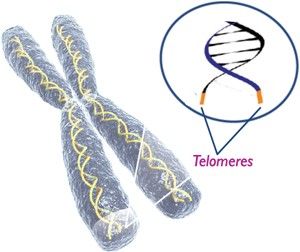
telomeres, which are the protective caps on the ends of chromosomes. The study
showed that women who had a high level of stress while waiting to complete the
tasks had shortened telomeres. Short telomeres show an older cell with an
increased risk for chronic diseases associated with aging such as cancer, heart
disease and stroke. Telomeres are found
on the tips of chromosomes and are made of repetitive sequence, which can't be
used to pass along genetic information. They function as a seal preventing the
chromosome from damage when DNA replicates. If the telomere is shorter, or
non-existent, it may not be able to prevent the chromosome from sticking
together and causing disease.
The minor stressful events in the laboratory may translate into larger
stress situations in real life. As demonstrated by the caregivers having a
higher level of stress, the high-anxiety situation (caring for a relative)
impacts how the participants were able to handle smaller stress tasks faces in
daily life. These participants are more likely to show physiological symptoms
of stress during situations such as losing their keys.
Before You Freak Out
Dr. Elissa Epel, an associate professor in the UCSF Department of
Psychiatry, looked at this study as "getting close to understanding how chronic
stress translates into the present moment." Researchers who focus on the impact
of stress were looking at the psychological process of how people respond to a
stressful event and how it affects their neurobiology and cellular health. The study also found that those participants
who are caregivers anticipated a situation with a higher level of stress than
non-caregivers. This put them at risk for short telomeres, and demonstrated
that higher levels of anticipated threat in daily life may promote cellular
aging in chronically stress individuals.
Currently stress is treated with tranquilizers, antidepressants, and
anti-anxiety medications, which account for one-fourth of the prescriptions
written in the U.S each year. This study has the potential to allow scientists
and doctors to design targeted interventions that reduce the risk for disease
and cellular aging associated with disease in stressed individuals. In the mean
time, there are easy ways to reduce stress in your life.
The most obvious is removing oneself from the person, thing or task that is
causing the stress. Other de-stressing
ideas include humor, a brisk walk outside to reenergize, rehydrate, or taking a nap.

He knows how to de-stress Image
Credit
References
Stress
Anticipation of Stressful
Situations Accelerates Cellular Aging
Stress facts
Stress
Management
TELOMERES AND
AGING
| 


 Re: Stress Is Making Your Cells Old


