|
 Back in the good ole days, before Indiana Jones 4 and
Cowboys & Aliens, I remember Harrison Ford as Dr. Richard Kimble - more
commonly called The Fugitive. In this
reprise of the 1960s TV series, Dr. Kimble is a well-to-do surgeon who finds
himself wrongly convicted of his wife's murder and sentenced to death by lethal
injection. Lucky for Kimble, the prison bus he is on crashes, and the doctor
makes a frantic escape Ford-style as he sets about trying to prove his
innocence. Back in the good ole days, before Indiana Jones 4 and
Cowboys & Aliens, I remember Harrison Ford as Dr. Richard Kimble - more
commonly called The Fugitive. In this
reprise of the 1960s TV series, Dr. Kimble is a well-to-do surgeon who finds
himself wrongly convicted of his wife's murder and sentenced to death by lethal
injection. Lucky for Kimble, the prison bus he is on crashes, and the doctor
makes a frantic escape Ford-style as he sets about trying to prove his
innocence.
(Credit: Entertainment
Weekly-->)
Tragically, wrong convictions are not uncommon in real life.
Unfortunately, many do not have the providence of the fictional Dr. Kimble in
finding justice or freedom, and become the unfortunate victims of faulty forensics
and an imperfect legal system.
 Such was the case with Steven Barnes. In 1988, he was
arrested and charged with the rape and murder of high school student Kimberly
Simon which occurred in 1985. Although he pleaded not-guilty and said he was
bowling at the time of the murder, forensics experts testified that soil, hair,
and an imprint from denim on his muddy truck matched samples from Simon. The
science was, not surprisingly, more convincing. Such was the case with Steven Barnes. In 1988, he was
arrested and charged with the rape and murder of high school student Kimberly
Simon which occurred in 1985. Although he pleaded not-guilty and said he was
bowling at the time of the murder, forensics experts testified that soil, hair,
and an imprint from denim on his muddy truck matched samples from Simon. The
science was, not surprisingly, more convincing.
(<--Barnes' reaction after his conviction. Credit: The Observer-Dispatch)
This was a problem the Innocence Project was formed to
combat. The Innocence Project is a nationwide legal network that works to free
innocent prisoners using DNA testing. In addition to playing a part in nearly
300 exonerations, the project has encouraged more intense scrutiny of
scientific and forensic evidence in court cases. Here's a link
to a pdf listing the details of these wrongful convictions overturned
through DNA technology.
Research conducted by the Innocence Project suggests that
the number one contributor to wrongful convictions is eyewitness
misidentification. But number two, involved 45% of the time, is faulty
forensics, which the Innocence Project defines as testimony that isn't
scientifically vetted, exaggerated testimony, and forensic misconduct.
 DNA technology is the Innocence Project's main weapon. It makes
it possible to link individuals to evidence related to a crime, such as traces
of blood or semen. It's not a perfect system, since the absence of DNA does not
always prove innocence, and handler error can result in small transfers of DNA
between samples. But regardless, it's been the most solid and trusted form of
forensic evidence since its inception. DNA technology is the Innocence Project's main weapon. It makes
it possible to link individuals to evidence related to a crime, such as traces
of blood or semen. It's not a perfect system, since the absence of DNA does not
always prove innocence, and handler error can result in small transfers of DNA
between samples. But regardless, it's been the most solid and trusted form of
forensic evidence since its inception.
(The Innocence Project's figures on reasons for faulty
convictions. Credit: Innocence Project-->)
It's not that many forensic scientists of the past were
doing bad work. Before DNA, there was no method that could definitively link a
person to a crime; most of the evidence scientists presented in the past was
with good intentions, even if less exact. Percentages regarding faulty
forensics range between 11% and the Innocence Project's figure of 45%. Even at
its minimum, this is an unacceptable figure when considering what things are at
stake.
The Innocence Project is backing two bills going through
Congress that would reform the way forensics is funded, organized, and
regulated. Based on our perception of forensics through CSI TV shows and other
media, we would think it to be at the peak of scientific excellence. In
reality, a 2009 report by the National Research Council found much of the
science in crime labs wanting. In addition, the legal community and the crime
labs approach cases from two different angles; though both have the same goals,
a great amount of training and resources will be needed to bring things up to
snuff.
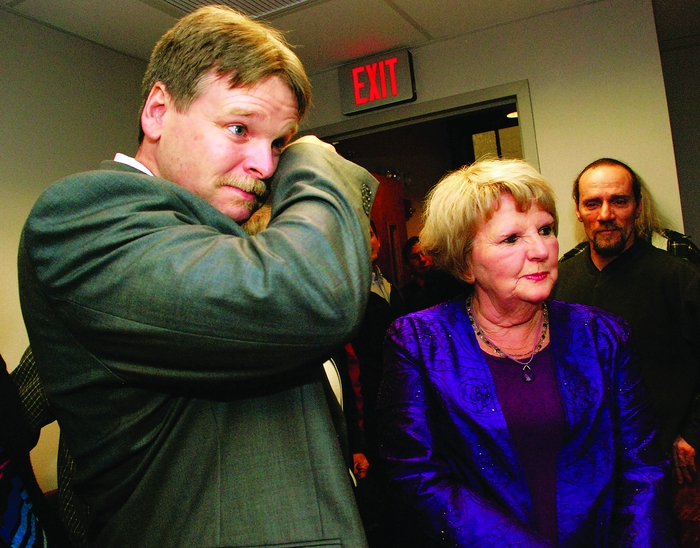 That's what Steven Barnes is fighting for. After over 19 years
in prison, the Innocence Project used DNA technology to prove his wrongful
imprisonment. When he was freed, Barnes said "I didn't know what the Internet
was, what a cell phone was." Bad science had taken a huge portion of his life
from him. But more importantly, good science had given him his life back. Now
Barnes uses his new freedom to speak on behalf of the Innocence Project around
the country. I doubt one could ask for a better reminder of why science done
right is so important. That's what Steven Barnes is fighting for. After over 19 years
in prison, the Innocence Project used DNA technology to prove his wrongful
imprisonment. When he was freed, Barnes said "I didn't know what the Internet
was, what a cell phone was." Bad science had taken a huge portion of his life
from him. But more importantly, good science had given him his life back. Now
Barnes uses his new freedom to speak on behalf of the Innocence Project around
the country. I doubt one could ask for a better reminder of why science done
right is so important.
(<--Barnes goes free. Credit:
Associated Press)
References
Forensic
Science And The Innocence Project - C&EN
| 

 2
2

 Re: Faulty Forensics and the Innocence Project


Good Answers: