|
From Science 2.0:
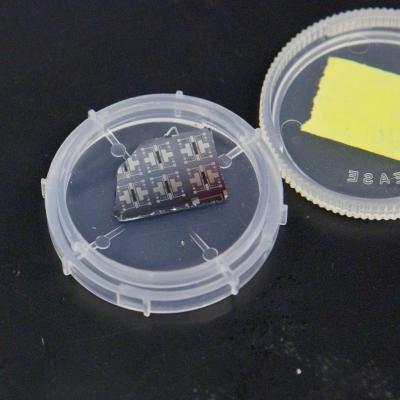 The world's best supercomputers are staggeringly inefficient and
energy-intensive machines and the human brain is staggering in its own
right; putting a brain's information into CDs would require a skyscraper
full of them and, unlike MP3s, there is no way to just create a
compression algorithm. The world's best supercomputers are staggeringly inefficient and
energy-intensive machines and the human brain is staggering in its own
right; putting a brain's information into CDs would require a skyscraper
full of them and, unlike MP3s, there is no way to just create a
compression algorithm.
The 86 billion neurons in our brains are connected by synapses that
not only complete myriad logic circuits, they also they continuously
adapt to stimuli, strengthening some connections while weakening others.
We call that process learning and its rapid, highly efficient
computational processes can't be matched.
But a new type of transistor can mimic the behavior of a synapse. It
simultaneously modulates the flow of information in a circuit and
physically adapts to changing signals and that means the effort to
create artificial intelligence could focus on the very architecture of a
computer rather than smarter algorithms.
The human mind, for all its phenomenal computing power, runs on
roughly 20 Watts of energy (less than a household light bulb), so it
offers a natural model for engineers.
Read the whole article
| 


 Re: Singularity Update: New Transistor Mimics The Behavior Of A Synapse


