|
We spend a lot of time on CR4 talking about pollution. But
it's not just us, it's the entire media, and it has been that way for more than
a decade. So if you're truly sick of hearing/reading/seeing about how damaging
we as a species are to the Earth, perhaps you should click the back button.
But before you do, let me tell you this isn't about ozone
layers, or global warming, or toxic materials storage. This is about a
pollution source that goes ridiculously underreported, and despite its highly
visible presence, researchers are just beginning to understand its effects.
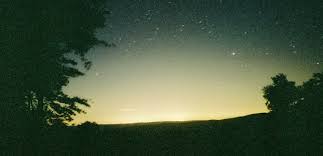 It might be weird to consider light a contaminant, but
that's exactly what it is (artificial light, that is). We all know the cyclic
patterns of the sun are entirely responsible for life on Earth anyway, but
humans' lack of night vision has birthed trillions of incandescent,
fluorescent, high-intensity discharge and LED bulbs since commercial light bulbs
were first available in the late 1870s. It might be weird to consider light a contaminant, but
that's exactly what it is (artificial light, that is). We all know the cyclic
patterns of the sun are entirely responsible for life on Earth anyway, but
humans' lack of night vision has birthed trillions of incandescent,
fluorescent, high-intensity discharge and LED bulbs since commercial light bulbs
were first available in the late 1870s.
Light Pollution
Effects
Of course, not all artificial light sources pollute equally.
Indoor lights are quite necessary. They have provided us with more time to
finish tasks or spend on recreation, and are absolutely necessary in higher latitudes,
when daylight can be reduced to just a few hours per day. There is no telling
how many "cow
kicked over the candle" fires that artificial lighting has spared. Indoor
light is also largely held in check by the building it illuminates.
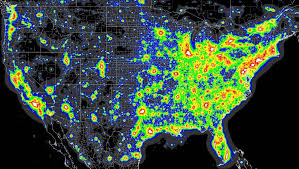 Outdoor lighting receives the most scrutiny when considering
light pollution. First, many overnight lights are left on continuously, and in
an age of resource sustainability this type of energy waste is being carefully
reconsidered. While streetlights may make shady street corners or
backstreets more safe, they're also an enormous energy burden in big and small
cities alike. Also, as energy savings from more efficient lights are realized,
it might prompt engineers to begin placing more lights. Studies have also indicated that excessive
light during nighttime can
lead to headaches, fatigues, stress, sexual dysfunction, anxiety and poor
temperament. Outdoor lighting receives the most scrutiny when considering
light pollution. First, many overnight lights are left on continuously, and in
an age of resource sustainability this type of energy waste is being carefully
reconsidered. While streetlights may make shady street corners or
backstreets more safe, they're also an enormous energy burden in big and small
cities alike. Also, as energy savings from more efficient lights are realized,
it might prompt engineers to begin placing more lights. Studies have also indicated that excessive
light during nighttime can
lead to headaches, fatigues, stress, sexual dysfunction, anxiety and poor
temperament.
Light pollution can also disrupt ecosystems-everything
from diurnal animals, to moths attracted to lights, to birds who are
disoriented by excessive light pollution, and amphibians and reptiles who
function on a "light compass." It also prevents
observation of the night sky by both professional and amateur astronomers,
as light from a single location scatters and impairs viewing conditions even
dozens of miles away.
Solutions? None,
really.
But really, what can we do? Humans never evolved the same
inherent night vision as many other mammals, and therefore developed technology
to combat this inferiority. .
To truly cut back on light pollution, several techniques are
recognized. First, full
cutoff fixtures have been implemented in many cities and towns, sometimes
by ordinance. These lighting devices use a flat lens to ensure all light is
pointed downward, and the light housing reduces extra glare but also minimizes
the light's efficiency. Also, spacing lights appropriately according to their
wattage often results in fewer lights being used overall.

There have been attempts to develop methods that minimize light
trespass using scientific guidelines. Researchers at Rensselaer Polytechnic Institute
have developed software
that allows lighting engineers to quantify the performance of lighting designs
by analyzing glow and trespass, while comparing different lighting alternatives
for the same space. Another system, the Unified
System of Photometry (.pdf), establishes a
measurement of what type of street lights belong where, based on an algorithm
of visibility, energy consumption and security. It commonly recommends
replacing yellow/orange-ish street lights with white 'cool' lighting, which can
reduce power drawn and light pollution without affecting visibility.
The problem with these solutions
is that they only minimize extraneous
light proliferation, and do nothing to ultimately stop light pollution.
Forgive my pun, but light pollution isn't a black-or-white,
day-or-night issue. There is always going to be a need for a competitive
balance between the two. But consider that, as a whole, illumination technology
is still quite immature. There could be a day when engineers are able to
reliably illuminate our nighttime environments without negatively affecting so
many of the ecological processes around us. Until then, personal responsibility
of light pollution is the only real means to moderate light pollution. It's
like the Keep America Beautiful advertising campaign from the 1960s: be
responsible for yourself, because there aren't any other alternatives.
| 


 Re: In[visibile] Pollution


