|
Fred
Pearce's new book on invasive plant species, The New Wild, came out while I was blogging last summer about the
use of native plant species on golf courses. Pearce is a well-respected environmental journalist; the
last thing I expected him to promote is the idea that invasive species aren't
the demons we've made them out to be. What about the damage invasive species
wreak on pristine ecosystems, wiping out the natives and creating a monoculture
of one unkillable plant? I grew up in the Land of Kudzu, so I know first-hand
about unkillable invasive species. It's possible that growing up with kudzu
reduced my tolerance for any plant that takes over a landscape, native or not,
but I digress.
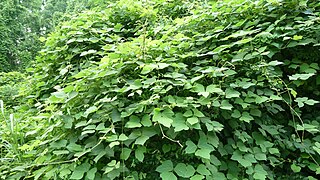
Kudzu (Pueraria lobata)
The language of
invasive/exotic/introduced species
The language used to label a plant as native, exotic,
invasive, or other variations on this theme is poorly defined, inconsistent and
unnecessarily pejorative. The connotation of the word "native" implies that
this is a "good" plant. The connotation of "exotic" is "bad" plant. But aren't
some native plants "bad"? Like ragweed, which is native to the US Southwest and
makes allergy sufferers' lives a misery in the fall. Isn't that a bad plant?
(Ragweed has been introduced to the Old World and has naturalized there.
Perhaps this makes up for garlic mustard.) Or take the various Oriental dogwoods
(Cornus kousa spp.). These lovely
ornamental trees are exotic, yet they don't compete with native species.
It's
important to distinguish between native
species - not introduced by humans --and introduced
species - brought to that location, usually by humans. The next level of distinction is between introduced and invasive. Some introduced species do become invasive: they proliferate and cause environmental or economic harm. Garlic mustard (Alliaria petiolata) is a particular favorite example of mine. But introduced or exotic does not necessarily equate to "bad."
Pearce's argument
I wanted to clarify these linguistic distinctions because
some of Pearce's argument rests on the importance of introduced plants in
preventing further damage to a

biome, such as erosion. He serves up Ascension Island as one of many
examples where non-native species, flora and fauna, colonized a barren
landscape and created a biodiverse community, including a large tropical cloud
forest. Pearce argues essentially that not only was no harm done, actual good
came from the invasion. Did these introduced species cause an ecological
holocaust? Possibly. According to Wikipedia, 25 species of plants were native,
ten endemic, when humans began introducing tropical plants. Now all of these
native plant species are threatened. This image shows the Marattia purpurascens fern, one of the threatened endemic species on Ascension. One presumes that the ecological jury is
still out on this one.
Pearce also points out the difficulty in determining which
species are truly native and which were introduced. Is a plant that grew from a
seed, deposited by a migrating bird a thousand years ago, native or introduced
and how would we know about the bird? Many introduced species thrive without
reducing their hosts to nothing. The author also reminds the reader that we
can't return to Eden - plants and animals are way too mixed-up now - and
characterizes "old school" environmentalists as trying to reestablish pure
native biomes.
Another brick in the edifice of Pearce's argument is a reminder
to read science with a critical mind, whether the subject is invasive-species
damage or the presence or absence of global warming. The author debunks a few
scientific proofs of environmental damage done by exotic species, questioning
data, assumptions, or methodology. I appreciated this reminder; too often
people accept at face value any piece of evidence that supports their own ideas
and opinions without reference to proven hypotheses or common sense.
So what's the upshot?
Fred Pearce asks the same question that I've pondered in the
past few years, as I've grown increasingly interested in using native plant
species for my own adventures in home landscaping. Most states have extensive
lists of plants banned from the commercial nursery trade because they crowd out
native species once they've escaped cultivation. Oriental bittersweet (Celastrus orbiculatus), Japanese
knotweed (Fallopia japonica), and the
multiflora rose (Rosa multifloria)
are a few of the most common culprits. I can't buy these plants even if I
wanted them. Preferable replacements are available. But should I also give up Oriental
dogwoods and tulips?Dahlias and apples? As long as a plant, or an animal, can
stay within boundaries acceptable to humans, and provide value one way or the
other, the planet will probably be all right. Better to spend our energy on
carbon emission reduction.

Cornus kousa chinensis
References
Pearce, Fred. The New Wild: Why Invasive Species Will Be
Nature's Salvation. Boston: Beacon Press, 2015.
https://en.wikipedia.org/wiki/Invasive_species
https://en.wikipedia.org/wiki/Invasion_biology_terminology
https://commons.wikimedia.org/wiki/File:Marattia_purpurascens.jpg
https://commons.wikimedia.org/wiki/Cornus_kousa#/media/File:Cornus_kousa_chinensis_B.jpg
http://www.invasivespeciesinfo.gov/plants/main.shtml
https://en.wikipedia.org/wiki/Ascension_Island
| 

 2
2

 Re: Do these alien plants come in peace?


Good Answers:
"Almost" Good Answers: