|
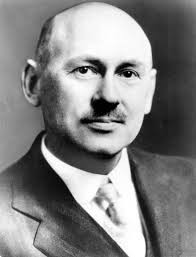 Robert H. Goddard was born in Worcester Massachusetts in 1882. A year later his family moved to Boston, where he would attend elementary school and high school. Goddard attended Worcester Polytechnic Institute and later Clark University. Goddard taught physics at Worcester Polytechnic Institute, Princeton University, and Clark University later in life. Robert H. Goddard was born in Worcester Massachusetts in 1882. A year later his family moved to Boston, where he would attend elementary school and high school. Goddard attended Worcester Polytechnic Institute and later Clark University. Goddard taught physics at Worcester Polytechnic Institute, Princeton University, and Clark University later in life.
Interested in science and rumored to have been inspired by H.G. Wells "War of the Worlds", Goddard developed a life long passion for rockets at an early age. After college Goddard began working on a liquid fuel based rocket. At the time, all rockets were solid fuel powered, often black powder. In 1914 Goddard received two patents, one was for a rocket using liquid fuel and the other was for a two or three stage rocket using solid fuel. In 1918 Goddard developed and demonstrated the basic idea of the bazooka at Aberdeen Proving Ground. A fellow researcher would continue the work to ultimately develop the bazooka used in World War II. In 1919, Goddard wrote a now famous paper on the feasibility of rocket powered flight. In the conclusion he speculated that a powerful rocket would be capable of reaching the moon. Goddard was strongly criticized by the press for this last statement, which was mistakenly believed to be impossible, since in a vacuum there was no air for the rocket to push against.
In 1923 Goddard tested the first rocket engine to use liquid fuel. In 1926 he launched the first liquid fuel rocket, the fuel was a mixture of gasoline and liquid oxygen. The rocket reached an altitude of 40 feet. In 1929, Goddard included a barometer and a camera in a rocket, the first rocket with a scientific payload.
In 1930, Goddard received a grant from Philanthropist Harry Guggenheim for $100,000 dollars. Goddard and his wife Esther moved out to Roswell New Mexico, where the clear dry weather and wide open desert were ideal for testing rockets. Over the next several years, Goddard's rockets grew from 12ft to 18ft in size, reaching altitudes from 2000 ft to 9000 ft. It was during this time in New Mexico Goddard invented vanes in the rocket motor blast for guidance and a gyro control apparatus for flight.
(Continued) Goddard's work anticipated in technical detail the later German V-2 missiles, including gyroscopic control, steering by means of vanes in the jet stream of the rocket motor, gimbalsteering, power driven fuel pumps and other devices. In World War II, Goddard worked in the Navy on the development of practical jet assisted takeoff and liquid propellant rocket motors capable of variable thrust. Goddard died August 10, 1945.
Goddard is generally considered the father of rocket propulsion and NASA's Goddard Space Flight Center in Greenbelt Maryland, established May 1, 1959, was named in his honor.
(Have we forgotten something? Let us know by adding a comment about Robert H. Goddard.)
| 


 Robert H. Goddard


