Previous in Forum: Hydro Testing Strainers/Vessel   Next in Forum: Specific Power, VFD Air Compressor System
Close
Close
Close
27 comments
Rate Comments: Nested
Guru
Safety - Hazmat - New Member United States - US - Statue of Liberty - New Member Engineering Fields - Chemical Engineering - Old Hand

Join Date: Mar 2011
Location: Lubbock, Texas
Posts: 14331
Good Answers: 162

Optimizing an Evaporative Intake Cooler on a Gas Turbine

06/22/2016 5:00 PM

One of the maintenance operators and I are debating as to whether lowering the conductivity set point of an intake cooler (evaporative cooler) produces colder air in the gas turbine intake plenum.

I say that what he thinks he observed was just the decrease in wet bulb temperature as the day wore on and morning humidity dropped from about 85% that morning to about 38% that evening. Ambient temperature was 100 F, and the absolute barometric pressure at our elevation was 26.96 " Hg. Initial water has conductivity of about 1600 μS/cm, while the set point of the controller was 4000. He lowered the set point to 3000, and claims that due to increased water flow, the intake plenum temperature dropped several degrees. I am calling bull shot on that.

The wet bulb temperature is below the water incoming temperature of 77 F.

__________________
If it ain't broke, don't fix it. Just build a better one.
Register to Reply
Interested in this topic? By joining CR4 you can "subscribe" to
this discussion and receive notification when new comments are added.

"Almost" Good Answers:

Check out these comments that don't yet have enough votes to be "official" good answers and, if you agree with them, vote them!
Guru
Technical Fields - Technical Writing - New Member Engineering Fields - Piping Design Engineering - New Member

Join Date: May 2009
Location: Richland, WA, USA
Posts: 21017
Good Answers: 795
#1

Re: Optimizing an evaporative intake cooler on a gas turbine

06/22/2016 5:43 PM

He's full of it. Since the conductivity of 1600 was already below both setpoints, lowering the setpoint had no effect at all.

The decreasing WBT during the day is a fully satisfactory explanation.

__________________
In vino veritas; in cervisia carmen; in aqua E. coli.
Register to Reply
Guru
Safety - Hazmat - New Member United States - US - Statue of Liberty - New Member Engineering Fields - Chemical Engineering - Old Hand

Join Date: Mar 2011
Location: Lubbock, Texas
Posts: 14331
Good Answers: 162
#10
In reply to #1

Re: Optimizing an evaporative intake cooler on a gas turbine

06/23/2016 4:00 PM

Uh, Tornado, when water evaporates, the salts become more concentrated, and the conductivity goes up.

3000 set point just means more blow-down than 4000 set point. I agree he is full of "it".

__________________
If it ain't broke, don't fix it. Just build a better one.
Register to Reply
Guru

Join Date: Jun 2010
Posts: 1296
Good Answers: 104
#2

Re: Optimizing an evaporative intake cooler on a gas turbine

06/22/2016 9:33 PM

Ok, I'm going to reveal my ignorance of these coolers in general and yours specifically. Tornado seems to think the water is once-through, but I'm thinking there is recirculation. Otherwise, there is no conductivity control. I'm assuming the conductivity controller controls a blow-down valve. If so, it stands to reason (as my dad would say) that as you lower the conductivity in the water loop, the blow-down would increase and the make-up flow would increase equally. So yes, if everything else had stayed the same, decreasing the conductivity set-point will cause an increase in make-up water flow, but not in the net water evaporation (make-up minus blow-down).

This wouldn't just happen to be an old-timer guy pulling your chain, would it? We used to have a few who would do stuff like this to the newer of us. They would know what was going to happen and then see if you could reason it out. When I left the company, there were still a couple I wasn't sure if they seriously believed their crapclaim or not.

Register to Reply
Guru
Technical Fields - Technical Writing - New Member Engineering Fields - Piping Design Engineering - New Member

Join Date: May 2009
Location: Richland, WA, USA
Posts: 21017
Good Answers: 795
#6
In reply to #2

Re: Optimizing an evaporative intake cooler on a gas turbine

06/22/2016 11:59 PM

I didn't assume any such thing. I simply noted that the actual 1600 value would not be affected by a setpoint change from 4000 to 3000. Nor would anything about blowdown rate or volume change, either. That renders a few other replies irrelevant as well.

__________________
In vino veritas; in cervisia carmen; in aqua E. coli.
Register to Reply
Guru

Join Date: Mar 2007
Location: by the beach in Florida
Posts: 33392
Good Answers: 1817
#7
In reply to #6

Re: Optimizing an evaporative intake cooler on a gas turbine

06/23/2016 1:31 AM

Well it seems to me you're assuming the conductivity remains the same and doesn't increase over time...If that's the case then what is the purpose of the control?

__________________
All living things seek to control their own destiny....this is the purpose of life
Register to Reply Score 1 for Good Answer
Guru
Technical Fields - Technical Writing - New Member Engineering Fields - Piping Design Engineering - New Member

Join Date: May 2009
Location: Richland, WA, USA
Posts: 21017
Good Answers: 795
#8
In reply to #7

Re: Optimizing an evaporative intake cooler on a gas turbine

06/23/2016 2:11 AM

I'm just repeating the conditions reported by the OP. If the actual conductivity is 1600, then adjustments between 3000 and 4000 do exactly nothing. Furthermore, such adjustments, even if active, would be slow-acting on scale build-up, but not apparent in hourly/daily temperature variations.

__________________
In vino veritas; in cervisia carmen; in aqua E. coli.
Register to Reply
Guru
Safety - Hazmat - New Member United States - US - Statue of Liberty - New Member Engineering Fields - Chemical Engineering - Old Hand

Join Date: Mar 2011
Location: Lubbock, Texas
Posts: 14331
Good Answers: 162
#14
In reply to #8

Re: Optimizing an evaporative intake cooler on a gas turbine

06/23/2016 4:09 PM

1600 is the make up conductivity (city water), not the system conductivity, which runs up to the set point, then over it, until blow-down catches up, if it does.

__________________
If it ain't broke, don't fix it. Just build a better one.
Register to Reply
Guru
Safety - Hazmat - New Member United States - US - Statue of Liberty - New Member Engineering Fields - Chemical Engineering - Old Hand

Join Date: Mar 2011
Location: Lubbock, Texas
Posts: 14331
Good Answers: 162
#11
In reply to #2

Re: Optimizing an evaporative intake cooler on a gas turbine

06/23/2016 4:02 PM

He is old timer and cowboy, but I am older, just less cowboy. You are correct in circulation aspects.

When I start in explaining psychrometric data, charts, and calculators (such the one on National Weather Service web site), his eyes sort of glaze, and he "zones" out on me.

__________________
If it ain't broke, don't fix it. Just build a better one.
Register to Reply
Guru
Engineering Fields - Electrical Engineering - Been there, done that. Engineering Fields - Control Engineering - New Member

Join Date: Dec 2008
Location: Long Island NY
Posts: 15601
Good Answers: 981
#3

Re: Optimizing an evaporative intake cooler on a gas turbine

06/22/2016 10:04 PM

I have no idea what you are talking about but I offer a mantra to solve your dilemma.

Data trumps theory every time!!!

Agree on additional data to be taken (e.g. outside air temperature and humidity) to normalize the result from external influences. Adjust your set points for each condition and take data. Analyze the data to verify that each experiment had sufficient time to determine an equilibrium and compare.

If you need managerial approval to perform these experiments, find an additional set of economic attributes (fuel efficiency, peak performance, lubricant breakdown or other maintenance attribute, etc.) to offer a plausible cost savings from the results.

__________________
"Don't disturb my circles." translation of Archimedes last words
Register to Reply
Guru
Safety - Hazmat - New Member United States - US - Statue of Liberty - New Member Engineering Fields - Chemical Engineering - Old Hand

Join Date: Mar 2011
Location: Lubbock, Texas
Posts: 14331
Good Answers: 162
#12
In reply to #3

Re: Optimizing an evaporative intake cooler on a gas turbine

06/23/2016 4:05 PM

And he also needs to start recording the water meter readings daily to track extra water consumption and cost, since part of my wager is that he is spending money our company does not have to waste. I have two other plants to watch besides this one 15 MW unit, so I am already covered up with our former base load plants operating in peak mode now, start-up 10 am to 11 am, shut down some time in the night when outside cools off, and everyone goes to bed.

__________________
If it ain't broke, don't fix it. Just build a better one.
Register to Reply
Guru

Join Date: Mar 2007
Location: by the beach in Florida
Posts: 33392
Good Answers: 1817
#4

Re: Optimizing an evaporative intake cooler on a gas turbine

06/22/2016 10:23 PM

It seems to me over time this could be true, a lower setpoint would increase blowdown frequency decreasing scaling and increasing efficiency....certainly the lowering humidity would increase the rate of evaporation increasing the efficiency as well, and in a timeframe that was observed...and you both could be right with a non-defined timeframe....

__________________
All living things seek to control their own destiny....this is the purpose of life
Register to Reply
Guru
Safety - Hazmat - New Member United States - US - Statue of Liberty - New Member Engineering Fields - Chemical Engineering - Old Hand

Join Date: Mar 2011
Location: Lubbock, Texas
Posts: 14331
Good Answers: 162
#16
In reply to #4

Re: Optimizing an evaporative intake cooler on a gas turbine

06/23/2016 4:14 PM

He (the cowboy) was basing his observation on a bad example, when some goober (me?) closed the master bleed valve leading to our dump basin (big cooling tower basin not in service). Sure that day, the weather was not all that hot, but humidity was over 90% in the morning, and only dropped to about 60% that afternoon. When the valve (blow-down master) was opened, the system dumped nearly all the initial water and replaced with fresh city water, dissolved a lot of salt deposits from around the edges, and got the fill working better once again. Not a good time was had by all that day.

__________________
If it ain't broke, don't fix it. Just build a better one.
Register to Reply
Guru
Engineering Fields - Power Engineering - New Member

Join Date: May 2007
Location: NYC metropolitan area.
Posts: 3230
Good Answers: 444
#5

Re: Optimizing an evaporative intake cooler on a gas turbine

06/22/2016 11:32 PM

Here's what GE and the Feds have to say about it. Looks like increasing the blowdown rate will reduce the potential fouling and incrementally increase the evaporation rate thereby decreasing the inlet temperature (when conditions allow).

__________________
“Tell me and I forget. Teach me and I remember. Involve me and I learn.” Ben Franklin.
Register to Reply
Guru
Safety - Hazmat - New Member United States - US - Statue of Liberty - New Member Engineering Fields - Chemical Engineering - Old Hand

Join Date: Mar 2011
Location: Lubbock, Texas
Posts: 14331
Good Answers: 162
#13
In reply to #5

Re: Optimizing an evaporative intake cooler on a gas turbine

06/23/2016 4:07 PM

Yes, except this is a chlorinated water source at about 0.5 free chlorine ppm, and about 3 ppm total chlorine (chloramine mostly). My experience on this water clearly indicates next to nothing for fouling potential from aerobic bacterial colonization on similar intake coolers we have, even ones that have a lot more R.O. water feed than city water feed.

__________________
If it ain't broke, don't fix it. Just build a better one.
Register to Reply
Power-User

Join Date: Nov 2015
Posts: 335
#9

Re: Optimizing an evaporative intake cooler on a gas turbine

06/23/2016 2:56 AM

Do you need some R statistics on that, buddy?

__________________
"And ye shall seek me, and find me, when ye shall search for me with all your heart."
Register to Reply Score 2 for Off Topic
Guru
Safety - Hazmat - New Member United States - US - Statue of Liberty - New Member Engineering Fields - Chemical Engineering - Old Hand

Join Date: Mar 2011
Location: Lubbock, Texas
Posts: 14331
Good Answers: 162
#15
In reply to #9

Re: Optimizing an evaporative intake cooler on a gas turbine

06/23/2016 4:11 PM

No, just need to give these guys a daily forecast of what WET BULB temperature will be at 10 am, and again at 15:00-16:00. Then tell them add 2-3 degrees F to that temperature, and that will be the gas turbine intake plenum temperature operating.

__________________
If it ain't broke, don't fix it. Just build a better one.
Register to Reply
Power-User

Join Date: Sep 2015
Posts: 175
Good Answers: 12
#20
In reply to #15

Re: Optimizing an evaporative intake cooler on a gas turbine

06/24/2016 1:39 PM

So, there is a disconnect in logic by the maintainers about the meaning of relative humidity, wet bulb temps vs dry bulb temps, and how evaporative coolers work......that they work on.

That's a lot like a problem I was given to solve, at a company I worked for located on the Gulf of Mexico......

Problem: Guys on a loading line were getting too hot. Cause: They had to load warm metal sheets (stop sign blanks, etc.) up onto an overhead conveyor. Thousands of pounds of them, all day long. The conveyor took the sheets through a process line that cleaned them, then sprayed them with chromate conversion, then hot air dried them. Then, other workers had to unload them off the conveyor and stack them on pallets.

My job was to figure out how to keep them cool, since none of the other process variables were, ...variable.

Plant Manager said to just buy some "Port-a-Cool" evaporative fans. That's all he would buy, that's all I needed. Period. Problem solved.

Bought them. Hooked up the water to them. Installed them. Turned them on. .......and waited.

Problem: Guys on loading line were getting too hot. Still.

Now, we're back to your discussion. Dry bulb vs. wet bulb temps. Dry bulb temp was 93 deg F; wet bulb temp was 91 deg F.

Made my pitch to CEO and Plant Manager on how to solve the problem. They didn't like it. They knew better how to solve the problem.......So, they made me hook up high pressure (3000 psi) water misters on the outlet of Port-a-Cool fans.

Problem: Guys on loading line were getting too hot...even hotter now....

CEO and Plant Manager just didn't understand how it could have gotten worse. The guys were sweating like crazy, hotter than ever.

Some folks just don't get it, no matter the facts or how you present them.

__________________
Invention is the mother of necessity.......there are always opportunities for improvement!!
Register to Reply Score 1 for Off Topic
Guru
Safety - Hazmat - New Member United States - US - Statue of Liberty - New Member Engineering Fields - Chemical Engineering - Old Hand

Join Date: Mar 2011
Location: Lubbock, Texas
Posts: 14331
Good Answers: 162
#22
In reply to #20

Re: Optimizing an evaporative intake cooler on a gas turbine

06/25/2016 12:39 PM

One can lead a horse to water (or an evaporative cooler), but when the humidity is high, the humility is even higher!

Bees especially are more aggressive in hot, high humidity weather. That is not the time to be found working the supers.

In your example, they would have need a chiller plant, and then hook the guys up to jackets with cold water running through tubing in the jackets., but to attempt space cooling in the environment you described would cost way too much, and might throw the process off temperature limits.

Another way, would have been to have an extra large (about double the number of workers), and run them in and out of the "game" to a cooling area. OR dehumidify the air being blown across the workers, now that would allow their sweating to be effective in cooling them, and also provide them lots re-hydration.

__________________
If it ain't broke, don't fix it. Just build a better one.
Register to Reply
Power-User

Join Date: Sep 2015
Posts: 175
Good Answers: 12
#24
In reply to #22

Re: Optimizing an evaporative intake cooler on a gas turbine

06/29/2016 4:55 PM

As the corporate EHS manager......and corporate Staff Engineer, I had some conflicts of interest to solve.

This whole situation became mine when one of the workers nearly collapsed, and had to be escorted into the air-conditioned break room one morning. He had overheated; and was one of the best line workers.

CEO didn't want to afford pouring bodies on the problem. It was cost prohibitive to hire twice the manpower to rotate workers to allow for the OSHA-mandated cooling period under the heat/humidity/work load environment.

We couldn't immediately redesign and re-equip the entire process.

I did redesign the entire process, making it highly automated, including automatic coil feed, automatic press die change-outs, automatic stacking/palletizing, and redesigned the entire chromate conversion/metal cleaning line. But, that was installed 3 years later.

The easiest, and by far cheapest was to allow each worker his own personal "cool spot", where he would stand in between loads/unloads of the overhead conveyor:

One of these was provided to each of 3 workers; each had his own cool air downspout. This solution turned out to be far cheaper and more effective than anything else. And, the solution was in place the next day. We rented these for 30 days, afterward we purchased our own. They came in handy later that summer when the a/c died in the corporate office area.

__________________
Invention is the mother of necessity.......there are always opportunities for improvement!!
Register to Reply
Guru
Safety - Hazmat - New Member United States - US - Statue of Liberty - New Member Engineering Fields - Chemical Engineering - Old Hand

Join Date: Mar 2011
Location: Lubbock, Texas
Posts: 14331
Good Answers: 162
#25
In reply to #24

Re: Optimizing an evaporative intake cooler on a gas turbine

06/30/2016 10:56 AM

So then corporate took them away from the workers, and put them in the cubicle arena?

__________________
If it ain't broke, don't fix it. Just build a better one.
Register to Reply
Power-User

Join Date: Sep 2015
Posts: 175
Good Answers: 12
#26
In reply to #25

Re: Optimizing an evaporative intake cooler on a gas turbine

06/30/2016 2:41 PM

No. At the time the a/c went out, we still had 2 rental units and the newly purchased units. Rentals went to the office folks.

__________________
Invention is the mother of necessity.......there are always opportunities for improvement!!
Register to Reply
Guru

Join Date: Mar 2007
Location: by the beach in Florida
Posts: 33392
Good Answers: 1817
#23
In reply to #20

Re: Optimizing an evaporative intake cooler on a gas turbine

06/29/2016 3:18 PM

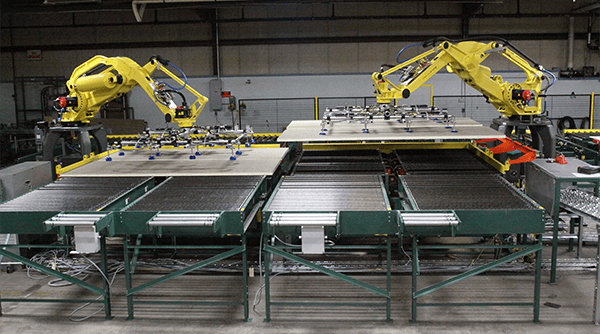
What you need are some robots for this work....

Then the workers just need to monitor and maintain the equipment...

__________________
All living things seek to control their own destiny....this is the purpose of life
Register to Reply Score 1 for Good Answer
Guru

Join Date: May 2016
Posts: 1746
Good Answers: 87
#17

Re: Optimizing an Evaporative Intake Cooler on a Gas Turbine

06/24/2016 10:42 AM

Does the swamp cooler have a pump to draw water up onto a fabric or to a spray nozzle?

If so, the cooling mechanism has two components. One is to warm the water to ambient, similar to a radiator type spot cooler. The second is to evaporate the water. If there is a change in in temperature in the sump of the swamp cooler, then the radiator spot cooler effect will also change. With specific heats and flow rates you should be able to calculate each effect and see what the flow rate contribution would be. Water inflow at 77 degrees compared to a 100 degree ambient is not necessarily negligible.

Register to Reply
Guru
Safety - Hazmat - New Member United States - US - Statue of Liberty - New Member Engineering Fields - Chemical Engineering - Old Hand

Join Date: Mar 2011
Location: Lubbock, Texas
Posts: 14331
Good Answers: 162
#18
In reply to #17

Re: Optimizing an Evaporative Intake Cooler on a Gas Turbine

06/24/2016 11:19 AM

To answer your question

  1. There is a circulation pump and evaporating media the water cascades down over.
  2. The heat capacity of air and the heat capacity of the water are not the dominant factors until ambient (outside) humidity approached 90-100%. Even then, the air will cool down to wet bulb temperature plus a few degrees (on the assumption that there is sufficient evaporation available before the air saturates with moisture at the system approach temperature.
  3. The water in the basin even when sitting idle never approaches the outside temperature completely, especially at the time of day early enough that peak ambient temperature has not been reached.
  4. To achieve most or all of the cooling (or really even see a difference) from bringing in fresh water only (assuming little or no evaporation), would require a vastly larger flow rate of incoming water, essentially making the sumps into a once through system, which is not the intended purpose or recommended operating range.
__________________
If it ain't broke, don't fix it. Just build a better one.
Register to Reply
Guru

Join Date: May 2016
Posts: 1746
Good Answers: 87
#19
In reply to #18

Re: Optimizing an Evaporative Intake Cooler on a Gas Turbine

06/24/2016 11:27 AM

I agree that the main effect is achieved from the evaporation. My only question is what the temperature of the sump is at the two flow rates and what percent cooling is from specific heat and delta T effects.

I assume you want lowest intake temp for best air density and highest humidity for hydrogen dissociation boost.

Register to Reply
Guru
Safety - Hazmat - New Member United States - US - Statue of Liberty - New Member Engineering Fields - Chemical Engineering - Old Hand

Join Date: Mar 2011
Location: Lubbock, Texas
Posts: 14331
Good Answers: 162
#21
In reply to #19

Re: Optimizing an Evaporative Intake Cooler on a Gas Turbine

06/25/2016 12:34 PM

Here is my final thought on it:

Suppose the blow-down is blocked, and there is some asymptotic approach to maximum achievable total dissolved solids content for the particular cooler in question given a more or less constant carry-over rating (mists containing dissolved salts carried out of the fill/wetted area, and into air filters (pretty a fairly heavy solids load on the filters). I have seen up to 17 mS/cm (milli, not micro), when the incoming water is about 1.5 mS/cm, thus a concentrating factor of at least 10 would be expected in detailed analysis. High number is not normal operation, just operator error.

The hardness ions would drop out first in zones that are wet/dry, or just over saturation. Once the fill becomes clogged, cooling efficiency should plummet.

In such a case, or following that, I can see where lowering the blow-down set point would help re-dissolve any at least partially soluble salts (sodium sulfate, sodium chloride), but the hardness minerals will not just magically pop off, since with silicate mineral included, these are highly irreversible.

Perhaps some cleaning of fill media takes place, and better distributed contact between air and water can once again take place.

Water incoming at 77 °F, is hotter than the sump temperature when the wet bulb is up to about 67 °F. That is just the true nature of evaporation. Water vapor pressure is a function of the water temperature, not the other way around.

__________________
If it ain't broke, don't fix it. Just build a better one.
Register to Reply
Guru

Join Date: May 2016
Posts: 1746
Good Answers: 87
#27

Re: Optimizing an Evaporative Intake Cooler on a Gas Turbine

07/01/2016 11:55 AM

Have you looked at coolvests?

I used to work in a nuclear plant and when temp and humidity were high we sent in the workers in full anticontamination clothing, including rubber rainsuits with coolvests. The coolvest looked like a standard safety vest, but had pockets all over it. You put frozen packets in the pockets and the workers stayed nice and cool for a few hours. If needed they could leave the area, suit out and change the packets as needed. The packets cycled back to the freezer so there was always a full set frozen and ready to go.

It's a cost effective way to keep people well away from heat exhaustion.

Register to Reply
Register to Reply 27 comments

"Almost" Good Answers:

Check out these comments that don't yet have enough votes to be "official" good answers and, if you agree with them, vote them!
Copy to Clipboard

Users who posted comments:

bigg (1); James Stewart (11); Jpfalt (3); Mr. small (1); RAMConsult (1); redfred (1); SolarEagle (3); Tornado (3); wolfie62 (3)

Previous in Forum: Hydro Testing Strainers/Vessel   Next in Forum: Specific Power, VFD Air Compressor System

Advertisement