Previous in Forum: Which Toggle Switch Would You Choose?   Next in Forum: Disassembly of AC Single Phase Motor 1/2 HP
Close
Close
Close
9 comments
Rate Comments: Nested
Anonymous Poster #1

Solar Inverter

08/10/2016 2:34 PM

What is bidirectional Inverter in Solar PV sytem? As I understand if the sun is out and if the PV generates voltage, it charges the batteries and during winter when there is no radiance if AC supply is connected to the Inverter, it charges the batteries? Is it right?

Reply
Interested in this topic? By joining CR4 you can "subscribe" to
this discussion and receive notification when new comments are added.

Good Answers:

These comments received enough positive votes to make them "good answers".
2
Guru

Join Date: Mar 2007
Location: by the beach in Florida
Posts: 33392
Good Answers: 1817
#1

Re: Solar Inverter

08/10/2016 2:56 PM

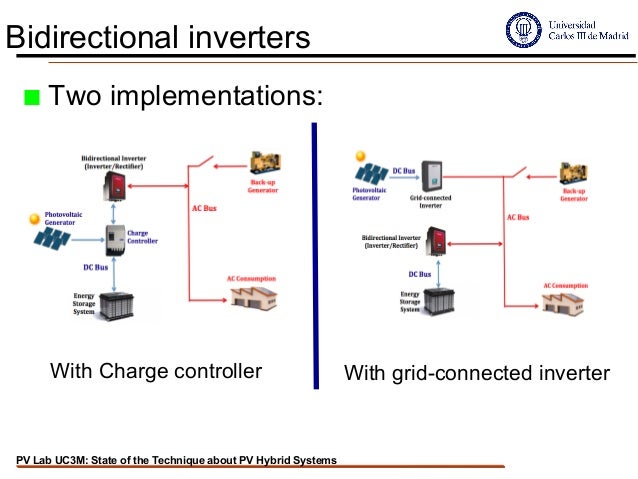
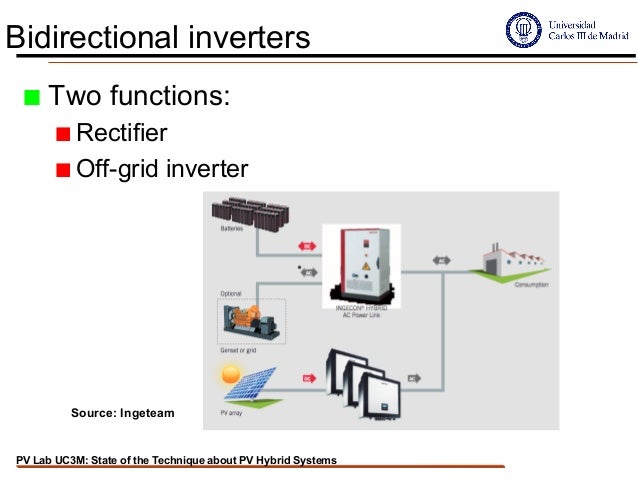
It can either feed charge to battery bank from grid or feed voltage to the grid from generation source(usually pv or wind)......

http://www.slideshare.net/VicenteSalas/pv-hybrid-systems-state-technique

Can be used in peak shaving...where cheaper energy is saved and then used during peak load times...

https://www.ti.com/corp/docs/landing/universityprogram/arkansas.pdf

__________________
All living things seek to control their own destiny....this is the purpose of life
Reply Good Answer (Score 2)
Guru
Safety - Hazmat - New Member United States - US - Statue of Liberty - New Member Engineering Fields - Chemical Engineering - Old Hand

Join Date: Mar 2011
Location: Lubbock, Texas
Posts: 14331
Good Answers: 162
#2
In reply to #1

Re: Solar Inverter

08/10/2016 4:12 PM

Yes that is what they are, and a good job illustrating how they fit into a hybrid system.

__________________
If it ain't broke, don't fix it. Just build a better one.
Reply
Anonymous Poster #1
#3
In reply to #1

Re: Solar Inverter

08/10/2016 9:53 PM

Solar Eagle,

Thanks! Can I use the AC source (from the utility commercial supply) to the bidirectional Inverter as AC Input, the main purpose of which would be charge the solar batteries and feed power supply to the critical loads in the absence of sunlight?

My concern is if there would be any problem when the PV generates more power and starts feeding it to the utility supply. If so what are the protections I should have?

Reply
Anonymous Poster #1
#4
In reply to #3

Re: Solar Inverter

08/11/2016 10:12 AM

I tried t o switch off the array Input to the inverert and the grid input (utility supply) do not act to give the output supply. what could be the reason?

Reply
Guru

Join Date: Jul 2016
Posts: 1368
Good Answers: 105
#6
In reply to #4

Re: Solar Inverter

08/11/2016 10:32 AM

The inverter converts your dc supply from the array to ac, or your dc supply from the batteries:

1. to use in your facility,

2. to send excess dc supply to the grid, in ac form, as long as you have a connection to the utility to ensure synchronism.

3. If you are on battery power, typically no power is sent to the grid, battery sourced power should be more expensive than grid power, when you consider your investment and wear & tear on batteries.

4. The utility (ac) or your solar array (dc) will charge the batteries usually directly, using rectifiers and steering /blocking diodes and a charge control circuit, to keep the batteries healthy. Separate equipment from inverter, converts ac to dc, for battery.

An inefficient method could be to invert the solar array power to ac, and then feed it to the ac input of the battery charger to keep the batteries charged. A wasteful double conversion of your expensive solar power collectors.

Reply
Guru

Join Date: Mar 2007
Location: by the beach in Florida
Posts: 33392
Good Answers: 1817
#7
In reply to #4

Re: Solar Inverter

08/11/2016 12:49 PM

Can you show us your wiring diagram? The wiring details should be included with the inverter via supplier, and installation should be done by a qualified technician....Your inverter is made to work with a system, the components and wiring instructions vary from product to product...

...as an example...

http://www.sysconpune.com/solar-power-system-and-inverters.html

__________________
All living things seek to control their own destiny....this is the purpose of life
Reply
Anonymous Poster #1
#9
In reply to #7

Re: Solar Inverter

08/13/2016 12:08 PM

Solar Eagle,

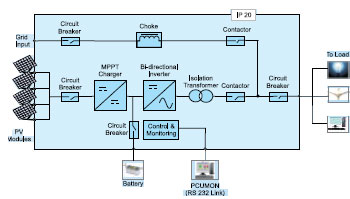
The Inverter works fine when there is sunlight, but when the sunlight is not available, the batteries could not take over. when I tried to switch off the array input, the batteries could not supply power to the loads and the Inverter trips on battery low input, but in actual the batteries are fully charged.

I tried to measure the voltage of batteries at the Inverter terminals when I switch off the array input breaker, the battery voltage drops to almost half of the nominal battery voltage. At this point I switched off the battery breaker at the Inverter side and the battery voltage again comes to nominal voltage.

I suppose there's something wrong in the Inverter circuit. What are the possible reasons for this behaviour of Inverter?

Shown below is my Inverter circuit.

Reply
Guru

Join Date: Nov 2010
Location: Virginia, Georgia, Idaho
Posts: 1079
Good Answers: 30
#5
In reply to #3

Re: Solar Inverter

08/11/2016 10:13 AM

That is net metering utilizing a grid tied connection, typically made in a panel with the same current protected device used to power the circuits. While this current protection device was not originally intended for this use (either line or load) it is the industry standard. There are many other connectivity schemes you can use that are also allowed by the code, but I am guessing that you are focusing on a small service.

There are labeling, utility permission and registration requirements, and of course, permit and design requirements. Any inverter that is suitable will have a UL1703 designation, along with extensive installation information. If you are interested and capable, you should read them. Outback makes very good single box equipment that will do this. SMA has equipment that will do this, but requires an assembly of units.

__________________
PFR Pressure busts pipes. Maybe you need better pipes.
Reply
Guru

Join Date: Nov 2010
Location: Virginia, Georgia, Idaho
Posts: 1079
Good Answers: 30
#8
In reply to #5

Re: Solar Inverter

08/11/2016 1:42 PM

I forgot to add that the bidirectional requirement (battery back up) will limit equipment configuration and selection criteria, as well as design for storage capacity and charging and discharging (c Rate) capability. There is a solid design movement in these types of systems to use a direct high voltage DC charge controller (1000 V) for output of solar PV, with very efficient stringing options of the PV direct to battery bank. You then need to program your inverter to sell to a SOC limit (only sell when SOC is >90%). This topology has some very interesting advantages.

There are a lot of moving design target requirements if you want the system to perform to your expectations. My experience tells me that the best outcome will occur when you first determine average rate of discharge (watts), maximum rate of discharge (amps), desired recharge autonomy in days or solar cycles including solar insolation probabilities, depth of discharge and type of storage bank which will impact life of system, and a few other parameters. Don't pick any equipment until you have completely designed the system. We get stuck all the time with people who say I want this battery bank and this solar array to do this, whenever I ask it to. I want to never buy food again, so I will plant a garden. It might work.

__________________
PFR Pressure busts pipes. Maybe you need better pipes.
Reply
Reply to Forum Thread 9 comments

Good Answers:

These comments received enough positive votes to make them "good answers".
Copy to Clipboard

Users who posted comments:

Anonymous Poster (3); James Stewart (1); PFR (2); rwilliams (1); SolarEagle (2)

Previous in Forum: Which Toggle Switch Would You Choose?   Next in Forum: Disassembly of AC Single Phase Motor 1/2 HP

Advertisement