Previous in Forum: Vacuum Tube Computer Module   Next in Forum: 1/3 in Symmetrical Components
Close
Close
Close
16 comments
Rate Comments: Nested
Associate

Join Date: Jan 2015
Posts: 43

L-ion Cell Configuration

11/15/2016 10:07 AM

Hi fellows. It is a credo of mine not to throw the good out with the bad. L-ion is now ubiquitous but modular cells mean a bad battery often has 1 or > good cells. I would like to save these but not sure how bigger ones are configured. See attached pic. Adjacent terminals are seemingly +\- yet don't seem to behave as if link joined adjacent cells in series since these links are tapped and read individually by control module. Can anyone pls. help me with a bit of explanation Thanks! Sorry, couldn't upload the pic.

Register to Reply
Pathfinder Tags: battery L-ion
Interested in this topic? By joining CR4 you can "subscribe" to
this discussion and receive notification when new comments are added.

Good Answers:

These comments received enough positive votes to make them "good answers".

"Almost" Good Answers:

Check out these comments that don't yet have enough votes to be "official" good answers and, if you agree with them, vote them!
Guru
Hobbies - Musician - Engineering Fields - Chemical Engineering - New Member Engineering Fields - Control Engineering - New Member Engineering Fields - Instrumentation Engineering - New Member

Join Date: Jan 2007
Location: Moses Lake, WA, USA, Thulcandra - The Silent Planet (C.S. Lewis)
Posts: 4216
Good Answers: 194
#1

Re: L-ion cell configuration

11/15/2016 10:30 AM

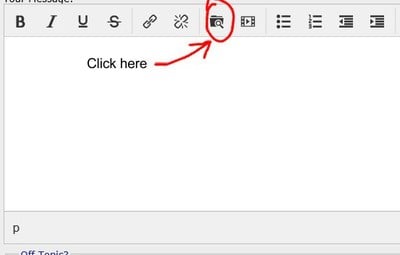
To attach a picture, click the camera icon:

__________________
"Reason is not automatic. Those who deny it cannot be conquered by it. Do not count on them. Leave them alone." - Ayn Rand
Register to Reply Score 1 for Good Answer
Associate

Join Date: Jan 2015
Posts: 43
#7
In reply to #1

Re: L-ion cell configuration

11/16/2016 12:29 AM

Thanks, but I did that expecting the file to transfer but although the path registered, when I clicked'Ok' nothing happened. I appreciate your reply though

Register to Reply Off Topic (Score 5)
Guru

Join Date: Mar 2007
Location: by the beach in Florida
Posts: 33392
Good Answers: 1817
#13
In reply to #7

Re: L-ion cell configuration

11/16/2016 10:32 AM

Probably wrong file type, try jpg...just re-save your file as a jpg in pictures

__________________
All living things seek to control their own destiny....this is the purpose of life
Register to Reply Off Topic (Score 5)
Guru

Join Date: Apr 2010
Location: About 4000 miles from the center of the earth (+/-100 mi)
Posts: 9910
Good Answers: 1141
#2

Re: L-ion cell configuration

11/15/2016 10:57 AM

Unless you know what you are doing, it might not be a good idea to try to replace individual cells. As you probably know, lithium ion batteries can overheat if not charged properly, and if damaged, can catch fire.

Li-Ion chargers monitor temperature of each cell as well as voltage and current, and temperature monitoring requires a physical (thermal) contact with the cells.

I would strongly recommend reading up on Li-Ion charging.

http://www.homemade-circuits.com/2013/03/simplest-safest-li-ion-battery-charger.html

http://www.nxp.com/files/microcontrollers/doc/ref_manual/DRM043.pdf

Register to Reply Score 1 for Good Answer
Guru
Canada - Member - If there is a way to screw someting up, there is someone to do so! Safety - Hazmat - New Member

Join Date: Mar 2007
Location: Iqaluit, NU. Canada
Posts: 1854
Good Answers: 140
#3

Re: L-ion cell configuration

11/15/2016 10:58 AM

I would advise caution. The battery chemistry of lithium ion being what it is, these cells are prone to all sorts of real nasty reactions when exposed to charging routines that are not just "right" and to discharge cycles that may also be not quite "right".

Mixing and matching cells together to form a new battery... may just be the impetus for a tragedy.

__________________
Joe Contractor to Electrical Inspector, "What do you mean you are going to make me follow the code?".
Register to Reply
Guru

Join Date: Mar 2011
Location: Sebastopol, California
Posts: 1205
Good Answers: 54
#5
In reply to #3

Re: L-ion cell configuration

11/15/2016 10:35 PM

I'll second that. I store my Li-x batteries in a steel ammo box. They are fine when half charged for storage, but anything over OR under the proper voltage and they come apart...sometimes violently.

__________________
Most people are mostly good most of the time.
Register to Reply
Guru

Join Date: Mar 2007
Location: by the beach in Florida
Posts: 33392
Good Answers: 1817
#4

Re: L-ion cell configuration

11/15/2016 11:09 AM
__________________
All living things seek to control their own destiny....this is the purpose of life
Register to Reply
Guru

Join Date: Mar 2011
Location: Sebastopol, California
Posts: 1205
Good Answers: 54
#6
In reply to #4

Re: L-ion cell configuration

11/15/2016 10:40 PM

I have some experience with this. DO NOT SOLDER! Spot weld the tabs only. It's the only way to attach the nickel strips without overheating the negative terminal of the LiIon battery. I made a simple spot welder for this from a microwave oven transformer and a variac. Works like a charm and I can upgrade the cells in my Ryobi 18v batteries with 10000maH LiIon 18650s.

__________________
Most people are mostly good most of the time.
Register to Reply
Associate

Join Date: Jan 2015
Posts: 43
#9
In reply to #6

Re: L-ion cell configuration

11/16/2016 12:43 AM

Cool!! Of course just as with NICAD packs, tabs are usually spot welded at the factory. However, on this particular pack low temp solder for PC work is used. Cheers!

Register to Reply
Guru

Join Date: Oct 2014
Location: Hemet, Land of milk and honey.
Posts: 2365
Good Answers: 36
#11
In reply to #6

Re: L-ion cell configuration

11/16/2016 8:45 AM

A spot welder from a microwave oven. Can you provide a picture, technical details and a schematic of your creation ? This necessity is the mother of invention, could be the start of a new blog.

Register to Reply
Guru

Join Date: Mar 2011
Location: Sebastopol, California
Posts: 1205
Good Answers: 54
#14
In reply to #11

Re: L-ion cell configuration

11/16/2016 3:29 PM

I can give you a description.

The Transformer is opened up by carefully cutting away the fine wire high voltage windings and the 5v winding leaving the primary 120v winding in place. Then wrapping about 6 turns of #8 stranded and insulated wire through the opening to create a high current low voltage secondary. (I used the 8gauge cable from a 220v double oven for mine, but cheap jumper cables will work too). The more turns, the higher the voltage and less current. Mine can push 300A at 6.5vAC for about 5sec before it starts to heat up. That's enough to spot weld two quarters together!

Terminate the ends of the secondary with copper lugs and attach whatever cables and probes you want to those lugs for the welding end of the device. (I used 3/8" copper pipe and ground the ends at an angle to make probes and soldered them on the wire. Then I cut the heads off of a couple of hard concrete nails and crimped them into the cut probe end of the copper probe. Solder it in and viola! sharp spot probes)

The primary is wired through a foot switch and then to the output of the variac. (auto transformer for testing TVs and the like). The variac is used to dial up or down the voltage supplied to the transformer you just rewound.

Turn on the Variac and set it to 0, plug in the welder, make sure the probes aren't touching each other or anything else, dial up a bit of voltage, set your probes where you want to make your spots, and step on the switch. Turn it up if it ain't welding and try again.

That's it in a nut shell. I clamped my probes together with wood and insulated screws so the probe tips are close but not touching. The gap is about 1/8" and that is fine for spotting two spots at once on a 18650 battery.

__________________
Most people are mostly good most of the time.
Register to Reply
Associate

Join Date: Jan 2015
Posts: 43
#8
In reply to #4

Re: L-ion cell configuration

11/16/2016 12:35 AM

Yeah, this style is familiar and ,obviously ,fundamentally like mine. However, the form is quite different. Thanks for that "shot".

Register to Reply
3
Guru

Join Date: Jun 2009
Location: South of Minot North Dakota
Posts: 8376
Good Answers: 775
#10

Re: L-ion Cell Configuration

11/16/2016 8:17 AM

Unfortunately you're not throwing good cells out with the bad. You're throwing near dead cells out with the bad.

Think about it for a bit.

In a battery pack all the cells see the exact same charge and discharge currents and cycle times and it's only the tiny internal variations between cells from when they were manufactured that determines which ones give up life first and given the tolerances in design and manufacture you may at best have a +-5% variance from the dead cell to the best cell in a worn out battery pack.

Believe me as someone who literally has dozens of cordless tools I have tried and tried to take the remaining good cells out of worn out batteries and build good ones from them and they never ever worked for very long because all I was doing was building batteries out of cells that were already at the 95+% used up point in their life.

I'd build a battery out of the still functional cells from multiple batteries only to have a rebuilt battery that lasted maybe 3 - 10 more cycles before one or more cells went bad again and so on and so on.

For the time and work involved in taking multiple battery packs apart and testing every single cell to find which ones were still capable of holding any usable charge for any workable period of time then putting them together to make another battery pack it was not worth the fuss for what dismally small remaining life I got for my work.

Simply put, just because you take the still functional cells from a bad battery and put them into making another battery you are not resting their life clock back to zero. All you're doing is building a battery that has a few percent more life left in it than the one you took apart.

Now for me when a battery pack goes bad I just toss the guts in the garbage and rebuild it with all brand new high capacity commercial cells and be done with it.

Believe me there is a world of difference in tool function and operation going from a rebuilt battery pack that's made from factory stock cells that only have a few percent of their working life left in them to one rebuilt with brand new high capacity commercial aftermarket cells that have double or more the AH and C ratings.

The majority of my tools are Craftsman 19.2 volt and Craftsmen has absolute sh!t cells in their batteries. Pretty much all of their Nicad batteries are 1400 - 1600 mAh with a designed service life to get them just past their 1 year warranty under normal hobbyist/weekend project use.

The cells I have been replacing them with for the last few years noware the Tenergy 3000+mAh high C rate NiMH units from here. All-battery.com ,

Which when bought in bulk means a $50 1400 - 1600 mAh NiCad battery that will last for just over a year can be rebuilt for ~$40 - $45 into one that has more than double the mAh capacity and will last for years even under hard daily use.

Register to Reply Good Answer (Score 3)
Associate

Join Date: Jan 2015
Posts: 43
#12
In reply to #10

Re: L-ion Cell Configuration

11/16/2016 10:14 AM

You make a very solid point! Thanks

Register to Reply
Guru

Join Date: Aug 2014
Location: Port Macquarie N.S.W. Australia
Posts: 1071
Good Answers: 225
#15
In reply to #10

Re: L-ion Cell Configuration

11/16/2016 3:38 PM

Whilst what you say is correct for NiCd and some other chemistry cells , it doesn't necessarily apply to Lithium based ones.

As many Electric vehicle nuts have found to their consternation, series connected Lis do not self balance, and it is very easy for one cell in the string to become either over or under charged while the entire pack still exhibits its correct terminal voltage - ie for a 12.8v 4 cell pack, one cell could be at 4.5v while the other 3 are at 2.8v, or alternatively one could be at 1.5v while the others are at 3.8v - in both cases the odd one out will likely be destroyed while the others have remained within safe operating parameters and are still quite viable.

The problem may only become evident when the internal resistance of the dead cell becomes sufficient to prevent adequate tool function, longer than normal charge times are a good general indication of high resistance in one or more cells.

This can occur just as easily with a new pack that is not correctly top balanced as with an older pack that has simply lost its balance.

Many of the cheaper chargers are temperature based - they measure the temperature rise of the pack to determine when the charge should be terminated. Many users kill their packs by re-inserting a fully or nearly fully charged pack - the pack becomes over charged before the device detects a sufficient temperature rise to stop the charge.

Not such a big deal replacing the entire pack when we are referring to smaller packs with cells like your 18650s, but can become a very expensive issue tossing perfectly good cells when we get up into some of the larger Prismatics.

Register to Reply
Guru

Join Date: Mar 2007
Location: by the beach in Florida
Posts: 33392
Good Answers: 1817
#16
In reply to #15

Re: L-ion Cell Configuration

11/16/2016 5:17 PM
__________________
All living things seek to control their own destiny....this is the purpose of life
Register to Reply
Register to Reply 16 comments

Good Answers:

These comments received enough positive votes to make them "good answers".

"Almost" Good Answers:

Check out these comments that don't yet have enough votes to be "official" good answers and, if you agree with them, vote them!
Copy to Clipboard

Users who posted comments:

Deefburger (3); greasy (4); Mikerho (1); North of 60 (1); Rixter (1); SolarEagle (3); spades (1); tcmtech (1); tonyhemet (1)

Previous in Forum: Vacuum Tube Computer Module   Next in Forum: 1/3 in Symmetrical Components

Advertisement