Previous in Forum: Intertripping in Power System   Next in Forum: Ground Fault Protection in Corner Grounded Delta System
Close
Close
Close
32 comments
Rating: Comments: Nested
Anonymous Poster #1

ETAP Motor Acceleration Study

11/24/2016 1:06 PM

Hello,

I'm doing a motor acceleration study with one motor starting by a VFD. The result at the report is that the %Voltage at the terminal motor is higher than the %Voltage in the bus. Is this correct? Why?

Thank you!

Reply
Interested in this topic? By joining CR4 you can "subscribe" to
this discussion and receive notification when new comments are added.

"Almost" Good Answers:

Check out these comments that don't yet have enough votes to be "official" good answers and, if you agree with them, vote them!
Guru

Join Date: Jul 2007
Location: Commissariat de Police, Nouvions, occupied France, 1942.
Posts: 2599
Good Answers: 77
#1

Re: ETAP motor acceleration study
11/24/2016 1:47 PM

Are you sure it's a motor and not a generator, Mildred?

__________________
Good moaning!
Reply
Anonymous Poster #1
#2
In reply to #1

Re: ETAP motor acceleration study

11/24/2016 1:51 PM

Yes, I do. It is a inducción motor.

Reply
Guru

Join Date: Oct 2008
Posts: 42355
Good Answers: 1693
#3

Re: ETAP motor acceleration study
11/24/2016 2:17 PM

Does this seem correct to you?

Please explain your answer.

Reply
Anonymous Poster #1
#5
In reply to #3

Re: ETAP motor acceleration study

11/24/2016 2:31 PM

No, I dont know if It is correct

Reply
Guru

Join Date: Aug 2005
Location: Hemel Hempstead, UK
Posts: 5826
Good Answers: 322
#4

Re: ETAP motor acceleration study

11/24/2016 2:29 PM

What do you mean by "at the report"?

Have you measured the voltage on the bus, and, at the terminals of the motor?

__________________
If you spend all your time looking for people and things to complain about: trust me, you will find plenty to complain about.
Reply
Anonymous Poster #1
#6
In reply to #4

Re: ETAP motor acceleration study
11/24/2016 2:34 PM

When you finish the motor acceleration study you can print a report where apperas the %V at the terminal an at the bus.

At the bus there is 0.4 kV and at the motor terminal 0.399kV

Reply
Guru

Join Date: Aug 2007
Location: Earth - I think.
Posts: 2143
Good Answers: 165
#7
In reply to #6

Re: ETAP motor acceleration study

11/24/2016 3:13 PM

From you original post: "%Voltage at the terminal motor is higher than the %Voltage in the bus" or %Vm > %Vb Where Vm is Terminal motor and Vb is Terminal bus.

From your last post: "At the bus there is 0.4 kV and at the motor terminal 0.399kV" or %Vm (0.399kV) < %Vb (0.4kV).

Please decide which of these statements is true, and then inform us please.

__________________
TANSTAAFL (If you don't know what that means, Google it - yourself)
Reply
Anonymous Poster #1
#8
In reply to #7

Re: ETAP motor acceleration study

11/24/2016 3:19 PM

Both. If you put a voltimeter there is 0.399kV at the motor terminal. But in the report of the motor acceleration when the motor is running the %Voltage at the motor is 98% and at the bus 94%

Reply
Guru

Join Date: Dec 2010
Posts: 1686
Good Answers: 116
#24
In reply to #8

Re: ETAP motor acceleration study

11/25/2016 6:19 AM

You write "motor acceleration when the motor is running".

If you want to accelerate a motor with VFD, the frequency setting must be ramped-up. So VFD frequency is greater than motor shaft "speed" in Hz plus steady state slip. V/Hz control ⇒volts will be greater than 50 Hz volts. You have not mentioned how much inertia you are accelerating ⇒more torque =more slip = higher frequency = higher volts.

You have not clarified this 50Hz out is with motor steady state or accelerating.

It may seem an elementary point, but is the shaft torque greater than rated for which a VFD might increase voltage above nominal. Or have you set output speed for e.g. 1500 rev/min instead of 1492?

And are you comparing identical waveforms at mains and motor? Measuring rms in both cases?

Is the motor current the same as when it is connected direct to mains with same shaft speed/torque? Same in all phases? VFD Harmonics may cause negative torque needing more slip to compensate.

Reply
Guru

Join Date: Mar 2007
Location: by the beach in Florida
Posts: 33392
Good Answers: 1817
#9
In reply to #6

Re: ETAP motor acceleration study

11/24/2016 3:21 PM
__________________
All living things seek to control their own destiny....this is the purpose of life
Reply
Anonymous Poster #1
#10
In reply to #9

Re: ETAP motor acceleration study

11/24/2016 3:25 PM

Can you explain?

Reply
Guru

Join Date: Mar 2007
Location: by the beach in Florida
Posts: 33392
Good Answers: 1817
#11
In reply to #10

Re: ETAP motor acceleration study

11/24/2016 3:39 PM

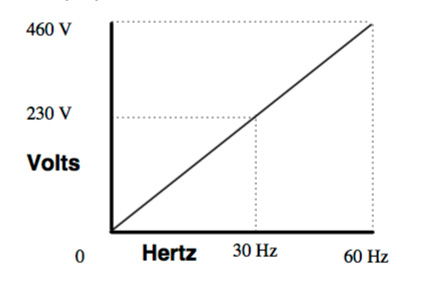
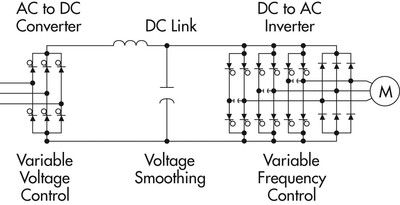
"AC motors are designed for a magnetic field (flux) of constant strength. The magnetic field strength is proportional to the ratio of voltage (V) to frequency (Hz), or V/Hz. But a VFD controls the motor speed by varying the frequency of the applied voltage, according to the synchronous speed equation:

N = 120*f / P

Where:

N = motor speed (RPM)

f = input voltage frequency

P = number of motor poles

V/Hz control maintains a constant ratio between voltage (V) and frequency (Hz).
Image credit: Square D

Varying the voltage frequency affects both the motor speed and the strength of the magnetic field. When the frequency is lowered (for slower motor speed), the magnetic field increases, and excessive heat is generated. When the frequency is increased (for higher motor speed), the magnetic field decreases, and lower torque is produced. In order to keep the magnetic flux constant, the V/Hz ratio must remain constant. This keeps torque production stable, regardless of frequency.

V/Hz control of a VFD drive avoids this variation in the magnetic field strength by varying the voltage along with the frequency, in order to maintain a constant V/Hz ratio. The appropriate V/Hz ratio is given by the motor’s rated voltage and frequency. For example, a motor rated for 230 V and 60 Hz will operate best at a V/Hz ratio of 3.83 at all times (230/60 = 3.83)."

http://www.designworldonline.com/faq-vhz-control-mode-ac-drives/

__________________
All living things seek to control their own destiny....this is the purpose of life
Reply Score 1 for Good Answer
Anonymous Poster #1
#12
In reply to #11

Re: ETAP motor acceleration study

11/24/2016 4:26 PM

Thank you. But the VFD is working at 50Hz as the bus. The bus is working at 50Hz.

Reply Score 2 for Off Topic
Guru

Join Date: Mar 2007
Location: by the beach in Florida
Posts: 33392
Good Answers: 1817
#15
In reply to #12

Re: ETAP motor acceleration study

11/24/2016 5:05 PM

Yes but what is the frequency at the motor terminals? - loss of efficiency of the VFD?

__________________
All living things seek to control their own destiny....this is the purpose of life
Reply
Guru

Join Date: Oct 2009
Location: sometimes Wales,UK.. was Libya, now Oman!
Posts: 1715
Good Answers: 117
#28
In reply to #12

Re: ETAP motor acceleration study

11/26/2016 1:53 AM

WTF?

Now you explain how the "bus" is at 50Hz!!

__________________
The square root of nothing is what you make it!
Reply
Guru

Join Date: Apr 2010
Location: About 4000 miles from the center of the earth (+/-100 mi)
Posts: 9910
Good Answers: 1141
#13
In reply to #6

Re: ETAP motor acceleration study

11/24/2016 4:32 PM

At the bus there is 0.4 kV and at the motor terminal 0.399kV

That's pretty close. Let's see:

  1. Were these measured with separate meters? Could the meters not be in exact calibration?
  2. If measured by the same meter, how much time between measurements? Could the voltage have changed in that time?
Reply
Anonymous Poster #1
#14
In reply to #13

Re: ETAP motor acceleration study

11/24/2016 5:01 PM

they are separate 100m. The measurements are at the starting point of the motor. 98% voltage at motor terminal and 94%voltage at bus.

Maybe the %Voltage at terminal motor indicarles another thing? Not exactly the voltage?

Reply
Guru

Join Date: Apr 2010
Location: About 4000 miles from the center of the earth (+/-100 mi)
Posts: 9910
Good Answers: 1141
#16
In reply to #14

Re: ETAP motor acceleration study

11/24/2016 7:04 PM

Sorry, I guess you'll need to just ask someone there who can look at what you are seeing.

Reply
Anonymous Poster #1
#17
In reply to #16

Re: ETAP motor acceleration study

11/25/2016 1:26 AM

Nobody know the exactly meaning at the report of the motor acceleration what is the meaning of %voltage kVb terminal y %bus Voltage?

Reply
Guru

Join Date: Jul 2005
Location: Stoke-on-Trent, UK
Posts: 4496
Good Answers: 137
#20
In reply to #17

Re: ETAP motor acceleration study

11/25/2016 4:48 AM

Following other posts, specially #13, I'd say the difference between 0.4 and 0.399kV is too small to worry about.

Why do you say %Voltage? What is the significance of %?

You say it's a motor acceleration study. Where does acceleration come into this?

Why do you want to "study" acceleration anyway?

Presumably you measured acceleration. Was the motor bare shaft or driving a load?

How did the result compare with the figure calculated from torque and moment of inertia?

__________________
Give masochists a fair crack of the whip
Reply
Anonymous Poster #1
#21
In reply to #20

Re: ETAP motor acceleration study

11/25/2016 5:18 AM

I repeat the study, this are the result. You can see that the %Terminal voltage at the motor is higuer than the %Voltage at the bus

Reply
Guru

Join Date: Jul 2005
Location: Stoke-on-Trent, UK
Posts: 4496
Good Answers: 137
#23
In reply to #21

Re: ETAP motor acceleration study

11/25/2016 6:13 AM

I can't read that well enough to comment, but I'm still curious about what the study is for. Can you answer my questions?

__________________
Give masochists a fair crack of the whip
Reply
Guru

Join Date: Dec 2010
Posts: 1686
Good Answers: 116
#25
In reply to #21

Re: ETAP motor acceleration study

11/25/2016 12:35 PM

Cut table in half along vertical mid-line; make black & white images to cut file sizes.

Insert it as two pictures.

It will probably be readable.

When you write "study", do you mean "test on real motor" or a computer simulation?

Reply
Guru

Join Date: Aug 2005
Location: Hemel Hempstead, UK
Posts: 5826
Good Answers: 322
#22
In reply to #14

Re: ETAP motor acceleration study

11/25/2016 5:31 AM

A 1V drop across 100m seems very low to me, but, it is a drop not a gain as you earlier implied.

VFD stands for "Variable Frequency Drive", so to say it's working at 50Hz doesn't seem very likely.

https://etap.com/motor-starting/motor-starters

click on the demo button.

__________________
If you spend all your time looking for people and things to complain about: trust me, you will find plenty to complain about.
Reply
Guru

Join Date: Oct 2009
Location: sometimes Wales,UK.. was Libya, now Oman!
Posts: 1715
Good Answers: 117
#30
In reply to #6

Re: ETAP motor acceleration study

11/26/2016 5:19 AM

You state....

"At the bus there is 0.4 kV and at the motor terminal 0.399kV"

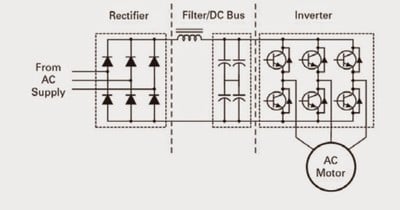
First.... what do you understand as "the bus" and in the diagram below show your test point(s) or reply with our own diagram with test points clearly marked..

Second.... why are you referring to voltage in Kv?

__________________
The square root of nothing is what you make it!
Reply
Guru

Join Date: Oct 2012
Location: 100 miles North from the World Center
Posts: 879
Good Answers: 42
#18

Re: ETAP motor acceleration study

11/25/2016 3:58 AM

In my opinion, it depends where is located the motor side measuring point=before the VFD[point1]or after[point2]. If it was in point 2 no connection will be between the two considered voltages.

__________________
Julius
Reply
Anonymous Poster #1
#19
In reply to #18

Re: ETAP motor acceleration study

11/25/2016 4:16 AM

The measurement is at the point 2.

Reply
Guru

Join Date: Mar 2007
Location: by the beach in Florida
Posts: 33392
Good Answers: 1817
#26
In reply to #19

Re: ETAP motor acceleration study

11/25/2016 12:49 PM
__________________
All living things seek to control their own destiny....this is the purpose of life
Reply
Guru

Join Date: Jul 2016
Posts: 1367
Good Answers: 105
#27

Re: ETAP motor acceleration study

11/25/2016 9:48 PM

It is likely due to the convergence tolerance of the multiple simultaneous equations, (real & reactive power). The solutions stopped when the convergence reached the tolerance. You probably have the option to force the calculations to a tighter tolerance, or past the point where they stopped.

The steady state motor voltage is the same or lower, if the lead resistance was modeled.

The other unlikely explanation is that at the point of reducing the accelerating torque, the motor momentarily acts like a generator, which will create a higher voltage at the motor terminals. Seems unlikely this imperfect operation of a VFD would be modeled.

Why you found it necessary to model a motor start with a VFD is curious.

Reply
Guru

Join Date: Jul 2005
Location: Stoke-on-Trent, UK
Posts: 4496
Good Answers: 137
#29
In reply to #27

Re: ETAP motor acceleration study

11/26/2016 4:11 AM

Agree with your last line. If the AP told us what the point of the test is it might help us to help him. I've asked more than once.

__________________
Give masochists a fair crack of the whip
Reply
Guru

Join Date: Jul 2006
Location: Eastern Kansas USA
Posts: 1503
Good Answers: 128
#31

Re: ETAP Motor Acceleration Study

11/26/2016 5:48 PM

Is it possible that we are looking at a "non-problem"? I'm not familiar with ETAP, because I use a different software package. However, a VFD can output a voltage marginally above the incoming bus voltage, depending on the actual waveform. Make sure that you are using a "True RMS" reading voltmeter because of the very large amount of high-frequency noise that usually is present on the output of a VFD.

--JMM

Reply Score 1 for Good Answer
Guru

Join Date: Oct 2012
Location: 100 miles North from the World Center
Posts: 879
Good Answers: 42
#32

Re: ETAP Motor Acceleration Study

11/30/2016 2:55 PM

In my opinion, even the supply voltage will be only 94% of rated[400*0.94=376 V] the VFD could

achieve 0.98*400-and even more. The d.c. voltage will be between 0.94*400*sqrt(2)=531.7 and

0.866*0.94*400*sqrt(2)=460.5 V D.C.

That means the inverter could still achieve 400 V A.C.- at least.

__________________
Julius
Reply
Reply to Forum Thread 32 comments

"Almost" Good Answers:

Check out these comments that don't yet have enough votes to be "official" good answers and, if you agree with them, vote them!
Copy to Clipboard

Users who posted comments:

67model (2); 7anoter4 (2); Anonymous Poster (10); brich (2); Codemaster (3); Crabtree (1); jmueller (1); Kilowatt0 (1); lyn (1); Randall (2); Rixter (2); rwilliams (1); SolarEagle (4)

Previous in Forum: Intertripping in Power System   Next in Forum: Ground Fault Protection in Corner Grounded Delta System

Advertisement