Previous in Forum: How Many CR4 Subscribers Had One of These? How Many Are Still Around?   Next in Forum: Fun Project Help!
Close
Close
Close
14 comments
Rate Comments: Nested
The Engineer
Engineering Fields - Engineering Physics - Physics... United States - Member - NY Popular Science - Genetics - Organic Chemistry... Popular Science - Cosmology - New Member Ingeniería en Español - Nuevo Miembro - New Member

Join Date: Feb 2005
Location: Albany, New York
Posts: 5060
Good Answers: 129

SpaceX Static Test of the Falcon Heavy

05/10/2017 8:20 AM

Last week SpaceX conducted a static test of the Falcon Heavy (see link below):

https://twitter.com/SpaceX

SpaceX is anticipating the first launch of the Falcon Heavy later this year. When it does, it will be the most powerful operational rocket in the world by a factor of two, able to lift 119,000 lbs into orbit.

For more details on the Falcon Heavy, click here.

Register to Reply
Interested in this topic? By joining CR4 you can "subscribe" to
this discussion and receive notification when new comments are added.
Guru
Engineering Fields - Electrical Engineering - Been there, done that. Engineering Fields - Control Engineering - New Member

Join Date: Dec 2008
Location: Long Island NY
Posts: 15600
Good Answers: 981
#1

Re: SpaceX Static Test of the Falcon Heavy

05/10/2017 9:09 AM

What a spectacular barbecue pit. I wonder how many seconds it takes to smoke a whole steer, 4 seconds.

I presume this will be an expendable rocket. Since this rocket will be using all Falcon 9 engines I wonder if the engines maybe re-purposed from a previous launch.

__________________
"Don't disturb my circles." translation of Archimedes last words
Register to Reply
Guru

Join Date: Dec 2016
Posts: 2914
Good Answers: 115
#2
In reply to #1

Re: SpaceX Static Test of the Falcon Heavy

05/10/2017 2:40 PM

BBQ? Nah, jerky, and good luck finding it all afterward.

Register to Reply
Guru
Safety - Hazmat - New Member United States - US - Statue of Liberty - New Member Engineering Fields - Chemical Engineering - Old Hand

Join Date: Mar 2011
Location: Lubbock, Texas
Posts: 14331
Good Answers: 162
#3

Re: SpaceX Static Test of the Falcon Heavy

05/10/2017 3:53 PM

When are people going to wake and realize that water-borne launch is a lot smoother, and less stress on the launch vehicle, and a helluva lot cheaper.

See this : The Sea Dragon makes Saturn V look like shrimp

Payload delivered to orbit over 1,000,000 pounds, equivalent to an entire space station. Saturn whole stage I fits in the nozzle bell of Sea Dragon. Is it time to resurrect this plan?

__________________
If it ain't broke, don't fix it. Just build a better one.
Register to Reply
Guru
Engineering Fields - Electrical Engineering - Been there, done that. Engineering Fields - Control Engineering - New Member

Join Date: Dec 2008
Location: Long Island NY
Posts: 15600
Good Answers: 981
#4
In reply to #3

Re: SpaceX Static Test of the Falcon Heavy

05/10/2017 4:09 PM

I can sketch a plan for a rocket and claim that it can make 10,000,000 pounds of thrust, too. Just don't ask me to build or test that boast.

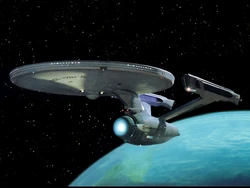
I wonder how many pounds of thrust does the star ship Enterprise, NCC-1701, make?

__________________
"Don't disturb my circles." translation of Archimedes last words
Register to Reply
Guru

Join Date: Dec 2016
Posts: 2914
Good Answers: 115
#5
In reply to #3

Re: SpaceX Static Test of the Falcon Heavy

05/10/2017 4:33 PM

Larger rockets yield diminishing returns.

The Rocket Equation, Part 1

Part 2

Register to Reply
Guru
Engineering Fields - Electrical Engineering - Been there, done that. Engineering Fields - Control Engineering - New Member

Join Date: Dec 2008
Location: Long Island NY
Posts: 15600
Good Answers: 981
#6
In reply to #5

Re: SpaceX Static Test of the Falcon Heavy

05/10/2017 10:01 PM

Yes! Larger rockets bring louder engines and bigger expenses but not as much payload improvements for that big bill.

I knew the sea dragon rocket was more than an artistic concept rocket but equipment that size were never fabricated.

Oh and both of your links are to Part 2. But Part 1 is easy to find.

Care for some jerky?

__________________
"Don't disturb my circles." translation of Archimedes last words
Register to Reply
Guru

Join Date: Dec 2016
Posts: 2914
Good Answers: 115
#7
In reply to #6

Re: SpaceX Static Test of the Falcon Heavy

05/10/2017 10:24 PM

Oops, sorry 'bout the link. I didn't realise I linked the same page both times. Thanks for the head's-up.

Something else you often see in artists' concepts of really big hypothetical rockets is that the rocket's proportions are kept pretty much the same however large they portray it. In real life that doesn't work and for the same reason elephants have thick legs.

Double the size of the rocket in each dimension, and look at what happens to the volume/mass: it goes up eight times. Meanwhile the area of the base of the rocket where the thrust is applied only goes up by four. If we assume the same thrust per base unit area, four times more thrust cannot lift eight times more weight. They either have to double the thrust of each engine or increase the area of the base of the rocket by a factor of eight, not four. Assuming rocket-engine tech advances fairly slowly, which it does, the result is that the rocket proper will have to take on the squat proportions of a trash can (with the attendant aerodynamic losses and structural problems) in order to allow enough room for the engines required. Consequently, the Sea Dragon's design, as shown, will not work. Even with its larger size it will have to produce twice the thrust per kilogram of fuel burned as the Saturn V's F1 engines.

Register to Reply
Guru
Safety - Hazmat - New Member United States - US - Statue of Liberty - New Member Engineering Fields - Chemical Engineering - Old Hand

Join Date: Mar 2011
Location: Lubbock, Texas
Posts: 14331
Good Answers: 162
#10
In reply to #7

Re: SpaceX Static Test of the Falcon Heavy

05/11/2017 12:16 PM

A much smarter engineer than most of us here, Robert Truax, designed the Sea Dragon. The article on her in Wikipedia states she was 2-stage.

The rocket would have been able to carry a payload of up to 550 metric tons into low Earth orbit. Payload costs were estimated to be between $59 to $600 per kg. TRW (Space Technology Laboratories, Inc.) conducted a program review and validated the design and its expected costs,[3] apparently a surprise to NASA.[citation needed] However, budget pressures led to the closing of the Future Projects Branch, ending work on the super-heavy launchers they had proposed for a manned mission to Mars.

This is the bad boy Werner von Braun wanted for the Mars Missions, but also the Saturn V could have propelled a Mars Mission, just not with near the payload, and would have required multiple launches to put everything needed for such a mission into Earth orbit first, then link and build the final craft in space, and off they would have headed ( to their death in space, no doubt).

__________________
If it ain't broke, don't fix it. Just build a better one.
Register to Reply
Guru
Safety - Hazmat - New Member United States - US - Statue of Liberty - New Member Engineering Fields - Chemical Engineering - Old Hand

Join Date: Mar 2011
Location: Lubbock, Texas
Posts: 14331
Good Answers: 162
#9
In reply to #6

Re: SpaceX Static Test of the Falcon Heavy
05/11/2017 10:40 AM

Jerky? I guess that would be lighter to take into space than a big, old fat steak.

The Sea Dragon design did actually innovate design in some key ways:

(1) no turbine pumps, it was to rely upon pressurized tanks to push out LH and LOX to the burner and rocket bell nozzle. Thus it was designed to represent large weight savings there.

(2) the actual rocket engine to achieve near orbital velocity was all in one large stage? (Not sure about that part) Supposedly the main rocket could be allowed to fall back to earth (ocean) with inflatable pads to soften water impact, so was this supposed to be a re-usable vehicle?

I think we can all agree, NASA will not need to look back on this design, as some recent British propulsion developments indicate, with the SABRE engine, for example. The idea is to make use of non-rocket propulsion and be air-breathing as long into the launch as possible, then switch over at the last minute, since oxidizer takes up far more of the mass than the propellant fuel.

__________________
If it ain't broke, don't fix it. Just build a better one.
Register to Reply
Guru

Join Date: Dec 2016
Posts: 2914
Good Answers: 115
#11
In reply to #9

Re: SpaceX Static Test of the Falcon Heavy

05/11/2017 12:55 PM

"... no turbine pumps, it was to rely upon pressurized tanks to push out LH and LOX to the burner and rocket bell nozzle. Thus it was designed to represent large weight savings there."

Are you quite sure? Think about it: the pressure inside the combustion chamber is pushing against the incoming fuel as well. That pressure must be countered over and above the combustion-chamber pressure in order to ensure to ensure adequate fuel flow. Without a turbopump and you're relying entirely on tank pressure to supply that force. That is a hell of a lot of force for a tank to endure and so the tank will have to be heavily reinforced, adding considerably to its weight far in excess to that of a turbopump. This is why turbopumps are preferred over pressurised tanks. They supply the pressure only where it's needed, allowing a lighter-weight fuel tank to be used.

Register to Reply
Power-User

Join Date: Mar 2014
Posts: 373
Good Answers: 2
#8

Re: SpaceX Static Test of the Falcon Heavy

05/11/2017 10:34 AM

Bigger, better, etc.

At some point, Planet Earth will have a low seismicity ocean-front Rocket City where the behemoths are manufactured on the launch pads due to size, then recovered at sea after launch, towed back to Rocket City with super tankers or the like, disassembled to the largest pieces of the original assembly, refurbished, and the whole process of building the rocket on the launch pad starts over again.

The deal is driven by $ per gram (really big stuff or a lot of little stuff) ''out there'', to borrow from HD Thoreau, ''however measured or far away''.

Register to Reply
Guru
Safety - Hazmat - New Member United States - US - Statue of Liberty - New Member Engineering Fields - Chemical Engineering - Old Hand

Join Date: Mar 2011
Location: Lubbock, Texas
Posts: 14331
Good Answers: 162
#12
In reply to #8

Re: SpaceX Static Test of the Falcon Heavy

05/11/2017 2:36 PM

People are just not getting that a launch pad is effectively worthless, although an expensive, and not ultimately recyclable piece of junk.

Launch from water, even under water. Less stresses on the metals, really.

__________________
If it ain't broke, don't fix it. Just build a better one.
Register to Reply
Guru

Join Date: Dec 2016
Posts: 2914
Good Answers: 115
#13
In reply to #12

Re: SpaceX Static Test of the Falcon Heavy

05/11/2017 3:18 PM

Possibly the biggest advantage in launching at sea is that you can choose your orbital inclination directly. Orbital-plane changes are in general very costly in terms of delta-v and so more fuel must be carried aloft to perform such manoeuvers in-orbit. For example, launching a geosynchronous satellite into orbit from the equator allows the same rocket to carry 20-25% more weight as payload than, say, one launching from Cape Canaveral (28.5 N lat), because carrying extra fuel aloft for a plane-change is not necessary. There is also a slight boost in speed in launching from the equator of course, but the efficiency gains from launching directly into the final orbital inclination are far more considerable. This is where sea launches really pay off.

Register to Reply
Guru
Safety - Hazmat - New Member United States - US - Statue of Liberty - New Member Engineering Fields - Chemical Engineering - Old Hand

Join Date: Mar 2011
Location: Lubbock, Texas
Posts: 14331
Good Answers: 162
#14
In reply to #13

Re: SpaceX Static Test of the Falcon Heavy

05/11/2017 4:04 PM

Interesting, and a good solid point of consideration (in spite of the liquid environment, LOL)!

Apparently, there is less early shaking, etc., and the rocket gets the additional boost of a large portion of its weight is bouyant at launch.

__________________
If it ain't broke, don't fix it. Just build a better one.
Register to Reply
Register to Reply 14 comments
Copy to Clipboard

Users who posted comments:

Andrew Westman (5); bullardrr (1); James Stewart (5); redfred (3)

Previous in Forum: How Many CR4 Subscribers Had One of These? How Many Are Still Around?   Next in Forum: Fun Project Help!

Advertisement