Ok, The Balloon Boy is back with another Idea. The NH3 project was a "Bust" Pun intended. First some spec's.
"AIR" = 1.293 KG/M3
"H2" = 0.08375 KG/M3
I'm more comfortable working in ounces and cubic feet so....
"AIR" = 1.219027 OZ/FT3
"H2" = 0.083634 OZ/FT3
So each Cubic foot of H2 can lift 1.27 ounces per cubic foot.
It all has to do with Buoyancy.
Example:
100 FT3 Balloon.
Displaced "AIR" = 129.1027 OZ
"H2" = 8.3624 OZ
Lift = 120 OZ.
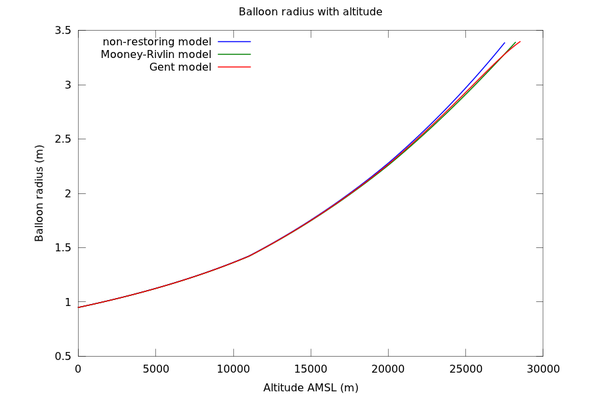
Now the question is. If you made the Balloon "Bigger" So it is displacing more "AIR" But did NOT increase the amount of "H2" The amount of lift will decrease correct? Because of the greater amount of "AIR" being displaced.
But how do you make the balloon bigger without adding more "H2" ans making the lift even stronger?
Inside the balloon is a smaller balloon that we pump into it ambient "AIR" so it changes the volume of the balloon, but does not change the amount of lift from the "H2"
I'd have to try to crunch some real numbers. but does this sound like this would happen? Or am I missing something?
Joe


 Buoyancy

 Re: Buoyancy


"Almost" Good Answers: