Previous in Forum: RFQ, Request for Quotation (For Construction)   Next in Forum: Experience with Designing Robust Building Systems Plus Question on Fire and Moisture Protection
Close
Close
Close
9 comments
Rate Comments: Nested
Participant

Join Date: Oct 2025
Posts: 3

Buried Irrigation Pipe Bottom Branch

10/07/2025 3:35 PM

Hello,
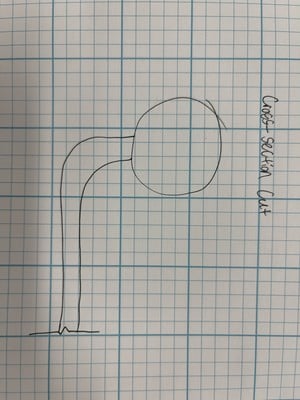
I recently started an internship at a water resources civil engineering firm. I'm assigned to a project where we are designing a buried pipe to replace an irrigation canal. The client asked us if we could design the pipe where branches would come out of the bottom of the main pipe and then extend out to their respective retaining ponds (see my basic sketch of the pipe cross section). The reason for this request is that no matter how little water is in the pipe, the water can always flow into the branch. My colleagues are unsure of the validity and constructability of such. Has anyone tried designing or constructing a pipe in such a way?

Register to Reply
Interested in this topic? By joining CR4 you can "subscribe" to
this discussion and receive notification when new comments are added.

Good Answers:

These comments received enough positive votes to make them "good answers".

"Almost" Good Answers:

Check out these comments that don't yet have enough votes to be "official" good answers and, if you agree with them, vote them!
2
Power-User
Hobbies - CNC - New Member

Join Date: Nov 2007
Location: Bronkhorstspruit, Gauteng, South Africa
Posts: 128
Good Answers: 9
#1

Re: Buried Irrigation Pipe Bottom Branch

10/08/2025 12:55 AM

Taking the branch pipe out at the bottom of the main pipe would be a maintenance problem. It would serve the same purpose to take the branch out horizontally from the bottom of the main pipe. This would be more serviceable.

__________________
Johan van Niekerk
Register to Reply Good Answer (Score 2)
2
Guru

Join Date: Jul 2016
Posts: 1367
Good Answers: 105
#2

Re: Buried Irrigation Pipe Bottom Branch

10/08/2025 1:40 AM

You need to allow for sediment buildup, especially in places of low velocity. It seems unlikely that you will be assured of enough velocity to keep solids suspended in the flow.

In the example you sketch, a sudden influx of flow could collect and deposit the sediment on the bottom of your large pipe into the bottom exit lateral, plugging it unexpectedly.

It is possible to design a tapered header where the velocity stays fairly constant through a flow range.

If you consider constructibility, a bottom exit pipe will be hard to fit and backfill so that the large pipe is supported evenly where the weight is greatest. Settling will occur as the pipe is filled. The design will need to account for this.

If unavoidable, then means to clean these collection areas should be designed in. Flush ports can be a common addition to such a design, brought to an accessible location for jetting out the line. Means to dispose of the sediment also needs to be considered.

Large pipes can transport significant weights of liquids, which can result in destructive forces if the liquid is stopped suddenly. This is significantly more dangerous in a closed pipe than an open topped channel.

Suddenly, a seemingly simple drain can become a complicated design problem.

Register to Reply Good Answer (Score 2)
Active Contributor

Join Date: Jan 2010
Location: England
Posts: 20
#3

Re: Buried Irrigation Pipe Bottom Branch

10/08/2025 2:42 AM

Have a filled trap and maintainable strainer at the entry to to underground system, arrange the buried main pipe to stay full and have accessible filled traps at all exit points?

Register to Reply Score 1 for Good Answer
Power-User

Join Date: Jul 2017
Posts: 236
Good Answers: 9
#4

Re: Buried Irrigation Pipe Bottom Branch

10/08/2025 6:17 AM

Hi, bit more info would help.
1: is the main pipe filled with constanstly flowing water or is it closed and simply filled as required ?
2: What is the source of the water used, pumped up ground water or river bed, etc. ? Reason for asking is to see if the water is relatively clean or muddy with silt depositing.
3: Are the retaining ponds open or also buried below ground?
4: Why is there a need for the retaining ponds ?

4: is the system pressurised ?
5: Without the relative dimensions of the Main / Pipe Outlets but my suggestion would be locate your "branches" on the side / upper half of the main pipe so you avoid the need for Access traps to clear any sediment build-up, especially if the water is not constantly flowing!

Register to Reply
Participant

Join Date: Oct 2025
Posts: 3
#6
In reply to #4

Re: Buried Irrigation Pipe Bottom Branch

10/08/2025 3:36 PM

1. I believe the main pipe will be filled as required in an open channel flow, but the flow rate will vary on demand and season. We are designing it to have a flow capacity of 30 cfs. The outlets range from a 2 to 4 cfs requirement.

2. The source of the water is from a nearby reservoir. They also have some water rights to a river that will contribute occasionally.

3. The retaining ponds are open.

4. I believe the retaining ponds provide the individual shareholders with a way to "pressurize" their irrigation lines without actually pumping the water. The pipe we're designing will be open channel flow.

5. The main pipe will be 42" in diameter to eventually 30". I don't know the size of the outlets (maybe 8"?). The main pipe will be about 4 miles long, and the maximum length of the outlets is 750 ft, another travels 415 ft, and another travels 150 ft. The remaining outlets travel less than 50 ft to their pond.

Thank you for your comments.

Register to Reply Score 1 for Good Answer
Associate

Join Date: Sep 2025
Posts: 35
#5

Re: Buried Irrigation Pipe Bottom Branch

10/08/2025 3:16 PM

I also have some questions first.

What is the scale of the system – dimensions and flow of channel ?

How much water is allocated to each user ?

What is done when the retaining dam is already full or when a specific customer does not require water ?

What is the rules when there is a shortage of water (pipe not full) – first come first served ?

What type of irrigation systems are used ?

One of the advantages of a pipe reticulation system is that the customer may avoid or reduce pumping costs by utilizing the pressure in the pipe for direct irrigation – what is the strategy ?

Register to Reply
Participant

Join Date: Oct 2025
Posts: 3
#7
In reply to #5

Re: Buried Irrigation Pipe Bottom Branch

10/08/2025 3:46 PM

1. I believe the main pipe will be filled as required in an open channel flow, but the flow rate will vary on demand and season. We are designing it to have a flow capacity of 30 cfs. The outlets range from a 2 to 4 cfs requirement. The main pipe will be 42" in diameter then funnel down to 30". I don't know the size of the outlets (maybe 8"?). The main pipe will be about 4 miles long, and the maximum length of the outlets is 750 ft, another travels 415 ft, and another travels 150 ft. The remaining outlets travel less than 50 ft to their pond.

2. I am unsure, but outlets require 2 to 4 cfs. Each outlet will have an isolation valve to open or close the flow of water.

3. The respective isolation valve will shut the flow through the outlet.

4. I believe it is first come, first serve. However, I do understand that each shareholder has a certain allotment that they cannot exceed.

5. There are pipes running from each shareholder's retaining pond out to their orchards. I believe the pond "pressurizes" the flow through these pipes.

6. Since the pipe will be open channel flow (initially, anyway), I believe that the retaining ponds each outlet leads to provide the pressure for each shareholder's irrigation system. When the main pipe is eventually pressurized, perhaps the retaining ponds won't be necessary anymore.

Thank you for your comments.

Register to Reply Score 1 for Good Answer
Guru

Join Date: Jul 2016
Posts: 1367
Good Answers: 105
#8
In reply to #7

Re: Buried Irrigation Pipe Bottom Branch

10/08/2025 4:27 PM

Since a closed pipe will be difficult to clean, a trash rack and screen is often included in such installations.

Perhaps the lateral exit pipes should exit at a slight angle back from the main pipe, so that a stick or object transported by the main flow would have to turn slightly upstream to travel down the lateral. I think that distribution pipes near the bottom of the main pipe should be adequate to ensure distribution during low flow. This would imply that your main pipe was level over the entire 4 mile length.

Of course, the first pipes will accept all of very low flows, leaving the downstream pipes & reservoirs wanting. If the reservoirs are all constructed to have matching bottom elevations, then the distribution should equalize reasonably well, proving the upstream consumers don’t consume their delivery in a short time.

The conversion to a closed system should make it easier to keep clean, especially from outside sources.

The sizes you mention seem reasonable for most any common materials of construction. (concrete?)

Having reservoirs at the ends of your distribution will provide another settling point for debris, and provide a buffer for periodic irrigation demands, smoothing delivery of water to the crops.

Register to Reply
Associate

Join Date: Sep 2025
Posts: 35
#9

Re: Buried Irrigation Pipe Bottom Branch

10/14/2025 4:26 AM

Irrigation on an orchard may already have filters and some sedimentation will also occur in the pond and the water in the pipe will also be cleaner than the water in the canal.

My concerns would be

The flowrate of the outlet - it should also be limited to what the pond can handle. In a canal system the flowrate is restricted by a weir or something.

It is not ideal to at some stage require the full flow to go all the way.

The second concern is that if the big pipe is trenched at 6 ft an 8" bend may add another 2ft and it will be deeper than the existing outlet pipe.

Register to Reply
Register to Reply 9 comments

Good Answers:

These comments received enough positive votes to make them "good answers".

"Almost" Good Answers:

Check out these comments that don't yet have enough votes to be "official" good answers and, if you agree with them, vote them!
Copy to Clipboard

Users who posted comments:

Johan van Niekerk (1); John Hadland (1); jwillis (2); Koos03 (2); rwilliams (2); The Wizard (1)

Previous in Forum: RFQ, Request for Quotation (For Construction)   Next in Forum: Experience with Designing Robust Building Systems Plus Question on Fire and Moisture Protection

Advertisement